Fraction Addition Numbers Worksheets for Ages 6-9
3 filtered results
-
From - To
Unlock the world of fractions with our engaging Fraction Addition Worksheets designed specifically for children ages 6-9! These thoughtfully crafted worksheets guide young learners through the fundamentals of adding fractions in a fun and interactive way. Each activity simplifies the process, focusing on visuals and relatable examples to help students grasp essential concepts. Ideal for classroom settings or at-home practice, our resources encourage skill development while ensuring enjoyment. Empower your child’s mathematical journey with our comprehensive fraction addition worksheets, fostering confidence and enthusiasm in their learning. Begin this exciting adventure into fractions today and watch your child's math skills flourish!
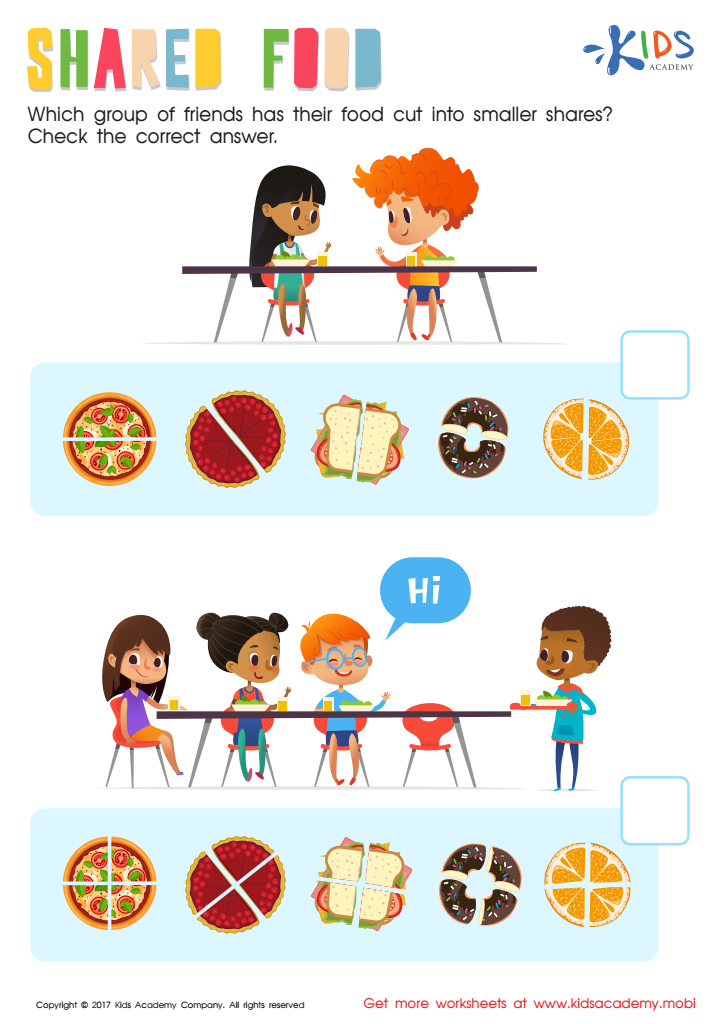
Shared Food Worksheet
 Assign to My Students
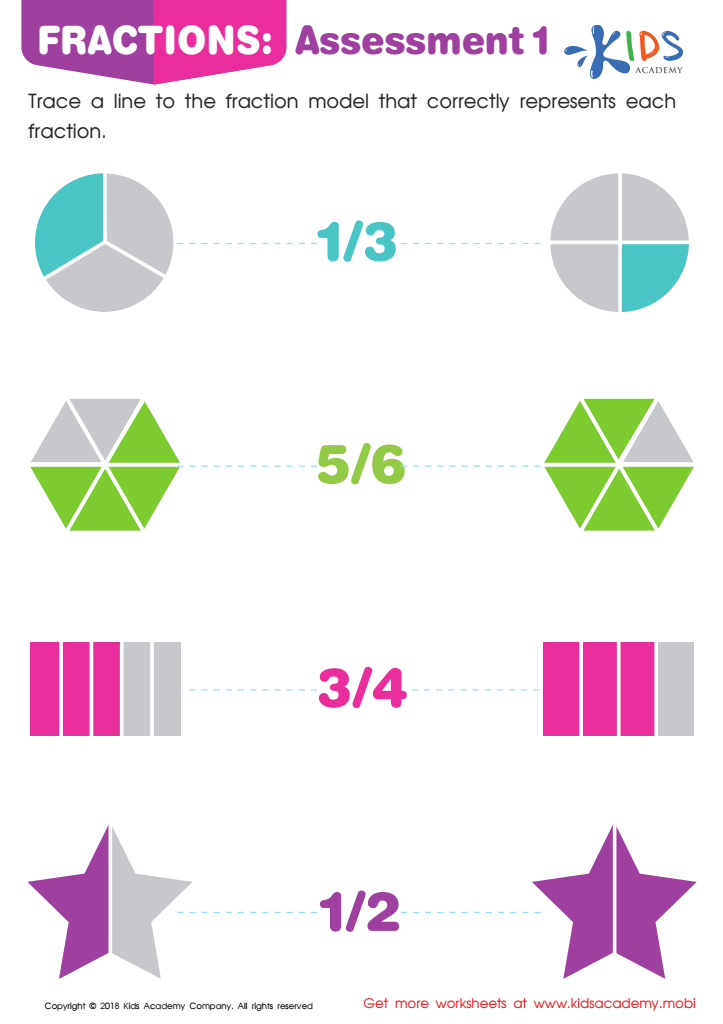
Fractions: Assessment 1 Worksheet
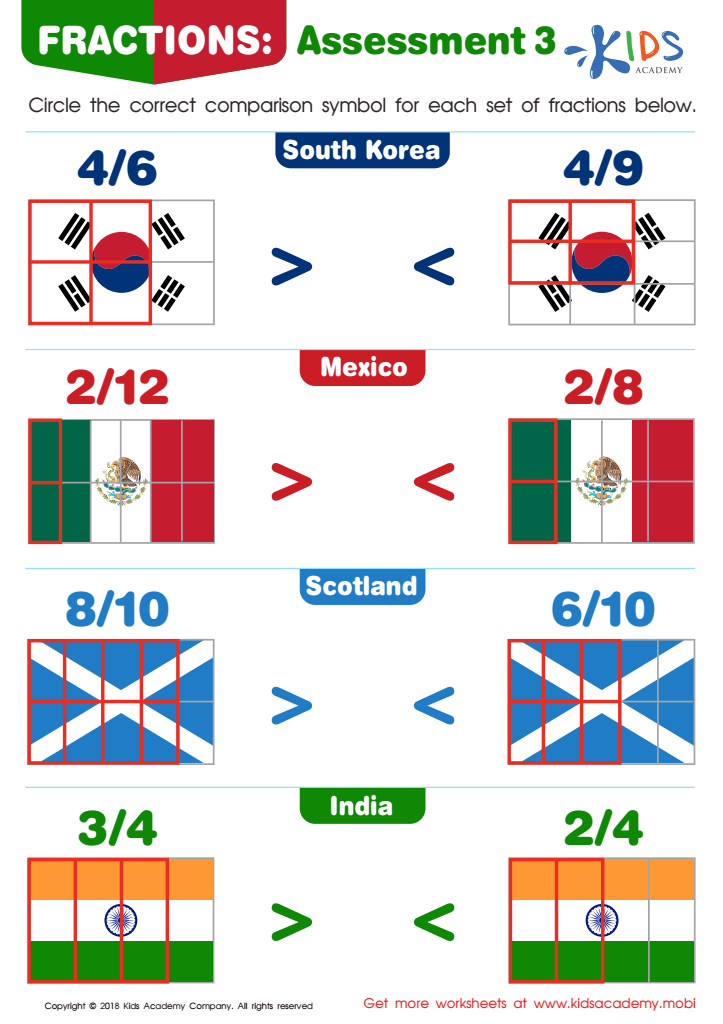
Fractions: Assessment 3 Worksheet






Understanding fraction addition is essential for children aged 6-9 as it lays the groundwork for their future mathematical skills and overall cognitive development. At this stage, children's conceptual understanding of numbers expands, and fractions start to play a significant role in various areas of math and real-life situations, from cooking and measuring to sharing and comparing.
Parents and teachers should focus on fraction addition because it helps children develop critical thinking and problem-solving skills. By engaging with fractions, children learn to recognize relationships between numbers, understand proportions, and grasp the idea of wholes and parts—important concepts that apply far beyond math class. Moreover, fraction addition introduces the idea of equivalency, promoting a solid understanding of how different numbers can represent the same quantity.
Additionally, a strong foundation in fractions can motivate students to embrace more advanced topics, fostering a positive attitude towards math as they progress in their education. By encouraging early mastery of fraction addition, parents and teachers equip children with essential skills to tackle more complex mathematical concepts and enhance their overall academic confidence and success. By fostering a joyful and supportive learning environment, adults can nurture children's natural curiosity and enthusiasm for math.








