Number representation Numbers Worksheets for Ages 6-9
3 filtered results
-
From - To
Discover our engaging "Number Representation Worksheets" for children aged 6-9, designed to enhance their understanding of numbers through fun and interactive activities. These worksheets introduce key concepts in number representation, helping young learners identify, compare, and visualize numbers in various forms, such as numerals, words, and pictures. With a variety of exercises, including tracing, matching, and color coding, students will build foundational math skills in an enjoyable way. Perfect for home practice or classroom settings, these resources support your child's progress in mathematics while fostering a love for learning. Empower their learning journey with our comprehensive number worksheets today!
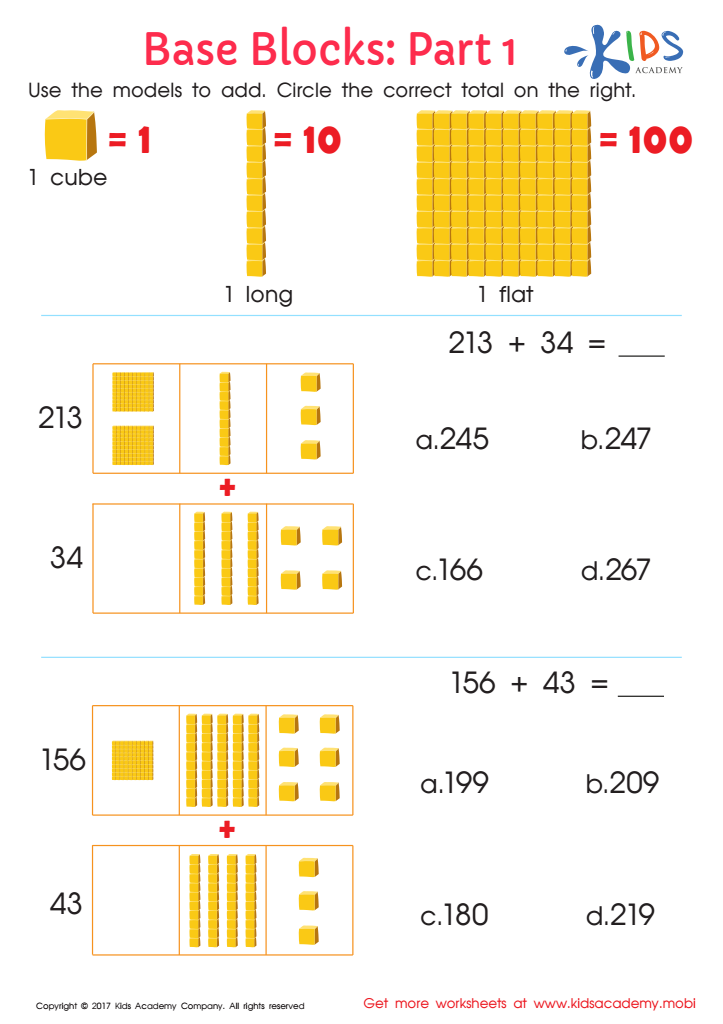
Base Ten Blocks Worksheet: Part 1
 Assign to My Students
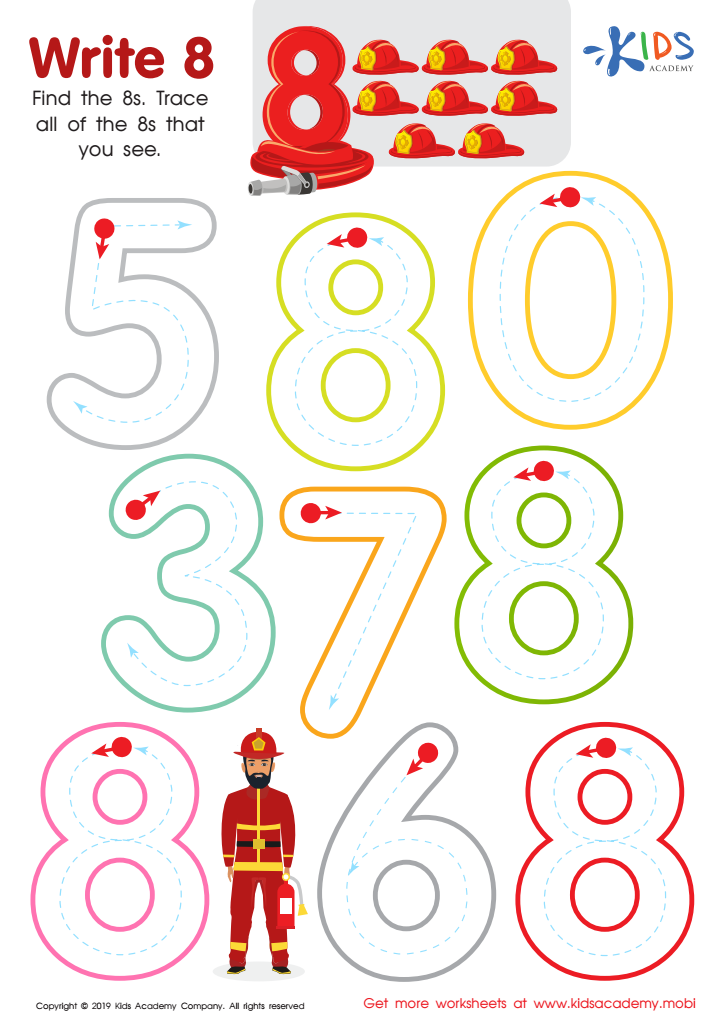
Write 8 Worksheet
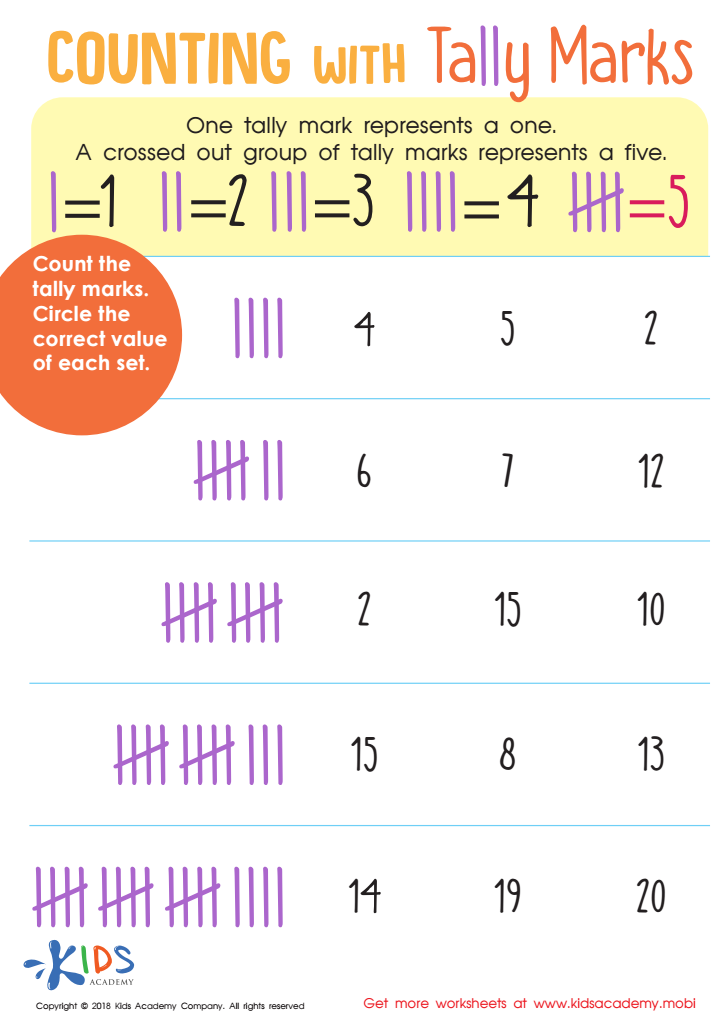
Counting with Tally Marks Worksheet








Understanding number representation is crucial for children aged 6-9, as it lays the foundation for their future mathematical skills. At this age, children are not only learning to count but also beginning to understand the meaning behind numbers and how they relate to one another. This foundational knowledge includes identifying numbers, utilizing number lines, and comprehending place value.
Parents and teachers play a vital role in fostering a robust numerical foundation. A strong grasp of number representation helps children develop problem-solving skills, enhances their ability to perform arithmetic operations, and assists them in understanding more complex mathematical concepts in later grades. When children can visualize and manipulate numbers, they become more confident in their abilities, making learning math less intimidating and more engaging.
Moreover, early exposure to number representation supports children in relating math to real-world contexts, boosting their critical thinking and analytical skills. As math is integral to daily life, encouraging a positive attitude toward numbers in these formative years can impact children's academic trajectory. Therefore, both parents and teachers should prioritize teaching number representation, as it not only enhances mathematical competence but also contributes to overall cognitive development.








