Rounding numbers Numbers Worksheets for Ages 6-9
6 filtered results
-
From - To
Explore our fun and engaging Rounding Numbers Worksheets designed specifically for kids ages 6-9! These worksheets make learning rounding a delightful experience, filled with colorful illustrations and easy-to-understand guidance. Perfect for practicing rounding to the nearest ten or hundred, our resources promote critical thinking and reinforce mathematical skills. Each worksheet is thoughtfully crafted to ensure students build a solid foundation in rounding concepts, preparing them for more advanced math challenges. Whether at home or in the classroom, our worksheets offer the ideal blend of learning and entertainment. Join us in making math an enjoyable adventure for young learners!
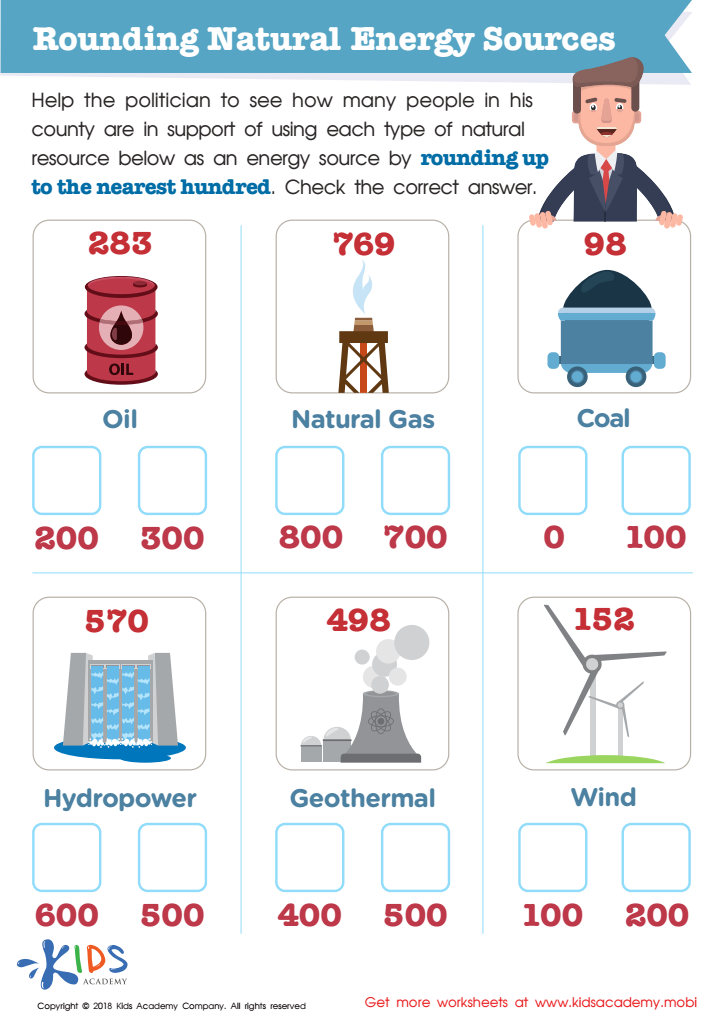
Rounding Natural Energy Sources Worksheet
 Assign to My Students
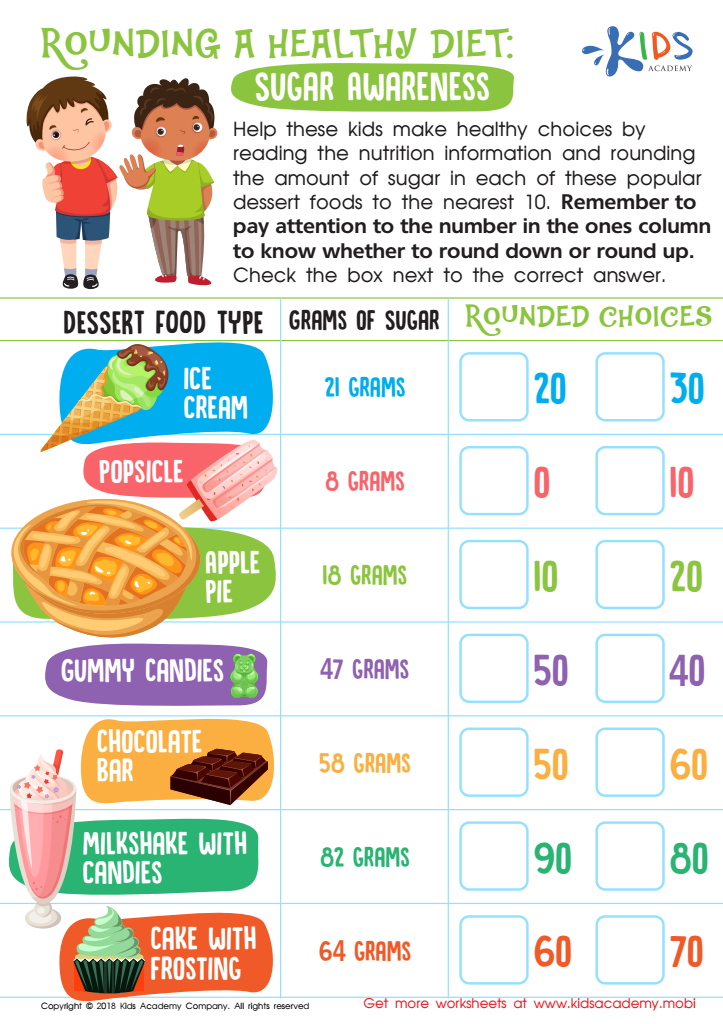
Rounding Healthy Diet Worksheet
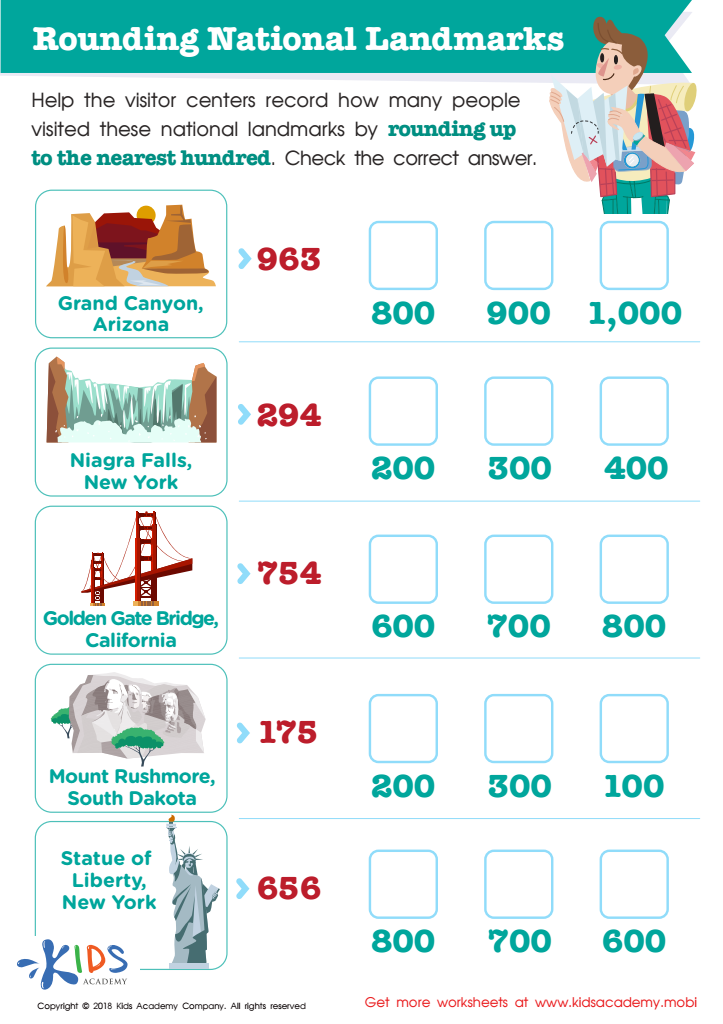
Rounding National Landmarks Worksheet

Rounding on the National Mall Worksheet
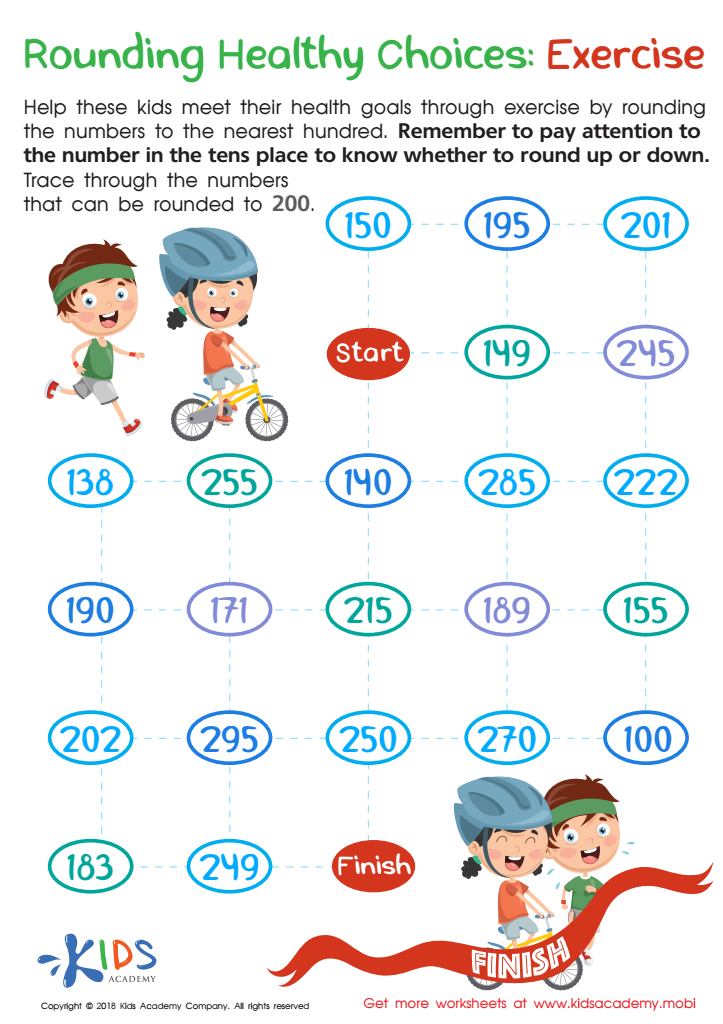
Rounding Healthy Choices Exercise Worksheet
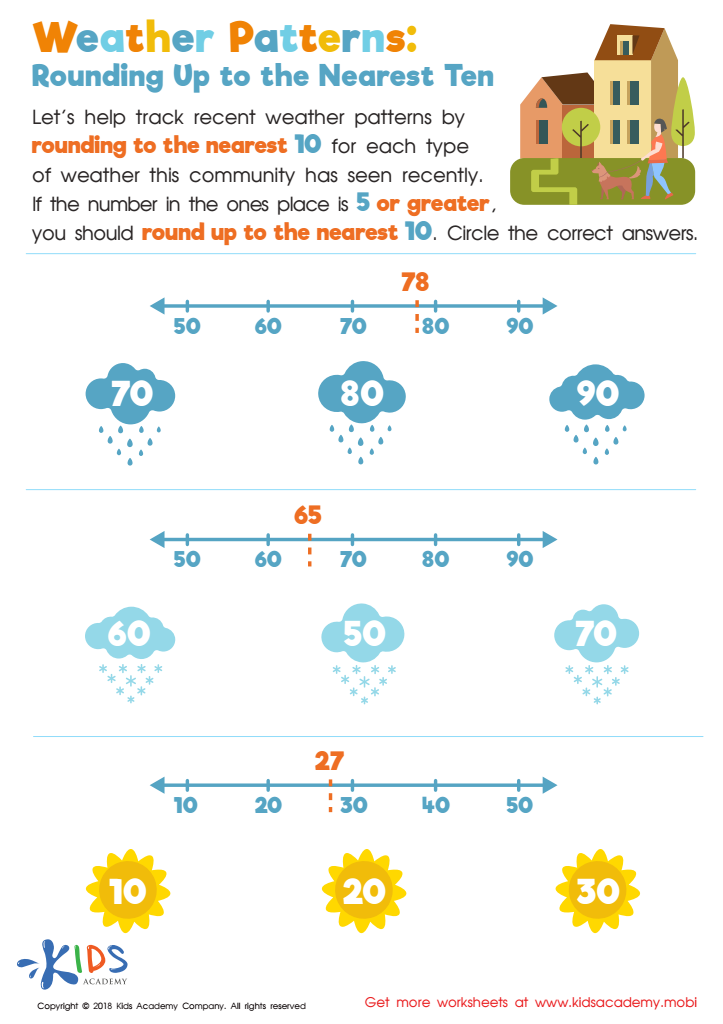
Weather Patterns Worksheet








Rounding numbers is an essential skill for children aged 6-9, and both parents and teachers should prioritize its teaching. This mathematical concept simplifies complex calculations and helps improve overall number sense. When children learn to round, they gain the ability to make quick estimations, which is useful in daily life situations like shopping, cooking, and budgeting. For example, when adding prices at a store, rounding can help children gauge the total cost without needing a calculator.
Additionally, rounding numbers builds a foundation for more advanced mathematical concepts. It prepares students for future lessons in arithmetic and ensures they understand place value, leading to stronger problem-solving skills. Encouraging young learners to round numbers cultivates critical thinking, allowing them to assess which digits deserve focus and fostering independence in their mathematical journeys.
Moreover, rounding can enhance communication. When children articulate reasons for rounding in discussion with peers or adults, they practice expressing their thoughts clearly and logically. This skill transcends mathematics, enhancing overall cognitive development and comprehension abilities.
In summary, parents and teachers play a vital role in nurturing rounding skills, equipping children with practical tools for everyday situations and establishing a robust foundation for future learning in mathematics and beyond.








