
Develop problem-solving abilities Math Worksheets for Ages 6-9
4 filtered results
Difficulty Level
Grade
Age
-
From - To
Subject
Activity
Standards
Unlock your child's potential with our "Develop Problem-Solving Abilities Math Worksheets for Ages 6-9." Designed to stimulate young minds, these engaging and interactive worksheets focus on critical thinking and practical applications of math concepts. Kids will tackle age-appropriate challenges that enhance their reasoning skills and boost their confidence in solving problems independently. Perfect for both classroom and home use, our worksheets provide a solid foundation in math while making learning fun and exciting. Watch as your child develops essential problem-solving abilities that will serve them well beyond their early school years. Explore all we offer today!
Favorites
With answer key
Interactive
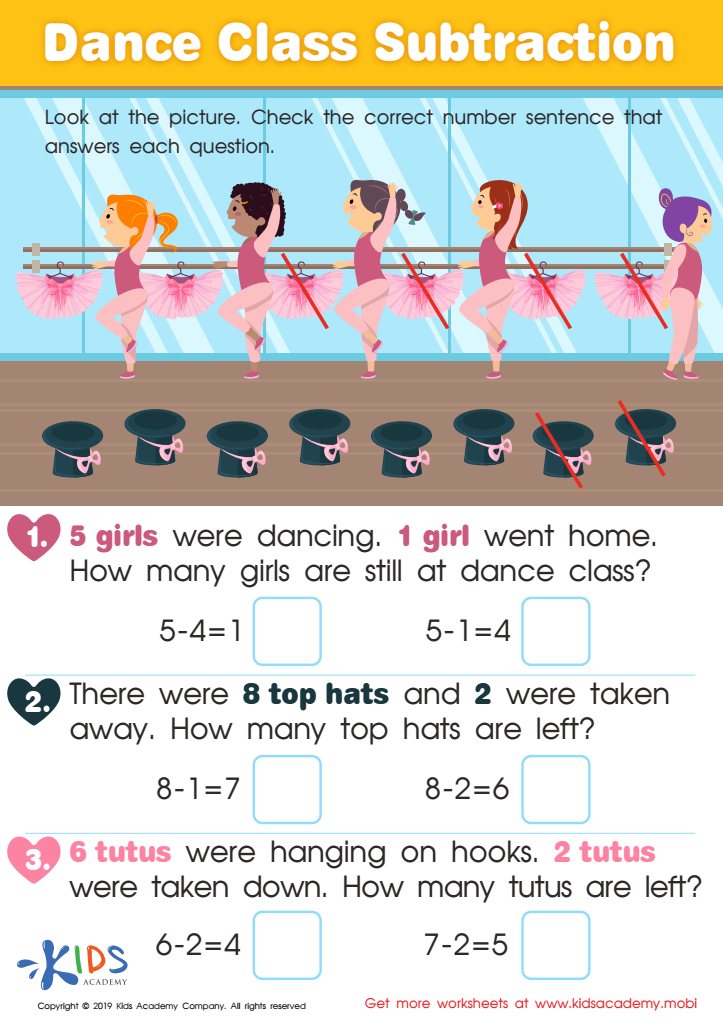
Dance Class Subtraction Worksheet
Dancing is an excellent form of exercise, and some people dance professionally, expressing their feelings through body movements. Help your kids identify the type of dance in the picture and answer the word problems in this worksheet. Encourage them to check the correct number sentence that answers the question.
 Assign to My Students
Dance Class Subtraction Worksheet
Worksheet
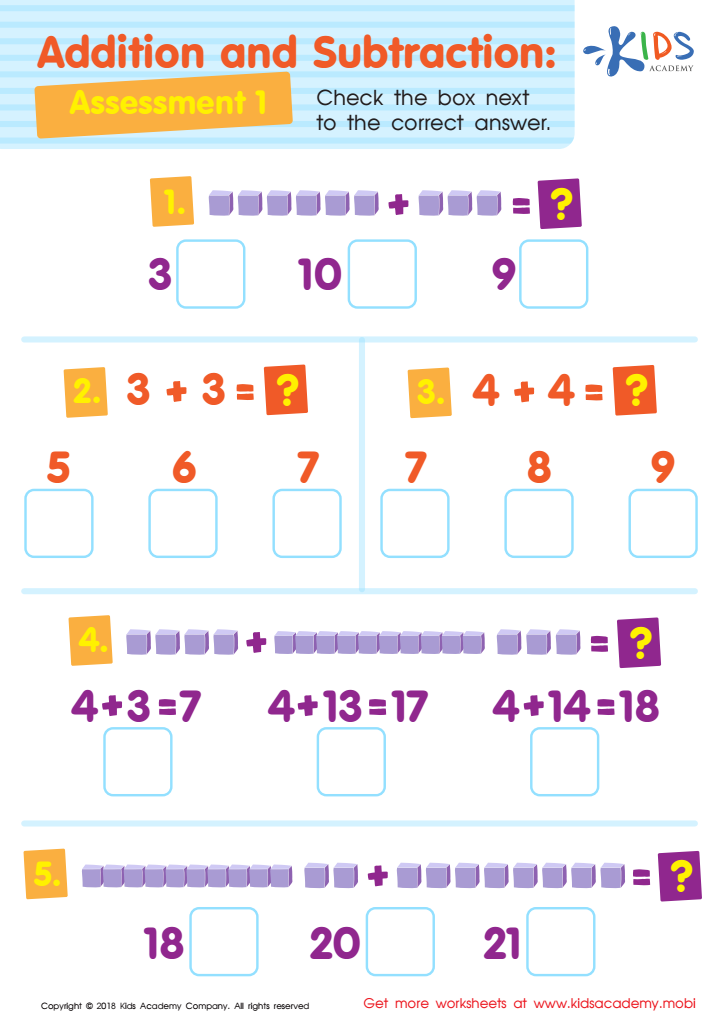
Addition and Subtraction Assessment 1 Worksheet
Kids often find math difficult, even adults! But it's important they learn the basics, like adding and subtracting. Use this worksheet to help them practice. Check the box next to the correct answer for each equation. It's a great way to give them a jump start and help them succeed in math.
Addition and Subtraction Assessment 1 Worksheet
Worksheet
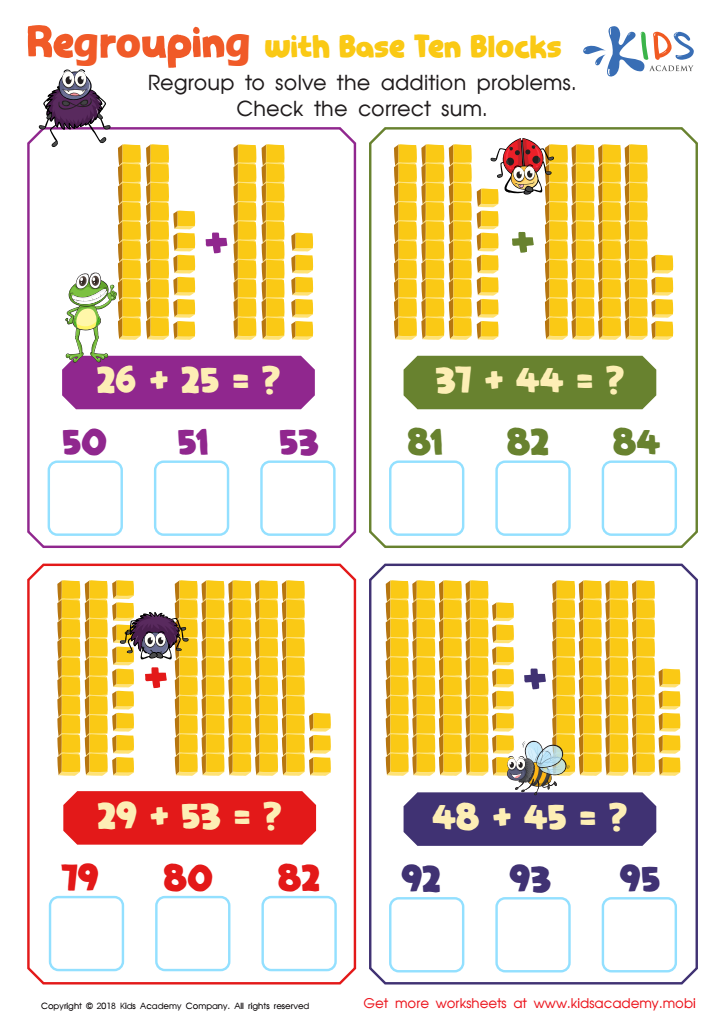
Regrouping With Base Ten Blocks Worksheet
Challenge your child to regroup the base ten blocks and solve the four equations in this worksheet. This exercise requires counting and adding up in base ten. When they are done, help them check the correct sum.
Regrouping With Base Ten Blocks Worksheet
Worksheet
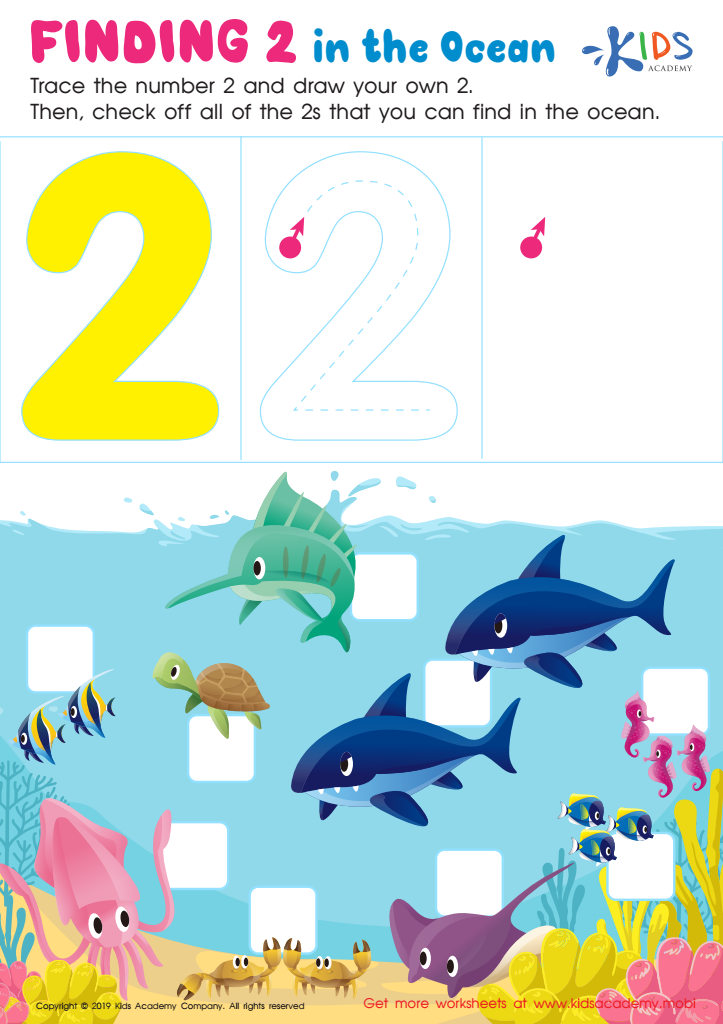
Finding 2: In the Ocean Worksheet
Kids start their math journey with basic numbers. Finger counting, number representation with pictures and this worksheet help build number sense. Kids trace lines and dots to write the number two and identify groups of two sea creatures for easy success and to feel proud of their math skills.
Finding 2: In the Ocean Worksheet
Worksheet
Join Kids Academy for Free
Who is primarily going to use this learning content?








Developing problem-solving abilities in math for children ages 6-9 is crucial for several reasons, benefitting both academic and real-life skills. Firstly, these foundational years are key for cognitive development. At this stage, children's brains are highly flexible, making it an optimal period to cultivate critical thinking and analytical skills. Math provides structured challenges that encourage logical reasoning and creativity.
Secondly, having strong problem-solving skills in math sets children up for future academic success. Mastery of basic math concepts such as addition, subtraction, and simple multiplication and division serves as a building block for more complex subjects. Confidence in math can boost overall self-esteem and encourage a lifelong love of learning.
In addition to academic benefits, problem-solving skills fostered through math translate to everyday life. These abilities enable children to approach real-world challenges methodically, think critically, and make informed decisions. Problem-solving nurtures persistence and resilience, teaching children how to navigate setbacks constructively.
Moreover, early engagement with math-related problem-solving can close achievement gaps, promoting equity in education. By offering support and resources, parents and teachers can nurture an inclusive environment where every child has the opportunity to succeed, laying the groundwork for informed, capable individuals in society.
So, developing these skills is an investment in children's holistic growth, preparing them for future challenges both inside and outside the classroom.








