Check out this FREE Trial Lesson on Math for age 6-9!

Cut Rectangles: Thirds and Fourths

Favorites
With answer key
Interactive
  • 6-9
  • Understanding fractions
  • Math
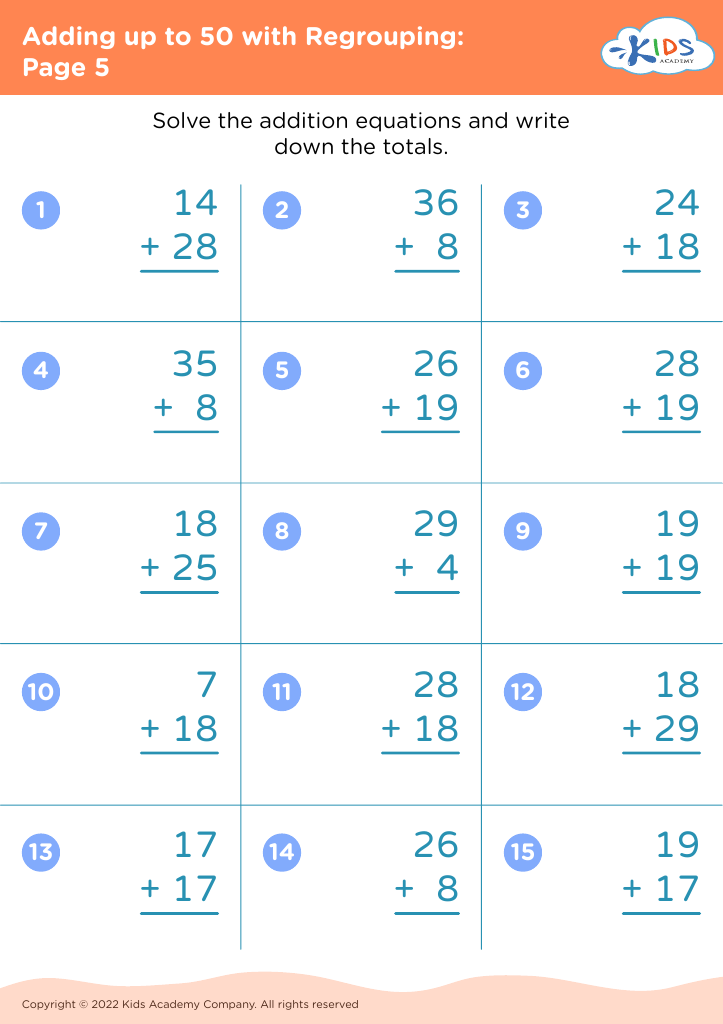
Adding up to 50 with Regrouping: Page 5
Worksheet
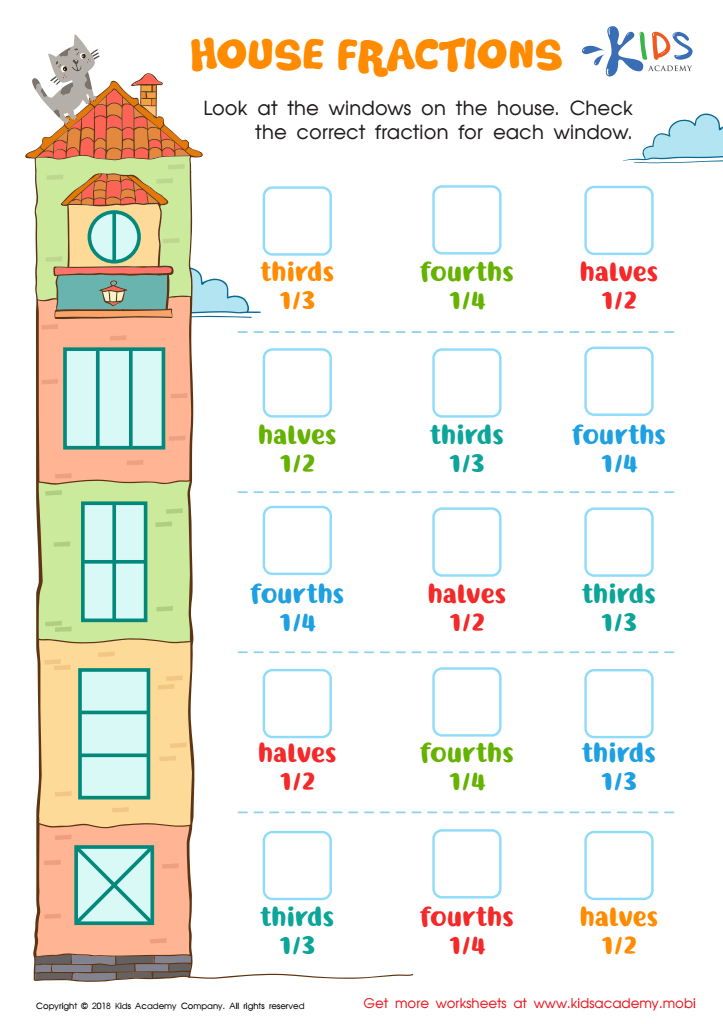
House Fractions Worksheet

House Fractions Worksheet

Test your child's knowledge of fractions with this worksheet! Have them examine the windows of a house and select the correct fraction from the options given. This is a great way to see how much they understand about wholes, fractions, halves, one thirds, and one fourths.
House Fractions Worksheet
Worksheet
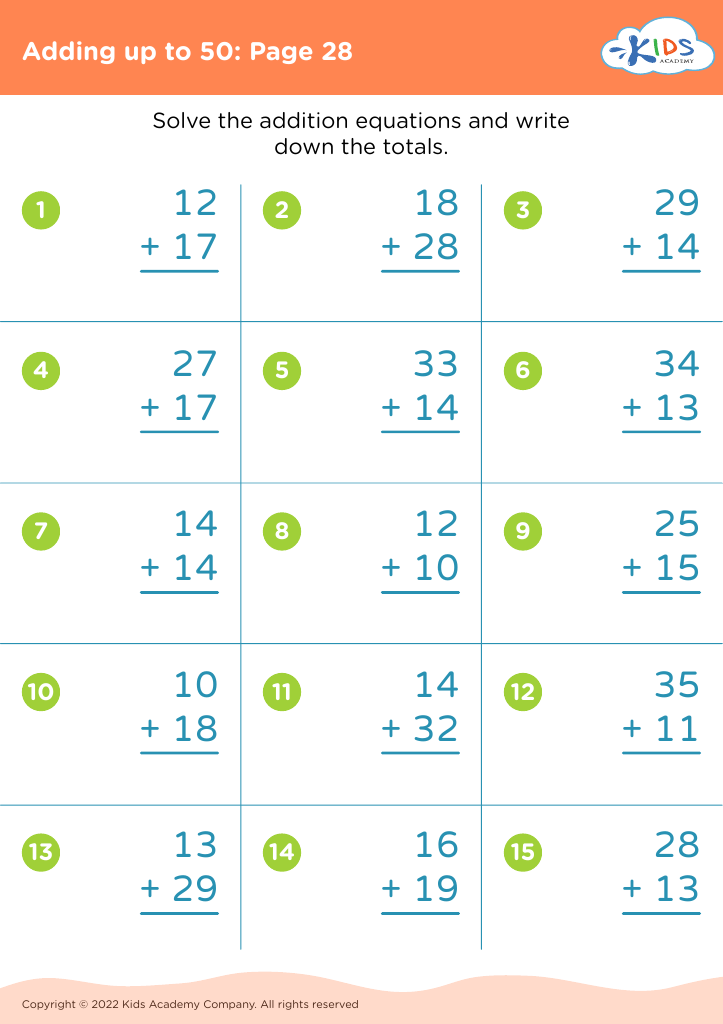
Adding up to 50: Page 28

Adding up to 50: Page 28

Adding up to 50: Page 28
Worksheet
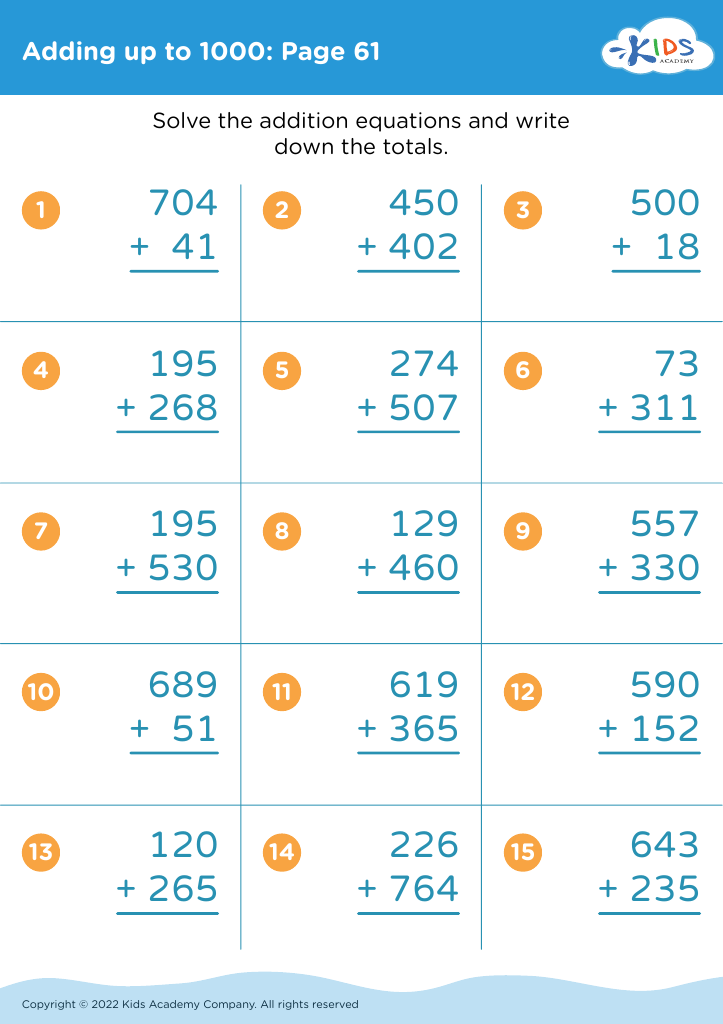
Adding up to 1000: Page 61

Adding up to 1000: Page 61

Adding up to 1000: Page 61
Worksheet
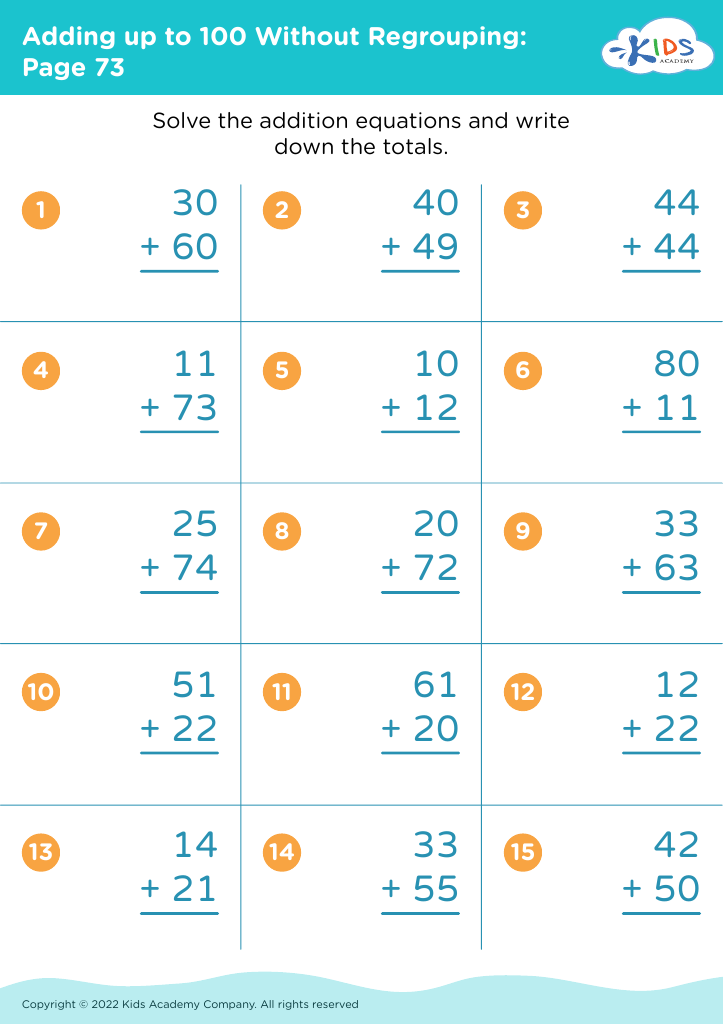
Adding up to 100 Without Regrouping: Page 73
Worksheet
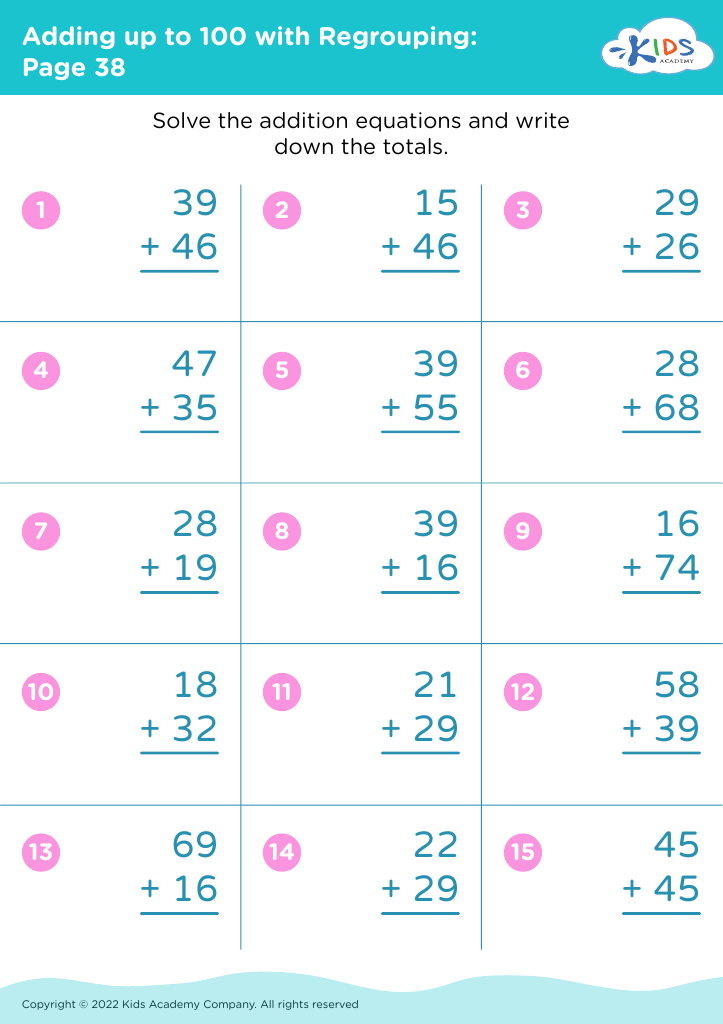
Adding up to 100 with Regrouping: Page 38
Worksheet
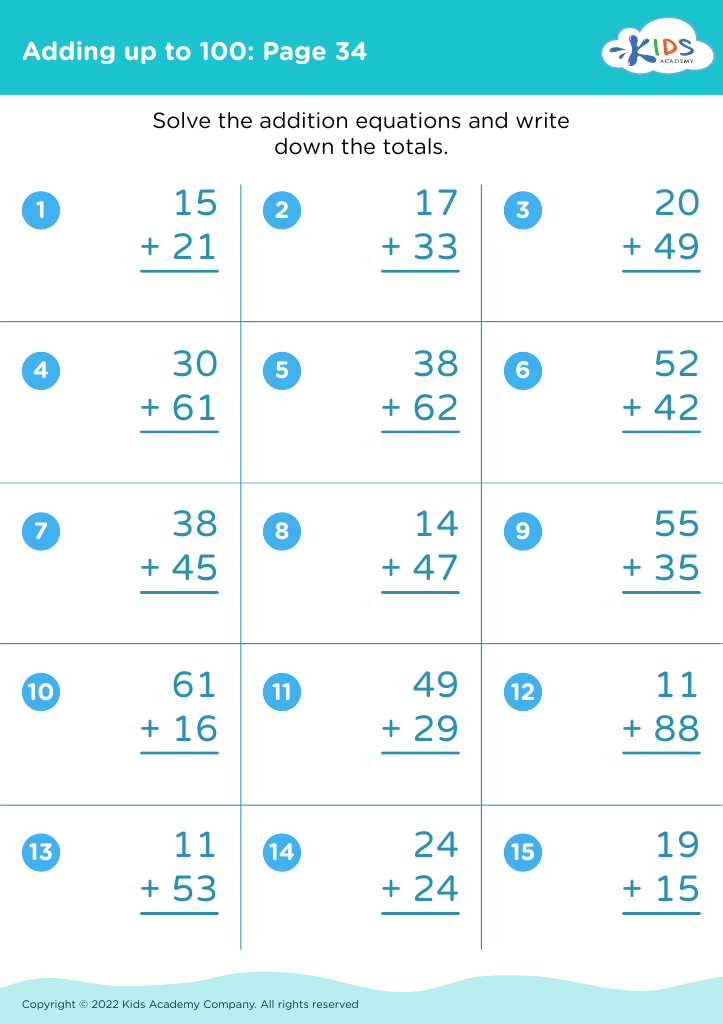
Adding up to 100: Page 34

Adding up to 100: Page 34

Adding up to 100: Page 34
Worksheet
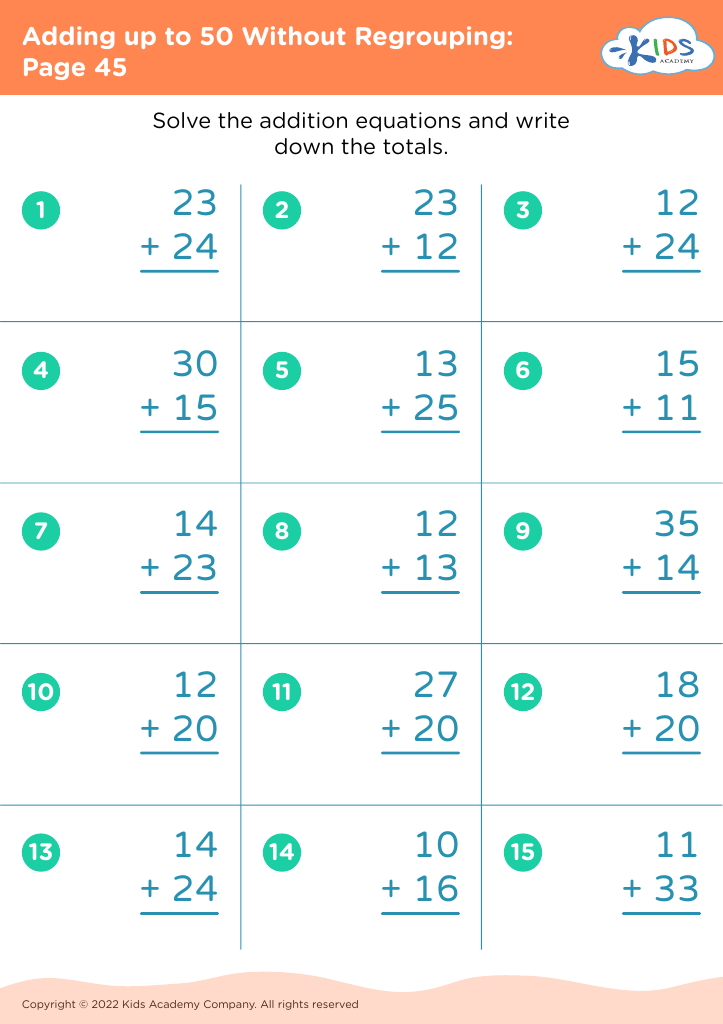
Adding up to 50 Without Regrouping: Page 45
Worksheet
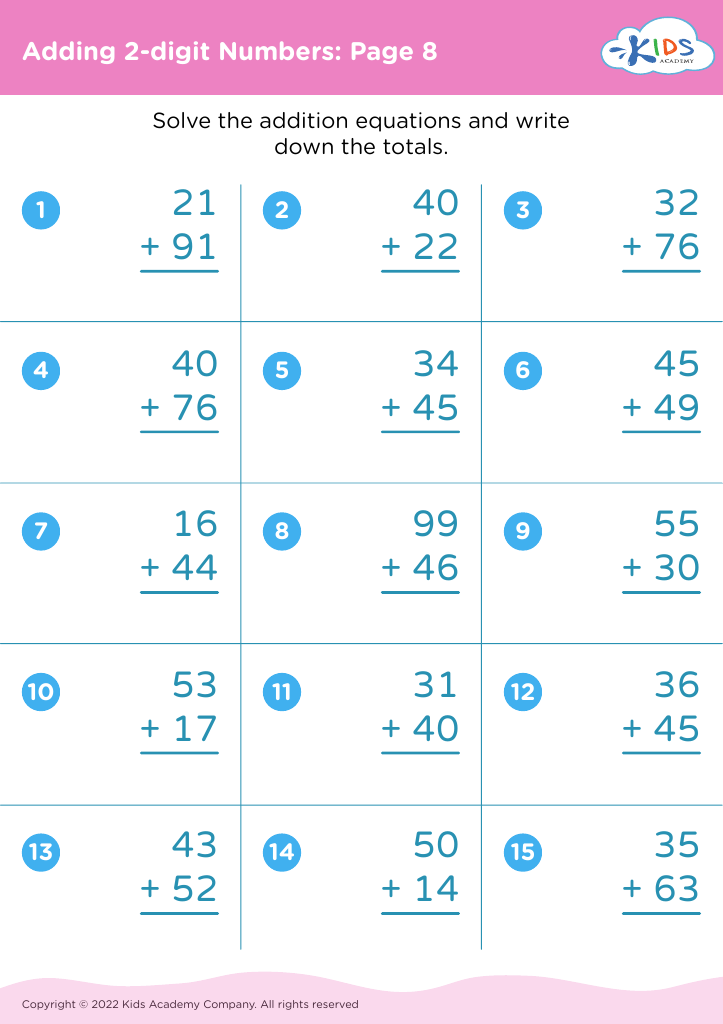
Adding 2-digit Numbers: Page 8

Adding 2-digit Numbers: Page 8

Adding 2-digit Numbers: Page 8
Worksheet
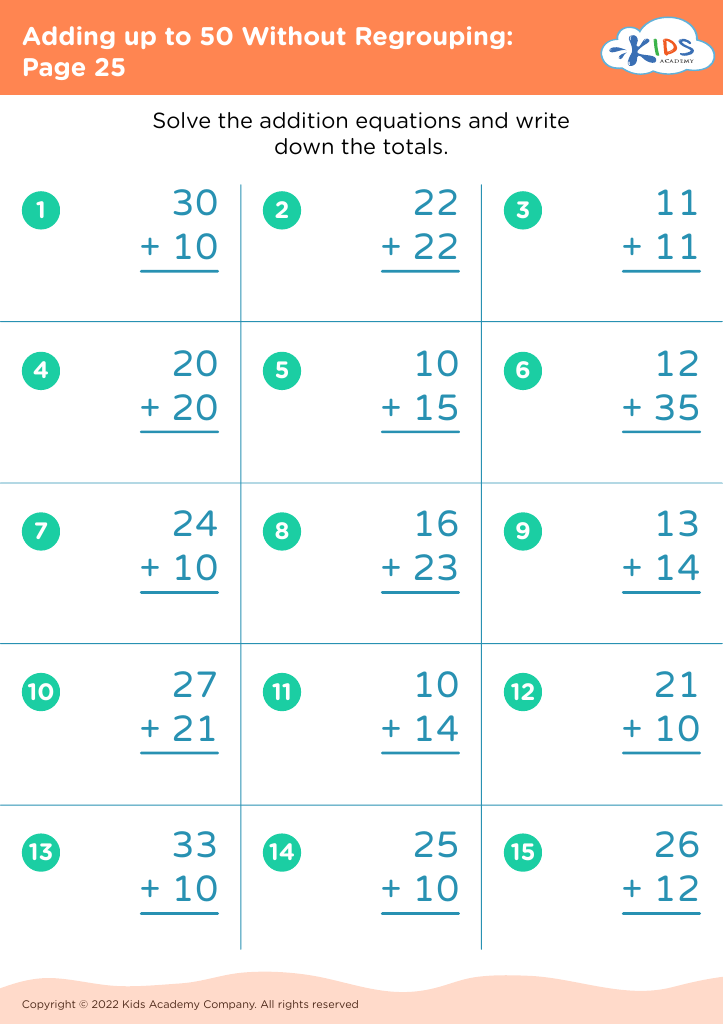
Adding up to 50 Without Regrouping: Page 25
Worksheet
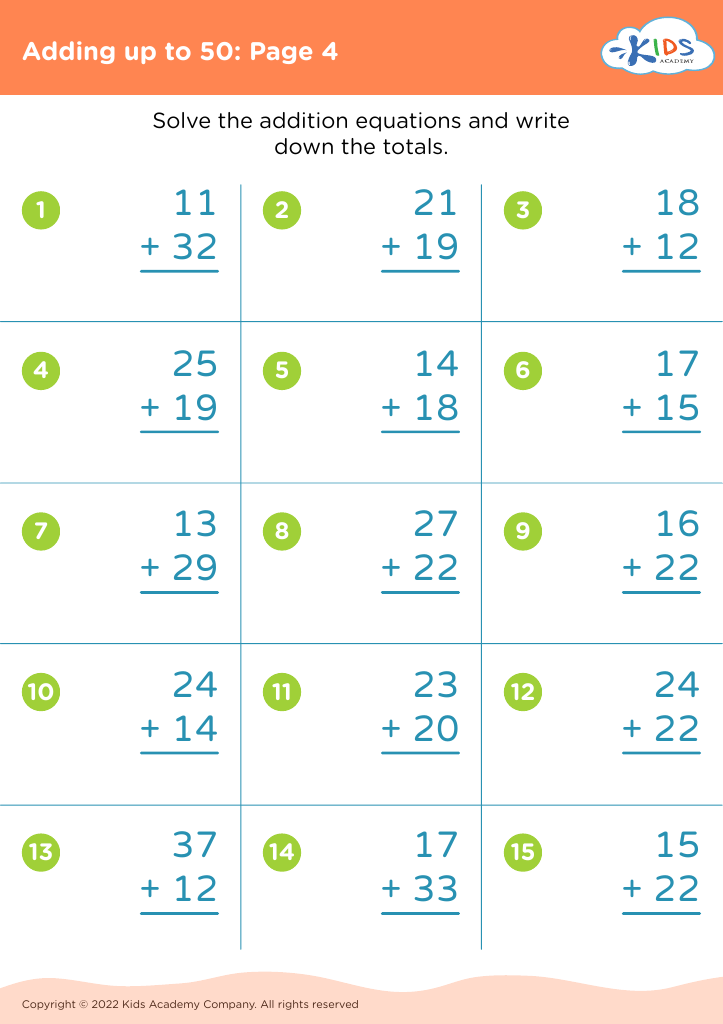
Adding up to 50: Page 4

Adding up to 50: Page 4

Adding up to 50: Page 4
Worksheet
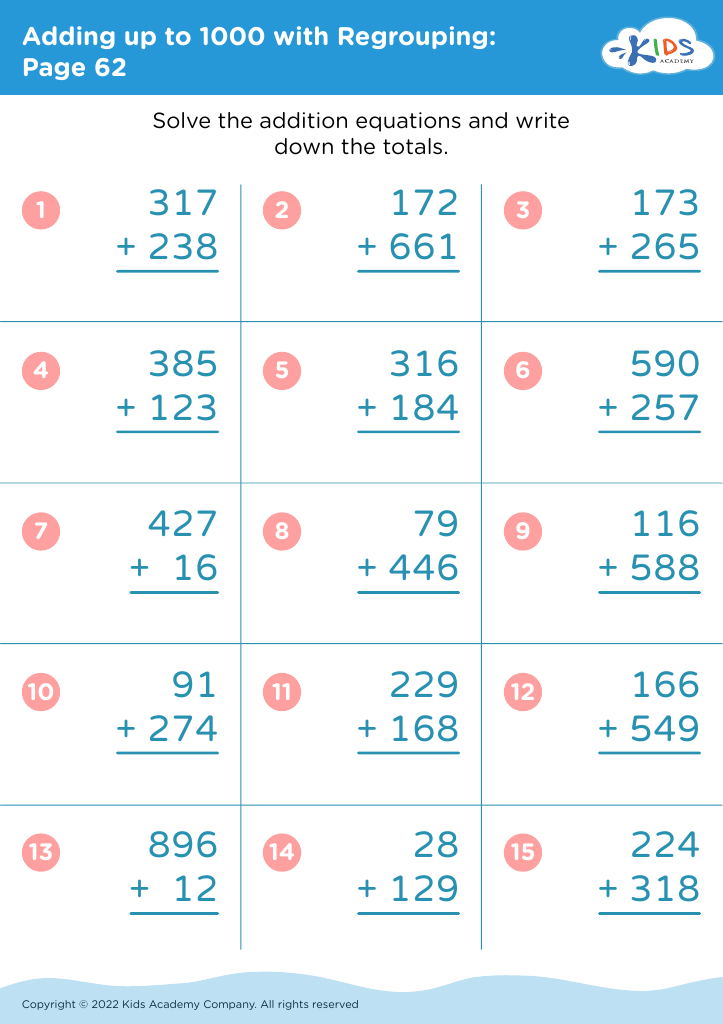
Adding up to 1000 with Regrouping: Page 62
Worksheet
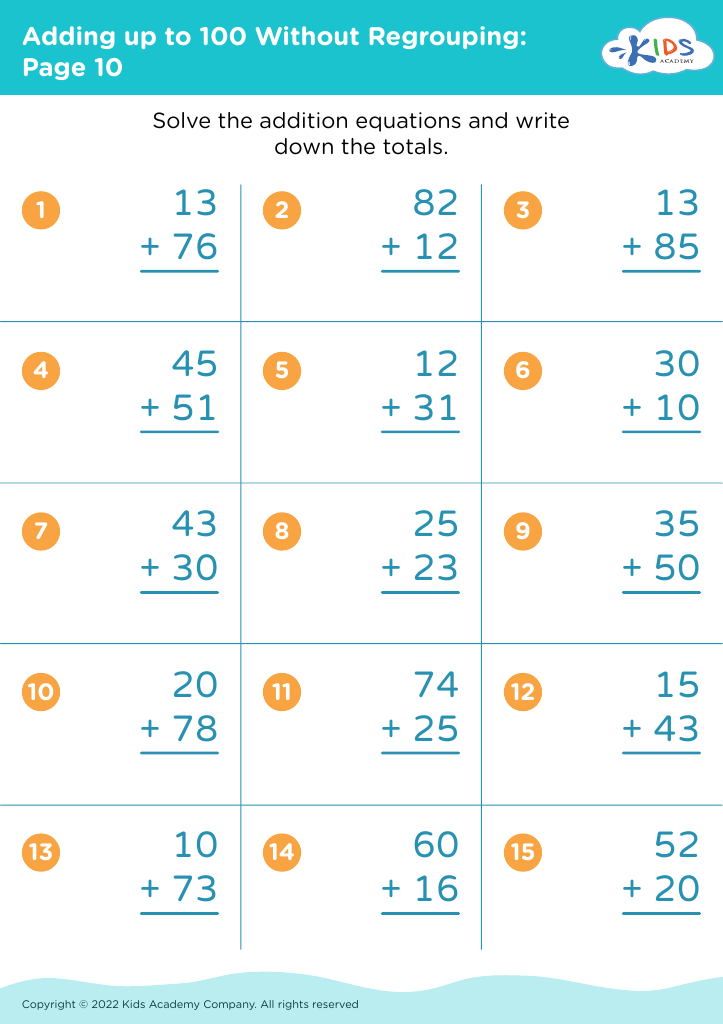
Adding up to 100 Without Regrouping: Page 10
Worksheet
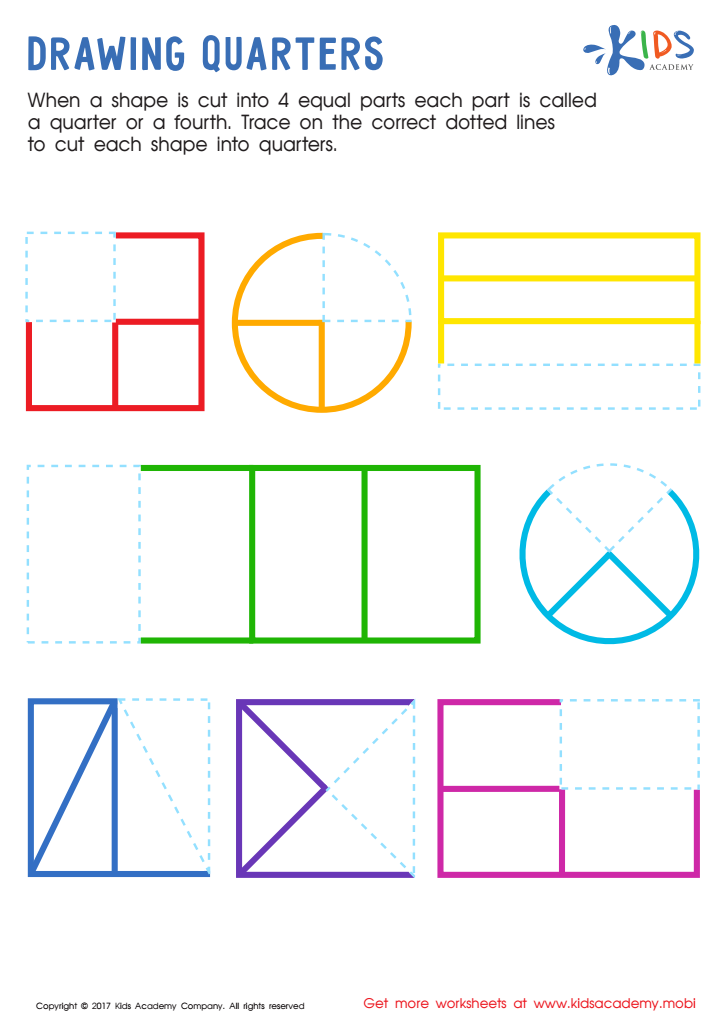
Drawing Quarters Worksheet

Drawing Quarters Worksheet

Help your kids divide shapes into quarters! Have them trace dotted lines to cut each shape into 4 equal parts. Each of the 4 parts is called a quarter or a fourth. This worksheet will help kids learn more about dividing shapes into four equal parts.
Drawing Quarters Worksheet
Worksheet
Food Fractions Worksheet

Food Fractions Worksheet

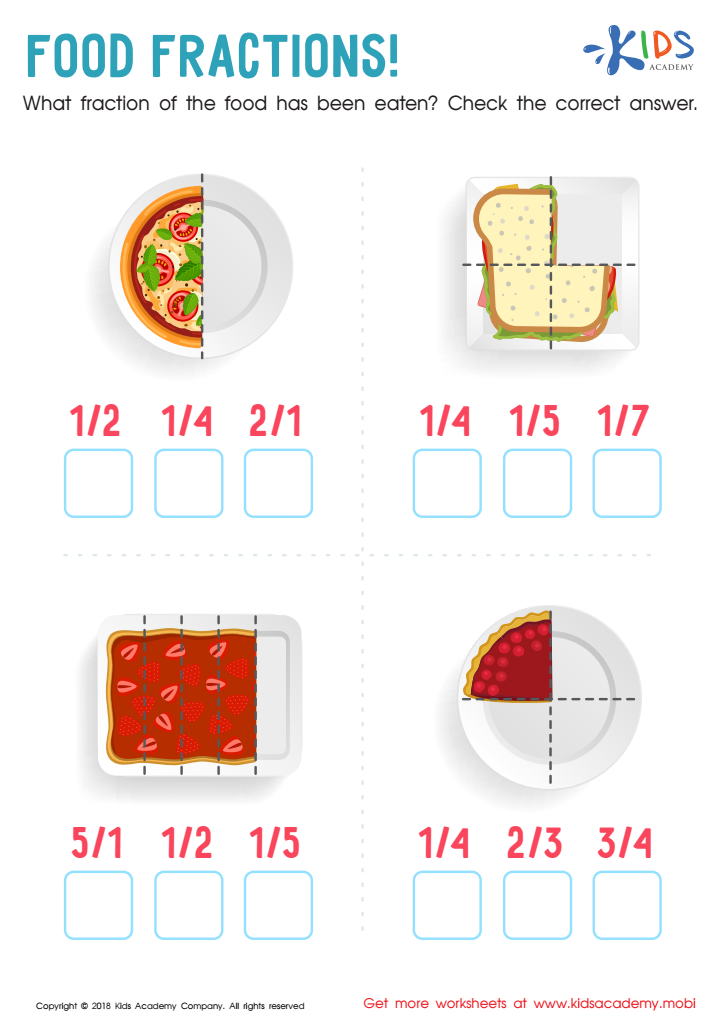
Test your child's understanding of fractions with this Food Fractions worksheet. Ask them to identify what fraction of the food in the four pictures has been eaten and select the correct answer from the options provided. See how well they understand your lessons!
Food Fractions Worksheet
Worksheet
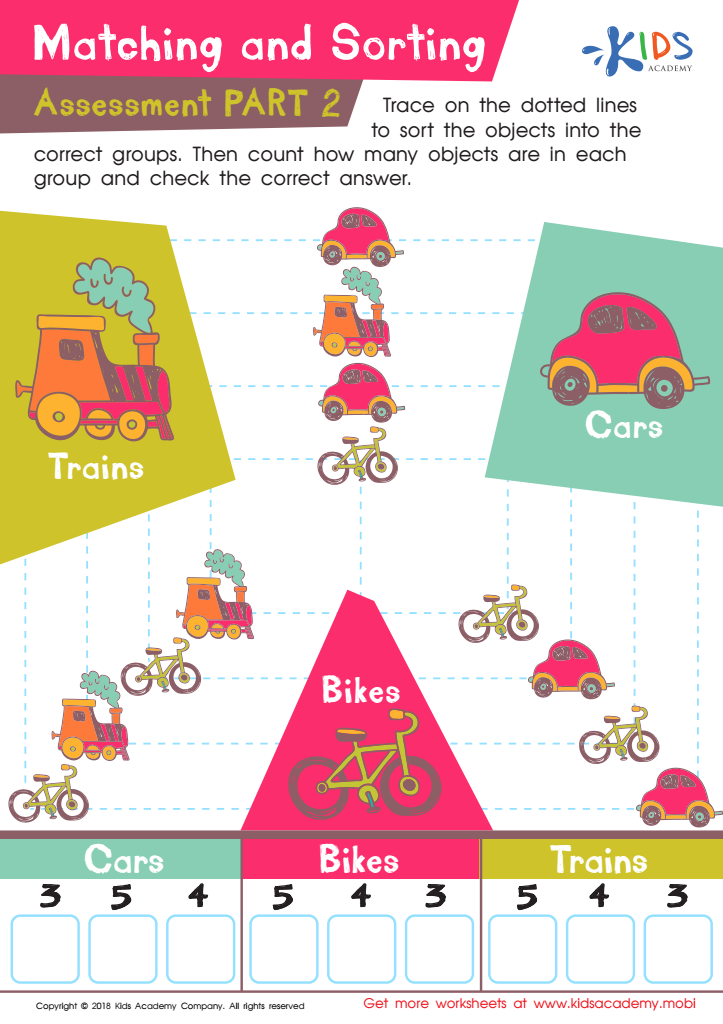
Matching and Sorting  for Kindergarten: Assessment 2 Worksheet

Matching and Sorting for Kindergarten: Assessment 2 Worksheet

This assessment tests matching, sorting and fine motor skills. It challenges kids to identify properties and attributes of pictures, trace guidelines and count the types of vehicles. It's a great way to practice basic number sense and hone in on important foundational skills.
Matching and Sorting for Kindergarten: Assessment 2 Worksheet
Worksheet
Piecing Together 16 Worksheet

Piecing Together 16 Worksheet

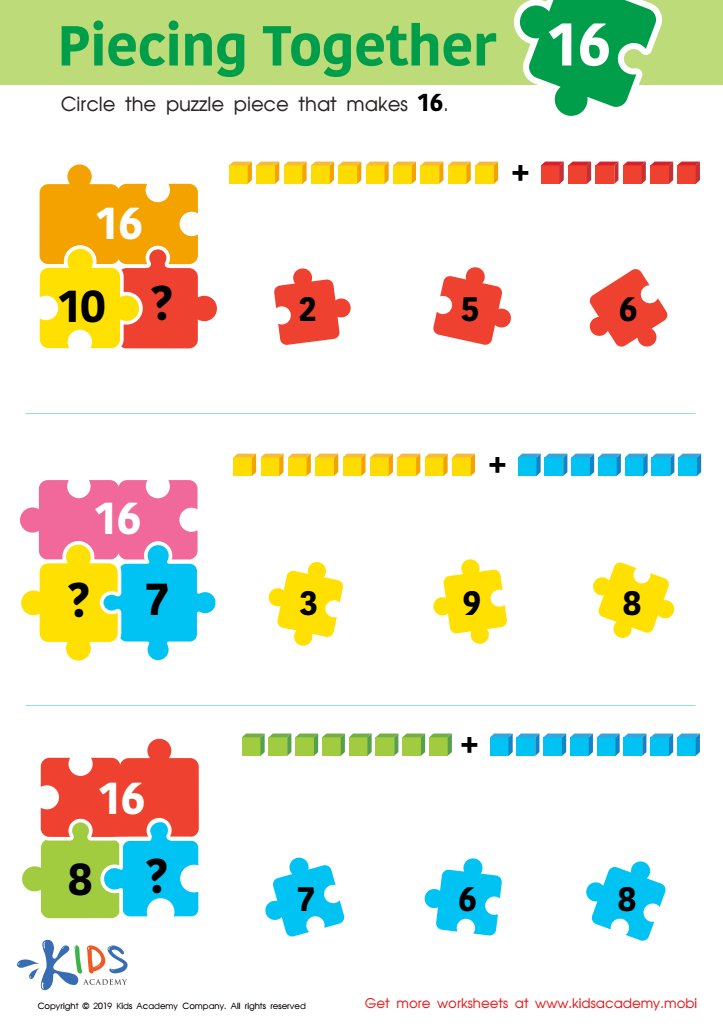
Combine learning with fun using this colorful worksheet! Ask your preschoolers what they see in the picture, then help them solve the mathematical equations on the puzzle pieces. One equation is missing on each; have them circle the piece that will make the bottom puzzle piece numbers equal 16. Use puzzles and bright colors to teach - it's one of the best ways your kids can learn!
Piecing Together 16 Worksheet
Worksheet
What Is the Numerator? Worksheet
What Is the Numerator? Worksheet

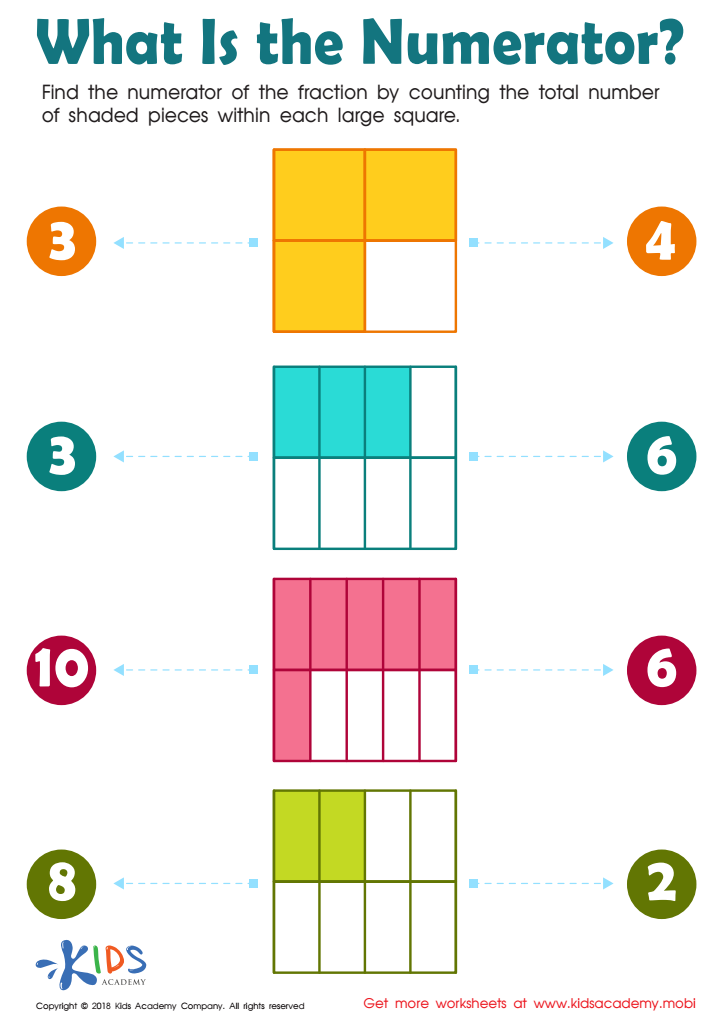
Help your kids learn fractions with this simple worksheet. Explain that the numerator is the number atop another number, then have them count the shaded pieces in each large square to find the numerator of the fraction. This activity is perfect for young kindergartners starting out with fractions.
What Is the Numerator? Worksheet
Worksheet
Adding up to 50 with Regrouping: Page 50
Worksheet
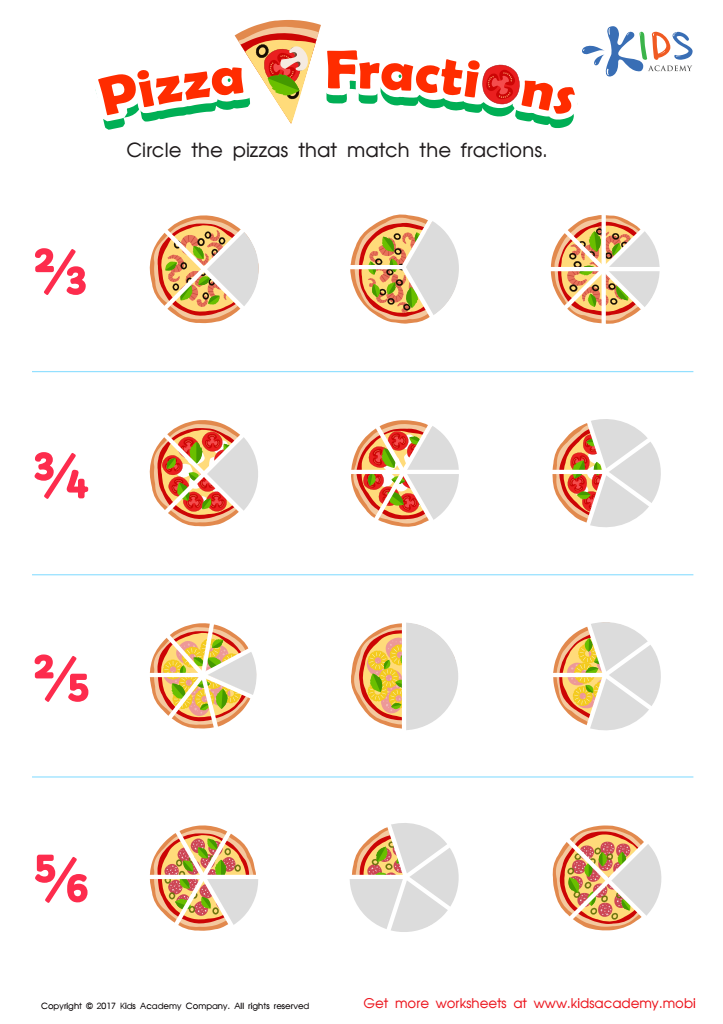
Pizza Fraction Printable

Fractions: Pizza Printable
Fractions can be tricky for kids, but this pizza fractions printable can help! Kids can understand fractions by seeing them, as they use one of their favorite foods. It helps them grasp the concept and gain a deeper understanding of what fractions represent. Extend their learning by quizzing them when you order pizza next time.
Fractions: Pizza Printable
Worksheet
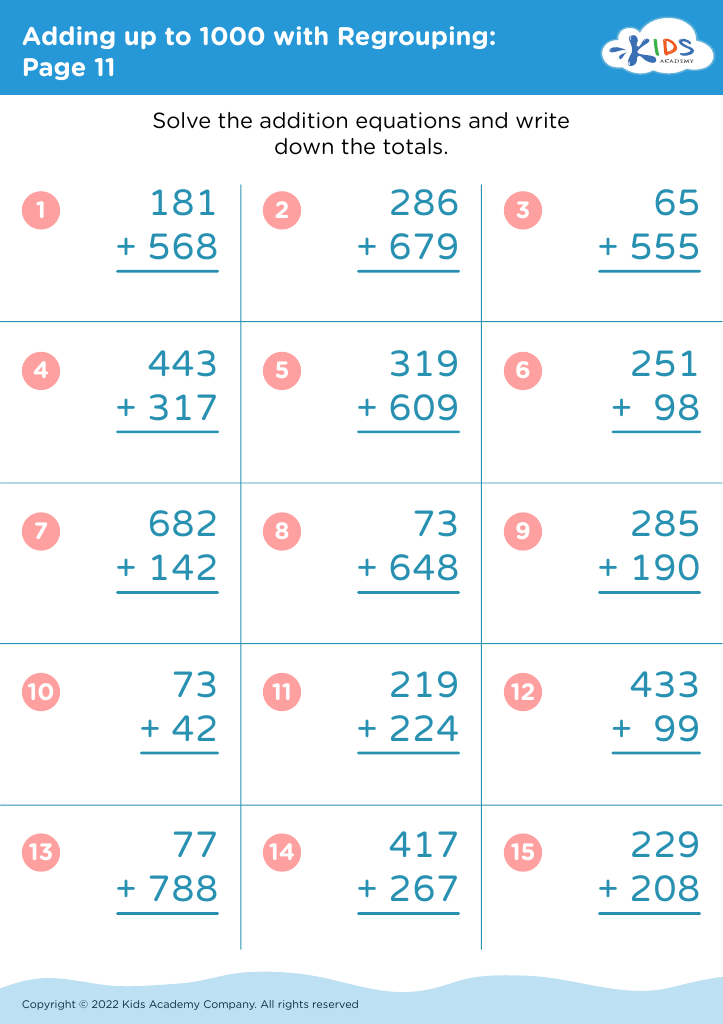
Adding up to 1000 with Regrouping: Page 11
Worksheet
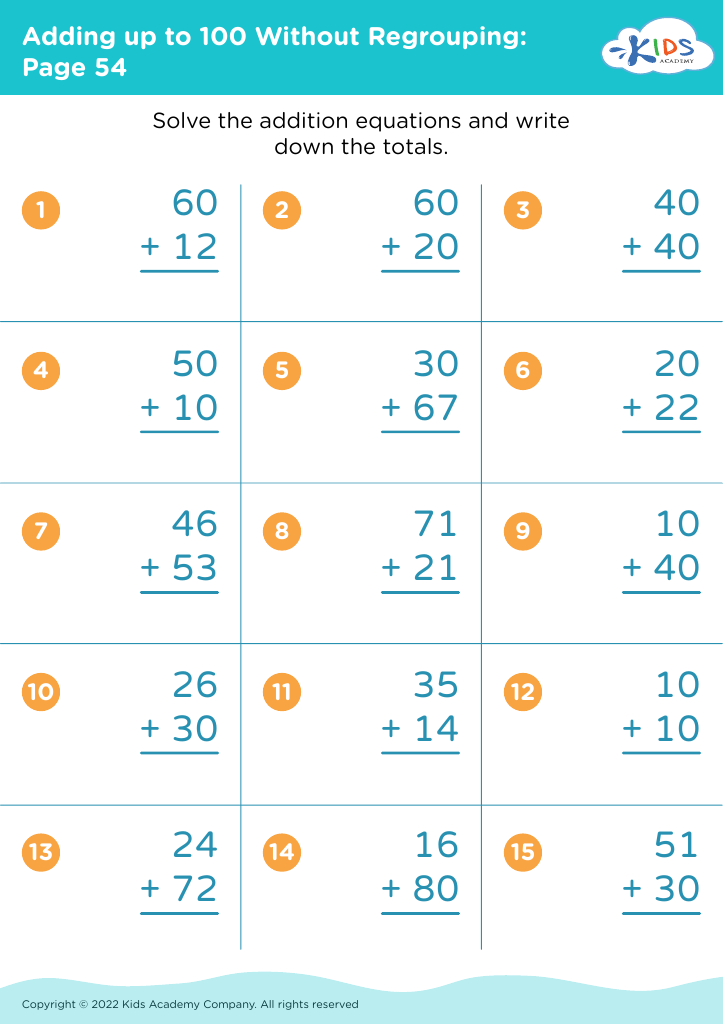
Adding up to 100 Without Regrouping: Page 54
Worksheet
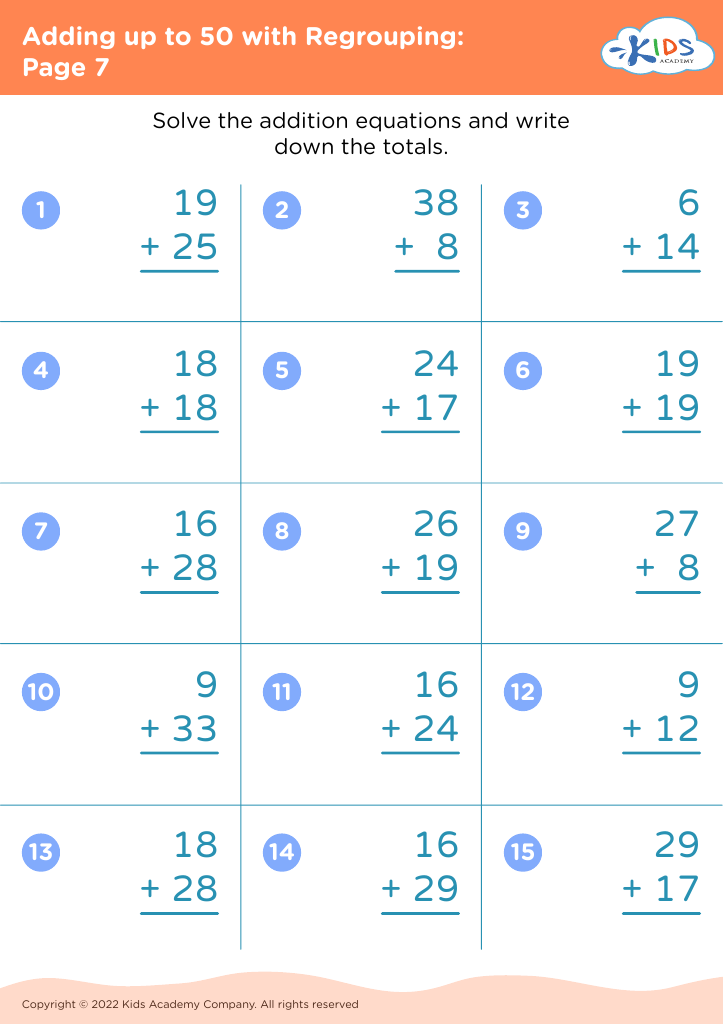
Adding up to 50 with Regrouping: Page 7
Worksheet
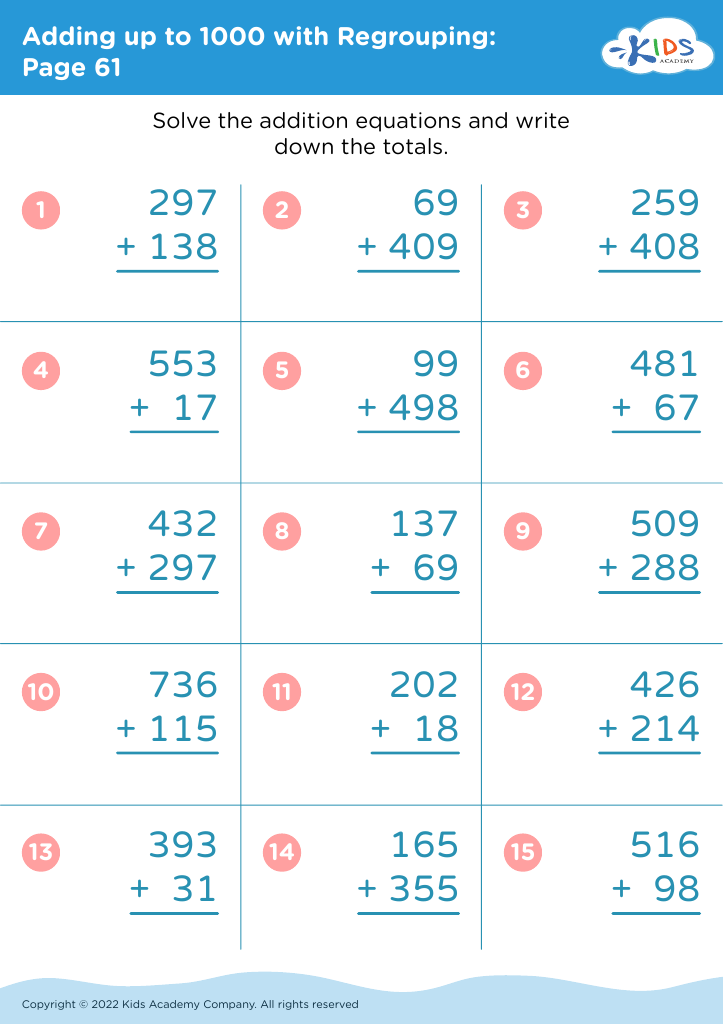
Adding up to 1000 with Regrouping: Page 61
Worksheet


Understanding fractions is crucial for children aged 6-9 as it lays the foundation for their mathematical knowledge and critical thinking skills. At this developmental stage, children are beginning to grasp basic concepts of numbers and operations, making it an opportune time to introduce fractions. Fractions help children understand parts of a whole, enabling them to visualize and manipulate concepts of quantity, portion, and division. Engaging with fractions can enhance their reasoning skills as they learn to compare quantities, add or subtract fractions, and recognize patterns.

Furthermore, mathematical literacy in fractions supports future learning in more complex math topics, such as ratios, percentages, and algebra. It also promotes problem-solving abilities that apply beyond the classroom.

When parents and teachers emphasize the importance of fractions, they not only strengthen a child's math skills but also build confidence and foster a positive attitude towards learning. Understanding fractions is not merely about numbers; it cultivates proportional thinking, promotes logical reasoning, and teaches them how to interpret and represent various data in everyday situations. Therefore, an emphasis on grasping fractions at this early age is essential for mathematical proficiency and overall cognitive development, helping pave the way for lifelong learning.