
Visual Perception Skills Math Worksheets for Ages 6-9
6 filtered results
Difficulty Level
Grade
Age
-
From - To
Subject
Activity
Standards
Empower your child's learning with our Visual Perception Skills Math Worksheets, ideal for ages 6-9. These carefully designed worksheets enhance visual skills critical for math success, including pattern recognition, spatial awareness, and shape identification. Engaging and interactive, they make learning fun while helping children develop crucial cognitive abilities. Perfect for both classroom and home use, our worksheets provide a strong foundation for future math challenges. Boost your child’s confidence and academic performance with tools that turn learning into an enjoyable adventure. Explore our wide selection and watch your kids thrive in their math journey!
Favorites
With answer key
Interactive
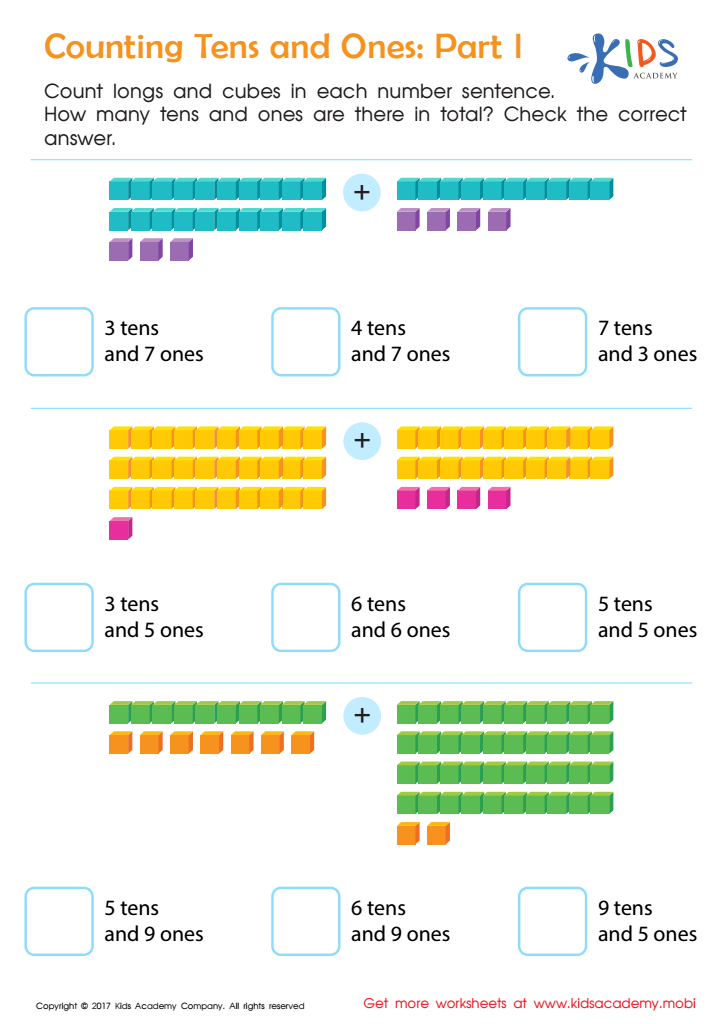
Counting Tens and Ones: Part 1 Worksheet
Kids Academy has a great place value worksheet to help kids learn when they don't have manipulatives at home! It includes longs and cubes that kids can count and add to find the sum. Colorful and downloadable, this page will help kids understand addition and place value better. Give it a try!
 Assign to My Students
Counting Tens and Ones: Part 1 Worksheet
Worksheet
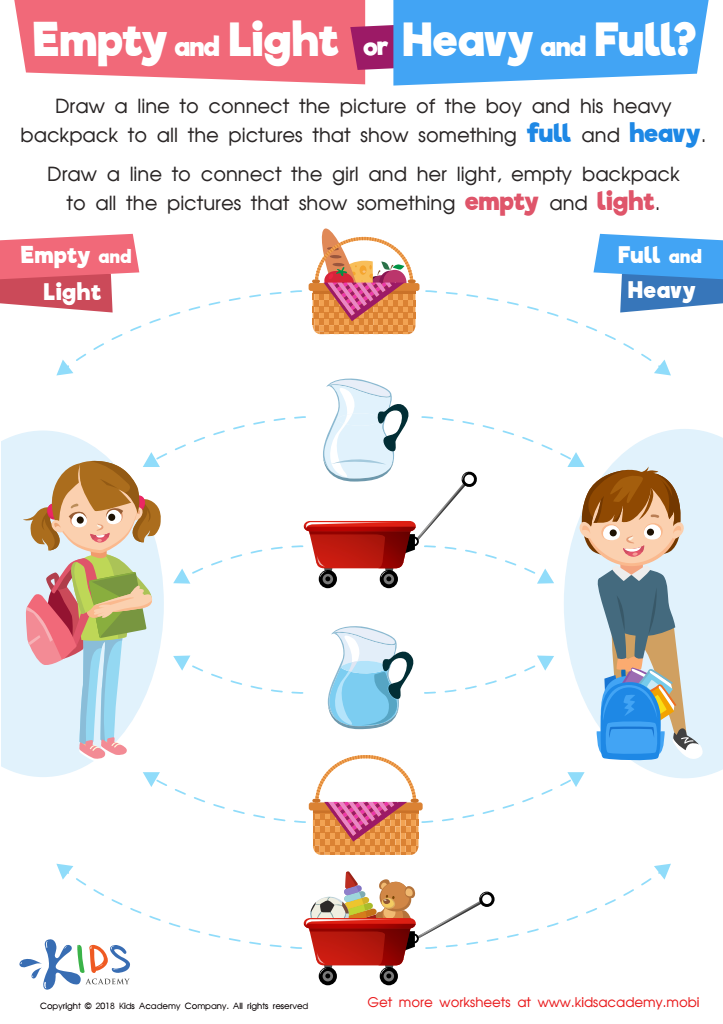
Empty and Light or Heavy and Full? Worksheet
Kids can have trouble understanding measurement, like the differences between heavy and light. This worksheet helps them associate full with heavy and empty with light, using familiar images. Plus, it's a fun way to practice fine motor skills, tracing the lines to connect the pictures.
Empty and Light or Heavy and Full? Worksheet
Worksheet
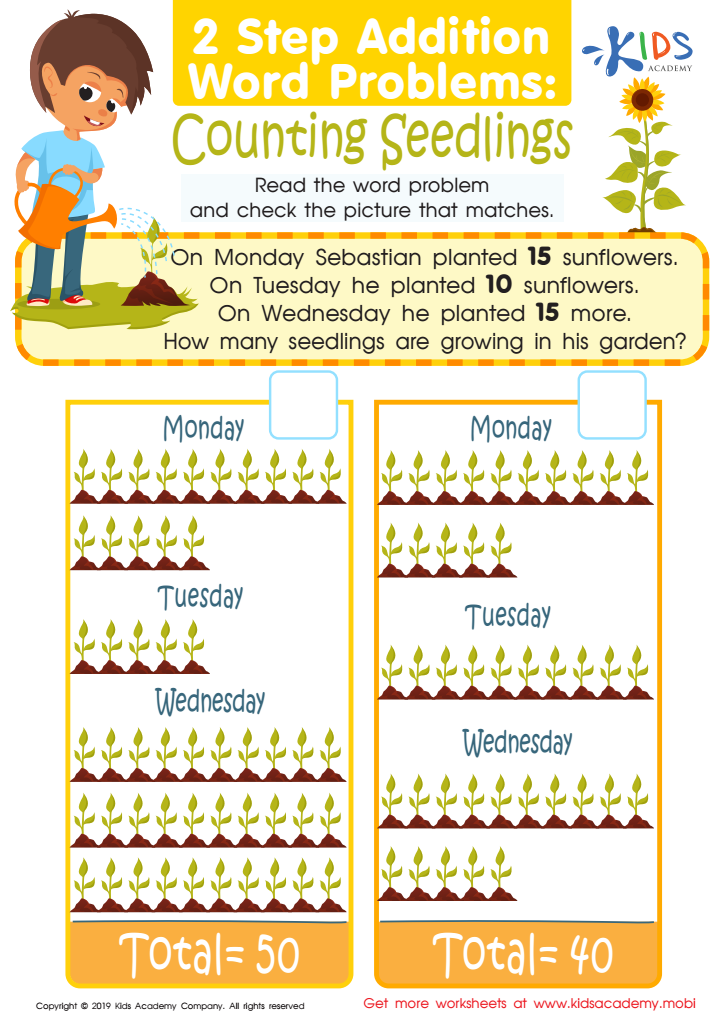
Counting Seedlings Worksheet
Understanding math word problems is key. Multiple steps can prove challenging - this free worksheet provides one-to-one picture representation to help kids solve multi-step addition word problems. Strengthen addition skills by choosing the matching picture to the answer.
Counting Seedlings Worksheet
Worksheet
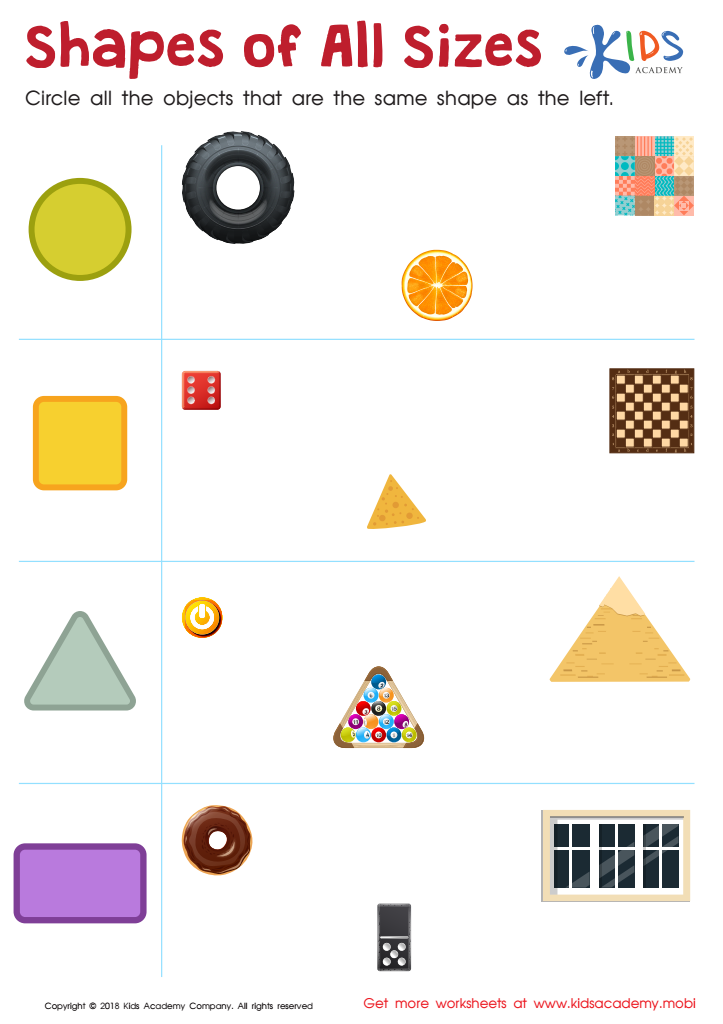
Shapes of All Sizes Worksheet
Students will have fun comparing basic shapes to familiar objects with this worksheet. It's an excellent way to help them recognize similarities in geometric shapes, building strong foundations for understanding congruence and similarity.
Shapes of All Sizes Worksheet
Worksheet
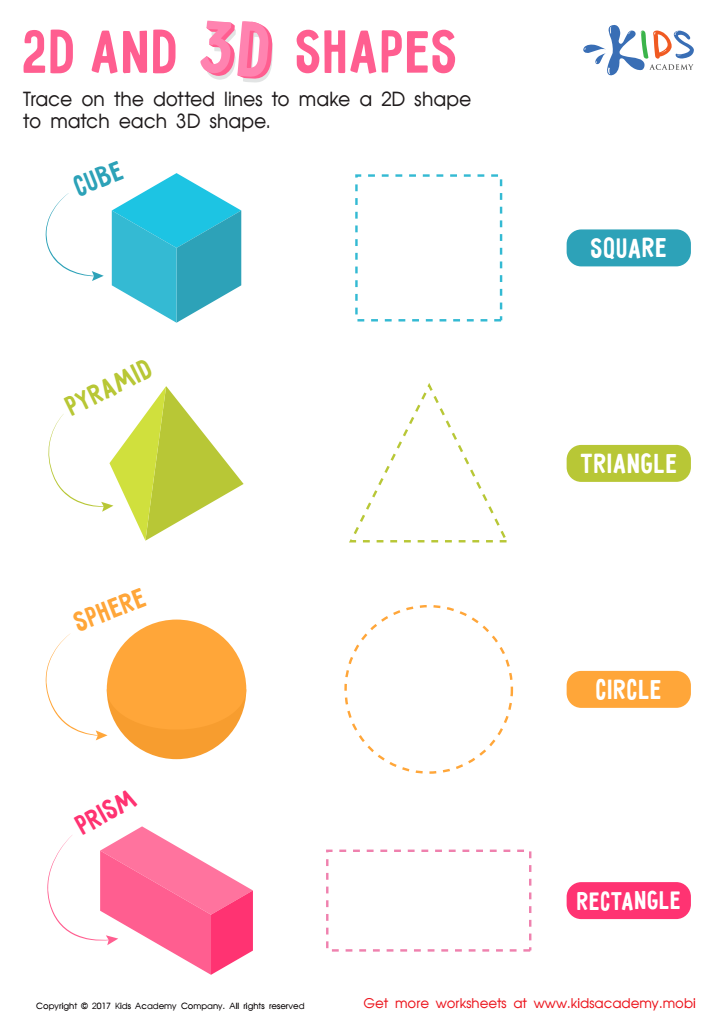
2D and 3D Shapes Worksheet
Introduce your child to 3D and 2D with this traceable worksheet. With dotted lines, help them trace and make a 2D shape for each 3D shape: square, triangle, rectangle, and circle. Show them there's more than one way to draw! You may have taken them to a 3D movie, or they've seen some fantastic 3D art. Now they can wonder no more.
2D and 3D Shapes Worksheet
Worksheet
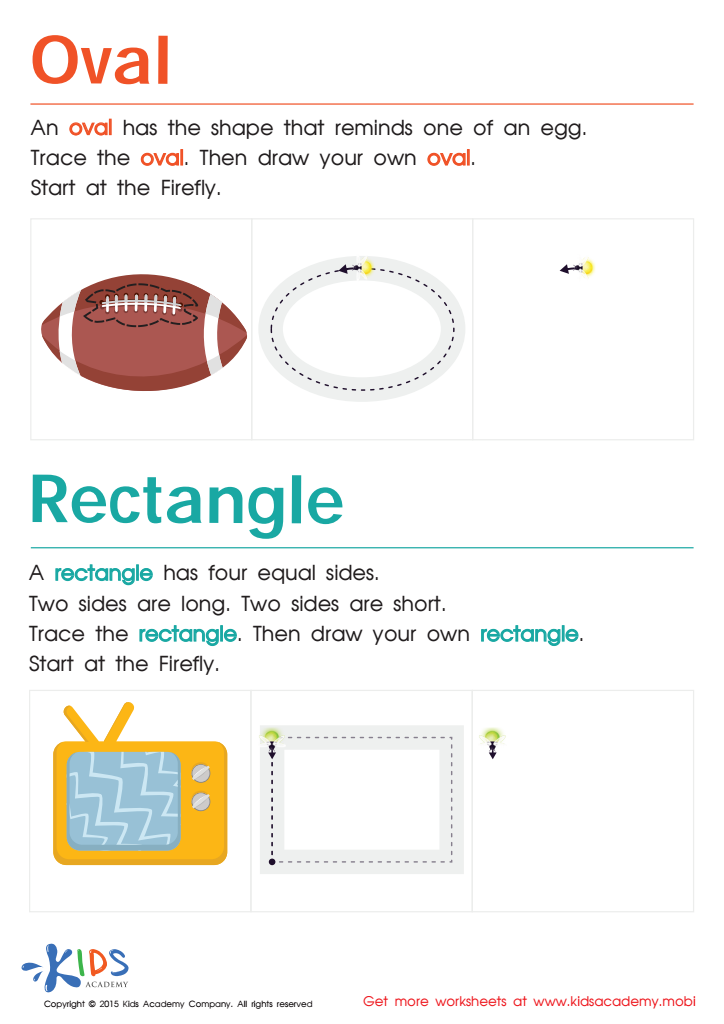
Easy Drawing of Ovals And Rectangles Worksheet
Kids Academy offers free geometry worksheets to make learning more fun and interesting. Trace an oval, rectangle, and many other shapes!
Easy Drawing of Ovals And Rectangles Worksheet
Worksheet
Join Kids Academy for Free
Who is primarily going to use this learning content?






Visual perception skills are crucial for children aged 6-9 because these foundational abilities significantly impact their success in comprehension-based learning and cognitive development, particularly in math. These skills entail the brain's capability to interpret and organize visual information, which is essential for recognizing patterns, spatial relationships, and geometric concepts in math.
Firstly, math relies heavily on recognizing numbers and understanding their spatial orientation. Visual perception aids children in distinguishing differences in shapes, sizes, and patterns, which is vital for basic arithmetic operations like addition, subtraction, and multiplication. For example, knowing that two separate groups of objects can be combined requires an understanding of spatial grouping and quantity.
Further, these skills enhance problem-solving and critical reasoning abilities. Many math problems involve visualizing and manipulating objects mentally, such as figuring out how to divide a shape into equal parts or visualizing the steps needed to solve a problem. And it goes beyond just numbers; visual perception also helps in reading graphs, charts, and maps in later grades.
By nurturing visual perception skills, parents and teachers can lay a robust foundation in math, benefiting the child's overall academic development. Early identification and support for any perceptual difficulties can lead to more targeted interventions and enduring academic success.








