
Vocabulary enhancement Matching Worksheets for Ages 6-9
5 filtered results
Difficulty Level
Grade
Age
-
From - To
Subject
Activity
Standards
Our engaging Vocabulary Enhancement Matching Worksheets for ages 6-9 are designed to promote early literacy and language skills. Each worksheet is crafted to build vocabulary through fun matching activities that connect words with pictures, enhancing comprehension and retention. Ideal for young learners, these sheets help children understand and use new words in context, fostering a love for learning. Perfect for classroom or home use, our worksheets support cognitive development and critical thinking while ensuring that kids have an enjoyable and educational experience. Explore our collection today to give your child a head start in developing strong vocabulary skills!
Favorites
With answer key
Interactive
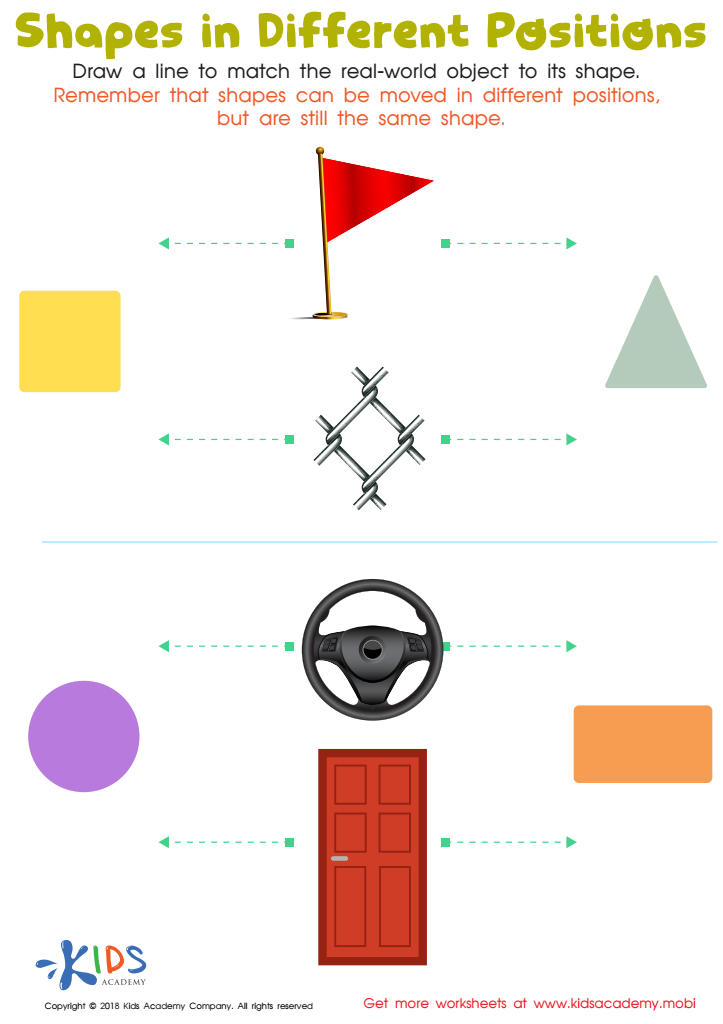
Shapes in Different Positions Worksheet
Children can practice and strengthen their visual-discernment, hand-eye coordination and neural connections by manipulating shapes in their minds and matching them with the right answer. This PDF with bright colors gives your kids the opportunity to do so.
 Assign to My Students
Shapes in Different Positions Worksheet
Worksheet
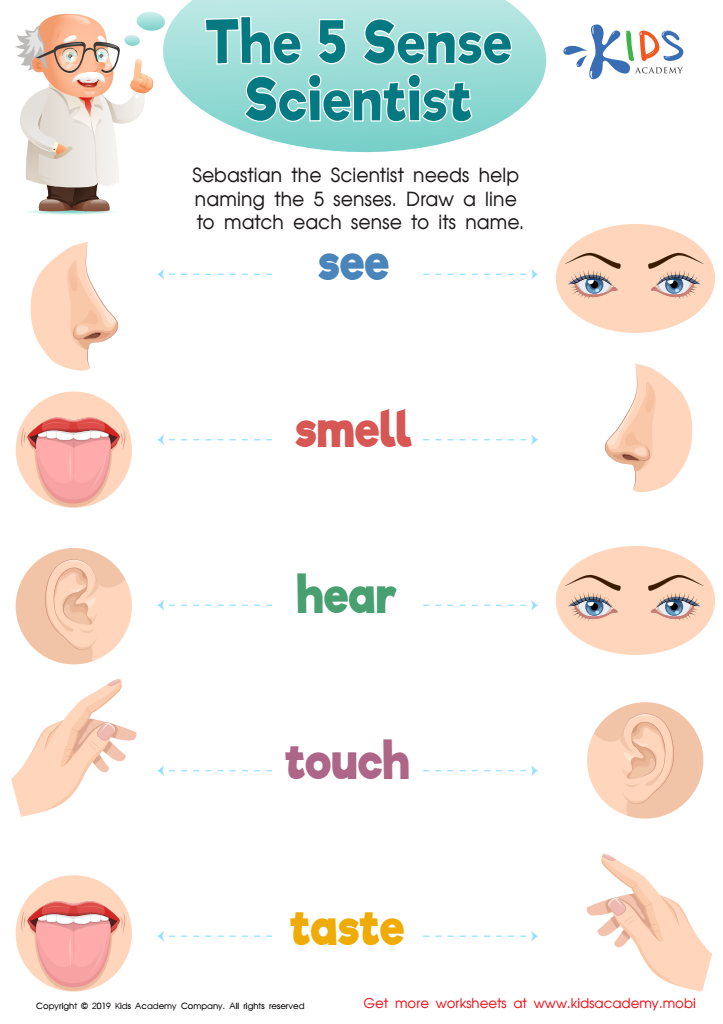
The 5 Sense Scientist Worksheet
Our young children will have fun learning about their five senses with this free Sense Scientist worksheet. Helping Sebastian the Scientist, they'll name the five senses and use traceable lines to connect each picture with its correct sense. Colorful words and pictures will create a memorable picture representation.
The 5 Sense Scientist Worksheet
Worksheet
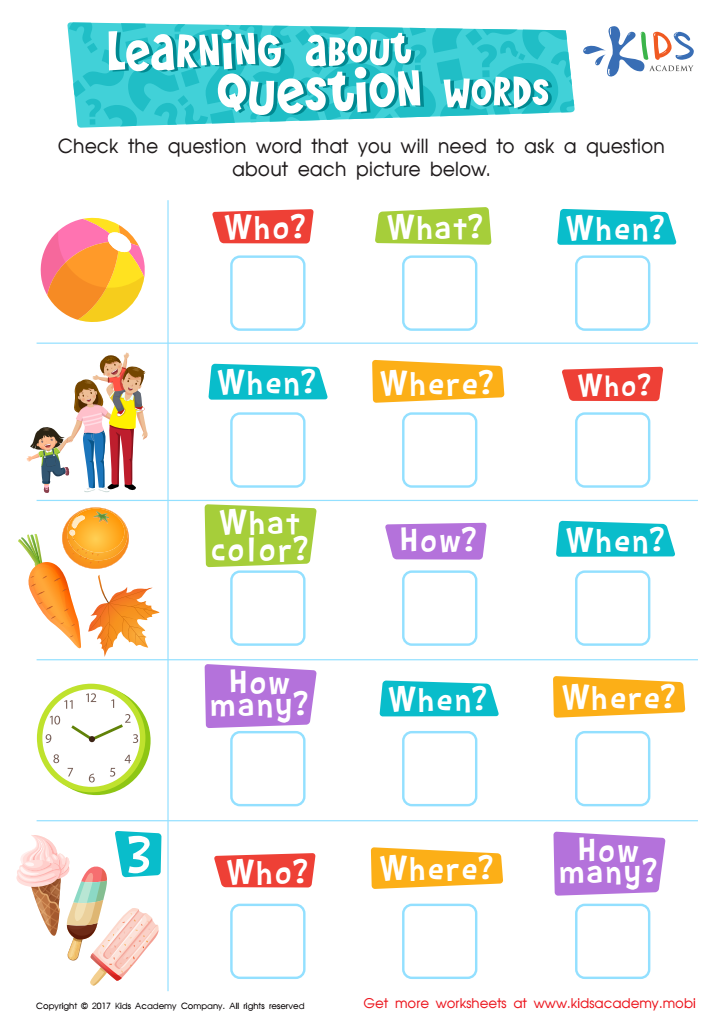
Learning about Question Words Worksheet
Learning language can be difficult, but this free printable worksheet will help! Have your child look at the picture and name it. Then help them choose the right question word to ask something about it. For example, when looking at a beach ball, you can't ask "Who?" Instead, look through the list to select the right word. It's a great way to learn language basics!
Learning about Question Words Worksheet
Worksheet
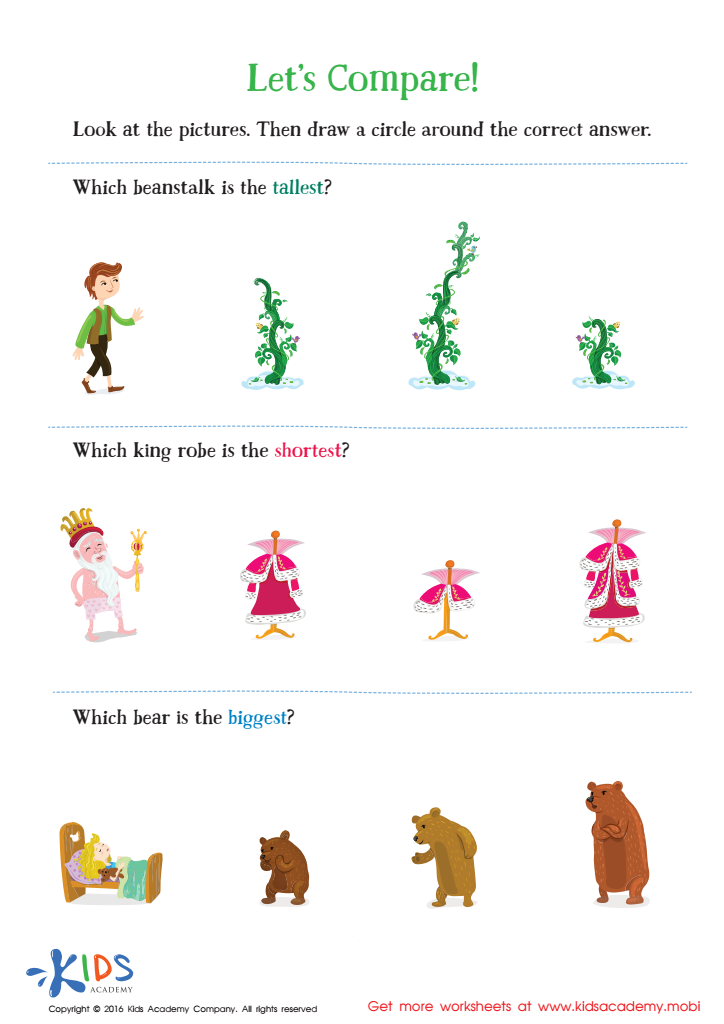
Fairy Tale Worksheet: Let's Compare
Preschoolers need to recognize different sizes of objects. This worksheet combines fun fairy tales with size practice, helping them read, problem solve, and sort through pictures. Your child will love the images and be eager to complete it. Enhance their learning by talking about the tales to build comprehension.
Fairy Tale Worksheet: Let's Compare
Worksheet
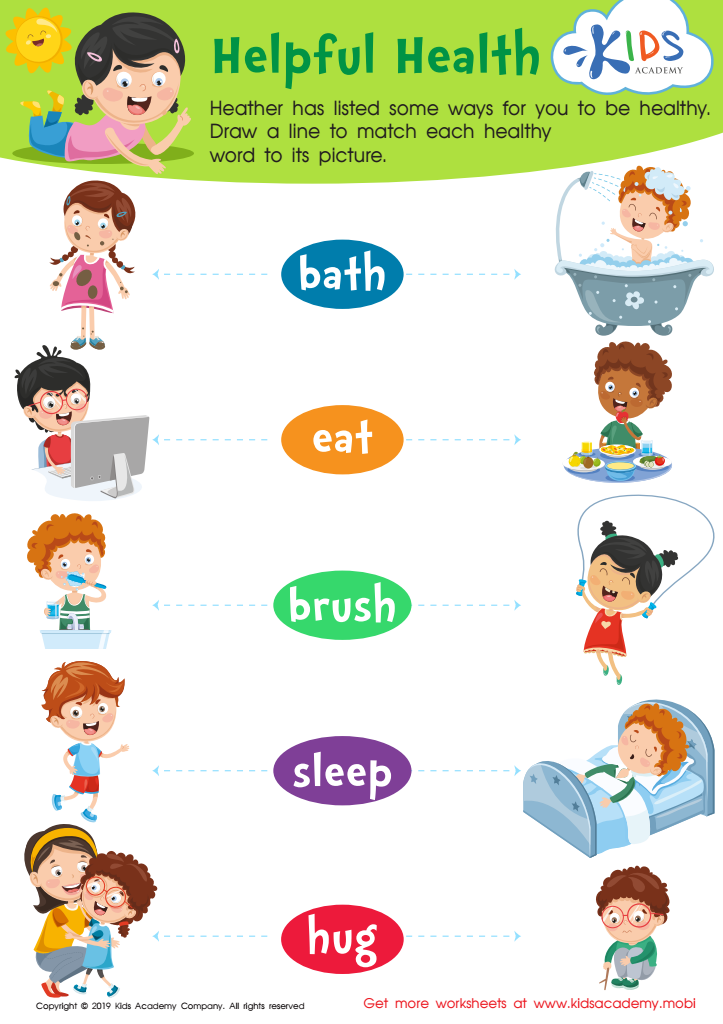
Helpful Health Worksheet
Kids can learn healthy habits with this free worksheet! With their pal Heather, they'll trace lines to connect health words with pictures like brushing teeth, hugging, and getting enough sleep. It's a great way to help young ones understand healthy activities.
Helpful Health Worksheet
Worksheet
Join Kids Academy for Free
Who is primarily going to use this learning content?








Vocabulary enhancement is a critical aspect of a child’s cognitive and academic development, especially for ages 6-9. During these formative years, children are rapidly expanding their understanding of language and the world around them. By focusing on vocabulary enhancement, either through games like matching activities or other educational techniques, parents and teachers can lay a strong foundation for future learning.
Increased vocabulary supports better reading comprehension. When children know the meanings of more words, they can understand texts more easily and deeply. This comprehension boost leads to improved performance in all academic areas, from science to social studies, as reading is integral to accessing information.
Vocabulary enhancement also aids in effective communication. As children learn new words, they become better at expressing their thoughts, emotions, and ideas clearly and accurately. This, in turn, builds their confidence in social interactions and classroom discussions.
Games like matching activities make learning new words fun and engaging, turning a potentially mundane task into an enjoyable experience. Playful learning helps in retaining new information and fosters a love for lifelong learning.
Therefore, parents and teachers should prioritize vocabulary enhancement to support cognitive development, academic success, and emotional intelligence. Investing in vocabulary activities during these crucial years can yield substantial long-term benefits in a child’s educational journey.








