
Understanding patterns Multiplication Worksheets for Ages 6-9
11 filtered results
Difficulty Level
Grade
Age
-
From - To
Subject
Activity
Standards
Discover our “Understanding Patterns Multiplication Worksheets” designed specifically for children ages 6-9! These engaging resources help young learners grasp the concepts of multiplication through the recognition of patterns. By incorporating visual aids and hands-on activities, our worksheets make math fun and accessible. Students will explore various multiplication patterns, enhancing their problem-solving skills and number sense. Whether in the classroom or at home, these worksheets provide the perfect foundation for young mathematicians to master multiplication concepts confidently. Empower your child's learning journey today with our expertly crafted worksheets, fostering a love for math that will last a lifetime!
Favorites
With answer key
Interactive
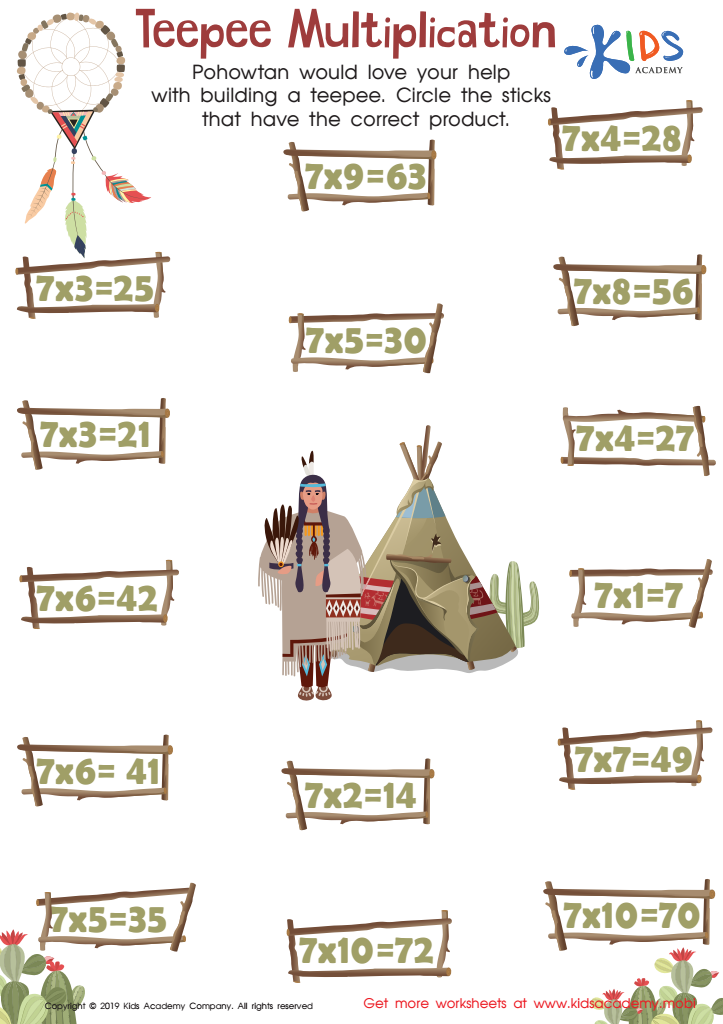
Teepee Multiplication Worksheet
Help the Native American man build his teepee by checking multiplication facts! Learners are given purpose and excitement with this fun math worksheet. Check each set of sticks, find, and circle the ones with the correct product to complete.
 Assign to My Students
Teepee Multiplication Worksheet
Worksheet
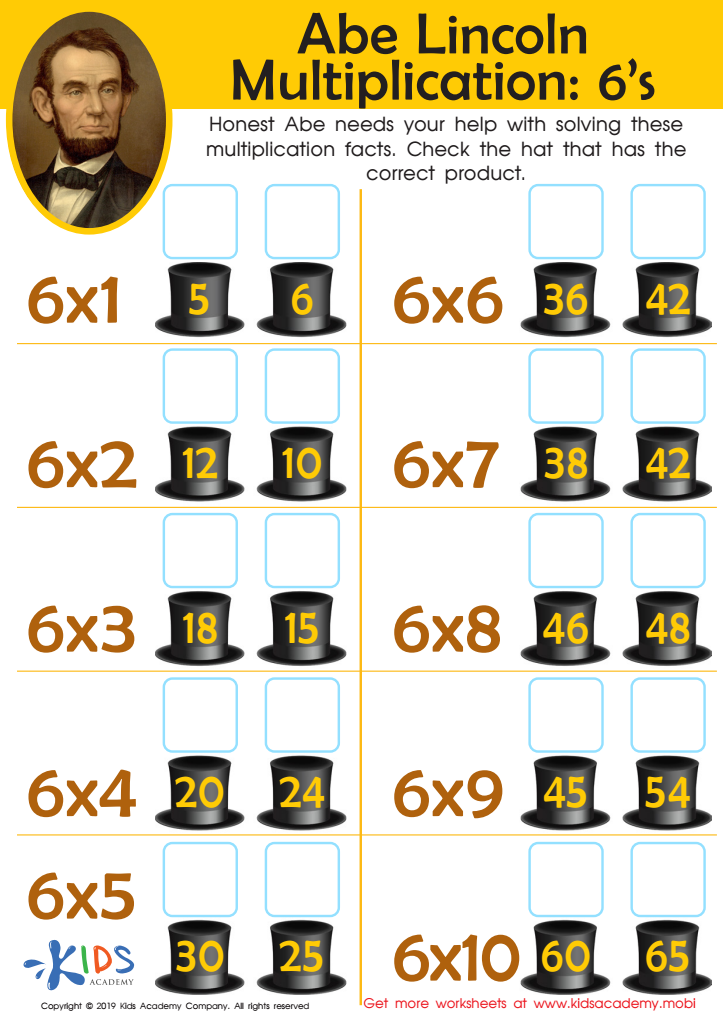
Abe Lincoln Multiplication: 6’s Worksheet
Abraham Lincoln is a key figure in US history. Remind your kids of his contributions and challenge them with this multiplication worksheet! Ask them to solve the facts in the picture and check the hat with the correct product.
Abe Lincoln Multiplication: 6’s Worksheet
Worksheet
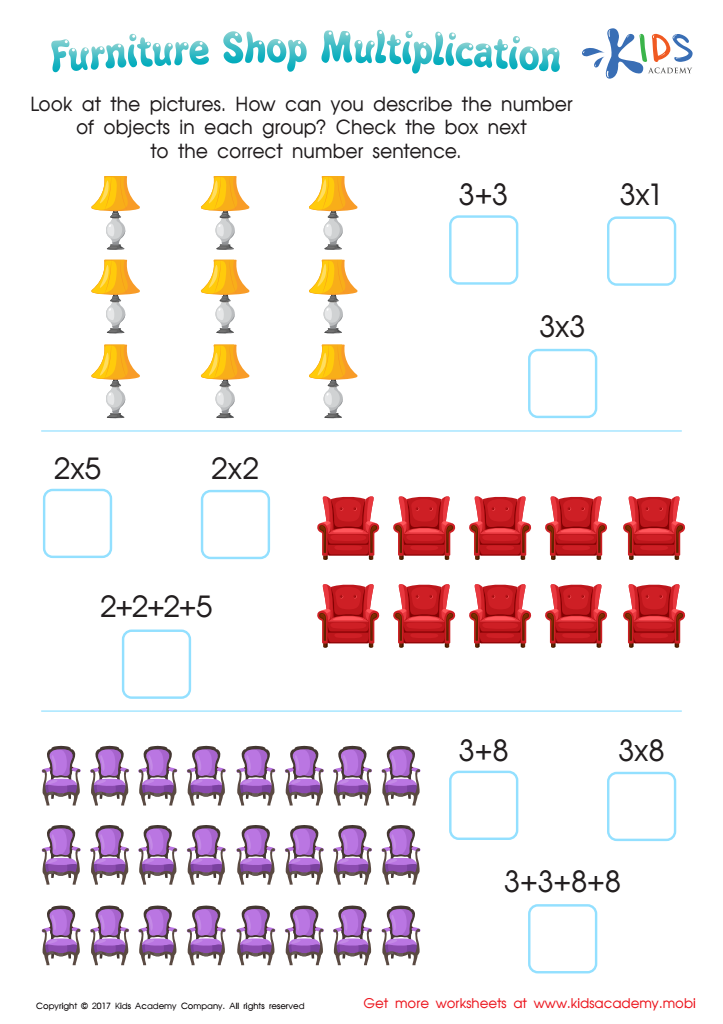
Furniture Shop Worksheet
Our multiplication PDF worksheets for 3rd grade use a visual strategy to help kids understand multiplication. Fun and colorful furniture engages kids as they use number sentences to describe each picture, aiding in memorizing multiplication tables.
Furniture Shop Worksheet
Worksheet
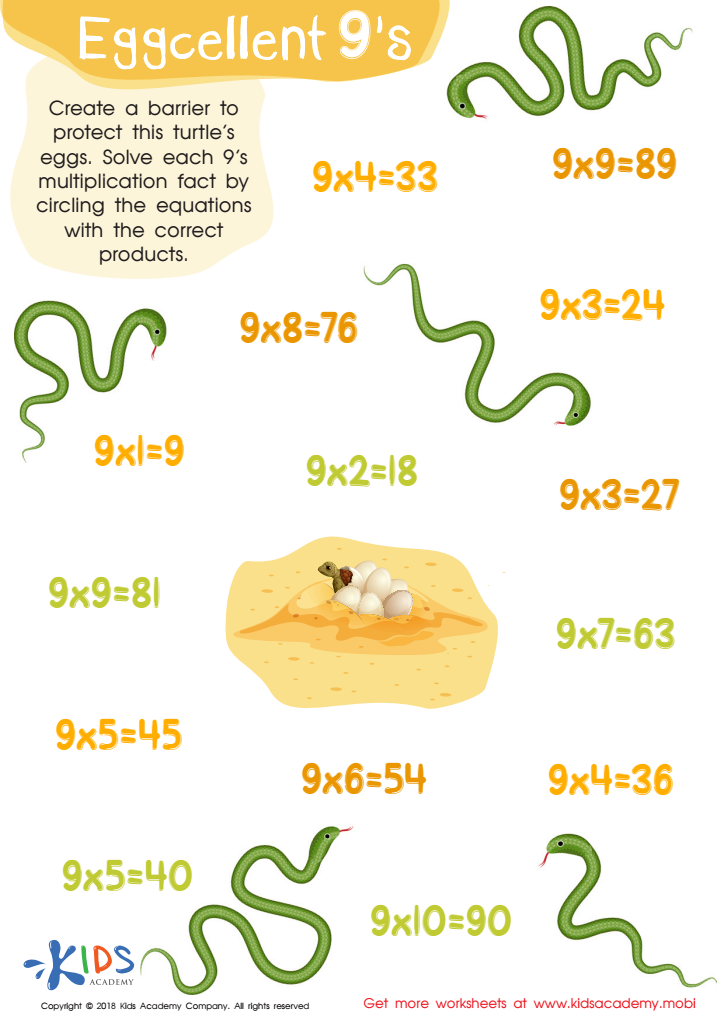
Eggcellent 9’s Worksheet
Help your kids save turtle eggs in this worksheet! Have them create a barrier by solving 9's multiplication facts, then circling the equations with the correct product. Finish up this exercise and show them how they can help protect turtle eggs from predators.
Eggcellent 9’s Worksheet
Worksheet
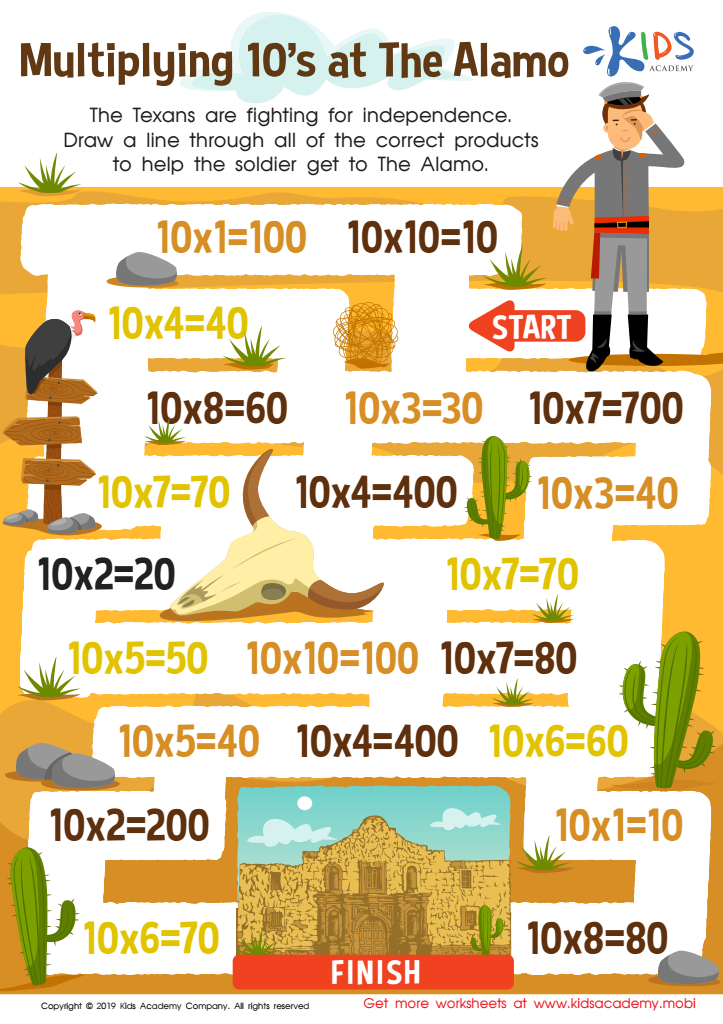
Multiplying 10’s at The Alamo Worksheet
Teach your kids easy tricks to simplify any multiplication problem. For example, when multiplying any number by 10, the result will always end in a zero. To help the Texans in this worksheet, draw a line through all of the correct products to get them to The Alamo.
Multiplying 10’s at The Alamo Worksheet
Worksheet
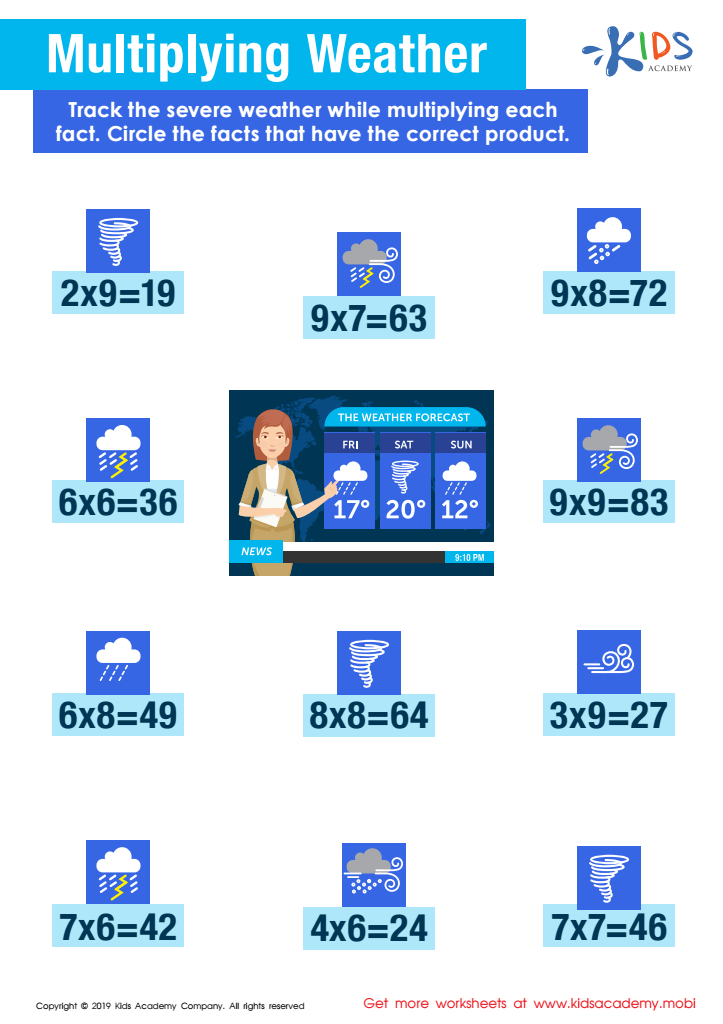
Multiplying Weather Worksheet
Most kids love playing outdoors, but weather can affect what we can do. Rain and snow can keep us from getting outside and even cancel school! Weather forecasters help us prepare for the day. In this worksheet, multiply facts to track severe weather and circle the ones with the right answer.
Multiplying Weather Worksheet
Worksheet
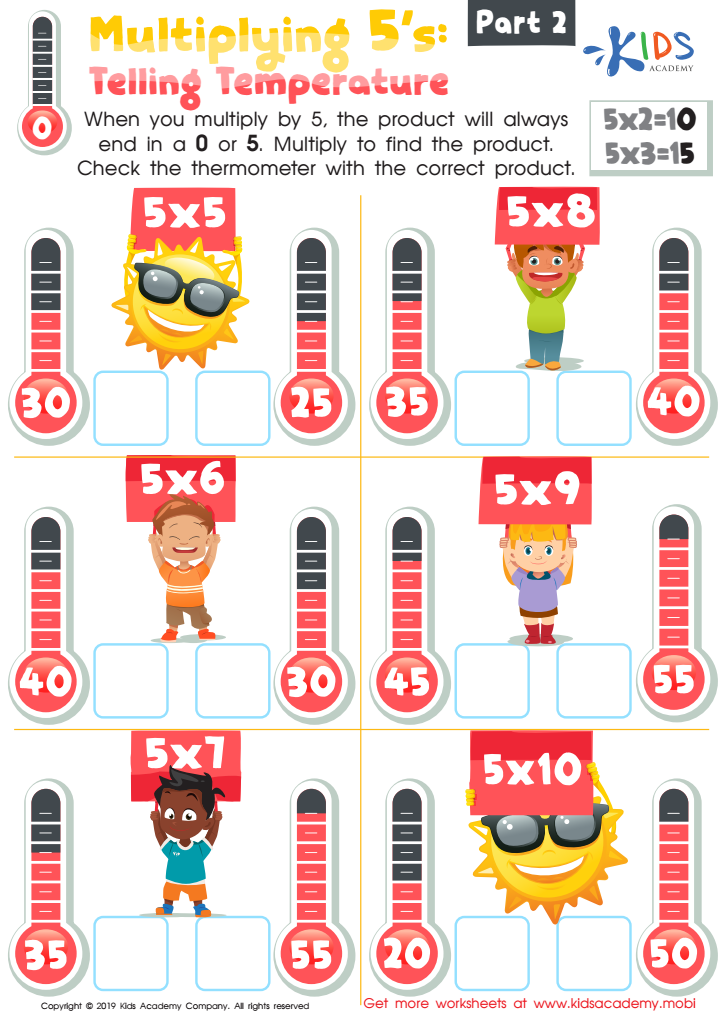
Multiplying 5’s: Telling Temperature Part 2 Worksheet
To help your child with multiplication, teach them some simple tricks. For example, when multiplying 10's the product always ends in a 0, and when multiplying by 5, the product will end in 0 or 5. Look at the problems in this worksheet and help your child find the product. Then, check the thermometer with the correct answer.
Multiplying 5’s: Telling Temperature Part 2 Worksheet
Worksheet
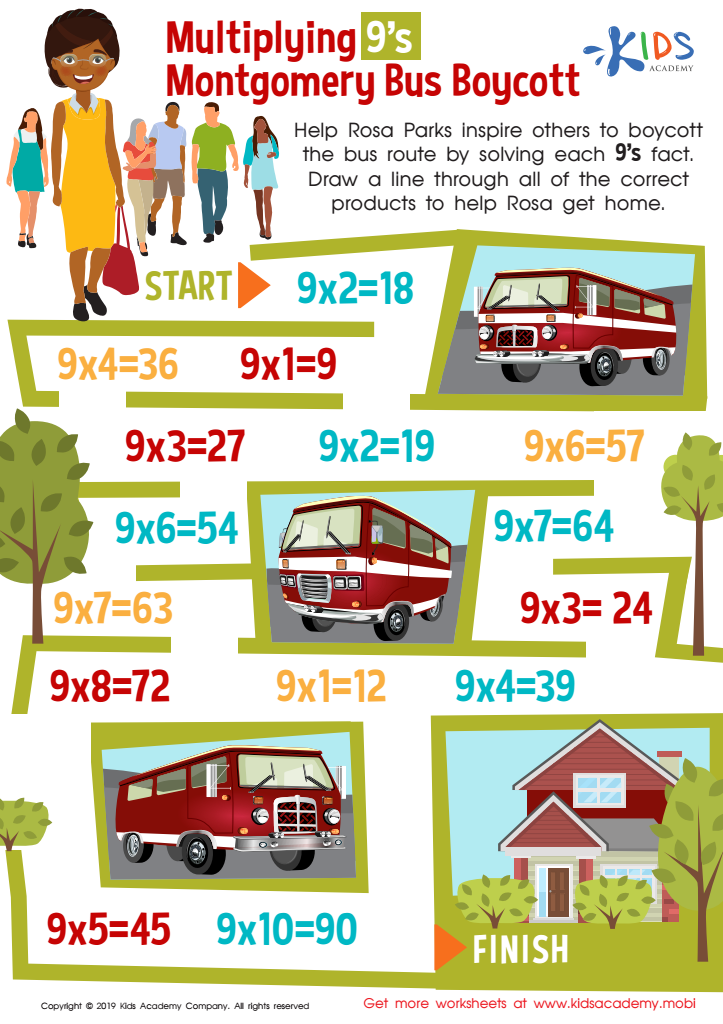
Multiplying 9’s Montgomery Bus Boycott Worksheet
As your students learn math, the numbers get bigger. This worksheet is great for learning the nine times table. Help Rosa Park get home - ask them to solve each multiplication fact, then draw a line through the correct products. Encourage your students to stand up for what's right!
Multiplying 9’s Montgomery Bus Boycott Worksheet
Worksheet
Join Kids Academy for Free
Who is primarily going to use this learning content?








Understanding patterns in multiplication is crucial for children aged 6-9, as it forms a foundational skill that enhances mathematical fluency and problem-solving abilities. At this age, children are generally discovering the basics of multiplication, transitioning from addition. Recognizing patterns helps them grasp the concept of multiplying in groups, facilitating quicker calculations and comprehension of larger numbers.
Teachers and parents should care about this because it promotes logical thinking. When children see that 3×4 is the same as 4×3 (commutative property), they learn to identify relationships between numbers. This pattern recognition can be applied to more complex multiplication and division later on, establishing a solid mathematical base.
Moreover, understanding these patterns encourages confidence and reduces anxiety around math. Children who comprehend the underlying structure of multiplication relationships are more likely to engage creatively with math, paving the way for advanced concepts like algebra. As a result, fostering these skills can lead not only to academic success but also a positive attitude towards math in general. In turn, this early exposure to pattern recognition will prepare them for integrated learning approaches that they will encounter in higher education. Ultimately, supporting multiplication pattern understanding is an investment in their future mathematical learning and overall cognitive development.








