Counting practice Tracing Numbers Worksheets for Ages 6-9
3 filtered results
-
From - To
Enhance your child's counting skills with our engaging Tracing Numbers Worksheets designed specifically for ages 6-9. These interactive worksheets provide a fun and effective way for young learners to practice number recognition, sequencing, and counting. Each worksheet features a variety of tracing activities to help improve fine motor skills and reinforce numeracy concepts. With colorful designs and captivating illustrations, children will enjoy practicing their numbers while building confidence in their mathematical abilities. Perfect for homeschooling, supplementary learning, or classroom activities, these worksheets make counting practice exciting and easy. Download now and watch your child's counting skills flourish!
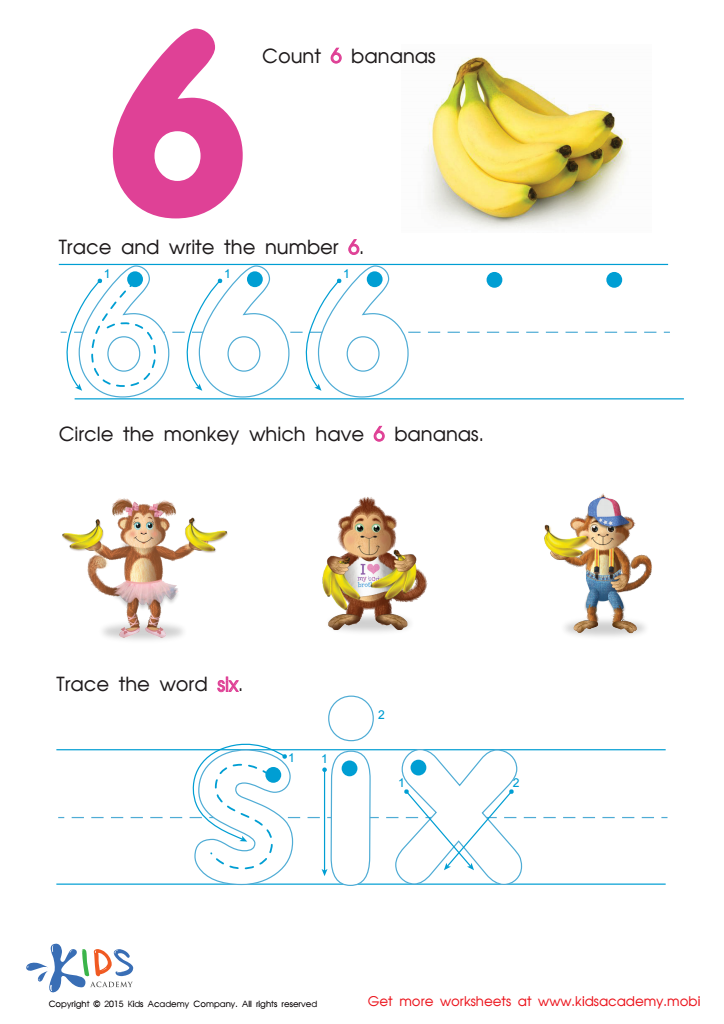
Tracing And Writing Number 6 Worksheet
 Assign to My Students
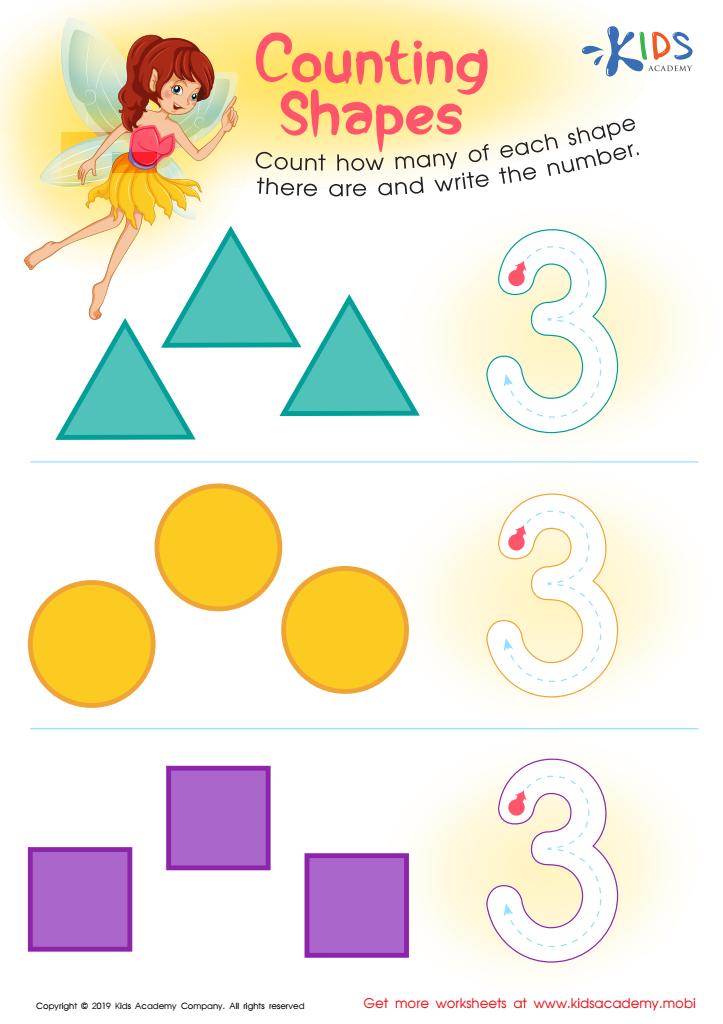
Counting Shapes Worksheet
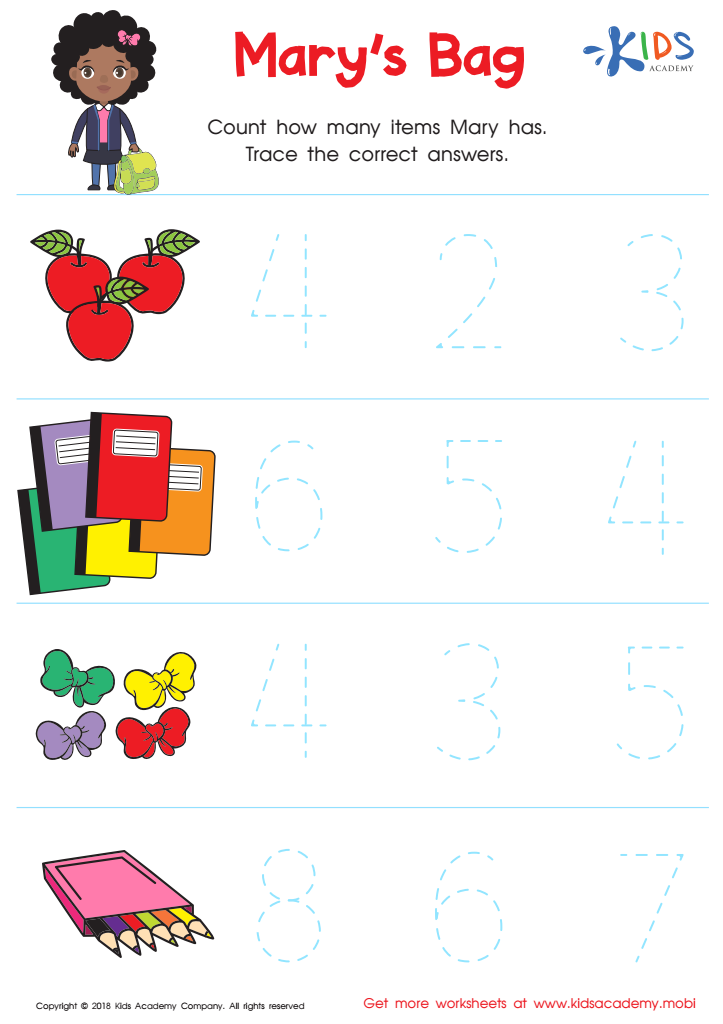
Kindergarten Number Tracing: Mary's Bag Worksheet








Counting practice and tracing numbers for children aged 6-9 are crucial aspects of early mathematics education that parents and teachers should prioritize. At this developmental stage, children are refining their motor skills and cognitive abilities, making it an ideal time to introduce structured counting and number formation activities.
Counting helps children understand foundational concepts such as quantity, sequencing, and the relationships between numbers. Tracing numbers reinforces proper formation, promotes muscle memory, and enhances handwriting skills. By engaging in these activities, children not only become proficient in recognizing and writing numbers but also develop confidence in their mathematical abilities.
Furthermore, early mathematical skills are linked to later academic success; a solid understanding of counting sets the groundwork for more complex concepts like addition, subtraction, and even problem-solving. Engaging in these fun and interactive practices fosters a positive attitude towards math.
Parents and teachers can use counting and tracing as tools to make learning enjoyable and relevant, ultimately setting the stage for lifelong skills. By emphasizing the importance of these practices, they empower children to embrace mathematics, paving the way for future academic pursuits and a better grasp of everyday tasks that require numerical literacy.