Fine Motor Skills Tracing Shapes Worksheets for Ages 6-9
6 filtered results
-
From - To
Enhance your child's fine motor skills with our engaging Tracing Shapes Worksheets designed specifically for ages 6-9! These worksheets provide a fun and interactive way for children to develop essential hand-eye coordination and dexterity. By tracing various shapes, kids will improve their pencil grip and refine their handwriting skills while enjoying creative play. Each worksheet is crafted to keep young minds engaged and motivated, featuring a range of shape patterns that challenge and inspire. Perfect for home or classroom use, our resources are ideal for reinforcing fine motor development in a playful and educational environment. Get started today!
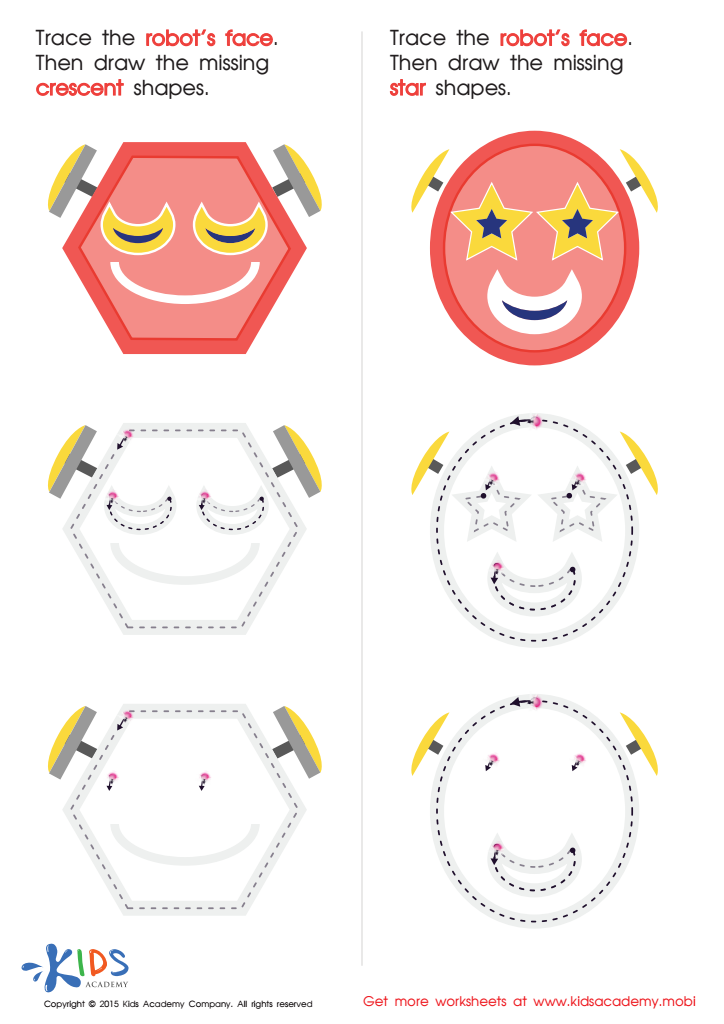
Composing a Robot's Face of Crescents And Stars Worksheet
 Assign to My Students
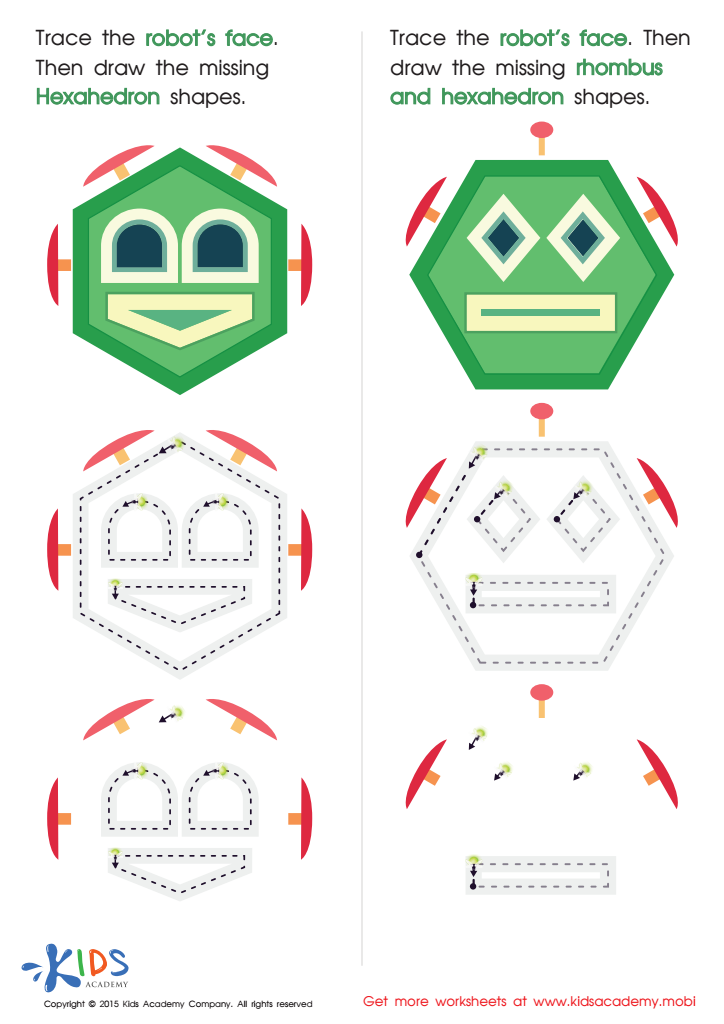
Practice Drawing Hexahedrons And a Rhombus Worksheet
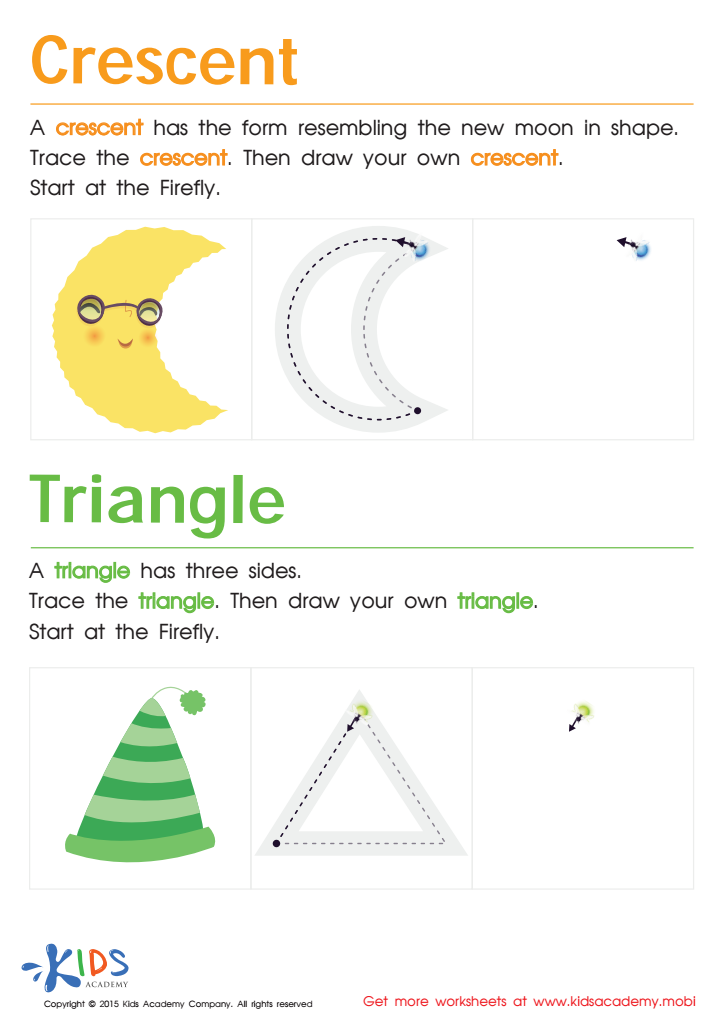
Learning to Draw Crescents And Triangles Worksheet
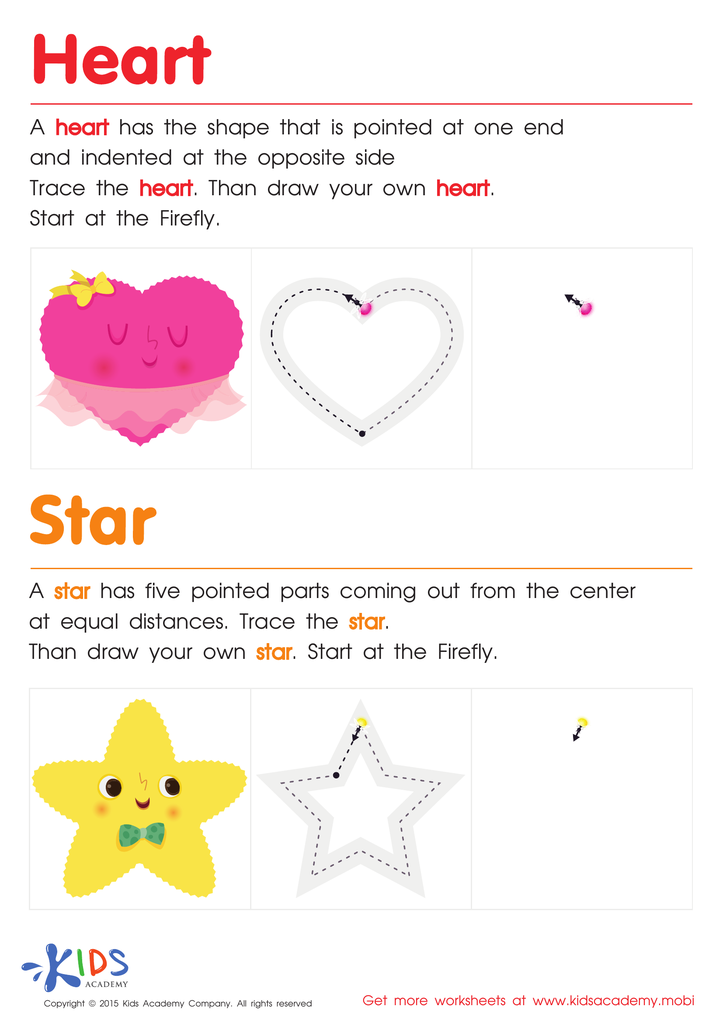
Let's Learn to Draw Hearts And Stars Printable
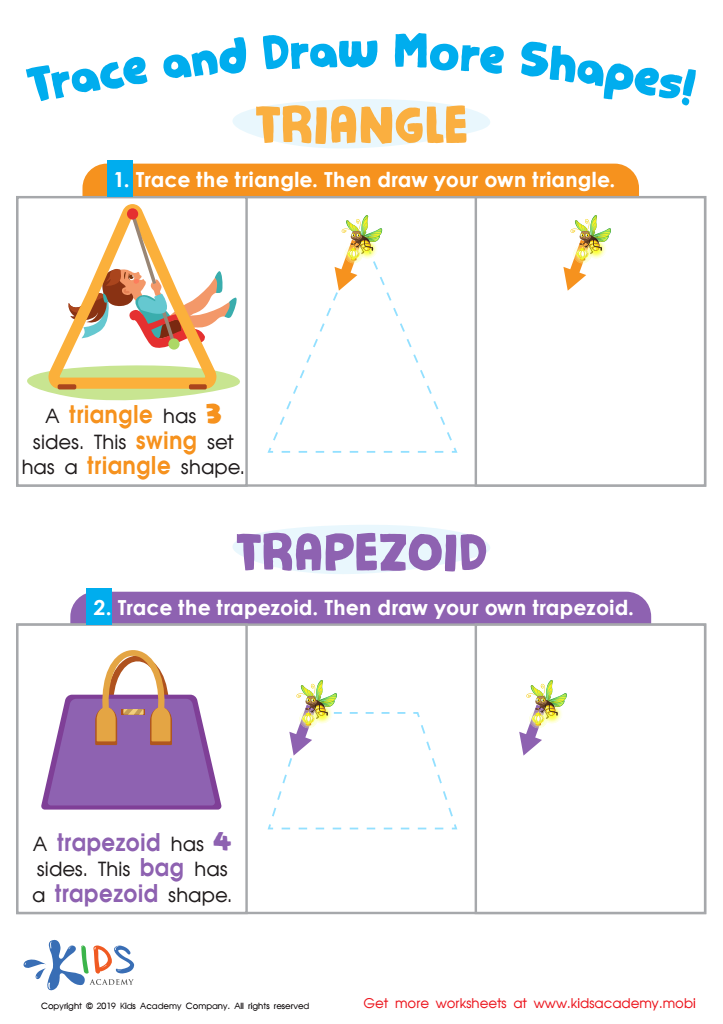
Trace and Draw More Shapes Worksheet
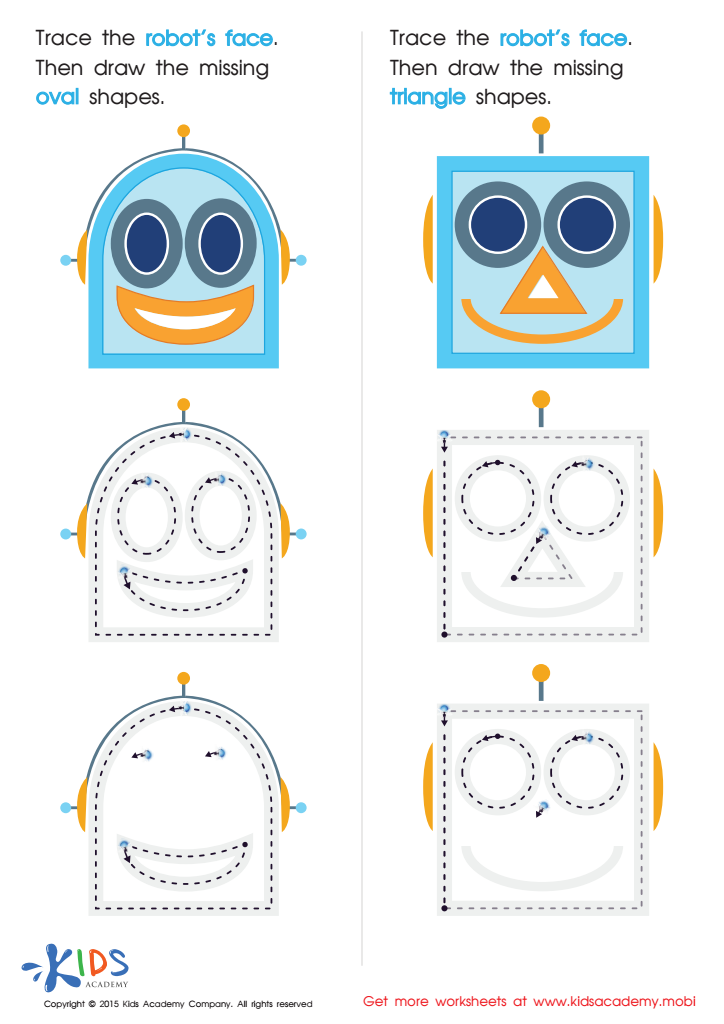
Drawing Ovals And Triangles with Fun Printable








Fine motor skills, particularly through activities like tracing shapes, are essential for children aged 6-9. These skills are the foundation for developing more complex tasks such as writing, cutting, and even playing musical instruments. By engaging in tracing activities, children enhance their hand-eye coordination, dexterity, and precision, which are crucial for their overall motor development.
Tracing shapes encourages focus and attention to detail, helping children cultivate patience and persistence—qualities that are beneficial beyond fine motor activities. Moreover, while tracing, children gain familiarity with various geometric concepts, promoting their cognitive development and understanding of spatial relationships.
For teachers and parents, promoting fine motor skills through activities like shape tracing can significantly support a child's academic success. As many school tasks require proficient writing and drawing abilities, developing these skills early on can prevent frustrations later in a child's educational journey. Additionally, tracing shapes can serve as a bonding activity between parents and children, making learning fun and interactive.
Ultimately, caring about fine motor skill development, like tracing shapes, equips children with the necessary tools for future success, encourages creativity, and bolsters their confidence as they navigate their early learning experiences.