Discover our "Understanding Fractions Building Vocabulary Worksheets" tailored for children aged 6-9! These engaging worksheets are designed to help young learners grasp the concept of fractions while enhancing their vocabulary skills. Featuring colorful illustrations and interactive exercises, these resources make learning fun and engaging. Students will explore basic fractions, improve their word knowledge, and develop essential math literacy. Ideal for classroom use or personalized learning at home, these worksheets promote critical thinking and improve comprehension. Equip your child with the tools for success in math and language with our comprehensive fraction vocabulary resources. Start the journey to fraction mastery today!

Check out this FREE Trial Lesson on Building Vocabulary for age 6-9!

Match Objects that Fit Together

Favorites
With answer key
Interactive
  • 6-9
  • Understanding fractions
  • Building Vocabulary
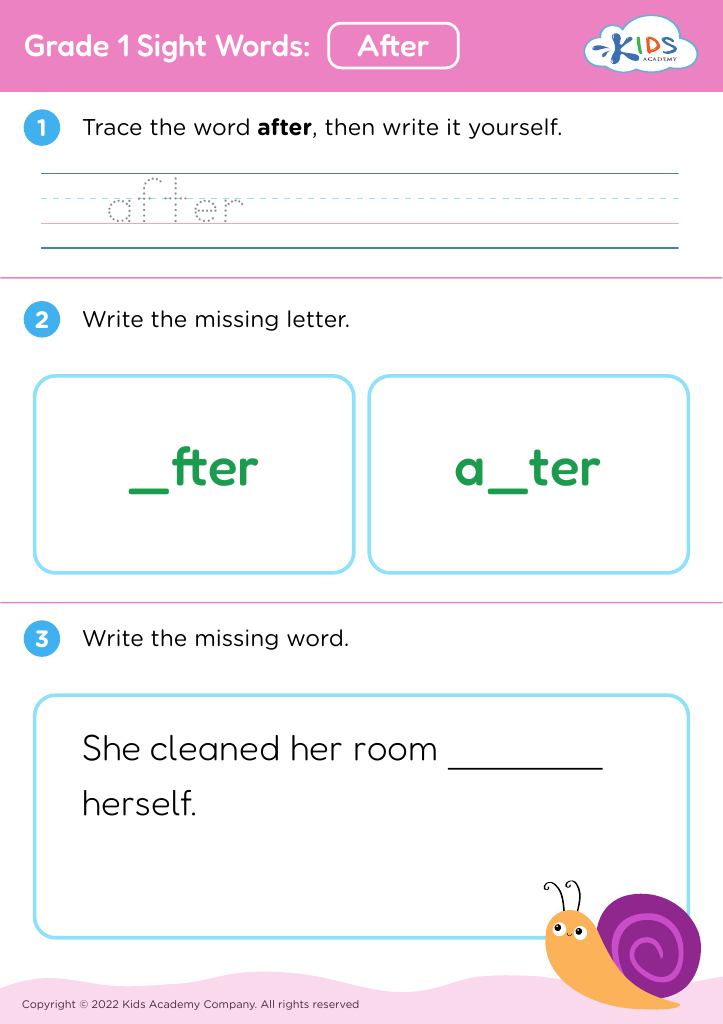
Grade 1 Sight Words: After

Grade 1 Sight Words: After

Grade 1 Sight Words: After
Worksheet
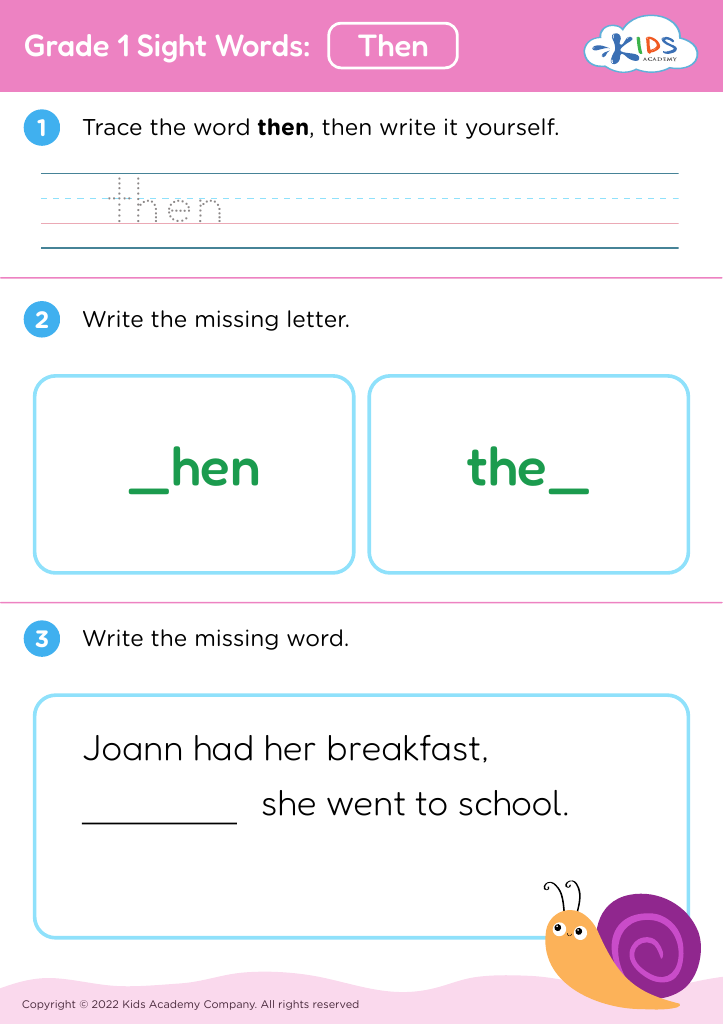
Grade 1 Sight Words: Then

Grade 1 Sight Words: Then

Grade 1 Sight Words: Then
Worksheet
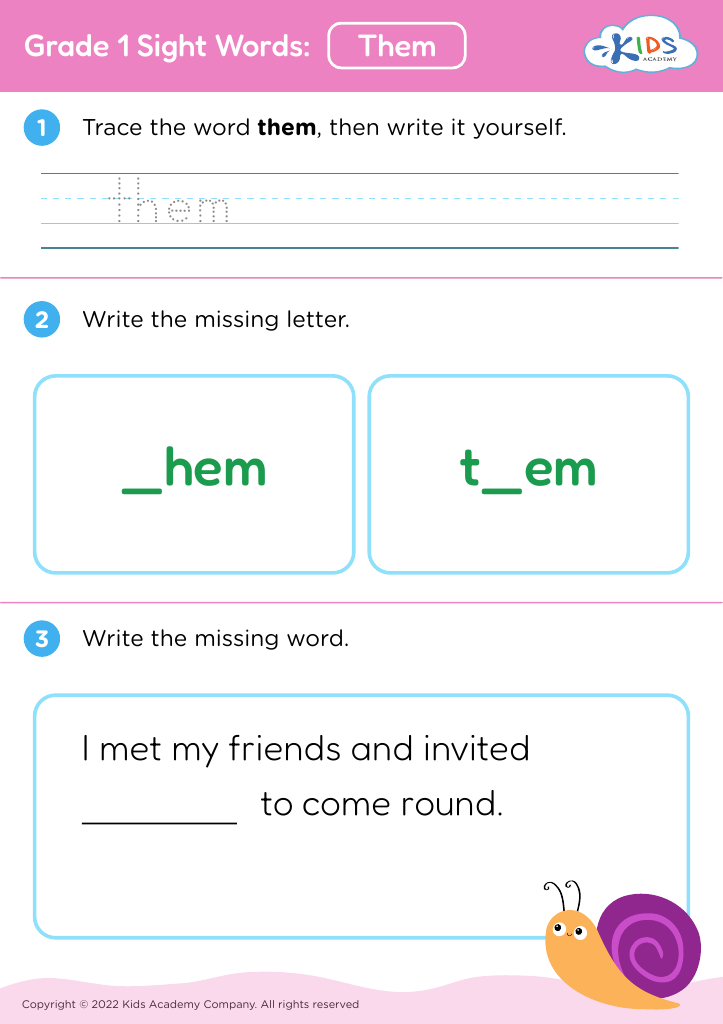
Grade 1 Sight Words: Them

Grade 1 Sight Words: Them

Grade 1 Sight Words: Them
Worksheet
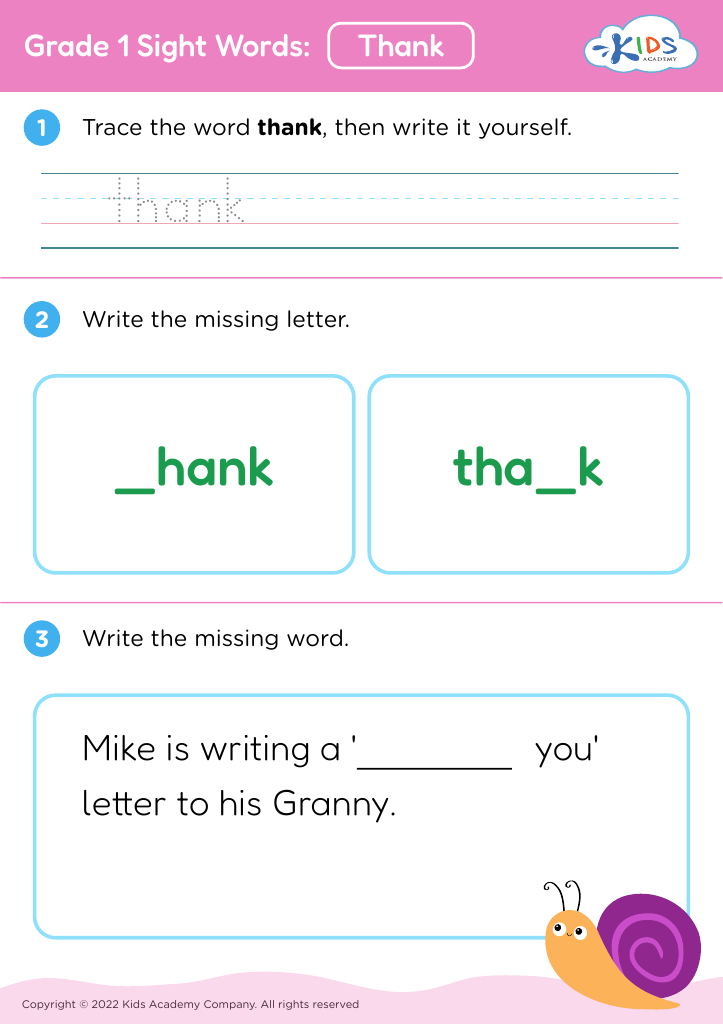
Grade 1 Sight Words: Thank

Grade 1 Sight Words: Thank

Grade 1 Sight Words: Thank
Worksheet
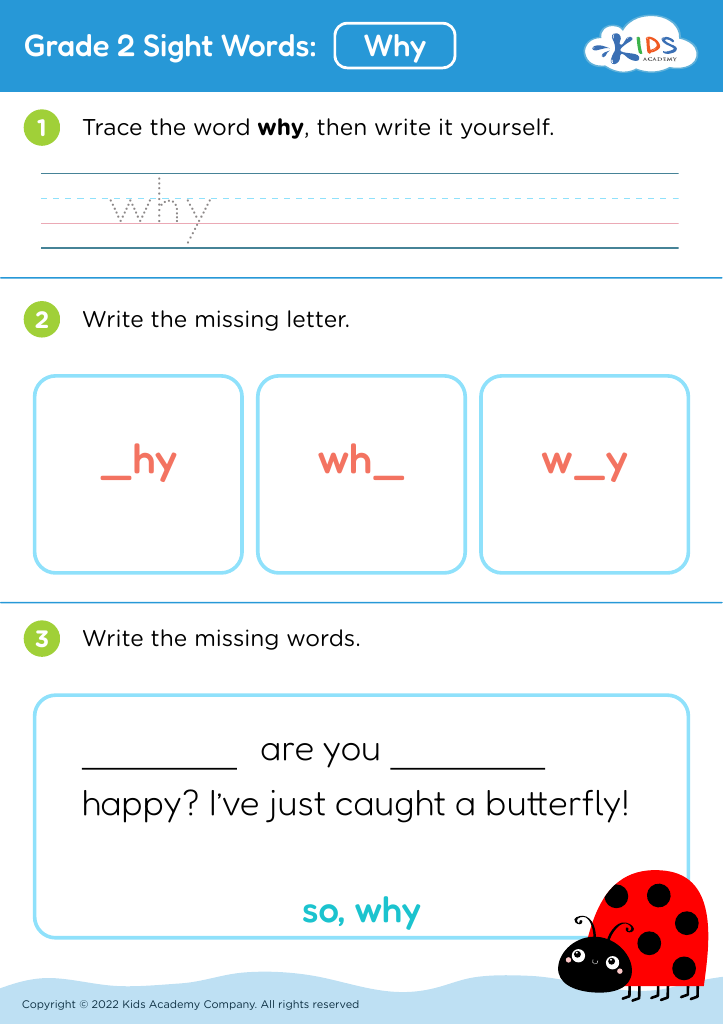
Grade 2 Sight Words: Why

Grade 2 Sight Words: Why

Grade 2 Sight Words: Why
Worksheet
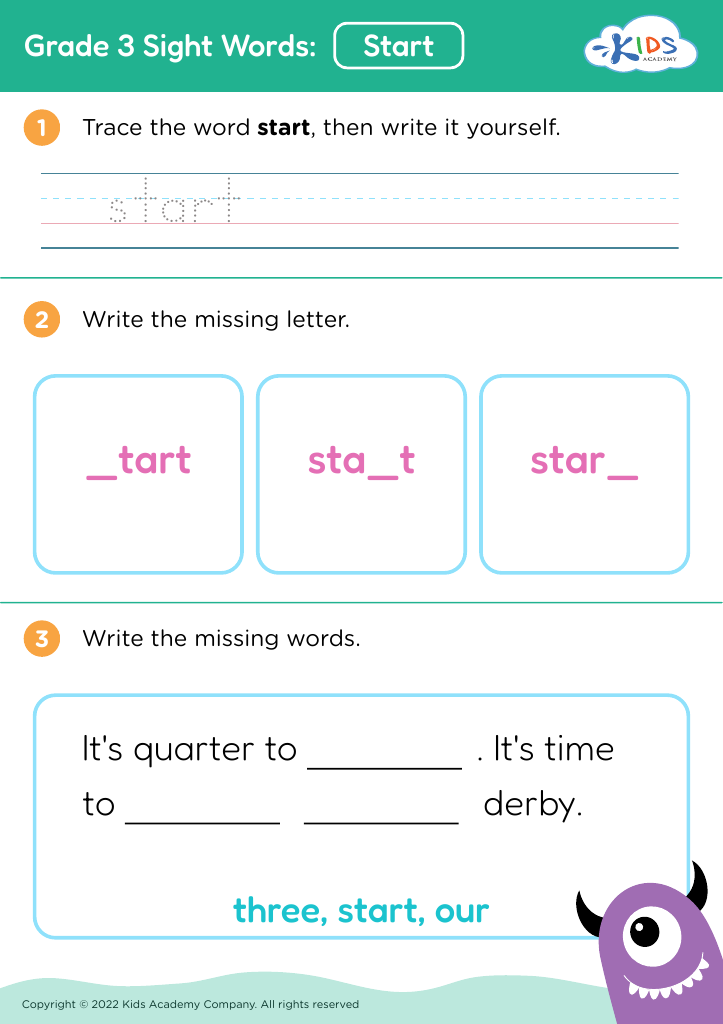
Grade 3 Sight Words: Start

Grade 3 Sight Words: Start

Grade 3 Sight Words: Start
Worksheet
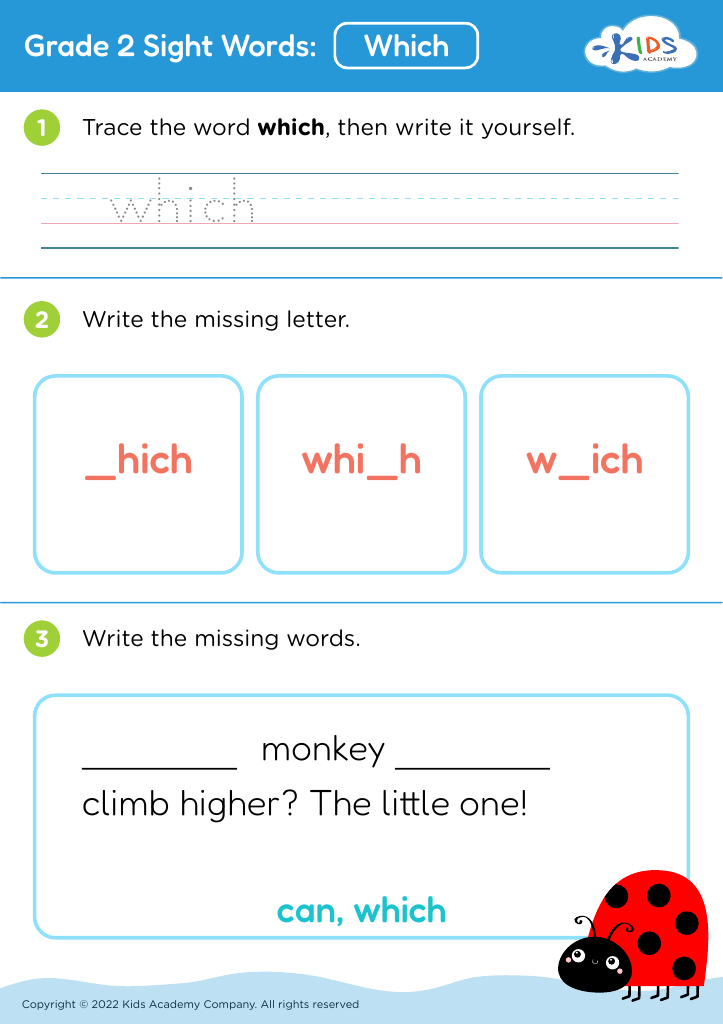
Grade 2 Sight Words: Which

Grade 2 Sight Words: Which

Grade 2 Sight Words: Which
Worksheet
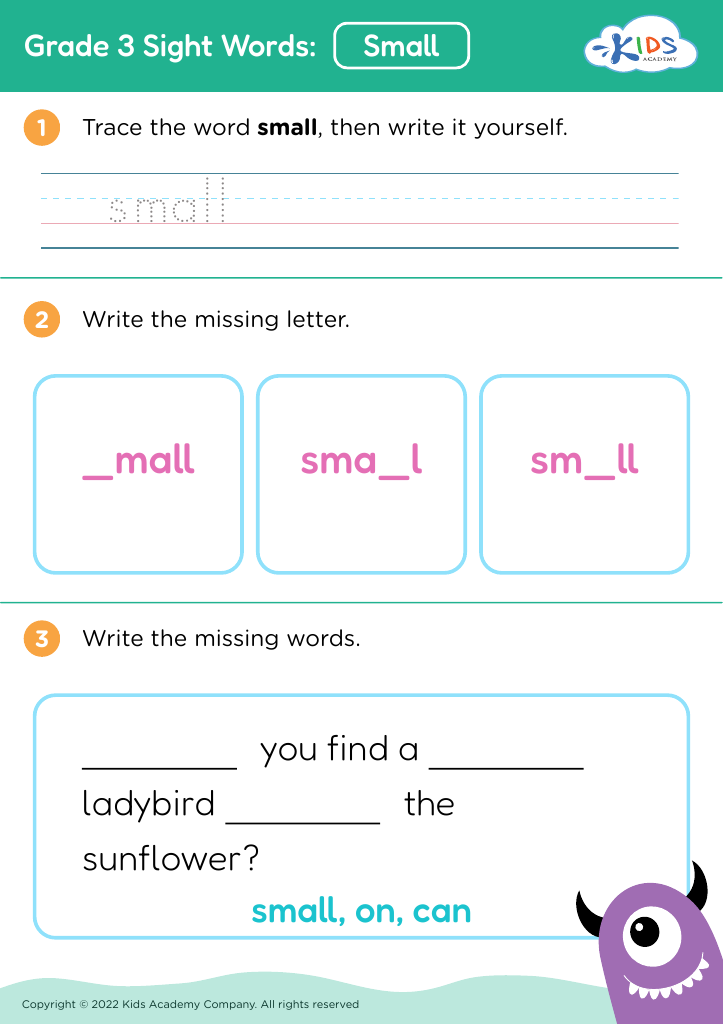
Grade 3 Sight Words: Small

Grade 3 Sight Words: Small

Grade 3 Sight Words: Small
Worksheet
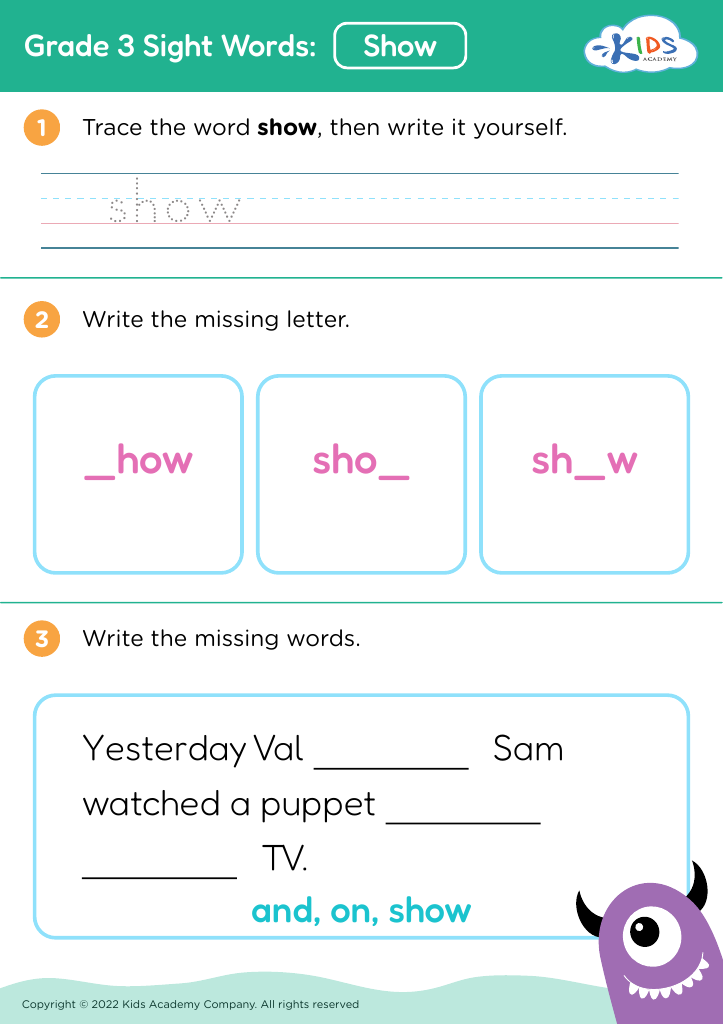
Grade 3 Sight Words: Show

Grade 3 Sight Words: Show

Grade 3 Sight Words: Show
Worksheet
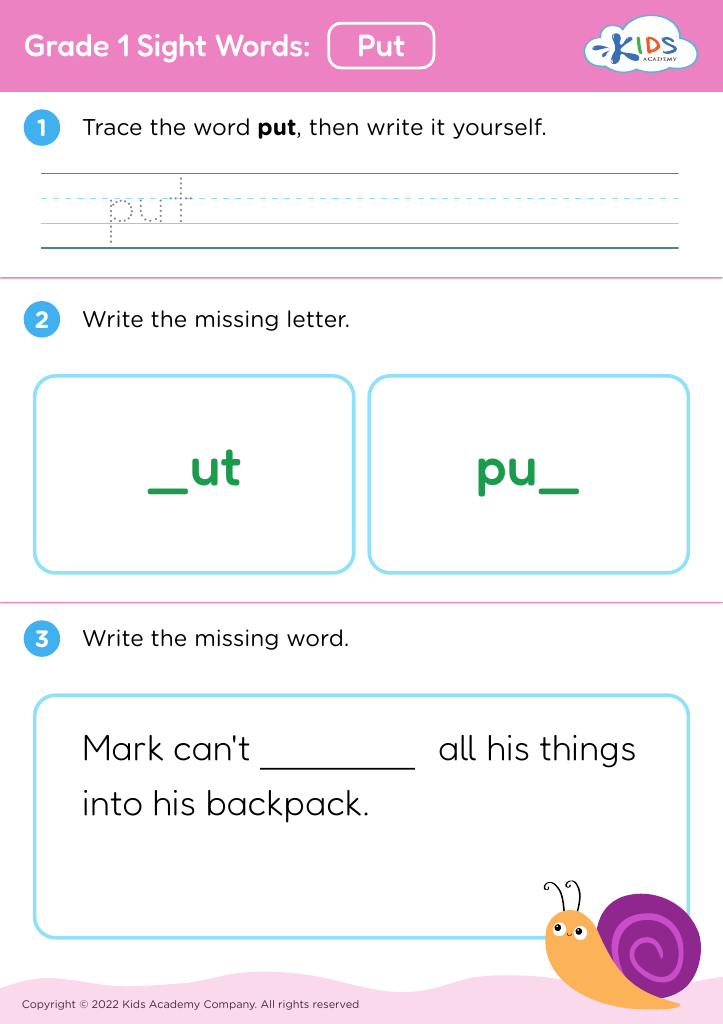
Grade 1 Sight Words: Put

Grade 1 Sight Words: Put

Grade 1 Sight Words: Put
Worksheet
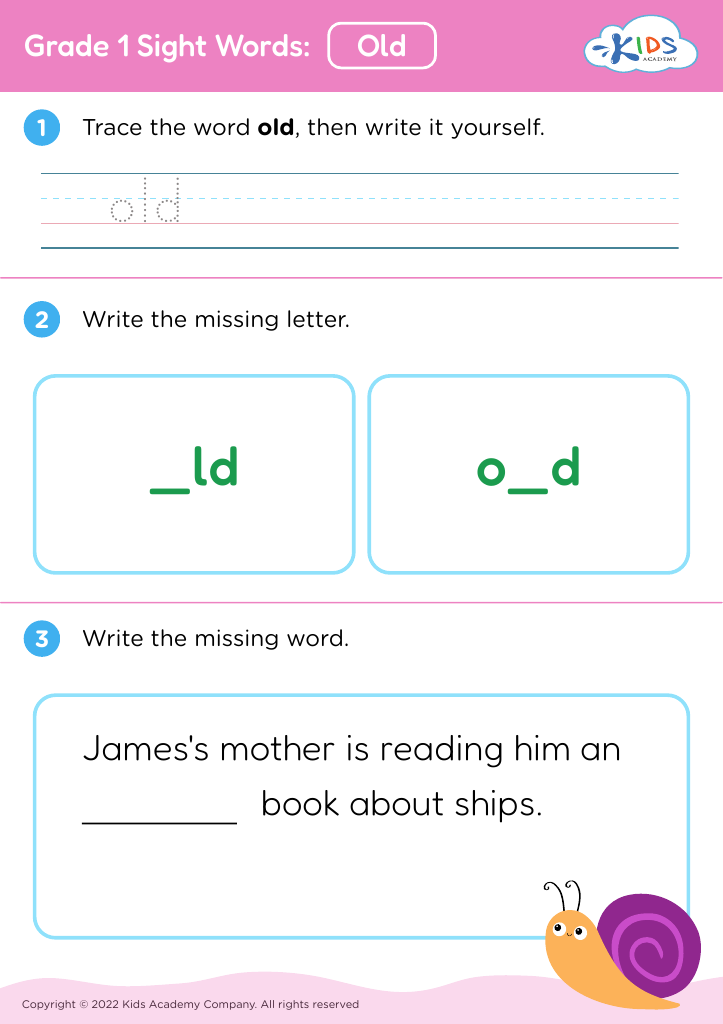
Grade 1 Sight Words: Old

Grade 1 Sight Words: Old

Grade 1 Sight Words: Old
Worksheet
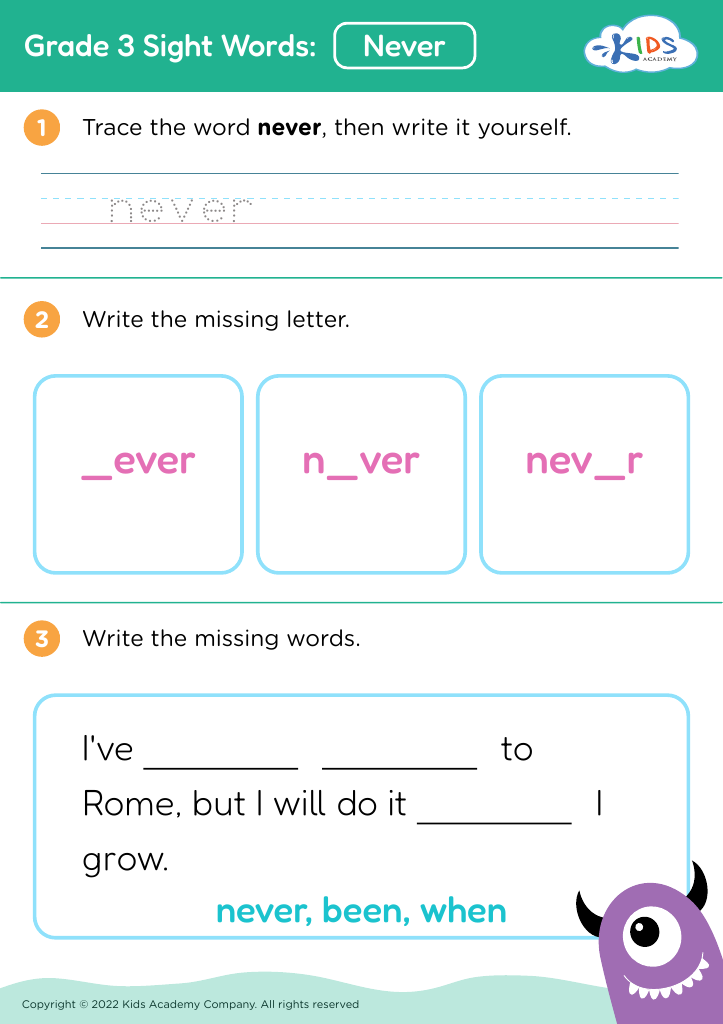
Grade 3 Sight Words: Never

Grade 3 Sight Words: Never

Grade 3 Sight Words: Never
Worksheet
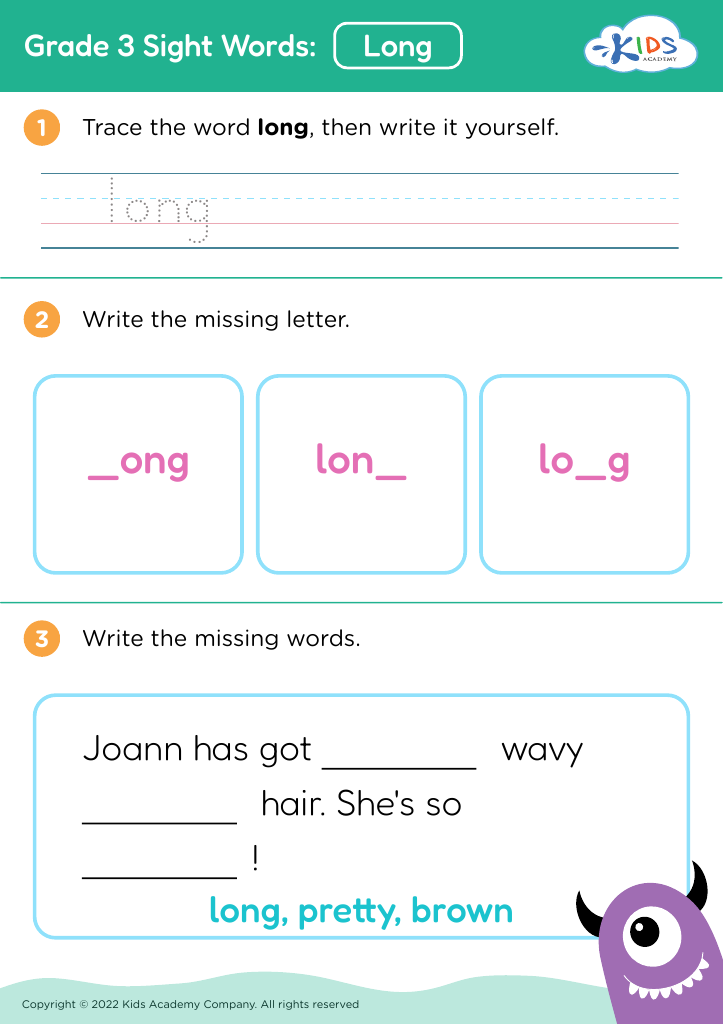
Grade 3 Sight Words: Long

Grade 3 Sight Words: Long

Grade 3 Sight Words: Long
Worksheet
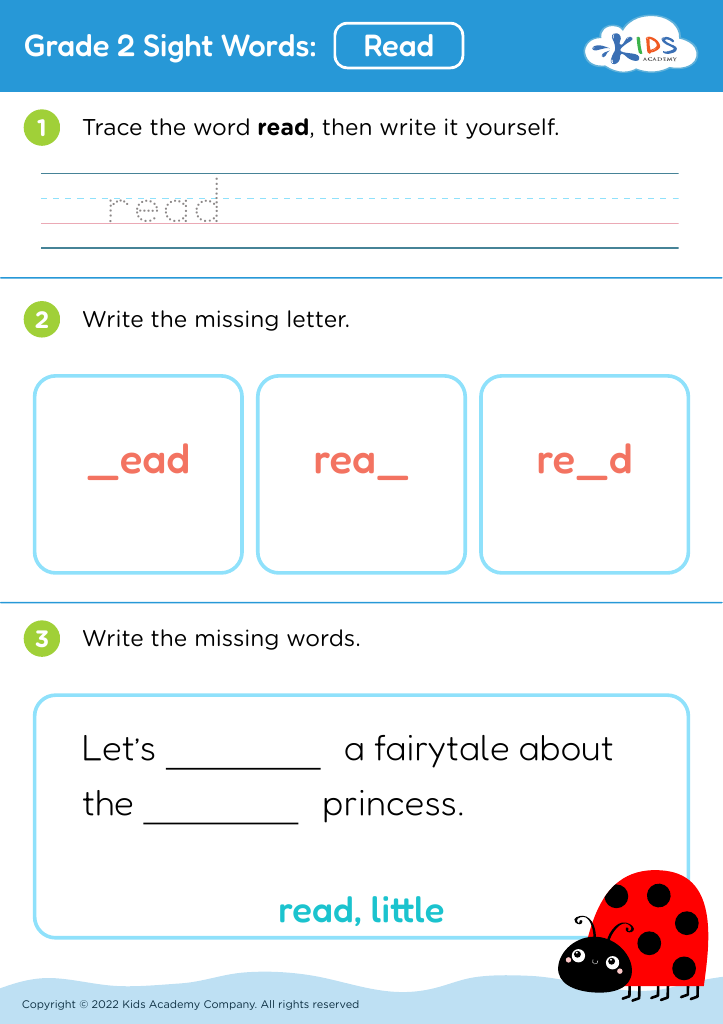
Grade 2 Sight Words: Read

Grade 2 Sight Words: Read

Grade 2 Sight Words: Read
Worksheet
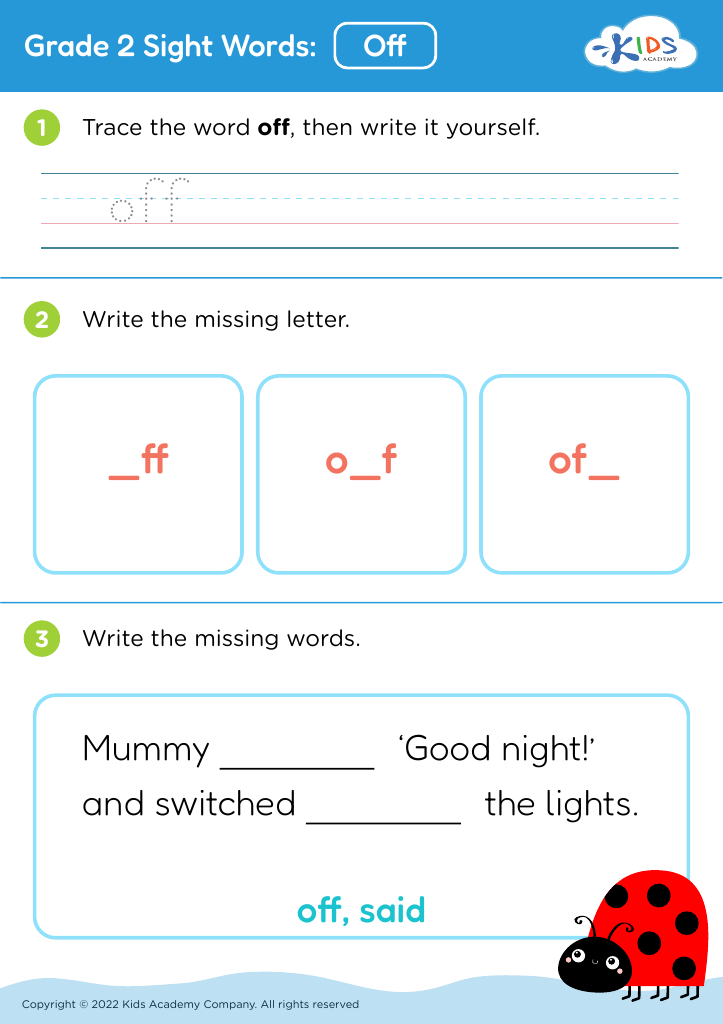
Grade 2 Sight Words: Off

Grade 2 Sight Words: Off

Grade 2 Sight Words: Off
Worksheet
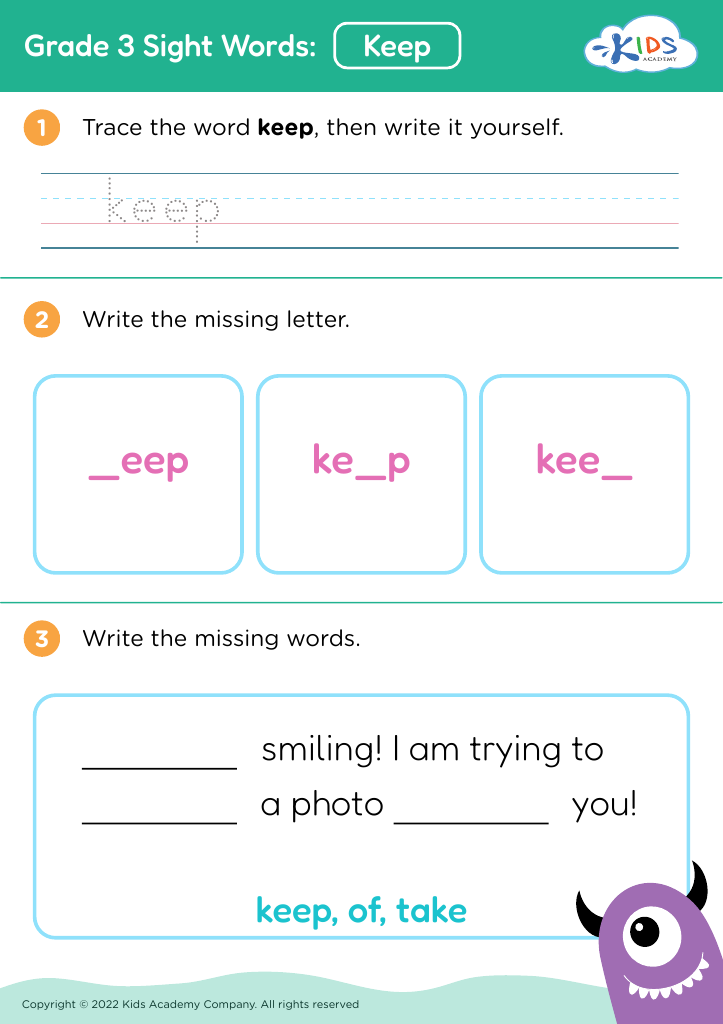
Grade 3 Sight Words: Keep

Grade 3 Sight Words: Keep

Grade 3 Sight Words: Keep
Worksheet
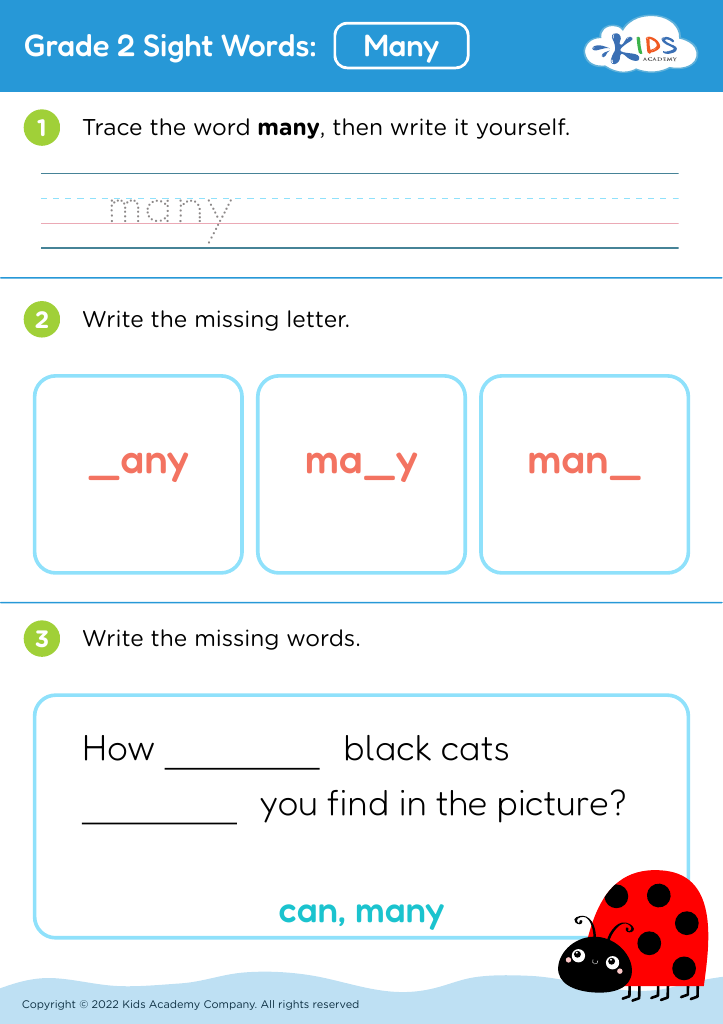
Grade 2 Sight Words: Many

Grade 2 Sight Words: Many

Grade 2 Sight Words: Many
Worksheet
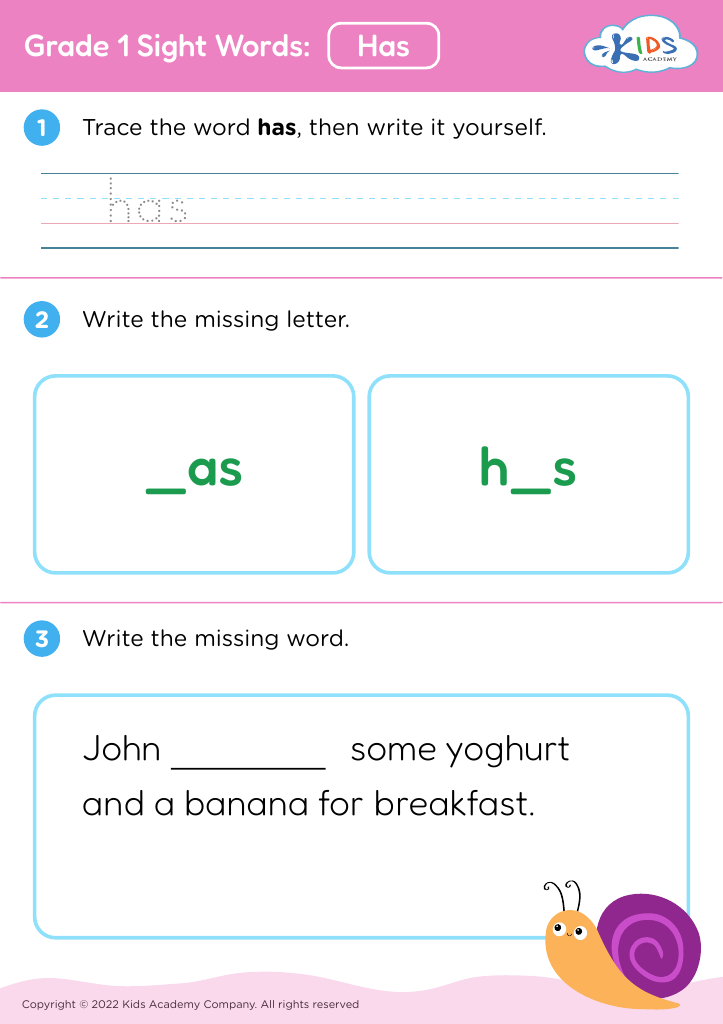
Grade 1 Sight Words: Has

Grade 1 Sight Words: Has

Grade 1 Sight Words: Has
Worksheet
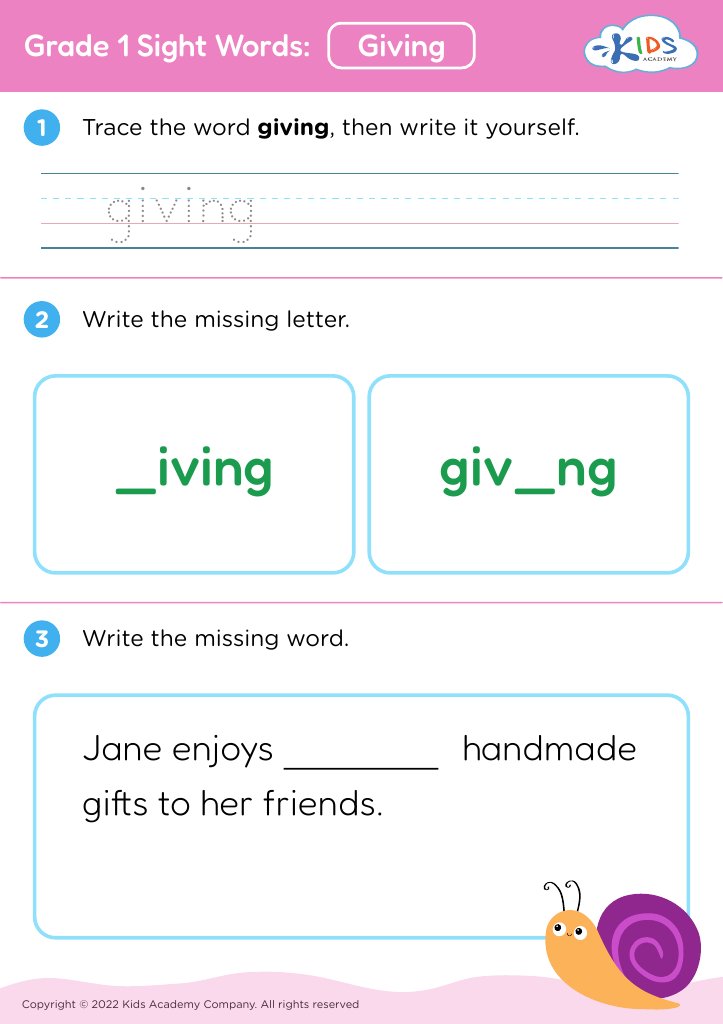
Grade 1 Sight Words: Giving

Grade 1 Sight Words: Giving

Grade 1 Sight Words: Giving
Worksheet
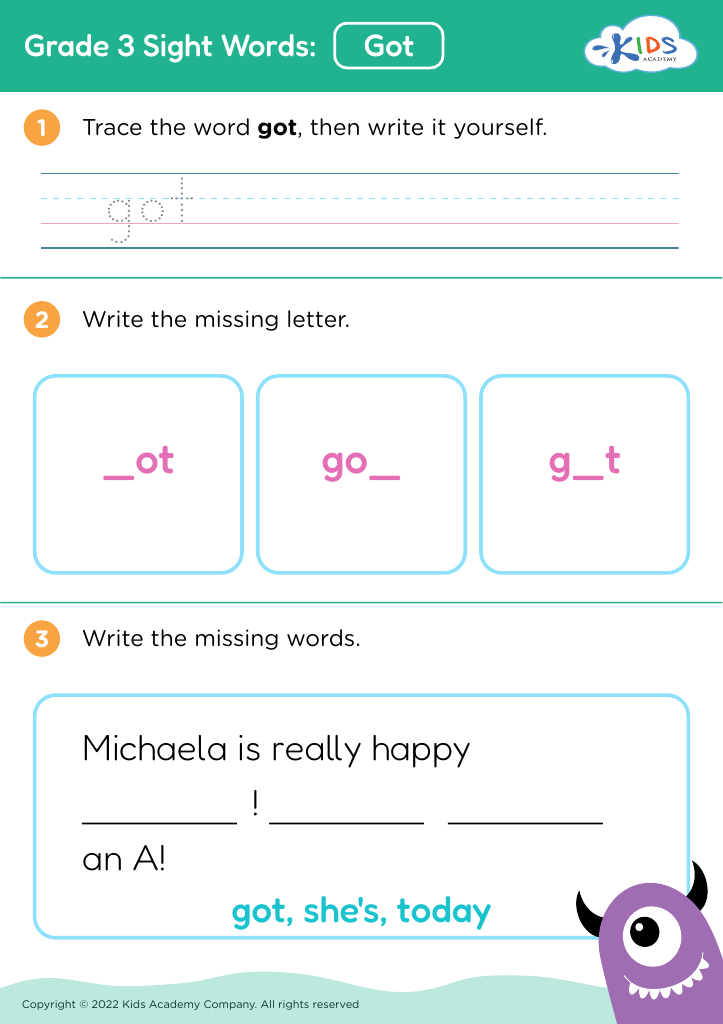
Grade 3 Sight Words: Got

Grade 3 Sight Words: Got

Grade 3 Sight Words: Got
Worksheet
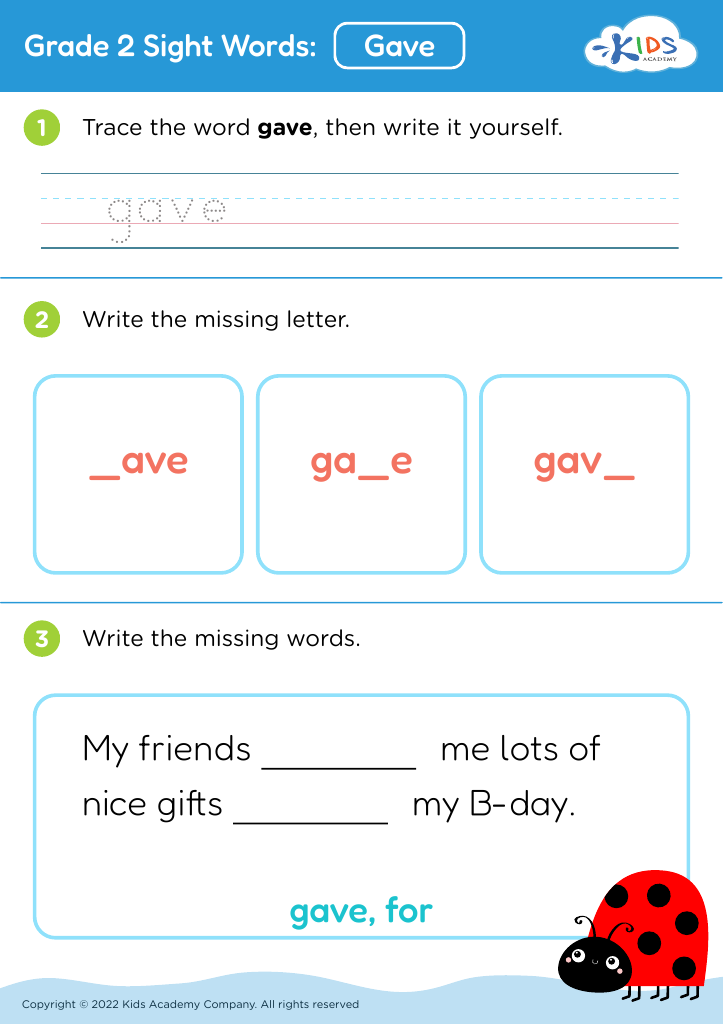
Grade 2 Sight Words: Gave

Grade 2 Sight Words: Gave

Grade 2 Sight Words: Gave
Worksheet
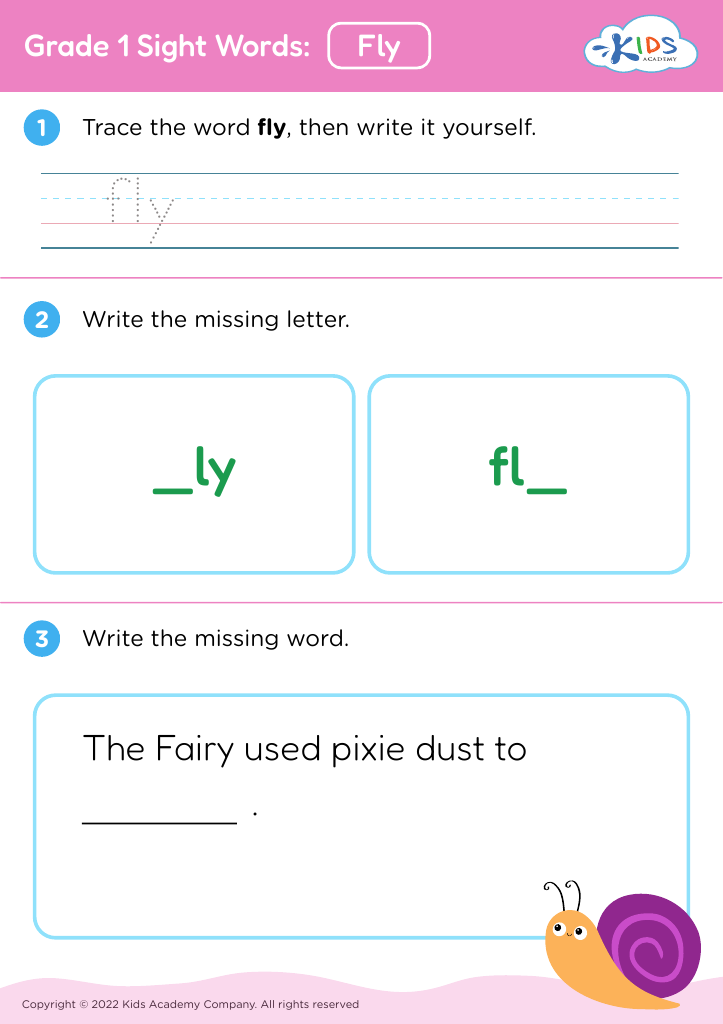
Grade 1 Sight Words: Fly

Grade 1 Sight Words: Fly

Grade 1 Sight Words: Fly
Worksheet
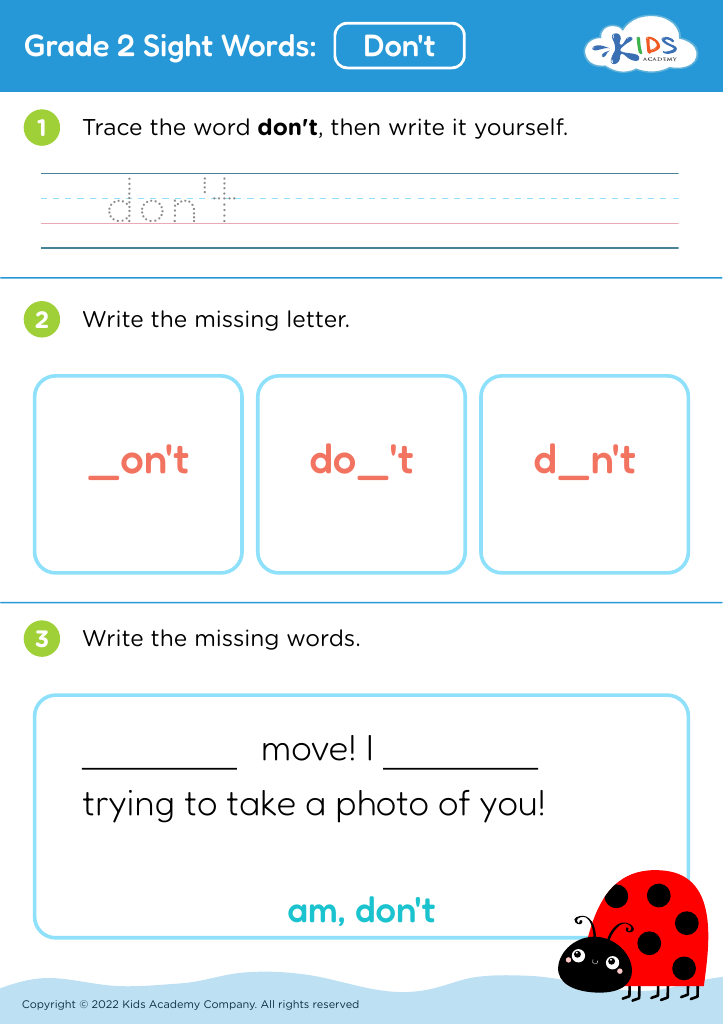
Grade 2 Sight Words: Don'T

Grade 2 Sight Words: Don'T

Grade 2 Sight Words: Don'T
Worksheet
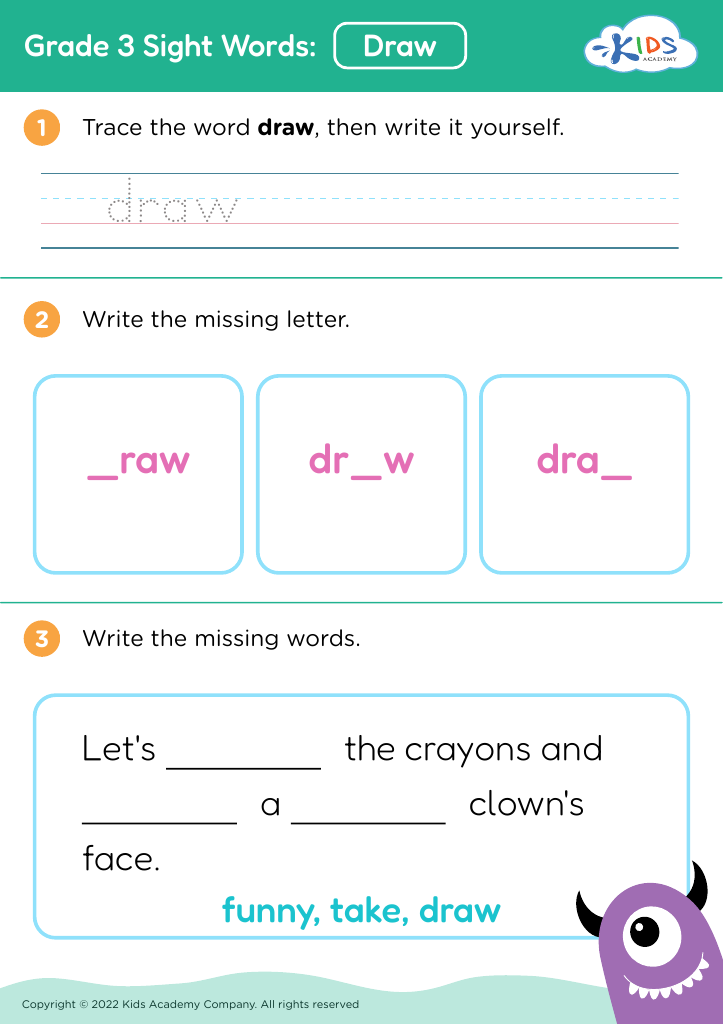
Grade 3 Sight Words: Draw

Grade 3 Sight Words: Draw

Grade 3 Sight Words: Draw
Worksheet


Understanding fractions is crucial for children aged 6-9 as it forms the foundation for their mathematical future. At this developmental stage, children are beginning to grasp more complex mathematical concepts. Fractions introduce them to the idea of parts of a whole, which is essential for understanding measurement, ratios, and even basic division later on. When parents and teachers emphasize this concept, they help children develop critical thinking skills and reasoning abilities.

Building vocabulary around fractions is equally important. Descriptive language helps children articulate their understanding and makes learning more engaging. Words like "numerator," "denominator," "equivalent," and "whole" enrich their mathematical vocabulary and enable them to communicate their thoughts effectively. This vocabulary helps them engage in mathematical discussions and fosters a deeper conceptual understanding.

Moreover, strong fractional knowledge supports future learning in various subjects, including science and economics, where these concepts often arise. By investing time and energy in these foundational skills, parents and teachers not only enhance children's academic performance but also build their confidence and enthusiasm for learning math. Ultimately, a solid grasp of fractions and related vocabulary will serve children well throughout their educational journeys and in everyday life.