Rhyming skills development Reading Worksheets for Ages 6-9
3 filtered results
-
From - To
Enhance your child's reading journey with our Rhyming Skills Development Worksheets for Ages 6-9! These engaging, interactive worksheets are designed to cultivate essential phonetic skills through fun and memorable activities. Geared toward early readers, they'll explore the rhythm and repetition found in rhymes, boosting vocabulary and comprehension. Each worksheet provides a variety of exercises, from matching rhyming words to creating unique rhymes, ensuring a comprehensive learning experience. Perfect for home use or classroom settings, our worksheets inspire creativity while reinforcing the love of reading. Discover the joy of rhyming and set your child on the path to reading success today!

Rhyming Words Rhyming Worksheet
 Assign to My Students
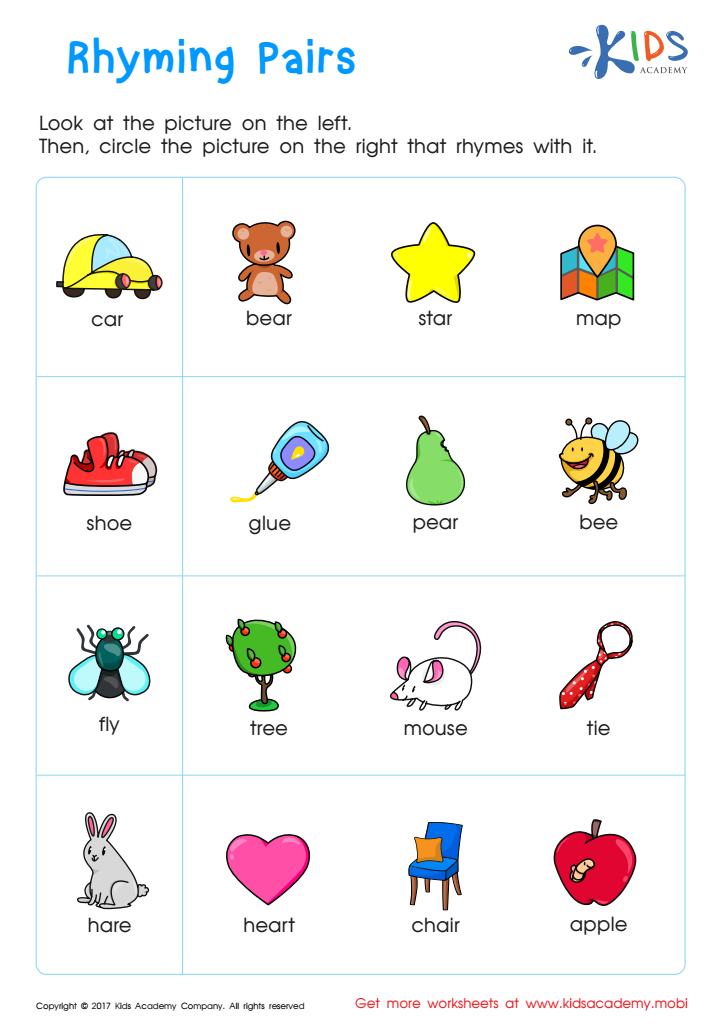
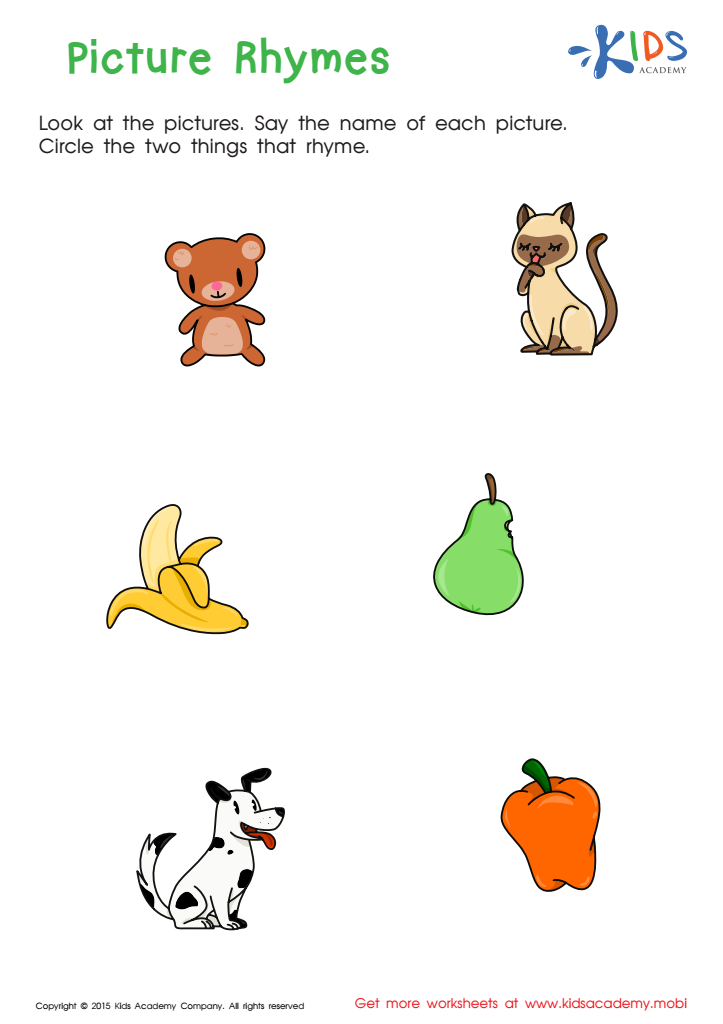
First Words: Picture Rhymes Worksheet



.jpg)



Rhyming skills development is crucial for children aged 6-9 as it significantly enhances their literacy and overall language skills. Rhyming helps young readers develop phonemic awareness, the ability to recognize and manipulate sounds in words. This skill is foundational for reading, as it supports spellings, pronunciation, and the blending of sound patterns, ultimately improving reading fluency.
Furthermore, engaging in rhyming activities fosters vocabulary expansion. Children learn new words and their meanings through playful rhyming games, poetry, and songs, making language acquisition more enjoyable. When children recognize rhymes, they can predict what comes next in text, boosting their comprehension skills.
Rhyming also cultivates critical thinking and creativity, allowing children to explore language in various forms, whether through storytelling, songwriting, or creative play. This enhances their cognitive development by strengthening pattern recognition and problem-solving abilities.
For teachers and parents, fostering rhyming skills means equipping children with essential tools for academic success. Encouraging rhyming at home and school can build confidence and enthusiasm for reading—important treasures in a child’s lifelong literacy journey. Ultimately, investing in rhyming skills is investing in a child’s bright educational future.








