Word Recognition Reading Worksheets for Ages 6-9 - Page 2
27 filtered results
-
From - To
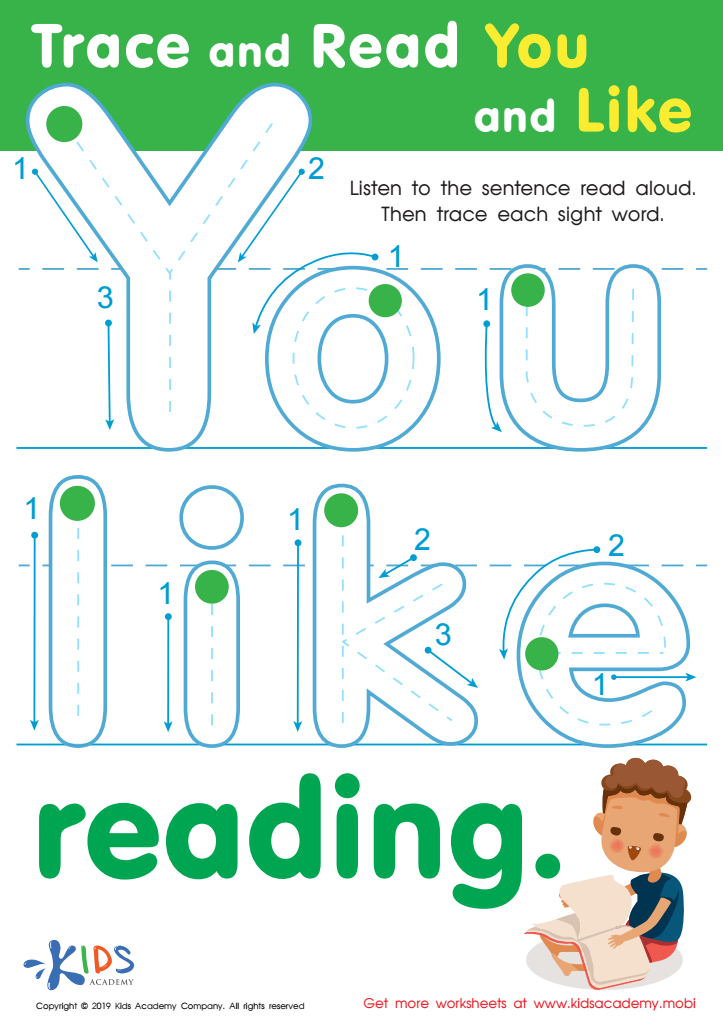
Trace Read You Like Worksheet
 Assign to My Students






.jpg)

Word recognition is a crucial component of reading development for children ages 6-9, a period when they transition from learning to read to reading to learn. During these formative years, children are developing the foundational skills necessary to identify words quickly and accurately, which directly impacts their comprehension and overall literacy journey.
When parents and teachers prioritize word recognition, they enhance students' confidence and fluency, enabling smoother reading experiences. Strong word recognition skills contribute to greater engagement with texts, allowing children to focus on understanding and interpreting content rather than struggling to decode unfamiliar words. Consequently, this fosters a love for reading, spurring lifelong learning habits.
Moreover, as these young readers encounter diverse vocabulary and complex sentence structures, effective word recognition serves as a bridge to higher-level critical thinking and analytical skills necessary for academic success. Parents and teachers can support word recognition through consistent practices, such as reading aloud, using word games, and encouraging sight word acquisition.
By investing time in nurturing these skills, adults play a pivotal role in empowering children, promoting literacy, and paving the way for a brighter educational future. In essence, strong word recognition skills set the stage for proficient learning and greater intellectual curiosity.








