Developing critical thinking Science Worksheets for Ages 6-9
3 filtered results
-
From - To
Explore our engaging "Developing Critical Thinking Science Worksheets" designed specifically for children aged 6-9! These thoughtfully crafted worksheets encourage young learners to analyze, evaluate, and apply scientific concepts through fun activities and stimulating questions. By fostering curiosity and creativity, our resources help children develop essential critical thinking skills crucial for their academic journey. The worksheets cover a range of topics, including life sciences, earth sciences, and physics, offering a well-rounded approach to learning. Perfect for classroom use or at-home practice, these activities inspire kids to think independently and cultivate a lifelong love for science. Start nurturing young minds today!

Seeds on the Move Worksheet
 Assign to My Students
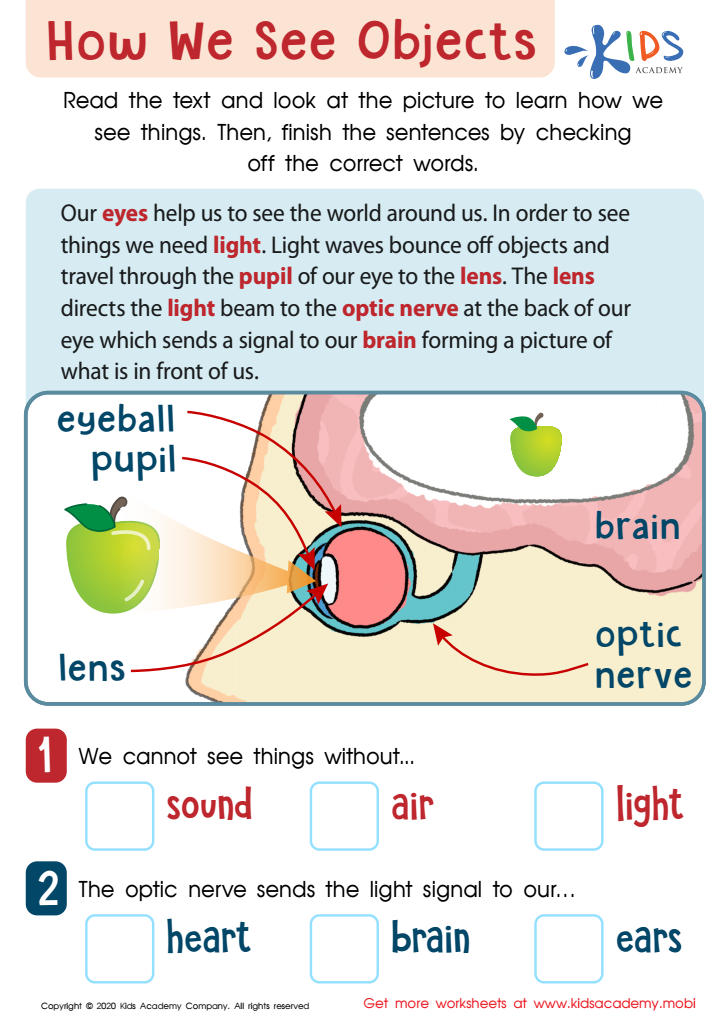
How We See Objects Worksheet
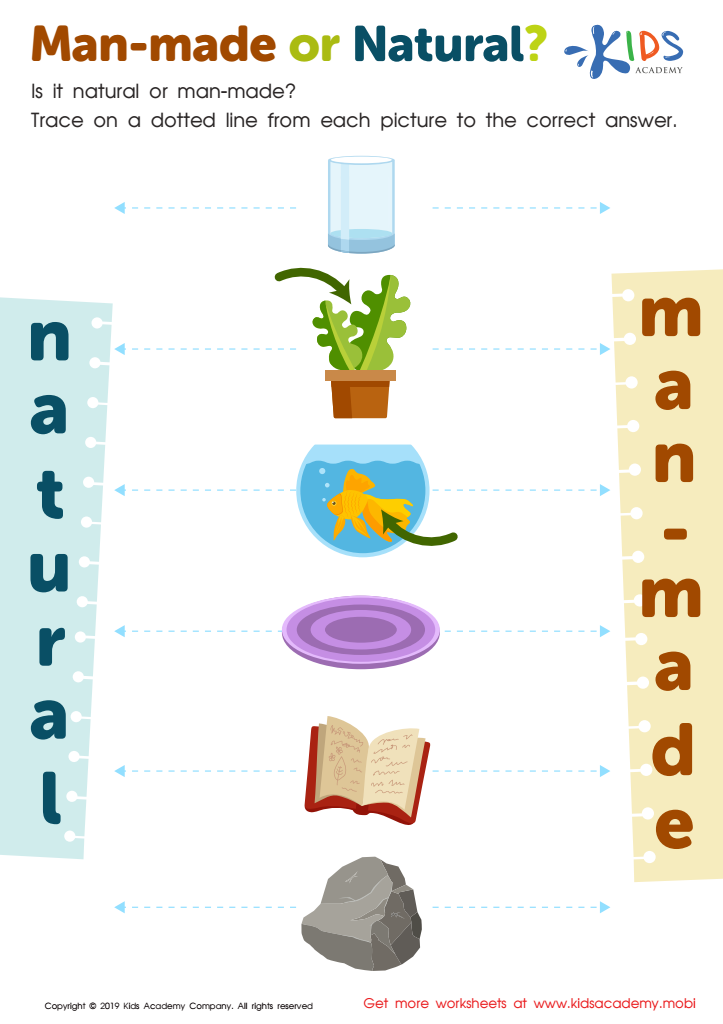
Man-Made or Natural? Worksheet






Developing critical thinking skills in young children, particularly in science, is essential for several reasons. First, it equips them with the ability to analyze information and draw conclusions based on evidence. At ages 6-9, children are naturally curious, and fostering critical thinking encourages them to ask questions and seek answers, cementing their understanding of scientific concepts.
In this digital age, children are surrounded by vast amounts of information, making the ability to discern credible sources vital. By engaging in scientific inquiry and experimentation, children learn to evaluate information and develop problem-solving skills that benefit them academically and socially.
Moreover, critical thinking in science nurtures a sense of wonder and exploration. When children engage in asking "why" or "how," they not only deepen their scientific knowledge but also enhance their creativity. This is particularly crucial as they begin to form their own views of the world.
Finally, as these critical thinking skills lay a foundation for lifelong learning, parents and teachers play a pivotal role in encouraging inquiry-based activities that emphasize questioning, experimenting, and reasoning, which ultimately prepare children for challenges beyond the classroom and in their future careers.







