Geography knowledge Science Worksheets for Ages 6-9
3 filtered results
-
From - To
Explore our engaging Geography Knowledge Science Worksheets designed for children aged 6-9! These worksheets provide a fun and interactive way for young learners to develop essential geographical skills. From identifying continents and oceans to understanding maps and landscapes, each activity promotes critical thinking and curiosity about the world. Perfect for use in the classroom or at home, our resources blend education with entertainment, ensuring children remain motivated to learn. Dive into topics like cultural diversity, environmental awareness, and basic navigation. Download our Geography Knowledge Worksheets today and help your child embark on their exciting journey of geographic discovery!
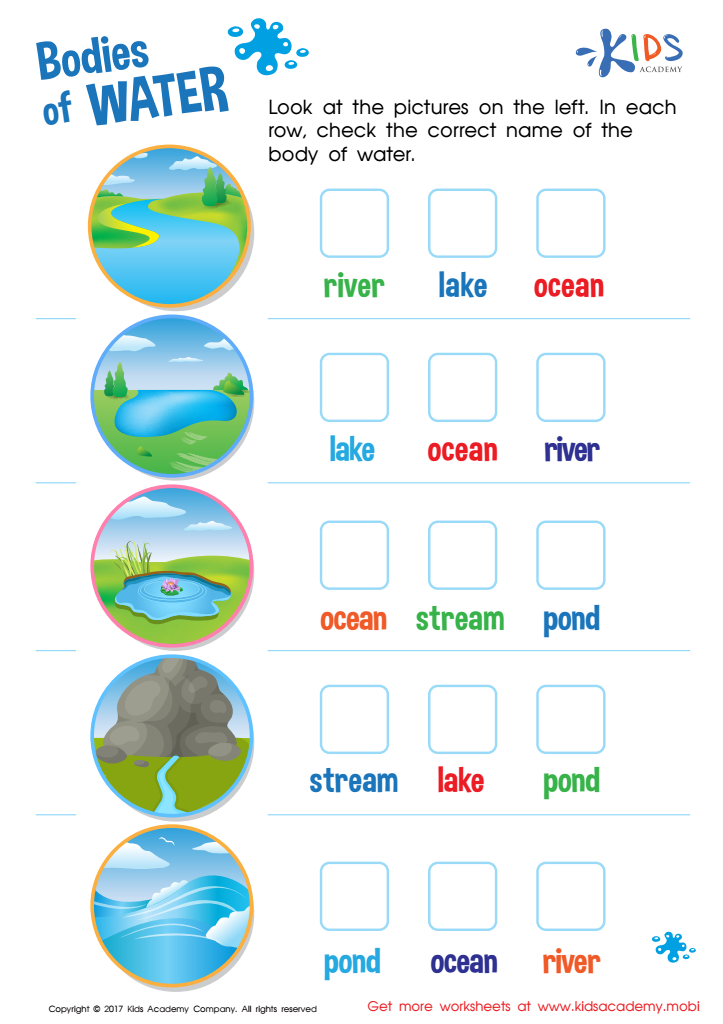
Bodies of Water Worksheet
 Assign to My Students
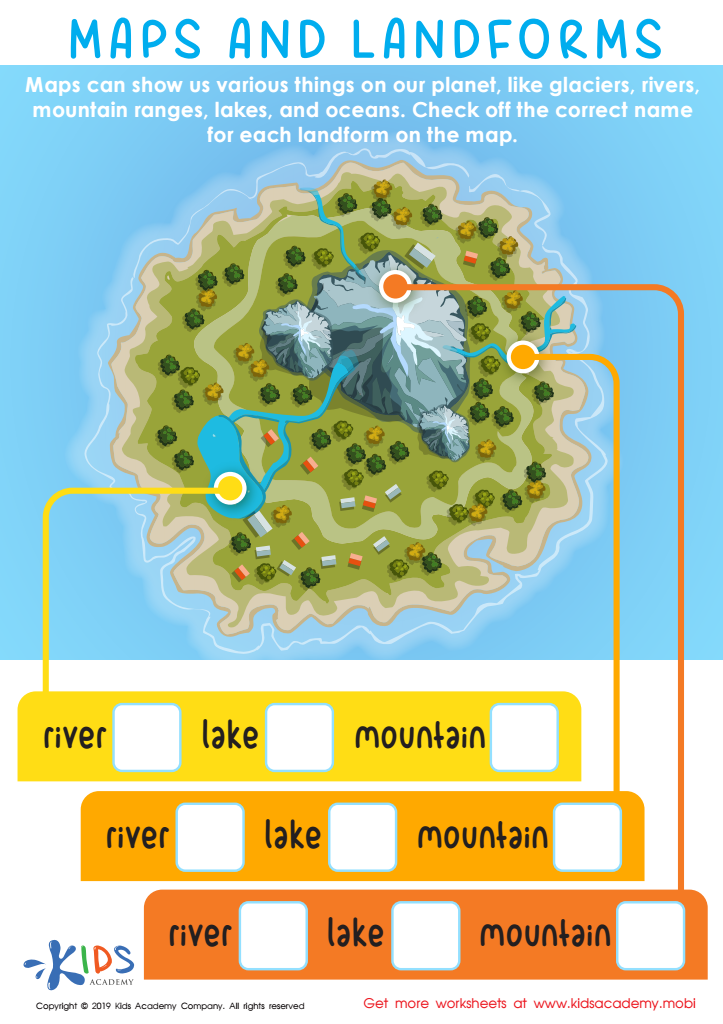
Maps and Landforms Worksheet
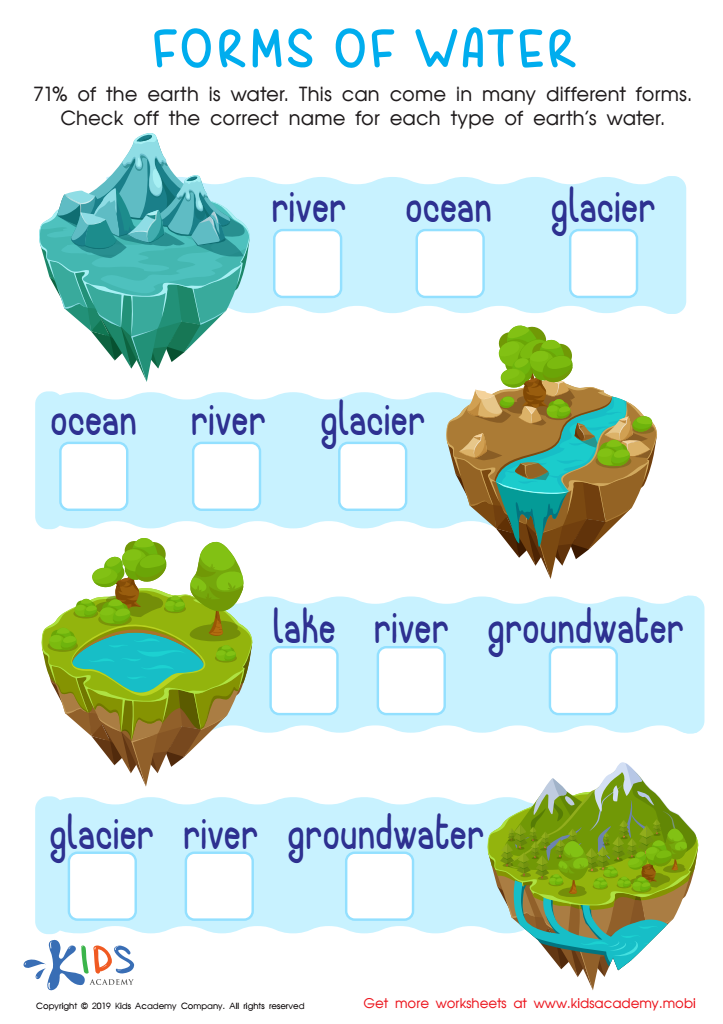
Forms of Water Worksheet







Parents and teachers should prioritize Geography knowledge as part of Science learning for children aged 6-9 for several compelling reasons. First, geography helps young learners develop a sense of place and identity, fostering an understanding of their surroundings and the world at large. Early exposure to concepts such as maps, terrains, and ecosystems enriches their spatial awareness and cognitive skills, essential building blocks for critical thinking.
Moreover, geography intertwines with environmental education, enabling children to recognize their impact on the planet. By understanding different climates and habitats, children can cultivate a sense of stewardship and responsibility towards nature and sustainability from a young age, encouraging them to make informed choices.
At this developmental stage, children are naturally curious, and teaching geography can satisfy this curiosity while making learning engaging through hands-on activities, field trips, and interactive tools. Such experiences not only spark children's interest but also boost their social skills as they learn about varied cultures, lifestyles, and perspectives.
Ultimately, fostering geographic literacy equips children with the knowledge and critical thinking abilities to navigate and address global challenges, paving the way for well-rounded, empathetic future citizens. This foundational understanding is crucial for their personal and societal growth.







