
Science knowledge Science Worksheets for Ages 6-9
3 filtered results
Difficulty Level
Grade
Age
-
From - To
Subject
Activity
Standards
Explore our comprehensive Science Worksheets designed specifically for ages 6-9. These educational resources make learning fun and engaging by covering essential science topics through interactive and hands-on activities. Our worksheets help young learners build a solid foundation in scientific concepts, foster curiosity, and develop critical thinking skills. From understanding the basics of life sciences to exploring earth and physical sciences, our diverse materials are aligned with educational standards. Perfect for classroom use or homeschooling, our science worksheets nurture a love for learning and discovery in every child. Access high-quality, printable worksheets and spark a passion for science today!
Favorites
With answer key
Interactive
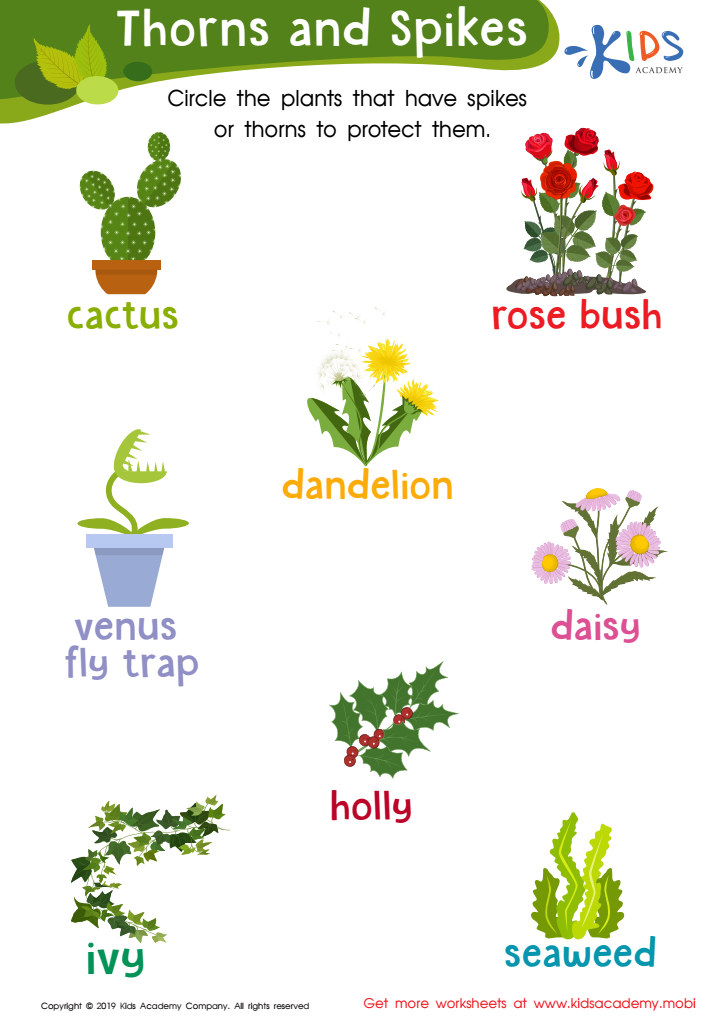
Thorns and Spikes Worksheet
Can your students name and identify the plants and flowers in this worksheet? Ask them to read out the names and circle the ones with spikes or thorns. Help them appreciate nature's beauty and understand how plants protect themselves.
 Assign to My Students
Thorns and Spikes Worksheet
Worksheet
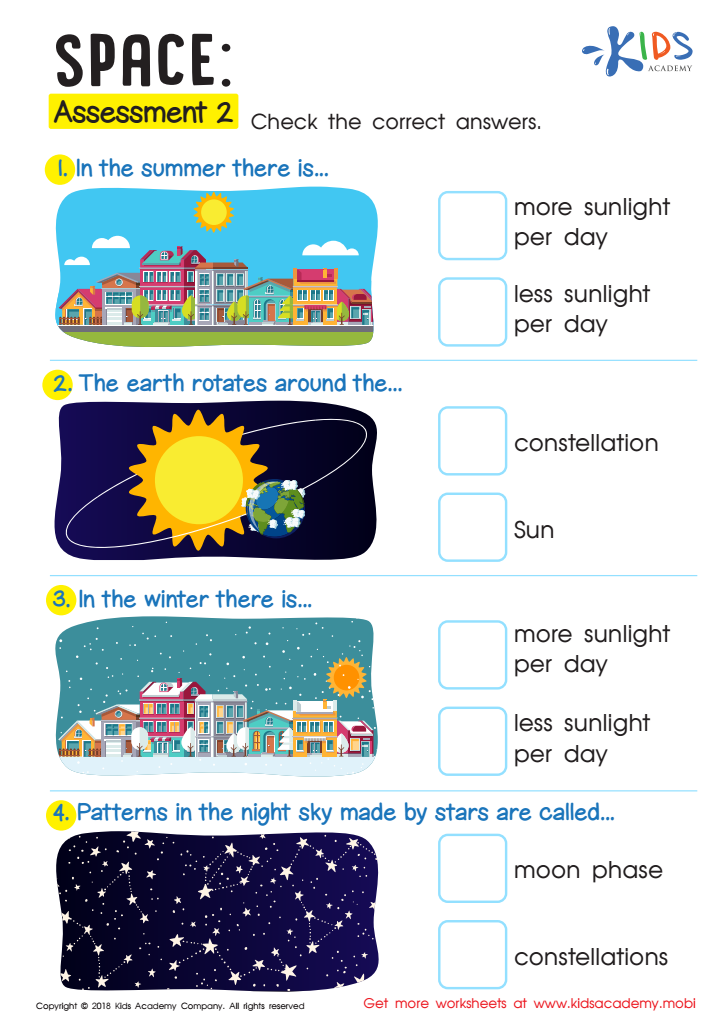
Space: Assessment 2 Worksheet
Test your kids' knowledge of the weather, constellations and Earth with this worksheet. Show them the 4 images and ask what's happening; then read the questions and options and help them pick the right answers. This printout is a helpful and fun way to learn!
Space: Assessment 2 Worksheet
Worksheet
Join Kids Academy for Free
Who is primarily going to use this learning content?








Parents and teachers should care about science knowledge for ages 6-9 because this formative period is critical for shaping a child's curiosity, critical thinking skills, and understanding of the world. Introducing science early ignites a sense of wonder, encouraging children to ask questions and explore—key components of scientific thinking. By fostering a love for science, we help develop problem-solving skills, logical reasoning, and the ability to comprehend and apply concepts.
Science education at a young age also lays the groundwork for future academic success and lifelong learning. Understanding basic scientific principles helps children grasp more complex ideas later on, making advanced topics less intimidating.
Moreover, early exposure to science can inspire future interests and careers in STEM fields, which are increasingly vital in our technology-driven world. Science knowledge captivates young minds by connecting everyday phenomena to underlying principles—for instance, why the sky is blue or how plants grow—making learning interactive and relevant.
Finally, children's natural scientists can take action to solve local issues, making them responsible, informed global citizens. Caring about science education for ages 6-9 isn't just about academic achievement; it’s about nurturing curious, knowledgeable, and responsible individuals prepared to contribute to society and the world.







