
Spatial awareness Science Worksheets for Ages 6-9
7 filtered results
Difficulty Level
Grade
Age
-
From - To
Subject
Activity
Standards
Unlock your child's potential with our engaging Spatial Awareness Science Worksheets designed for ages 6-9. These interactive resources blend fun and education, helping young learners develop critical spatial reasoning skills through captivating activities. Your child will explore concepts such as shapes, measurements, and patterns while enhancing their understanding of the world around them. Each worksheet is thoughtfully crafted to cater to diverse learning styles, ensuring effective skill development. Perfect for home or classroom use, our worksheets are an essential tool for fostering creativity and problem-solving abilities. Download today and watch your child's confidence soar as they navigate the fascinating realm of spatial awareness!
Favorites
With answer key
Interactive
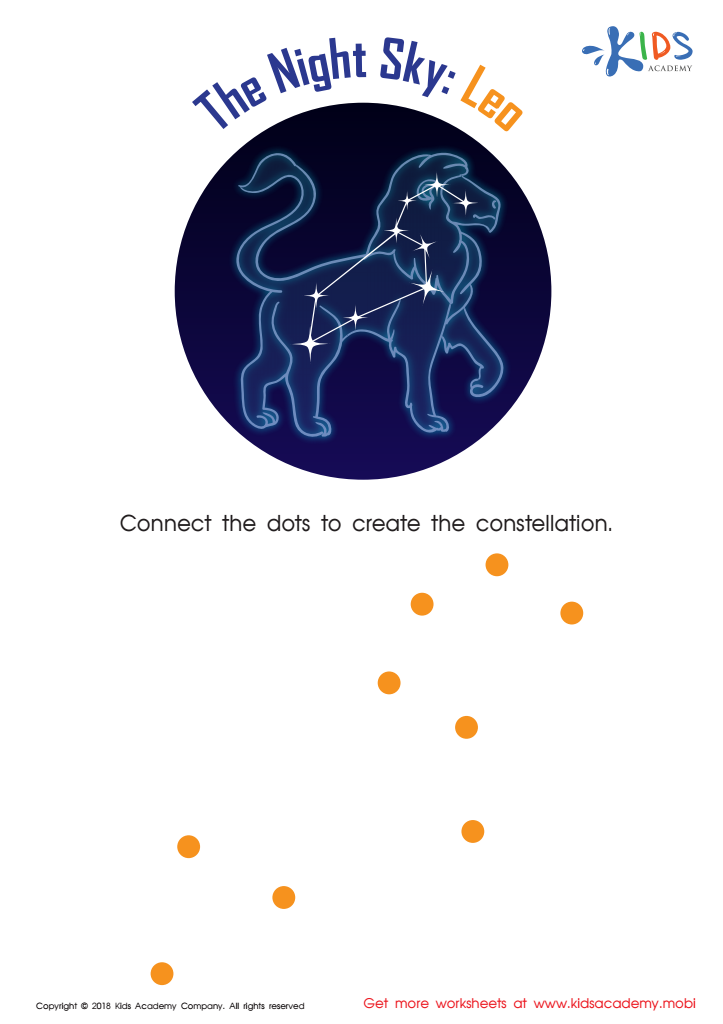
The Night Sky: Leo Worksheet
Let your kids explore the wonders of the stars with this fun worksheet! They'll connect the dots to create the constellation Leo. Night gazing instruments, a telescope or this printout can help your kids learn about constellations and horoscopes. Download the worksheet and let the star watching begin!
 Assign to My Students
The Night Sky: Leo Worksheet
Worksheet
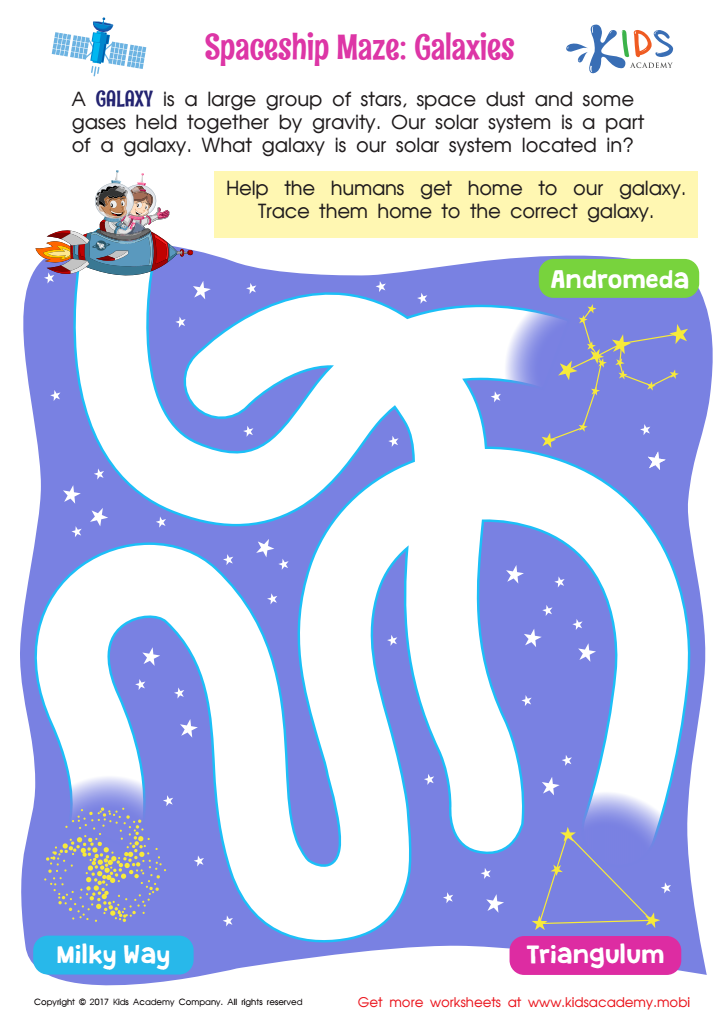
Spaceship Maze: Galaxies Worksheet
Guide lost humans home with this fun space maze: Galaxies! Once the journey is complete, kids can discover the name of our galaxy: the Milky Way! An exciting way to teach kids about space and help humans find their way back home.
Spaceship Maze: Galaxies Worksheet
Worksheet
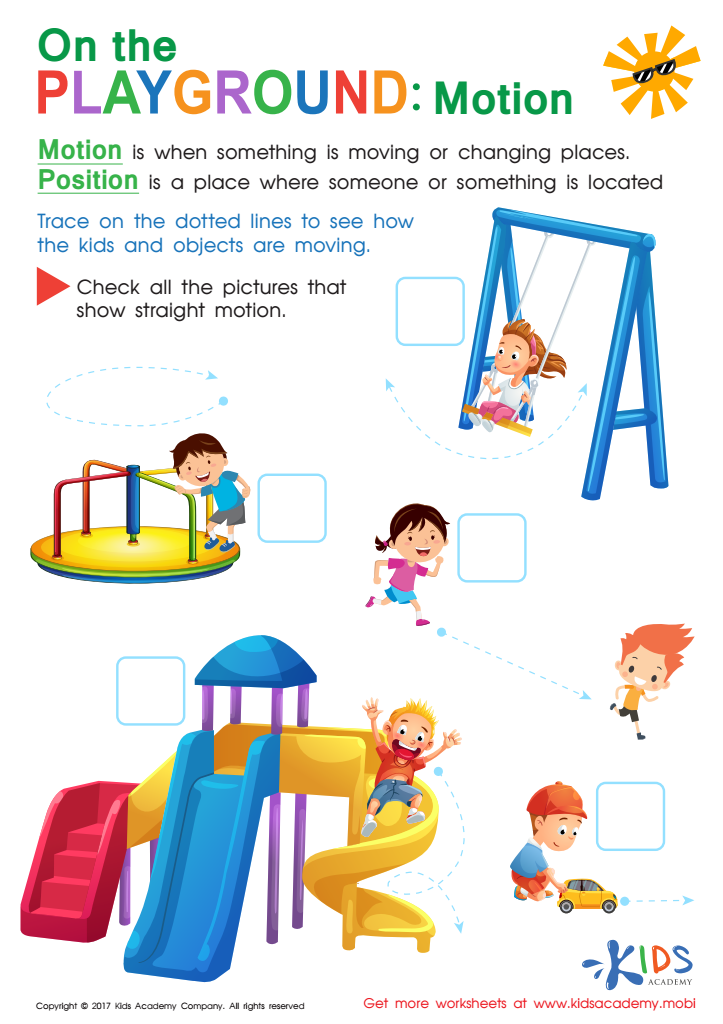
Position and Motion Worksheet
Take a trip to the park and explore motion and position with fun worksheets!
Take your child's science knowledge to a whole new level with Kids Academy's grade 2 position and motion worksheets! Explore motion and position with fun worksheets while taking a trip to the park. Strengthen their understanding of physics and how people and objects move through space.
Position and Motion Worksheet
Worksheet
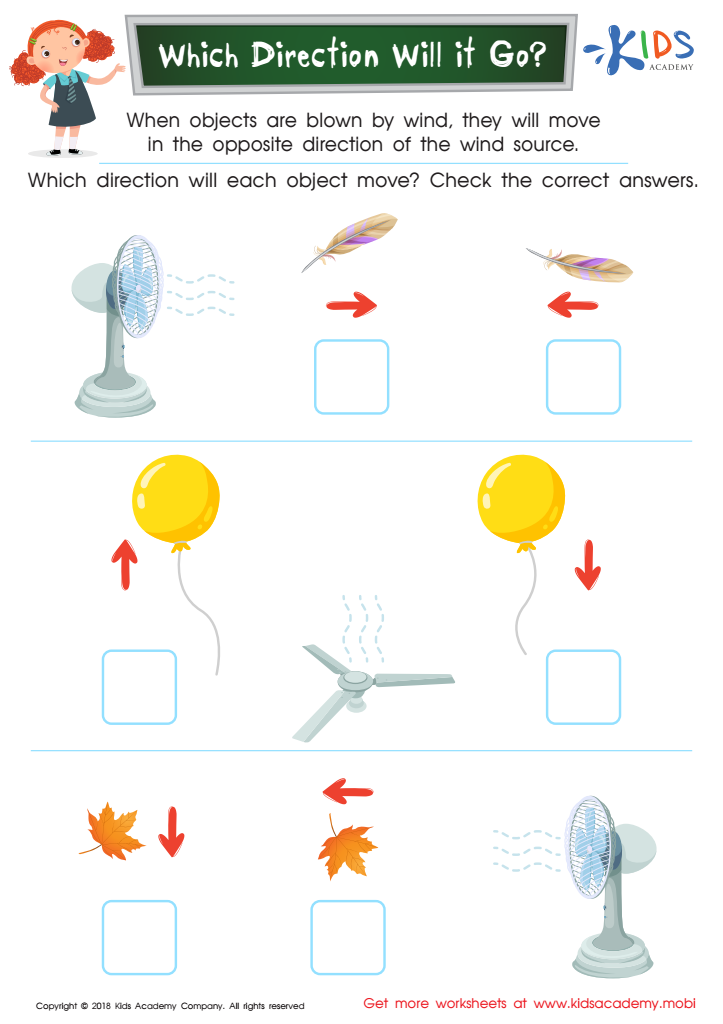
Which Direction Will it Go? Worksheet
Explain to your students: when objects are blown by wind, they will move in the opposite direction. In the worksheet, there are pictures of wind sources and objects being blown by the wind. Ask your child to identify and check the direction each object will move.
Which Direction Will it Go? Worksheet
Worksheet
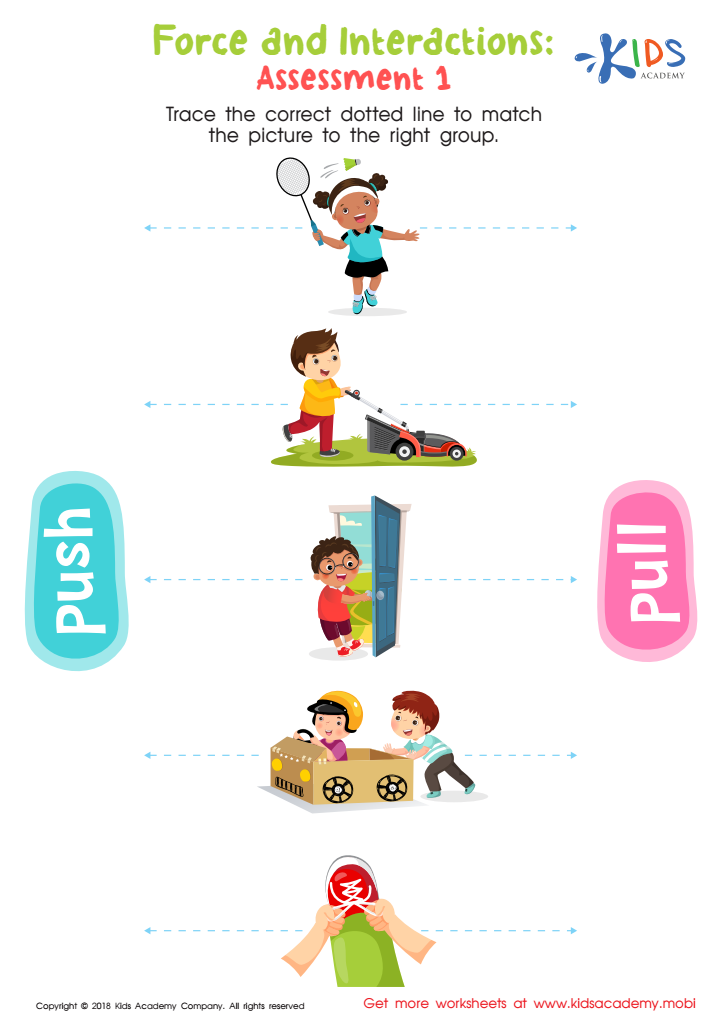
Force and Interactions: Assessment 2 Worksheet
Help your child see the difference between push and pull with this fun worksheet. Ask them to match each picture to the right group. The "push" is on the left and the "pull" is on the right. Assist them in tracing the activities and explain what it is the people are doing.
Force and Interactions: Assessment 2 Worksheet
Worksheet
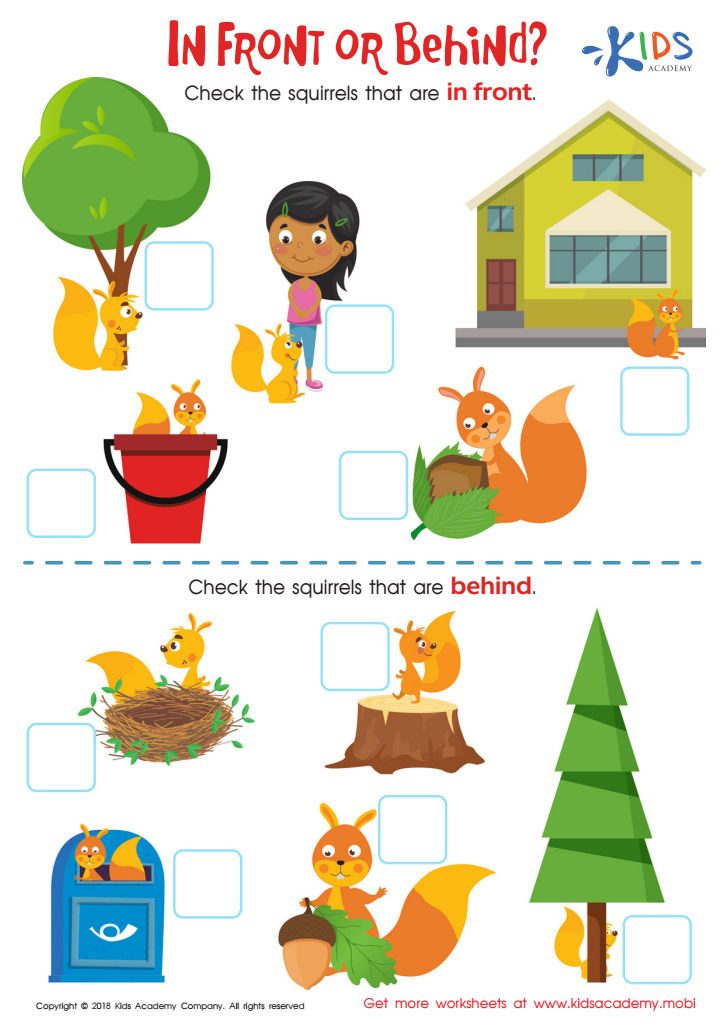
In Front or Behind: Part 2 Worksheet
Teach positional words "front" and "behind" with this fun worksheet! Students identify where the squirrel is in relation to the object - in front or behind. It's a great exercise to practice early geometry skills and understanding object movement.
In Front or Behind: Part 2 Worksheet
Worksheet
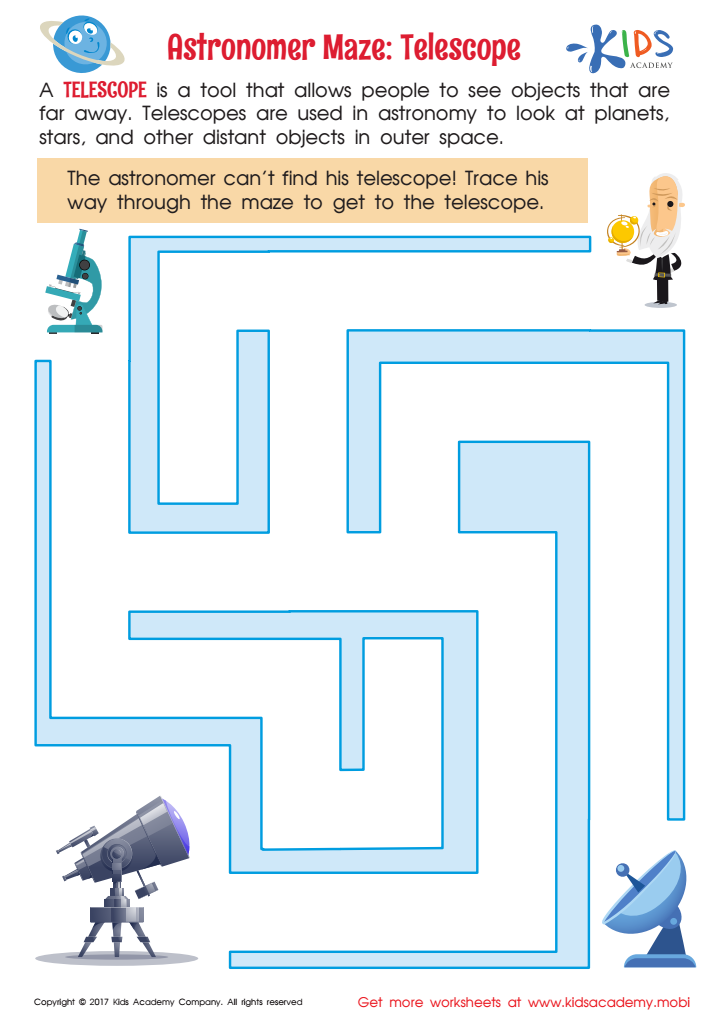
Astronomer Maze: Telescope Worksheet
Let your mini astronomer explore the galaxy with this fun and puzzling space maze worksheet – Telescope! Your child will have a great time navigating the maze, while learning how telescopes help scientists study the stars.
Astronomer Maze: Telescope Worksheet
Worksheet
Join Kids Academy for Free
Who is primarily going to use this learning content?








Spatial awareness is a crucial skill for children aged 6-9 as it lays the foundation for various academic subjects and everyday activities. This ability enables children to understand the relationship between objects in space, which is fundamental in fields such as mathematics, science, and art. By developing spatial awareness, children enhance their problem-solving skills, critical thinking, and creativity.
Moreover, spatial awareness significantly impacts children’s performance in geometry, measurement, and even in understanding complex scientific concepts, such as the properties of different materials. Engagement in activities that foster spatial awareness, like building with blocks or participating in puzzles, encourages teamwork and communication, essential social skills.
Parents and teachers play a vital role in nurturing spatial awareness by incorporating engaging hands-on activities and interactive learning experiences into their curriculum. By prioritizing spatial awareness, educators can help children excel academically and prepare them for future learning in STEM fields (science, technology, engineering, and mathematics). Furthermore, these skills extend beyond the classroom, providing children with the ability to navigate the world confidently and efficiently. Thus, recognizing the importance of spatial awareness in early education will yield long-term benefits for children’s development and future success.







