
Understanding moon phases Science Worksheets for Ages 6-9
3 filtered results
Difficulty Level
Grade
Age
-
From - To
Subject
Activity
Standards
Explore the fascinating world of moon phases with our "Understanding Moon Phases Science Worksheets" designed for ages 6-9! These engaging and interactive worksheets introduce young learners to the different stages of the moon, enhancing their grasp of lunar cycles. With a variety of activities, including diagrams, coloring pages, and quizzes, children can easily visualize and comprehend how the moon changes shape. Perfect for home or classroom use, these worksheets promote critical thinking and scientific literacy while making learning fun. Let your child embark on an exciting journey through space and expand their knowledge of our celestial neighbor with these thoughtfully crafted resources!
Favorites
With answer key
Interactive
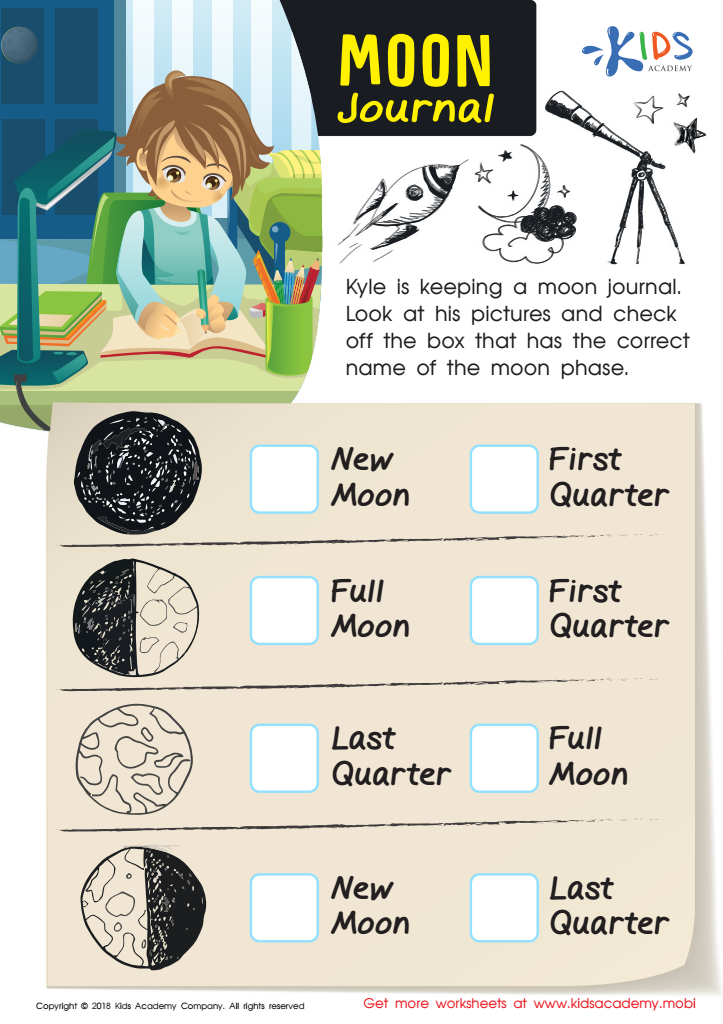
Moon Journal Worksheet
Observe the moon and its 8 phases with your child by downloading this free PDF worksheet from Kids Academy! Review the moon phases with them then help them label Kyle's moon journal. Select the right moon phase for each picture to complete the page!
 Assign to My Students
Moon Journal Worksheet
Worksheet
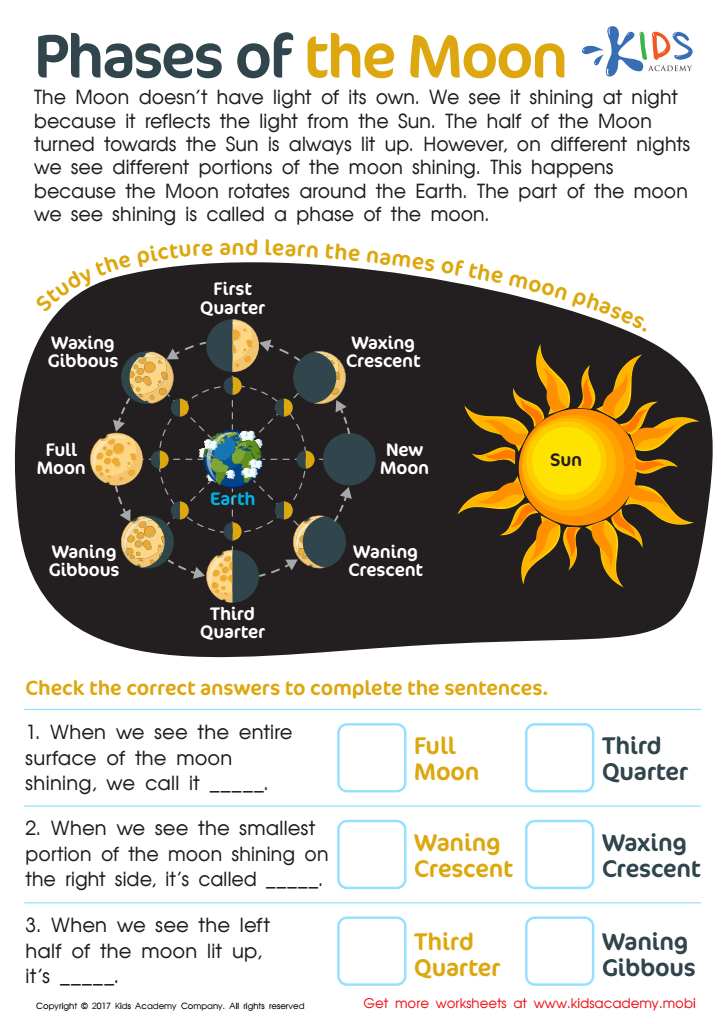
Phases of The Moon Worksheet
It'll show kids the fascinating phases and journey the moon takes around Earth. They'll be amazed to learn it's not always shining!
Phases of The Moon Worksheet
Worksheet
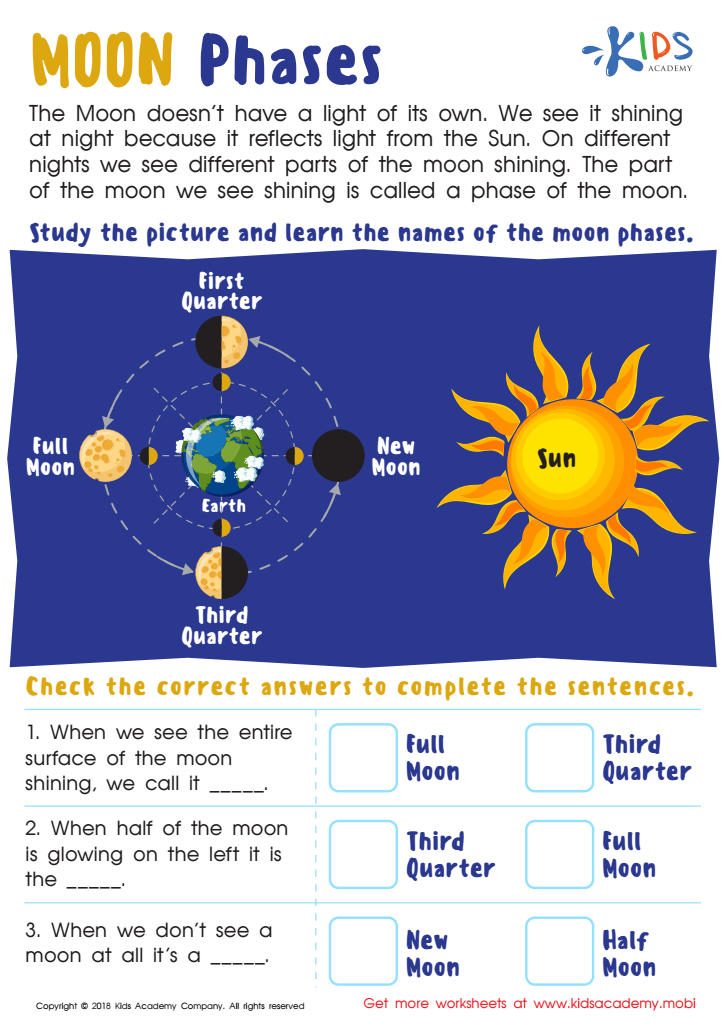
Moon Phases Worksheet
Gaze up at the night sky and the moon's appearance may change from night to night. Encourage your child to learn more about the sun, the moon, and space with this science worksheet. Have them read the text then study the picture. Finally, read the sentences and check the answers to identify the moon's phases.
Moon Phases Worksheet
Worksheet
Join Kids Academy for Free
Who is primarily going to use this learning content?






Understanding moon phases is crucial for children aged 6-9 as it aligns with early science education and stimulates curiosity about the natural world. Engaging with this topic helps children grasp fundamental scientific concepts such as the Earth's rotation and its orbit around the Sun. Learning about the moon’s cycles not only fosters observational skills but also encourages critical thinking as students ask questions and seek explanations.
Moreover, integrating moon phases into the curriculum can spark adventurous imagination. Children often enjoy storytelling, and framing the moon's phases around tales of mythological figures or space exploration can enhance their enthusiasm for learning. This approach makes science relatable and exciting, which increases retention and understanding.
Additionally, understanding moon phases connects to broader themes in science and astronomy, promoting literacy in these subjects. Parents and teachers can use moon observations to instill a sense of wonder and appreciation for celestial phenomena. It also offers opportunities for hands-on activities, such as moon journaling or creating models, which engage different learning styles.
Ultimately, teaching moon phases cultivates a foundational knowledge of astronomy that can inspire future scientific exploration and curiosity in young learners, setting the stage for further academic success and a lifelong love of learning.







