Visual Perception Skills Science Worksheets for Ages 6-9
4 filtered results
-
From - To
Enhance your child's learning journey with our engaging Visual Perception Skills Science Worksheets tailored for ages 6 to 9. These worksheets foster critical skills such as observation, shape recognition, and spatial awareness, laying the foundation for scientific learning. Designed to captivate young minds, they incorporate fun activities and colorful visuals to stimulate curiosity and promote effective exploration of the world around them. Ideal for use at home or in the classroom, these worksheets encourage independent thinking and problem-solving. Ignite your child’s love for science while developing essential visual perception skills with our expertly crafted resources!
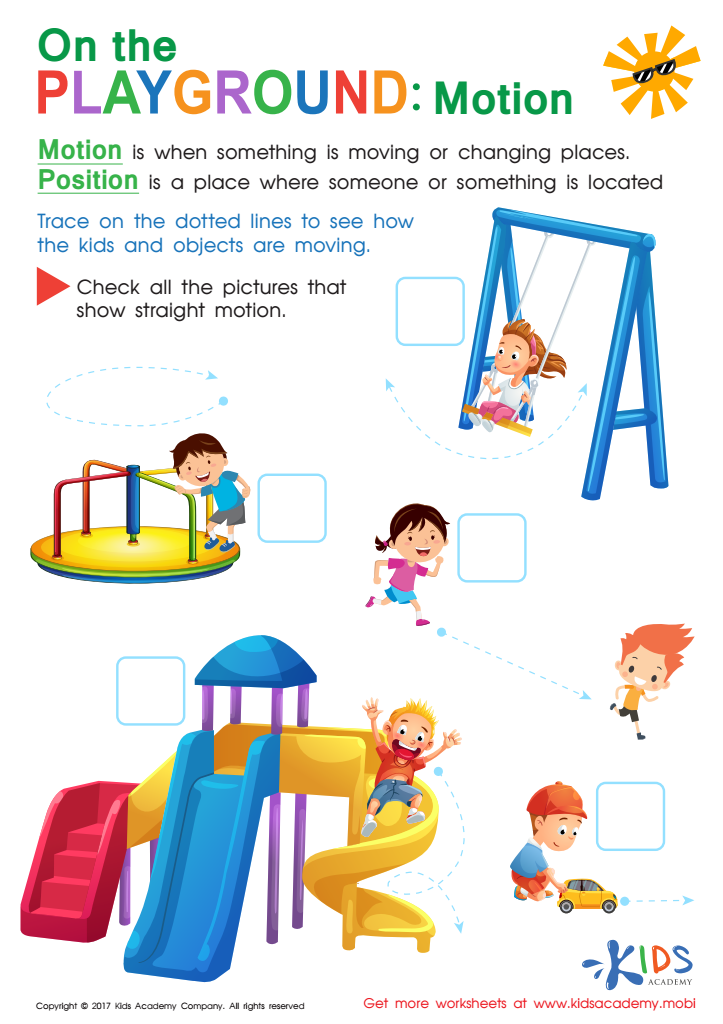
Position and Motion Worksheet
 Assign to My Students
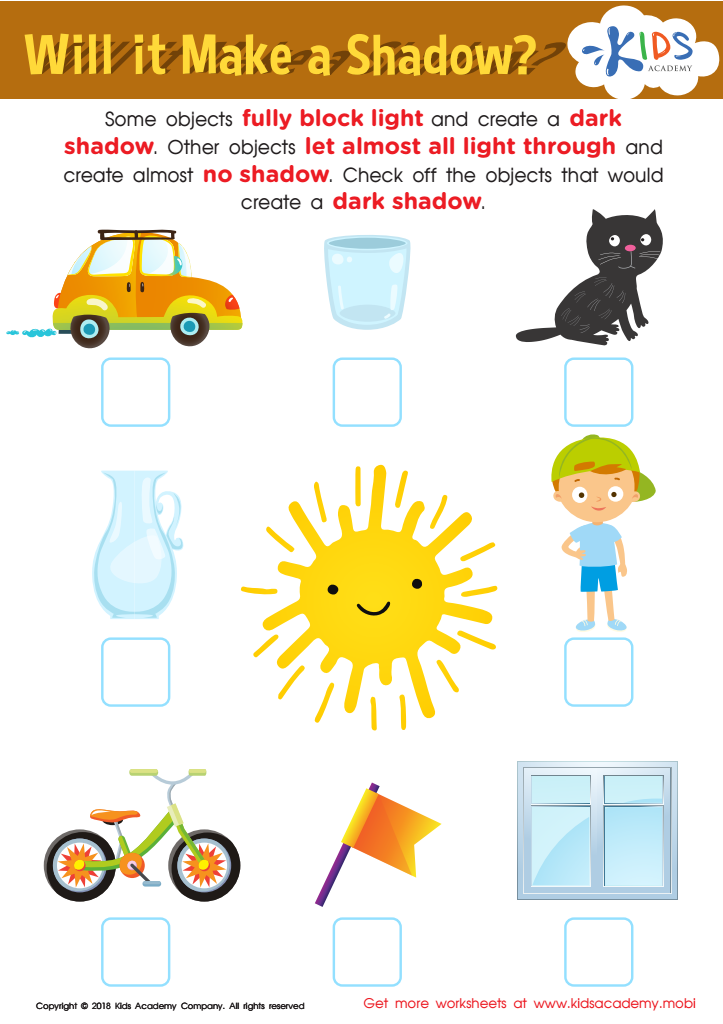
Will It Make a Shadow? Worksheet
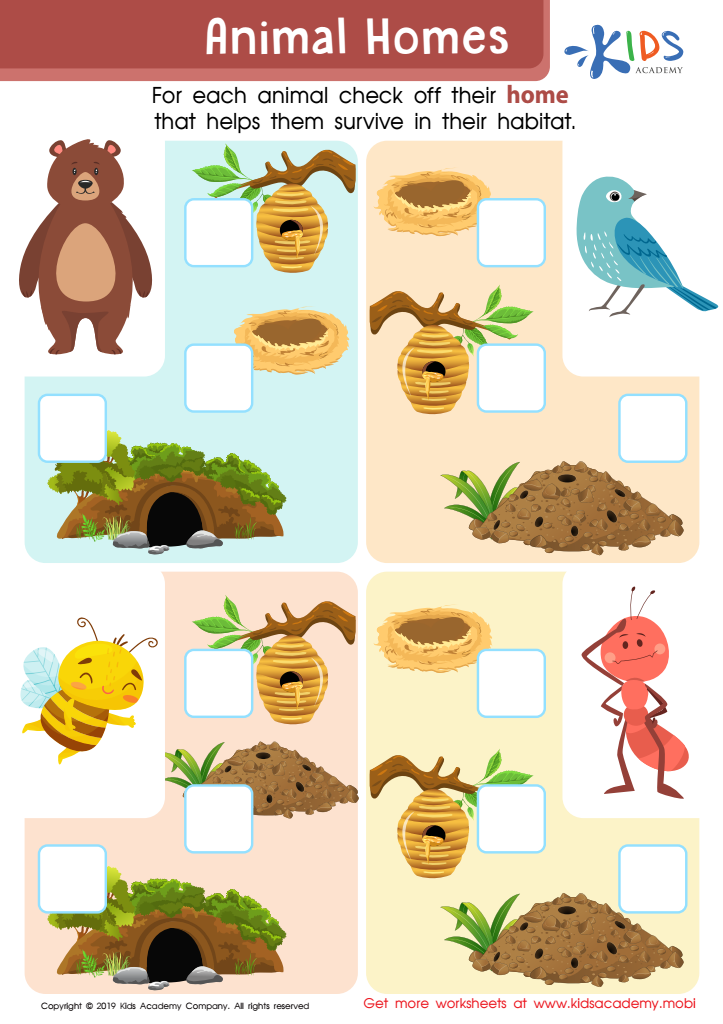
Animal Homes Worksheet
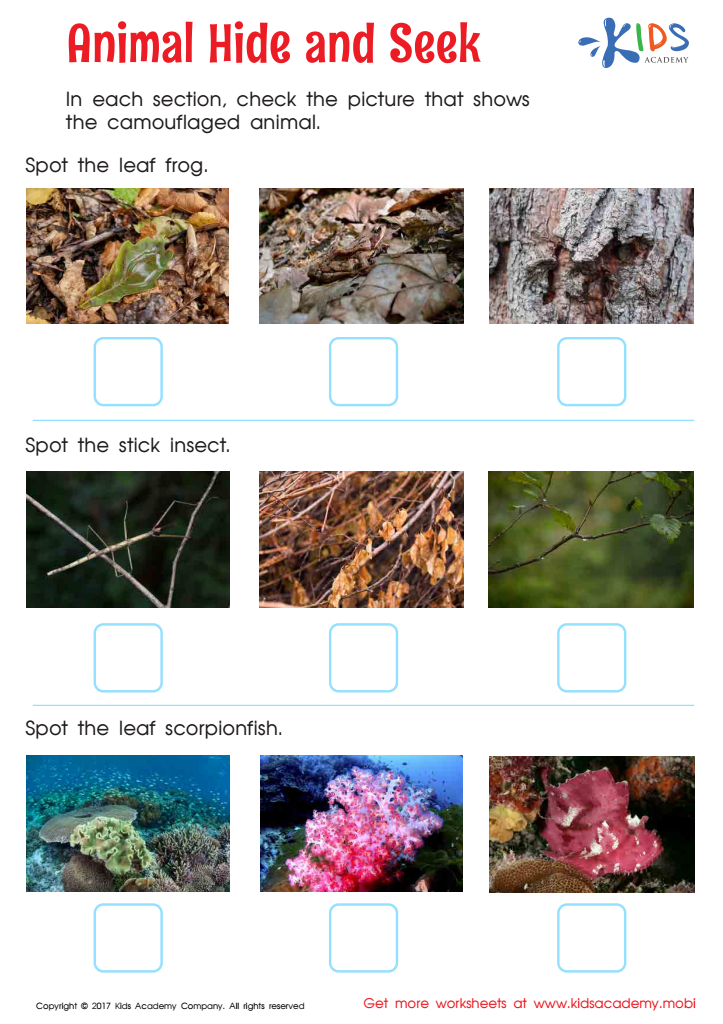
Animal Hide and Seek Worksheet








Visual perception skills are fundamental for children's overall development and learning processes, particularly for those aged 6-9. As children transition into more complex academic environments, these skills become crucial in areas like reading, math, and even social interactions. When children can perceive, interpret, and make sense of visual information effectively, they are better equipped to interpret text, solve problems, and understand their surroundings.
Parents and teachers should prioritize visual perception because these skills not only support academic achievement but also enhance fine motor skills, hand-eye coordination, and spatial awareness. For instance, recognizing patterns and shapes can bolster a child’s ability to decode words, crucial for reading readiness. Skills like figure-ground discrimination help children focus on relevant information amidst distractions, allowing for more effective learning.
Moreover, establishing strong visual perception can aid in developing confidence and independence. As children feel more competent in interacting with their environment, they are likely to engage more fully in classroom activities and social situations. In summary, fostering visual perception skills sets the foundation for lifelong learning and adaptation, making it essential for parents and teachers to actively support this development during ages 6-9.







