
Weather Vocabulary Science Worksheets for Ages 6-9
3 filtered results
Difficulty Level
Grade
Age
-
From - To
Subject
Activity
Standards
Explore our engaging Weather Vocabulary Science Worksheets designed specifically for ages 6-9! These printable resources help young learners understand essential weather terms, enhancing their science vocabulary while making learning fun. The worksheets include a variety of activities such as matching words with pictures, fill-in-the-blank exercises, and word searches, allowing children to connect words to real-life weather phenomena. Perfect for classroom use or at-home learning, these worksheets foster critical thinking and creativity as kids discover the wonders of weather. Equip your child with the knowledge they need to talk about storms, sunshine, and everything in between. Start their weather adventure today!
Favorites
With answer key
Interactive
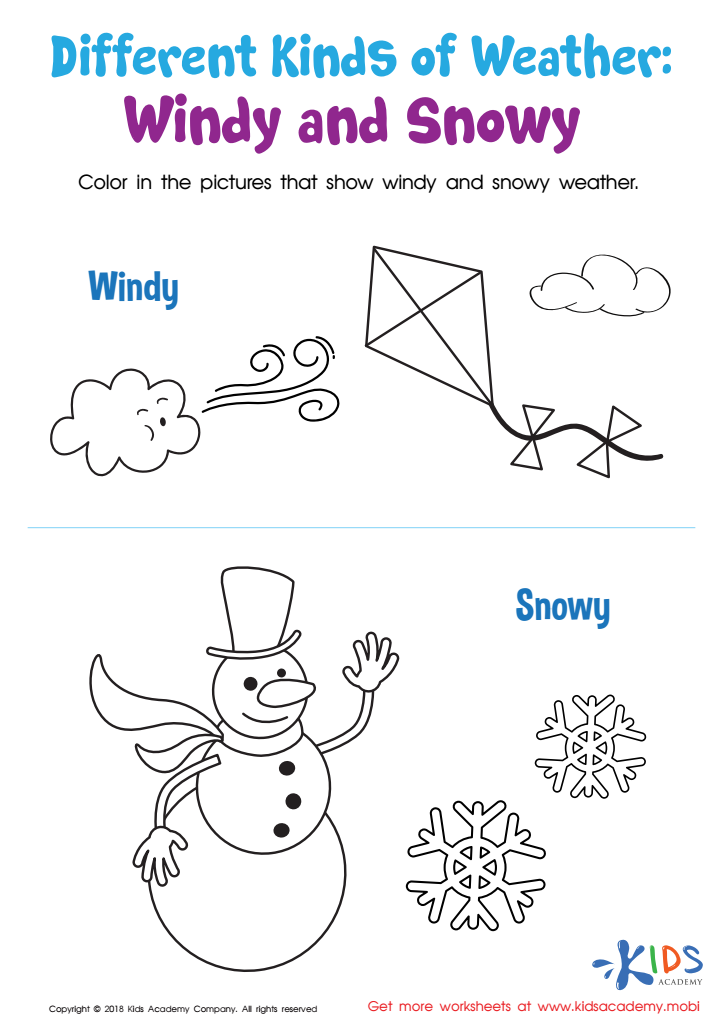
Different Kinds of Weather: Windy and Snowy Worksheet
Invite your little learner to practice their fine motor skills and learn about nature with this fun and charming PDF worksheet! Reinforce weather patterns and examine their environment as they color, giving them a foundation for understanding how weather affects them. No matter the weather, your learner will have a blast!
Download (PDF)
 Assign to My Students
Assign to My Students
Different Kinds of Weather: Windy and Snowy Worksheet
Worksheet
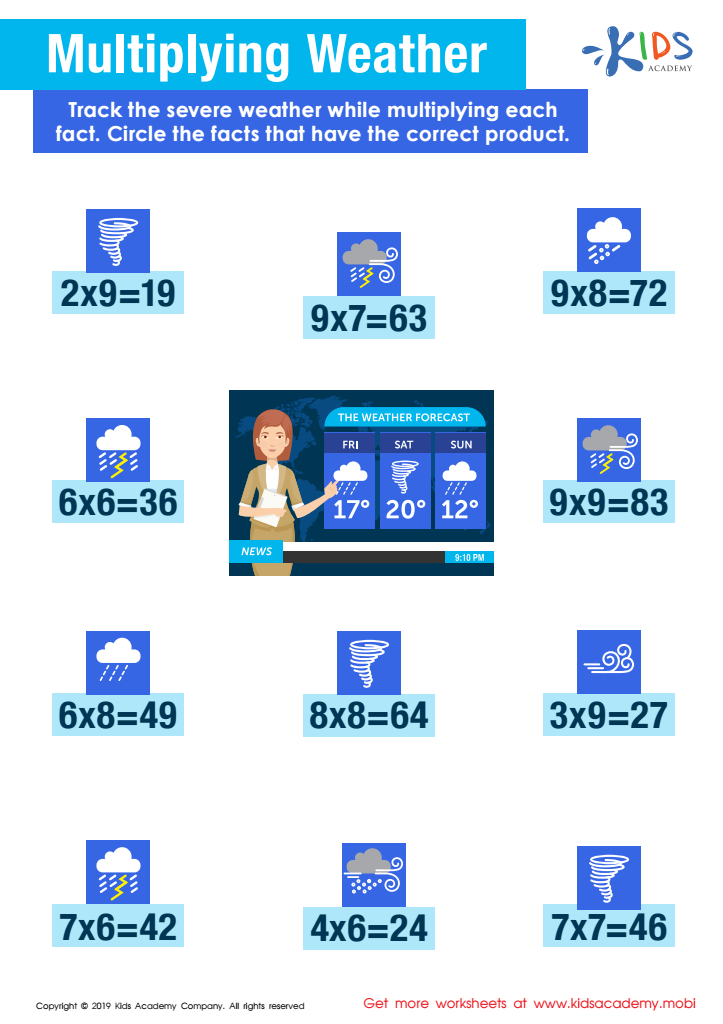
Multiplying Weather Worksheet
Most kids love playing outdoors, but weather can affect what we can do. Rain and snow can keep us from getting outside and even cancel school! Weather forecasters help us prepare for the day. In this worksheet, multiply facts to track severe weather and circle the ones with the right answer.
Multiplying Weather Worksheet
Worksheet
Join Kids Academy for Free
Who is primarily going to use this learning content?







Weather vocabulary science is crucial for children aged 6-9 because it lays the foundation for their understanding of the natural world. During these formative years, children are naturally curious about their environment, making it an ideal time to introduce scientific concepts. Understanding weather vocabulary helps them describe phenomena they experience daily, from rain and snow to sunny days and storms. This vocabulary is not just about words; it fosters inquiry and engagement, encouraging children to ask questions like, "Why does it rain?" or "What makes a tornado?"
Moreover, weather literacy promotes critical thinking and helps children make sense of the information they encounter, including forecasts and environmental news. As they learn key concepts like temperature, humidity, and precipitation, they also develop essential skills such as observation and prediction, which are applicable to various subjects and real-life situations.
Additionally, by nurturing an interest in weather phenomena, parents and teachers can inspire a love for science, leading to further exploration in related fields. This creates a generation that is more informed about climate issues, enhancing their ability to participate in conversations about environmental stewardship. Engaging children with weather vocabulary not only enhances their language skills but also cultivates curiosity and responsibility toward their planet.







