Map reading skills Our Planet and Environment Worksheets for Ages 6-9
1 filtered results
-
From - To
Enhance your child's understanding of geography with our engaging "Map Reading Skills: Our Planet and Environment" worksheets, designed for ages 6-9. These interactive resources help young learners develop essential map-reading skills while exploring various aspects of our planet and environment. Students will engage with colorful and informative maps, learn to identify key features, such as landmarks and natural resources, and practice navigating using legends and scale. Perfect for reinforcing classroom learning or as a fun at-home activity, these worksheets encourage critical thinking and boost spatial awareness. Dive into the wonders of maps and nature—stimulate your child's curiosity today!
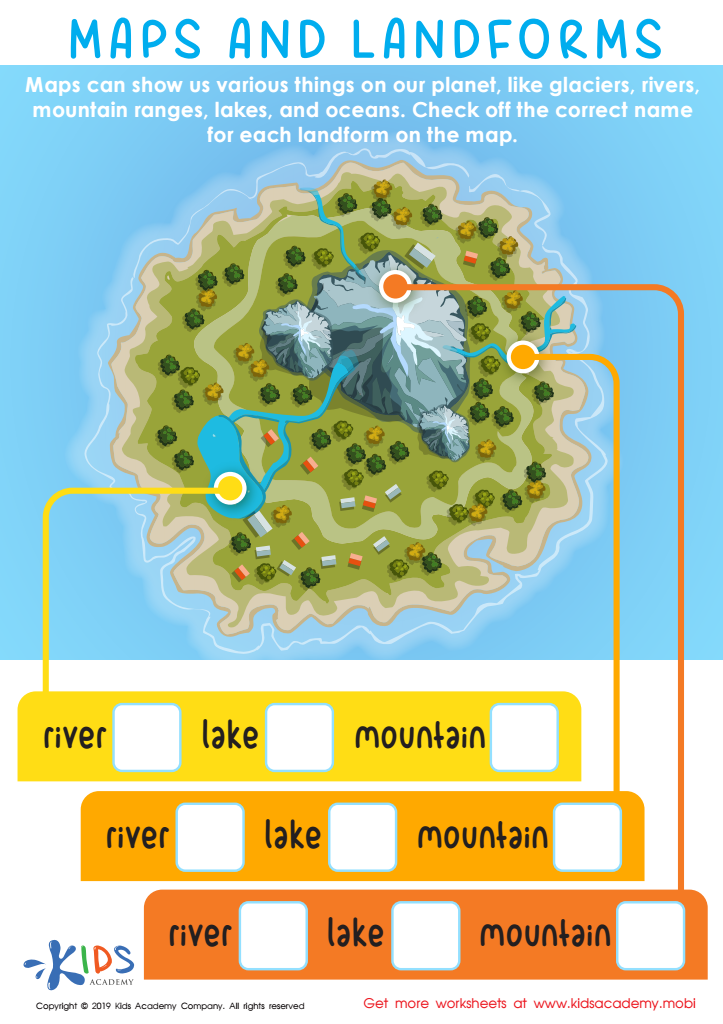
Maps and Landforms Worksheet
 Assign to My Students






Parents and teachers should prioritize map reading skills for children aged 6-9 because these abilities are essential for developing spatial awareness, critical thinking, and a connection to our planet and environment. At this critical developmental stage, children are naturally curious about the world around them. Teaching them map reading fosters their understanding of geography, helping them grasp how different locations relate to one another and the significance of our diverse ecosystems.
Furthermore, map skills empower children to navigate their surroundings, cultivating confidence and independence. Understanding maps equips them to identify important landmarks, natural resources, and environmental features, fostering a sense of responsibility towards their environment. This knowledge promotes eco-awareness as children learn to appreciate and interpret the natural world.
Incorporating map reading into educational activities can make learning interactive and enjoyable. It encourages collaboration through group projects, enhancing communication skills and teamwork. By nurturing these skills early on, we not only prepare children for future academic pursuits but also instill a lasting appreciation for geography and environmental stewardship, ultimately shaping informed and responsible citizens who understand the importance of protecting our planet.







