Filters

6 filtered results

Clear all filters
Favorites
With answer key
Interactive

6 filtered results

Difficulty Level

Grade


Enhance your child's observational skills with our engaging "Our Planet and Environment Worksheets" designed for ages 6-9. These worksheets encourage young learners to closely examine their surroundings, fostering curiosity about the natural world. Activities include identifying plants, animals, and environmental changes, helping children develop critical thinking and analytical skills. Perfect for classroom or home use, our printable worksheets create an interactive learning experience that makes science fun and accessible. Explore the wonders of our planet while nurturing a sense of responsibility for the environment. Start your child’s journey to becoming an observant and informed global citizen today!

Check out this FREE Trial Lesson on Our Planet and Environment for age 6-9!

Bird and Insect Structures

Favorites
With answer key
Interactive
  • 6-9
  • Observational skills
  • Our Planet and Environment
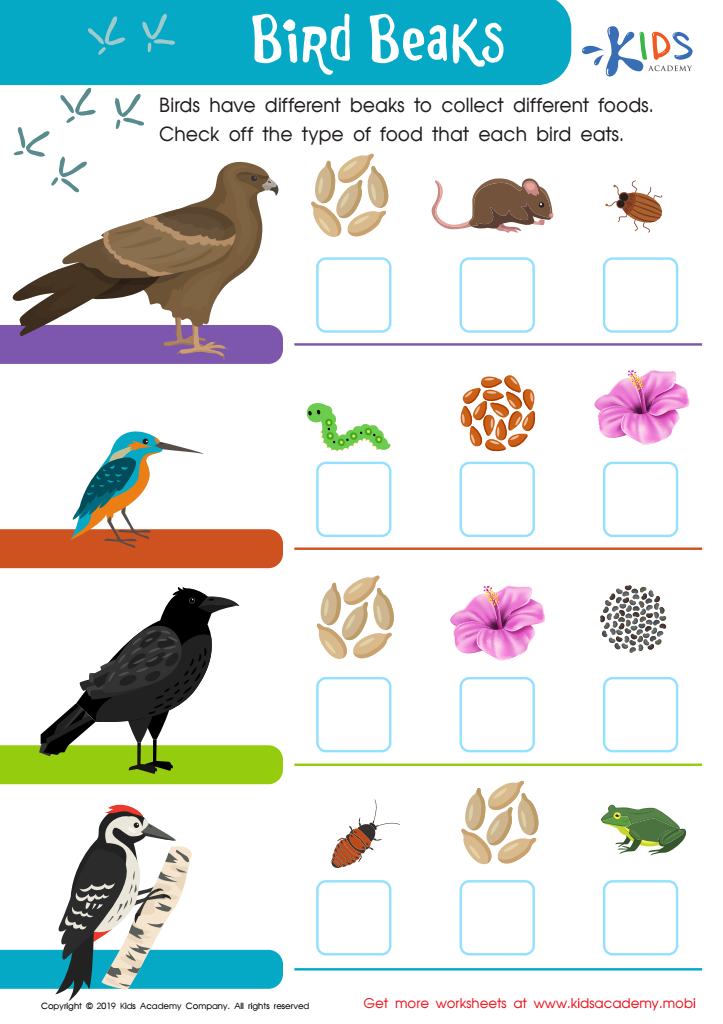
Bird Beaks Worksheet

Bird Beaks Worksheet

Birds have beaks to eat different types of food. Let your little nature lover explore why with this free worksheet! They'll learn about different beak shapes and match them to the food that's best for them. Be an adorable bird watcher together!
Bird Beaks Worksheet
Worksheet
Weather Journal Worksheet

Weather Journal Worksheet

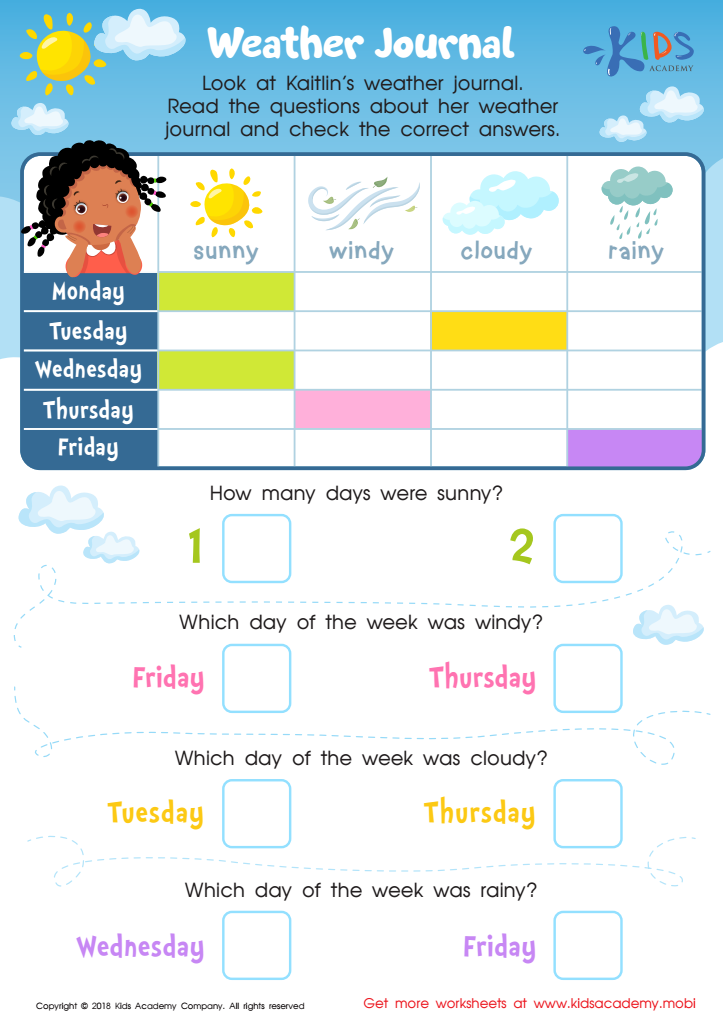
Kaitlin keeps a weather journal. Encourage your child to do the same! Look at Kaitlin's journal with them, and have them note the weather for each day. Read aloud the questions and check the correct answers.
Weather Journal Worksheet
Worksheet
Observing the Sky Worksheet

Observing the Sky Worksheet

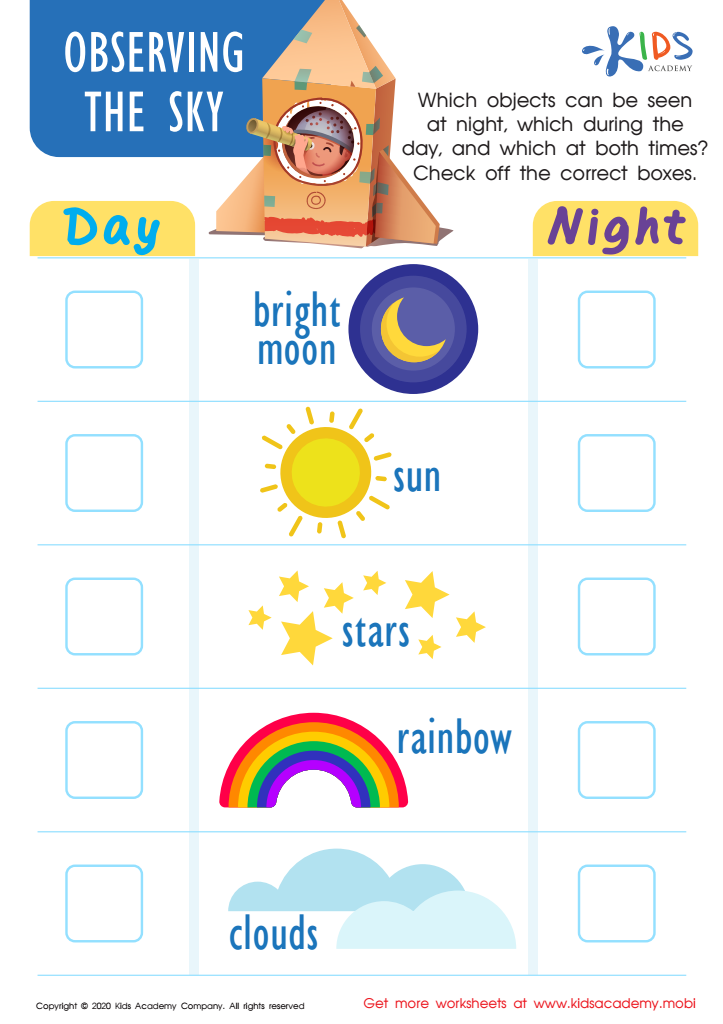
Look up to the sky and observe day and night objects! See a rainbow or some clouds by day and stars and the moon at night. Help your little learner review this science concept with Kids Academy's fun and colorful worksheet. Have them sort and check off the objects seen by day or night, going down the column in the center.
Observing the Sky Worksheet
Worksheet
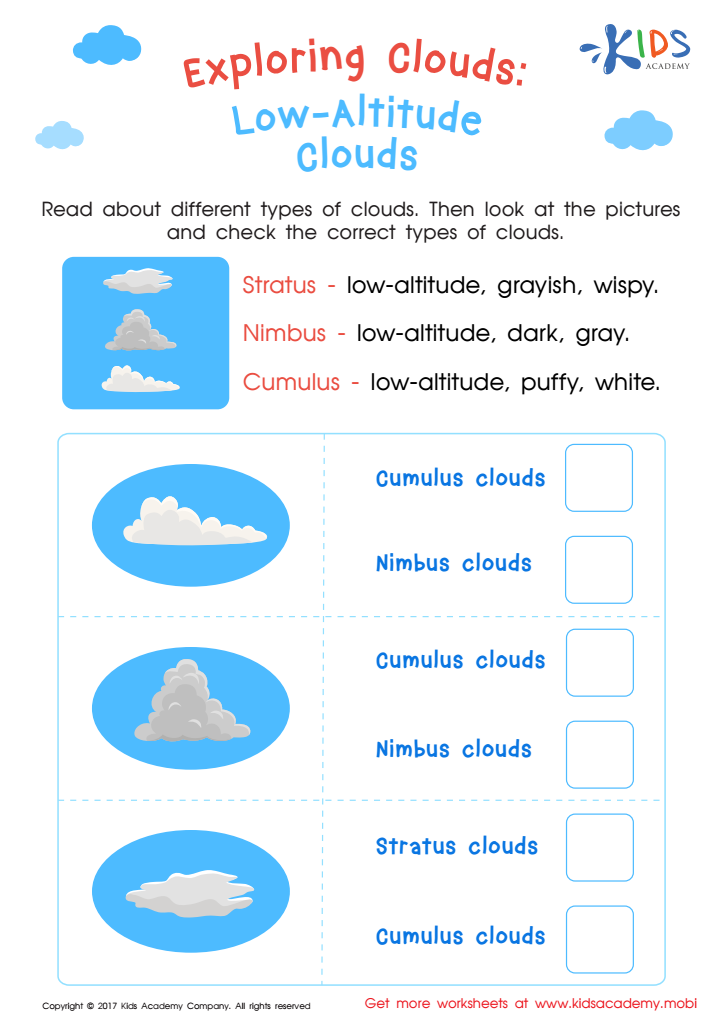
Worksheet: type of low altitude clouds

Exploring Clouds: Low Altitude Clouds Printable
Use this fun worksheet to teach them about the different types of low altitude clouds like cirrocumulus, stratocumulus, and cumulonimbus. 80 words. When a storm clouds up the sky, have your child identify the different types of clouds! This worksheet can help them learn about the nimbus, cirrocumulus, stratocumulus, and cumulonimbus clouds. It's a great way to teach them about the various low altitude clouds and have fun at the same time!
Exploring Clouds: Low Altitude Clouds Printable
Worksheet
Moon Phases Worksheet

Moon Phases Worksheet

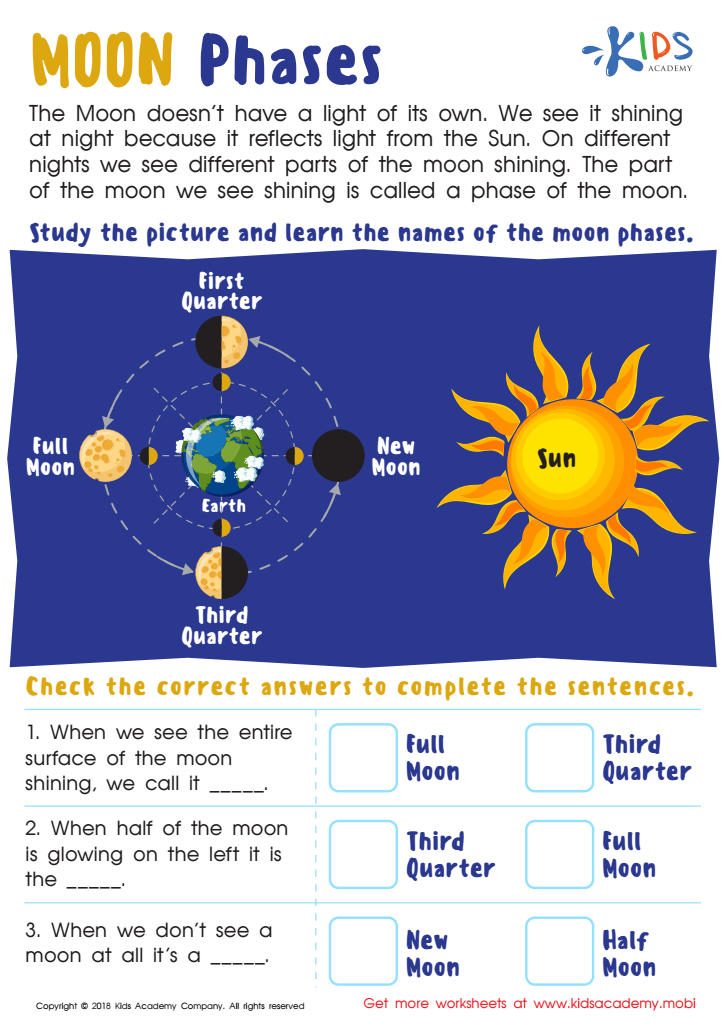
Gaze up at the night sky and the moon's appearance may change from night to night. Encourage your child to learn more about the sun, the moon, and space with this science worksheet. Have them read the text then study the picture. Finally, read the sentences and check the answers to identify the moon's phases.
Moon Phases Worksheet
Worksheet
Animals and Plants: Assesment 1 Worksheet

Animals and Plants: Assessment 1 Worksheet

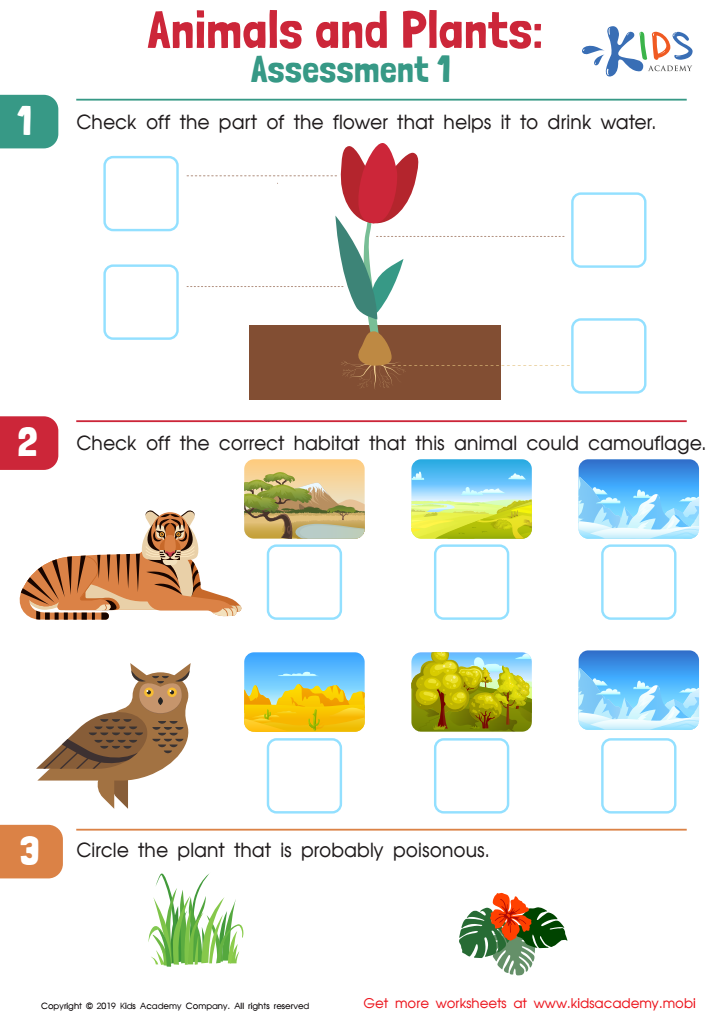
Do you want to easily assess your child's understanding of basic science concepts? This colorful PDF offers a free opportunity for them to test their knowledge about parts of a flower, poisonous plants, animal habitats and more! Bright pictures make it fun and easy for you to see what they know.
Animals and Plants: Assessment 1 Worksheet

Worksheet


Observational skills are crucial for children aged 6-9, especially when exploring Our Planet and Environment. These skills cultivate awareness and curiosity about the world around them, encouraging young learners to notice details such as patterns in nature, the behavior of animals, and the impact of human activities on ecosystems. By developing observational skills, children enhance their critical thinking and problem-solving abilities, enabling them to assess environmental issues and their importance.

Parents and teachers play a vital role in fostering these skills. Engaging in activities like nature walks, outdoor scavenger hunts, or gardening can spark conversations about biodiversity, conservation, and sustainability, helping children form a connection with their environment. These experiences not only promote interactive learning but also lay the foundation for responsible citizenship.

Additionally, strong observational skills translate to greater academic success across subjects. When children learn to observe closely, they improve their comprehension and retention skills, benefiting their overall education. By prioritizing the development of observational skills in conjunction with environmental education, parents and teachers can inspire a generation of environmentally conscious, thoughtful, and informed individuals ready to protect and cherish the planet for years to come.