Animal recognition Plants and Animals Worksheets for Ages 6-9
5 filtered results
-
From - To
Discover the exciting world of Animal Recognition with our engaging worksheets designed for children aged 6-9! Our thoughtfully crafted printable materials introduce young learners to various animals through fun activities, promoting cognitive skills and nurturing a love for nature. Each worksheet features vibrant illustrations and interactive exercises that foster recognition, critical thinking, and vocabulary development related to wildlife. Perfect for both classroom use and at-home learning, these resources encourage curiosity and enhance children's understanding of diverse animal species. Explore our collection today to inspire the next generation of nature enthusiasts and scientists while making learning fun and enjoyable!
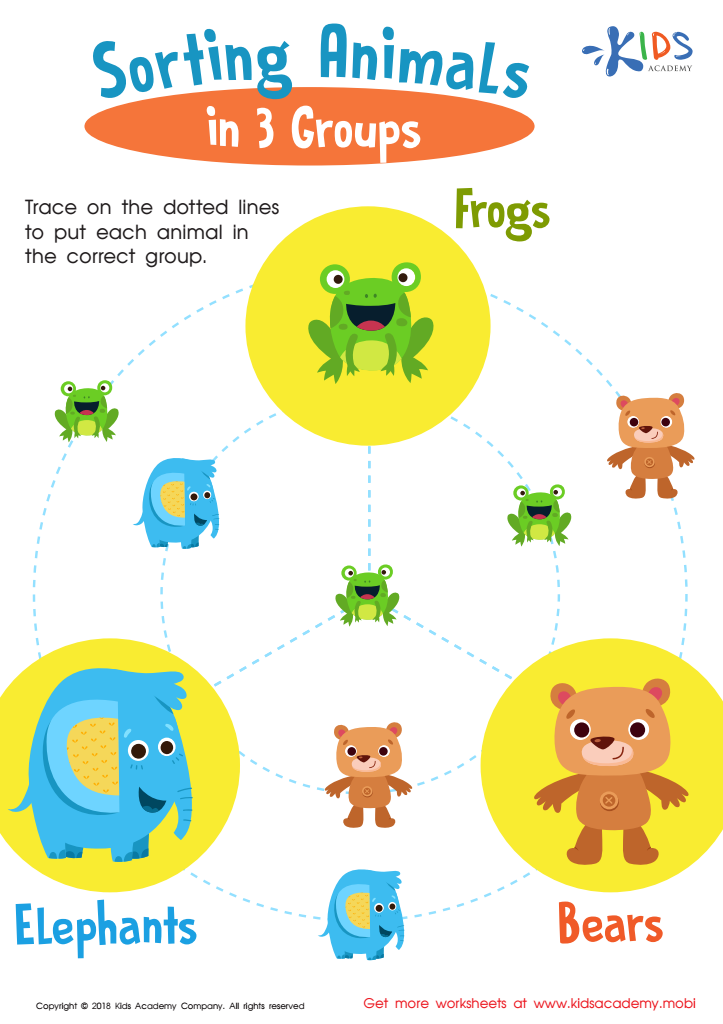
Sorting Animals in 3 Groups Worksheet
 Assign to My Students











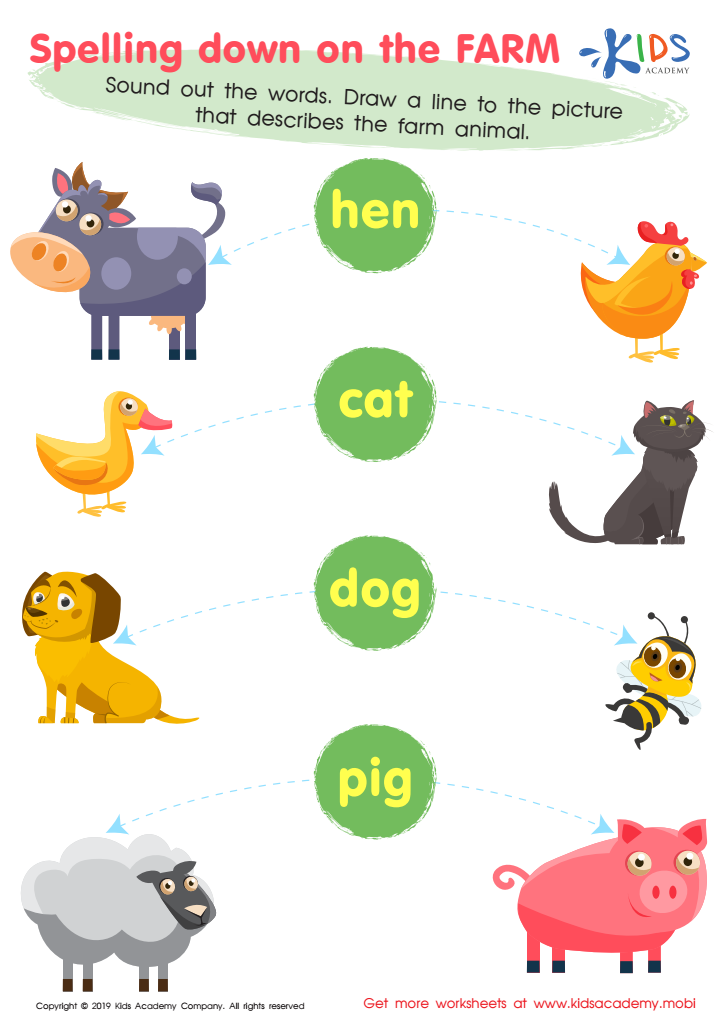
Spelling Down on the Farm Worksheet
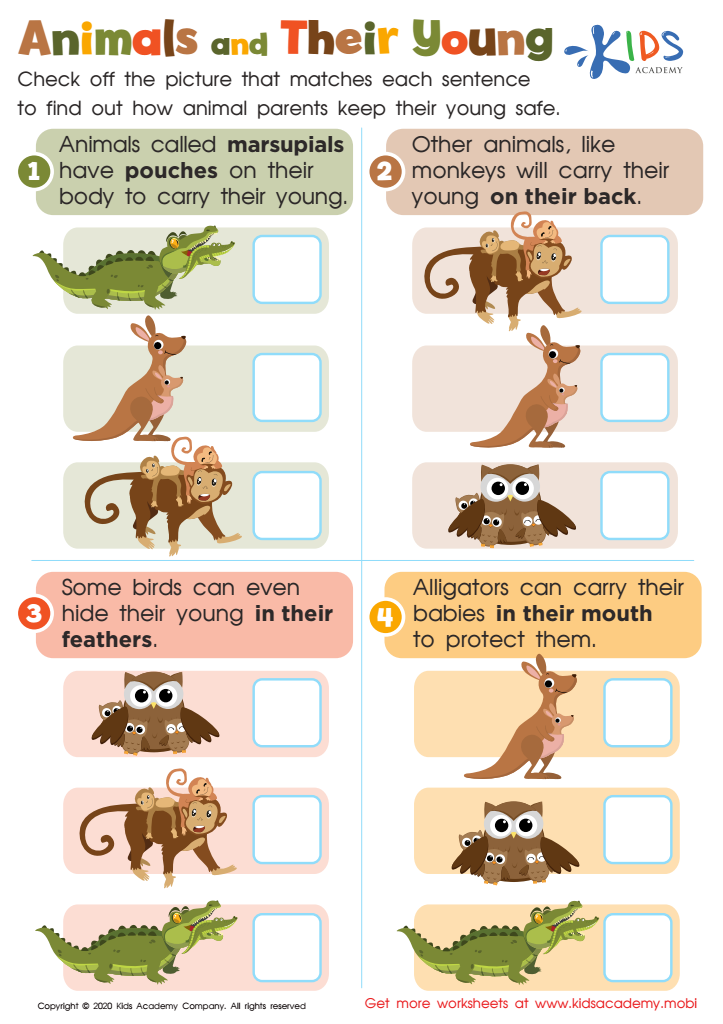
Animals and Their Young Worksheet
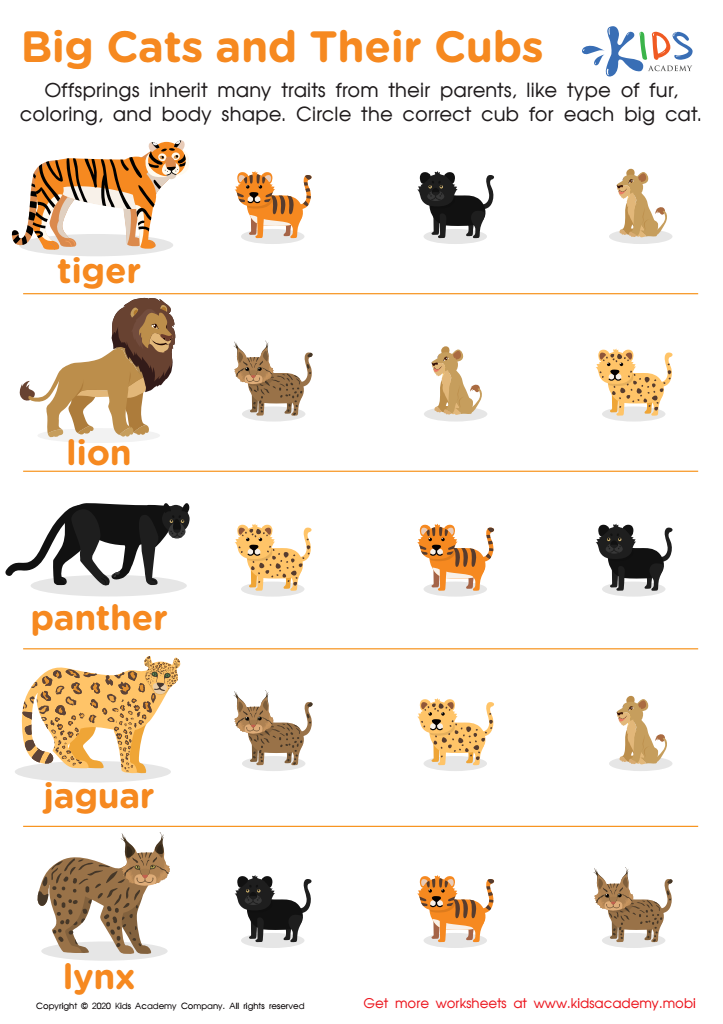
Big Cats and Their Cubs Worksheet
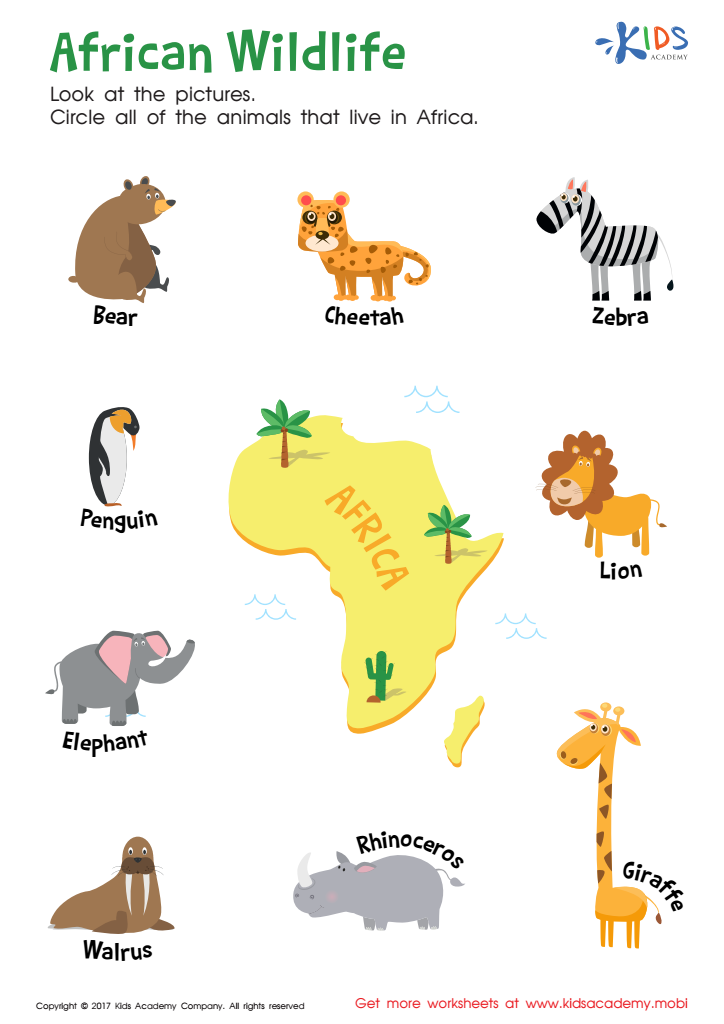








Understanding animal recognition is crucial for children aged 6-9, not only for their cognitive development but also for fostering a sense of responsibility and empathy towards the environment. At this stage, children are naturally curious about the world around them, and engaging them in recognizing different animals helps cultivate their observational skills and enhances their ability to classify and categorize information.
Learning about animals and their habitats instills a foundational knowledge of biodiversity, which is essential in teaching them the importance of conservation and respectful coexistence with nature. This awareness is particularly relevant how many animal species are threatened or endangered due to human impact.
Additionally, recognizing different species can improve children's communication skills and enrich their vocabulary as they describe characteristics, behaviors, and interactions of animals within their ecosystems. This knowledge can also trigger a strong interest in sciences and foster critical thinking as children start to ask questions about ecological balance, food chains, and the roles various animals play in our world.
Ultimately, teachers and parents play a key role in steering these conversations, encouraging an early appreciation of wildlife, and nurturing responsible future citizens committed to protecting our planet.








