Spatial awareness Space Worksheets for Ages 6-9
3 filtered results
-
From - To
Explore our engaging Spatial Awareness Space Worksheets designed for children aged 6-9! These worksheets are perfect for developing essential spatial skills through fun, space-themed activities. Kids will navigate concepts such as direction, size, shape recognition, and spatial relationships in an exciting intergalactic context. With colorful illustrations tied to the universe, your little learners will gain confidence in understanding how objects relate to one another in space and in everyday life. Ideal for classroom use or at-home practice, these worksheets are both educational and entertaining. Boost your child's cognitive and problem-solving abilities with our spatial awareness resources today!
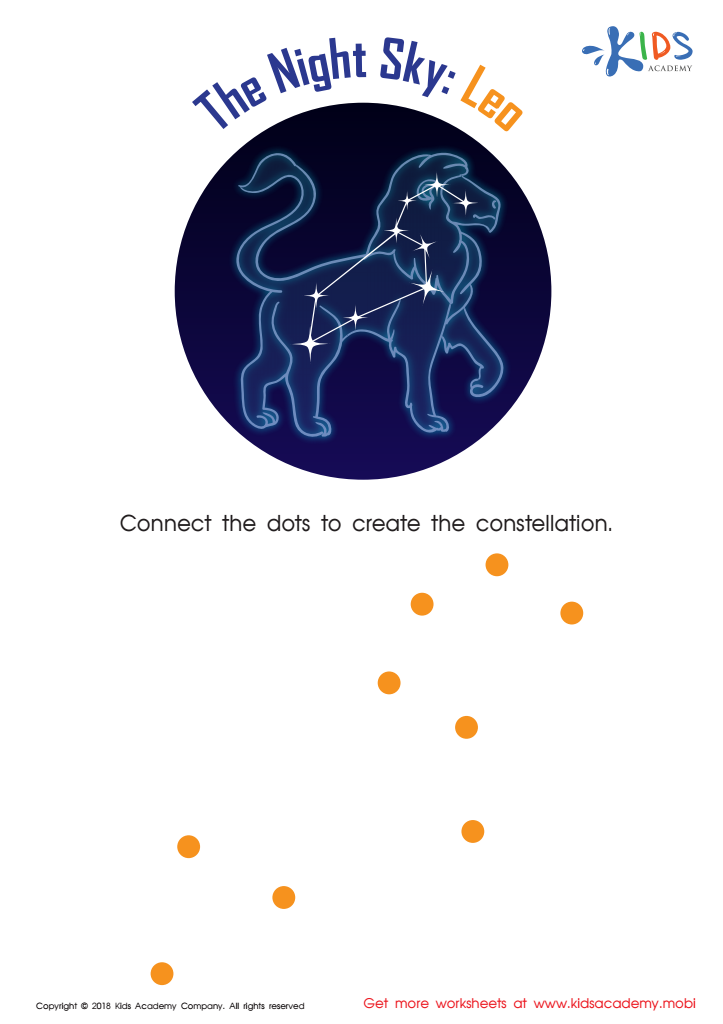
The Night Sky: Leo Worksheet
 Assign to My Students
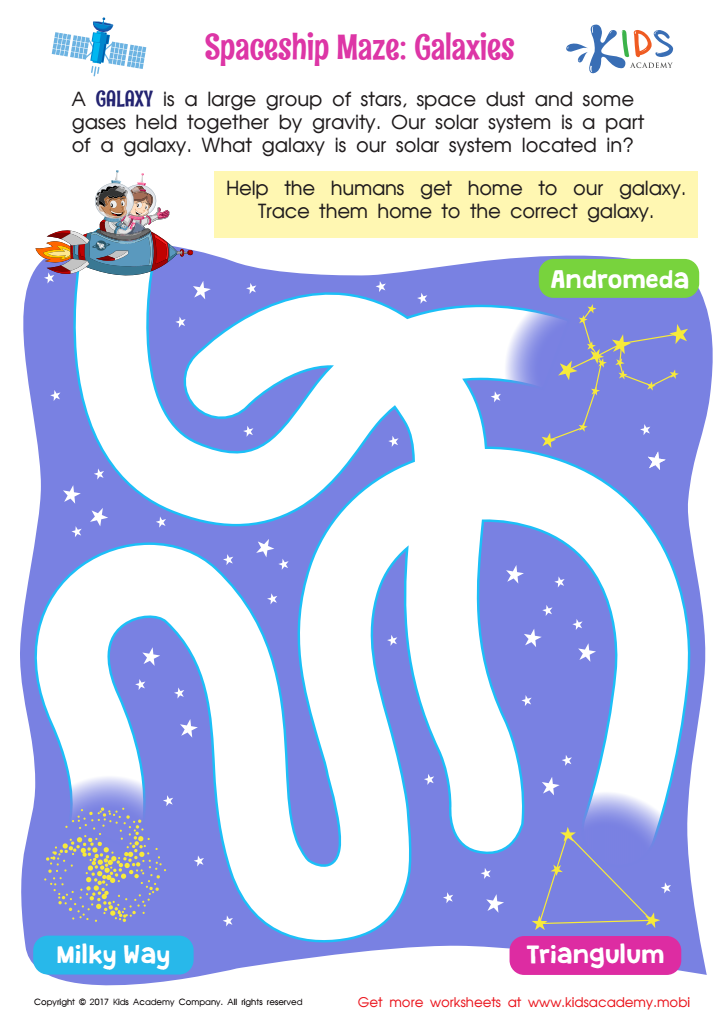
Spaceship Maze: Galaxies Worksheet
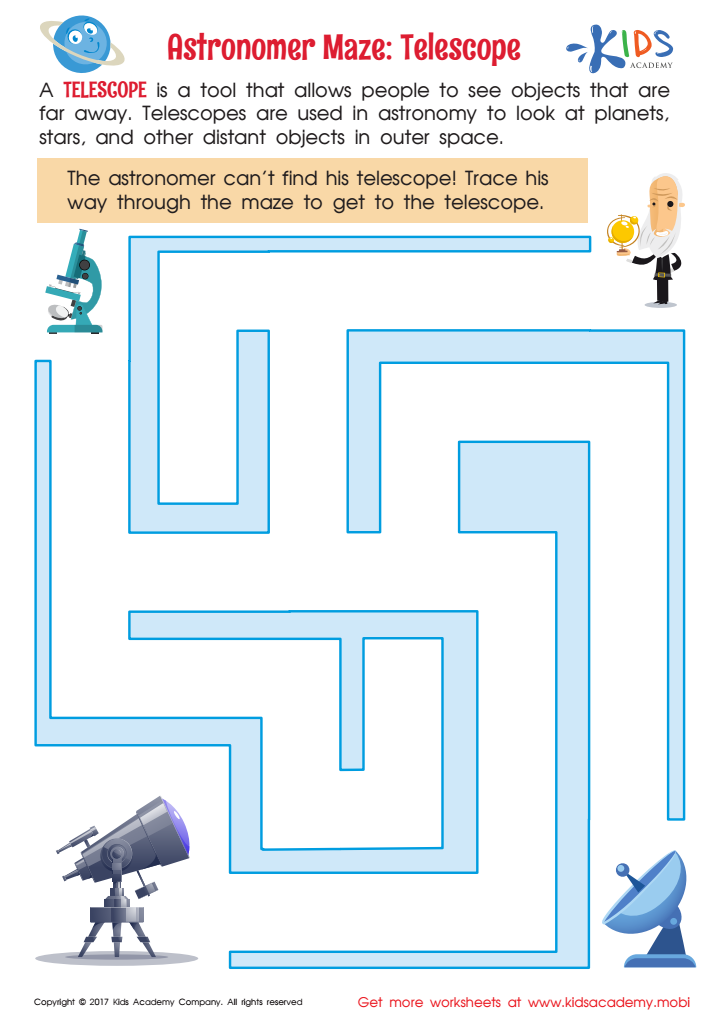
Astronomer Maze: Telescope Worksheet








Spatial awareness is a critical developmental skill for children aged 6-9, as it lays the foundation for numerous cognitive and physical abilities. For parents and teachers, nurturing spatial awareness is vital because it enhances problem-solving skills, creativity, and academic achievement. Children with strong spatial awareness can visualize objects, manage their body in space, and relate to the world around them more effectively. This skill aids in subjects like math—understanding geometry and measurements—and in science for grasping concepts like topography and scale.
Furthermore, spatial awareness contributes to improved motor skills, as children learn to coordinate their movements in response to their environment. This can positively impact activities ranging from sports to everyday tasks such as navigating a school hallway or arranging their belongings.
Additionally, fostering spatial reasoning encourages independence, confidence, and critical thinking. Parents and teachers play an essential role in offering opportunities for children to practice these skills through play, puzzles, and activities that involve building, drawing, and movement games. By prioritizing spatial awareness, caregivers can empower children to thrive both academically and socially, equipping them with essential life skills that will benefit them well beyond the classroom.







