Weather identification Weather Worksheets for Ages 6-9
4 filtered results
-
From - To
Discover our engaging Weather Identification Worksheets designed specifically for children aged 6-9! These interactive activities help young learners recognize and name various weather types, fostering a deeper understanding of meteorological concepts. Each worksheet includes colorful illustrations and fun exercises to capture kids' interest while enhancing their critical thinking skills. Perfect for home or classroom use, our resources promote active participation in learning about clouds, rain, snow, and sunshine. By exploring different weather patterns, children will develop observational skills and expand their vocabulary in a playful, educational environment. Start your child’s scientific journey today with our captivating weather worksheets!
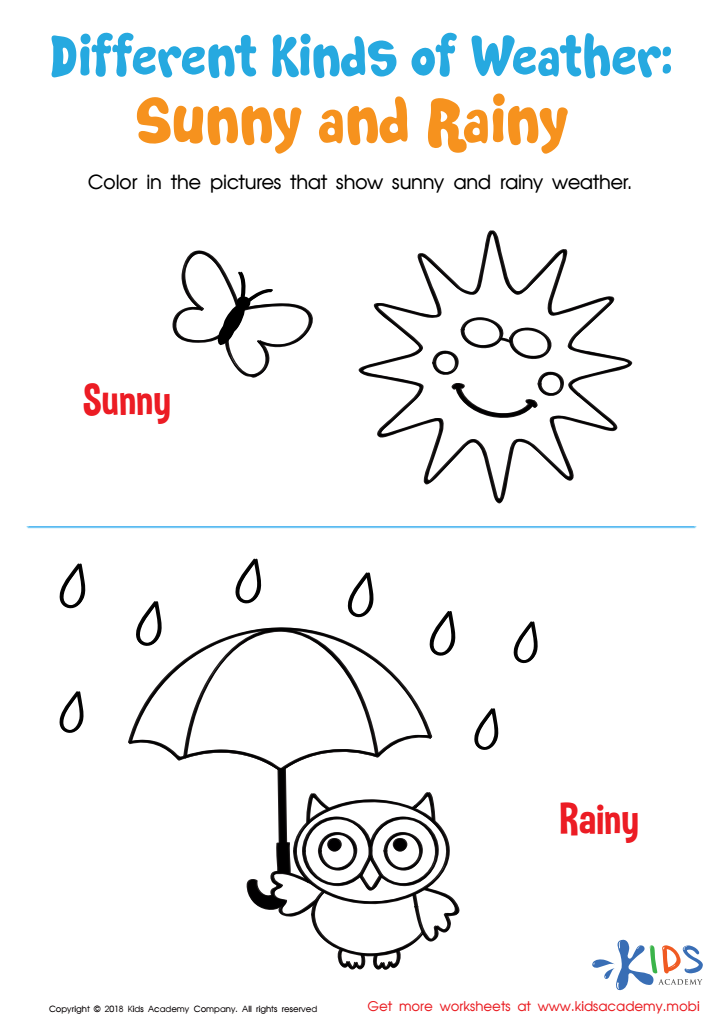
Different Kinds of Weather: Sunny and Rainy Worksheet
 Assign to My Students
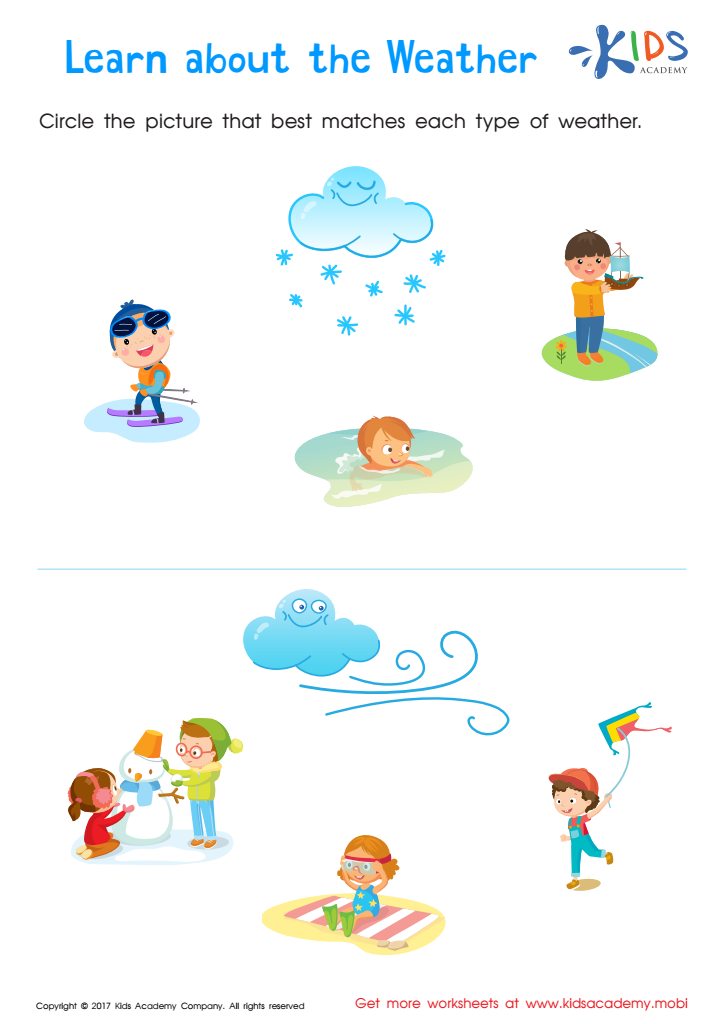
About the Weather Printable
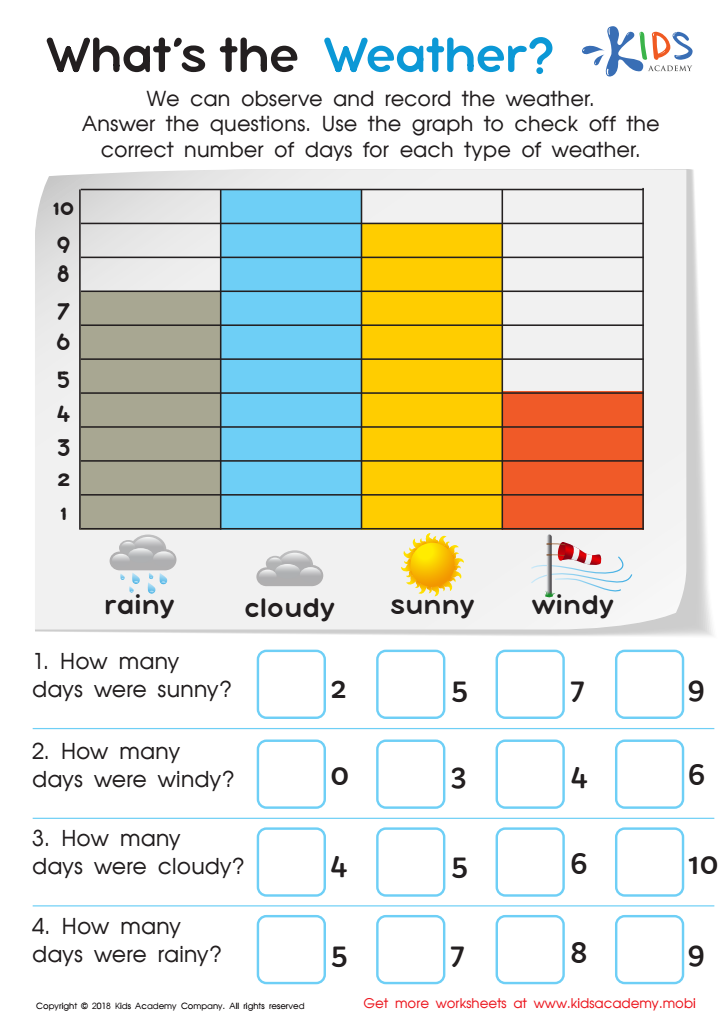
What's the Weather? Worksheet
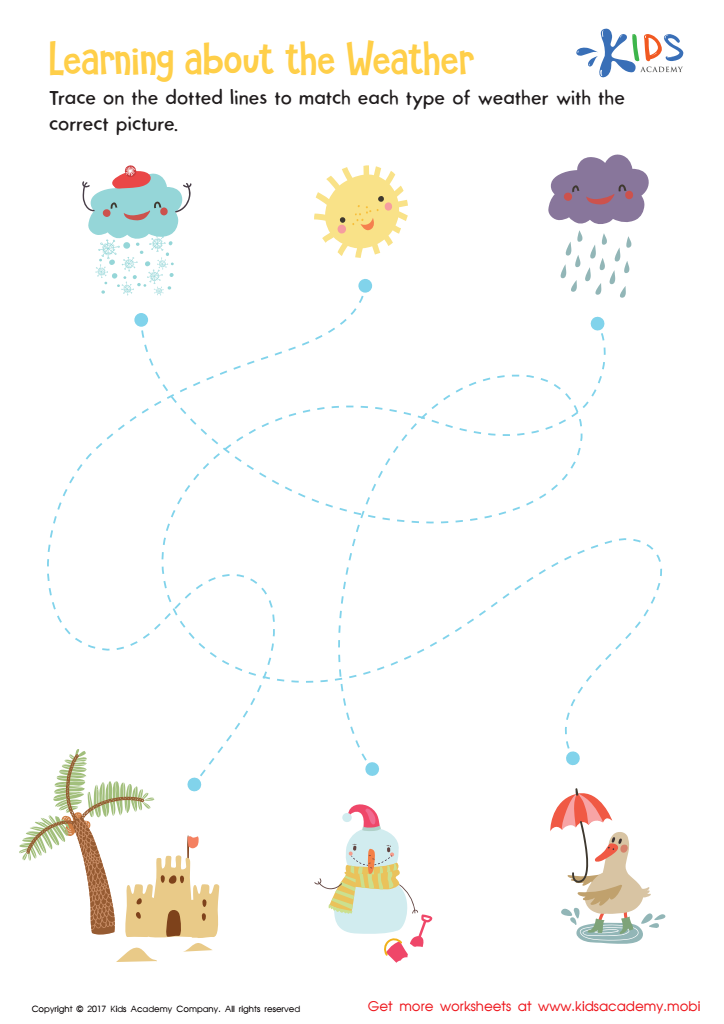








Understanding weather is crucial for children aged 6-9 because it lays the foundation for their science education and promotes critical thinking. First, weather identification enhances children's observational skills. By learning to recognize different weather conditions, kids develop curiosity about the world around them, fostering a sense of wonder that is essential for lifelong learning.
Additionally, weather has a direct impact on children's daily lives and activities. Knowing how to identify whether it's sunny, rainy, or windy helps them dress appropriately and plan their outdoor activities effectively. This awareness can also instill a sense of responsibility, as children learn the importance of taking precautions, such as wearing a raincoat or sunscreen.
Moreover, teaching children about weather can spark discussions about climate change and environmental stewardship. Understanding the basics of weather patterns encourages empathy towards the planet and highlights the significance of caring for our environment.
Finally, engaging with weather topics can be a fun, interactive classroom experience—using observations to predict weather aligns with hands-on learning approaches that hold children's attention. Therefore, incorporating weather education is not just beneficial; it's a vital part of nurturing informed, responsible global citizens.







