Shape Recognition Social Studies Worksheets for Ages 6-9
3 filtered results
Difficulty Level
Grade
Age
-
From - To
Subject
Activity
Standards
Discover engaging Shape Recognition Social Studies Worksheets perfect for ages 6-9! Designed to blend geometry with cultural learning, these printable activities help young learners identify shapes while exploring key social studies concepts. Promote critical thinking and spatial awareness as kids match shapes to historical landmarks or community symbols. Ideal for classroom settings or at-home learning, these worksheets provide a fun, educational way to enhance geometry skills within a social studies context. Created by education experts, they ensure educational quality while making learning enjoyable. Boost your child's knowledge and shape recognition with these valuable resources today!
Favorites
With answer key
Interactive
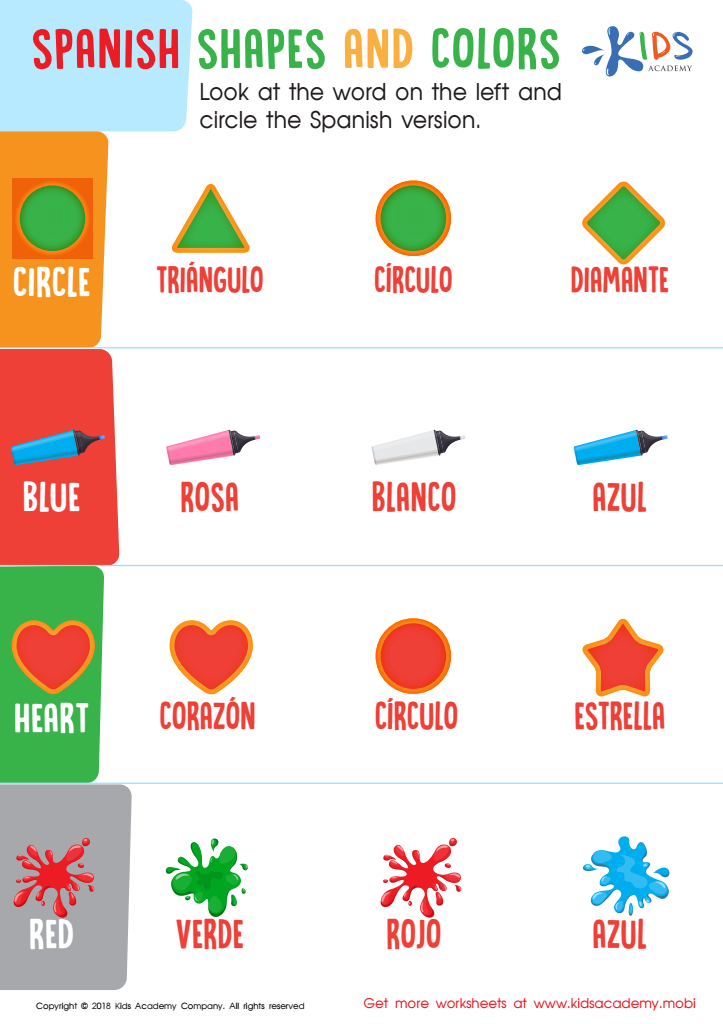
Spanish Shapes and Colors Worksheet
Encourage your children to learn another language from an early age. For example, Spanish - use a worksheet to help with the basics. Point to the English word and ask them to identify and circle the corresponding Spanish word on the right. This way, your kids will grow up with familiarity of the language.
 Assign to My Students
Spanish Shapes and Colors Worksheet
Worksheet

Playground Worksheet
Head to the park with this playground worksheet! It strengthens sorting and cognitive skills while encouraging problem solving. Plus, it's fun-filled and engaging! When finished, head out to the park to see what items your child finds in the playground!
Playground Worksheet
Worksheet
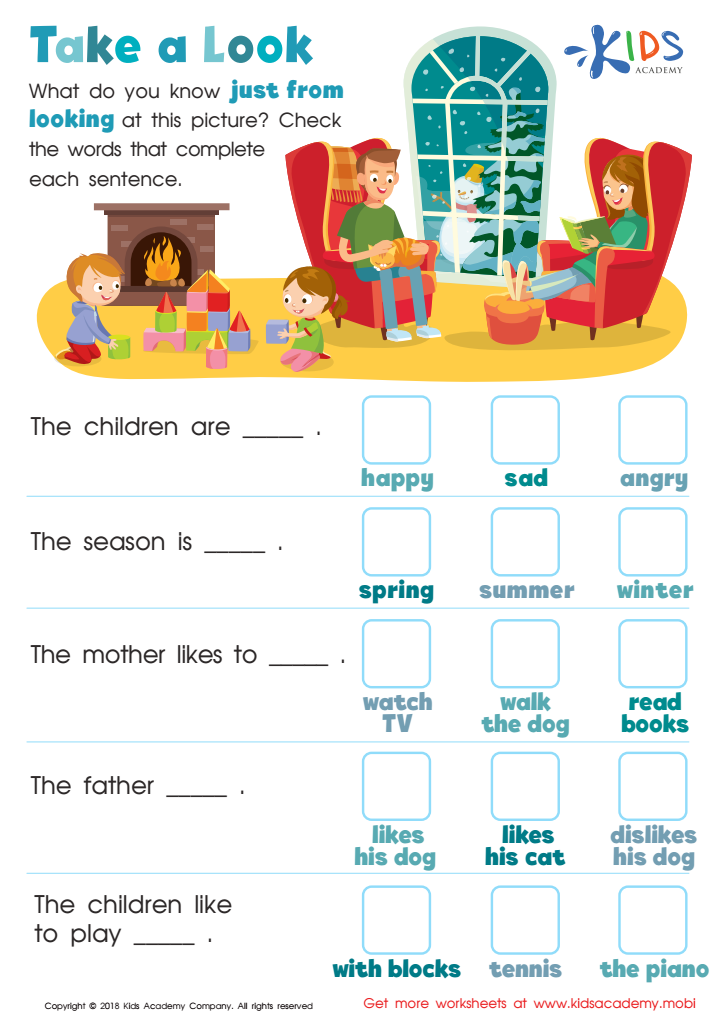
Take a Look - Part 1 Worksheet
Young learners gain understanding when using picture clues when reading. Looking at illustrations can help students learn the meaning of key vocabulary when reading fiction or informational text. Ask your students to look at the worksheet and observe what they can learn from the picture. It's a great comprehension strategy for early readers.
Take a Look - Part 1 Worksheet
Worksheet
Join Kids Academy for Free
Who is primarily going to use this learning content?








Shape recognition in social studies for ages 6-9 is pivotal as it seamlessly integrates essential academic and cognitive skills with historical and cultural understanding, fostering well-rounded intellectual development. For parents and teachers, focusing on this aspect cultivates a child's ability to observe, analyze, and interpret the world around them. Recognizing shapes and patterns in maps, globes, and artifacts enable children to grasp geographical ideas and historical timelines more concretely.
Connecting shape recognition with social studies encourages young learners to draw parallels between shapes they see daily and those found in flags, buildings, and art from various cultures. This recognition can spark interest in global diversity and heritage, fostering inclusivity and curiosity about different societies. Additionally, these activities build foundational skills in math and finer coordination, critical for fields across science and engineering.
Moreover, integrating shape recognition enhances spatial awareness and critical thinking, as children learn not merely to see shapes but to understand their significance within cultural and historical contexts. By emphasizing this interplay within educational curricula, teachers and parents help children develop a holistic approach to learning, encouraging them to see the interconnections between different areas of knowledge.
Thus, shape recognition in social studies nurtures both academic and socio-emotional growth, building a bridge between abstract concepts and real-world applications—a vital process in early education.