Enhancing vocabulary Writing Worksheets for Ages 6-9
3 filtered results
-
From - To
Unlock your child's potential with our "Enhancing Vocabulary Writing Worksheets" designed specifically for ages 6-9. These engaging worksheets foster a love for words while helping kids build a robust vocabulary through fun activities. Each worksheet incorporates creative writing prompts and engaging exercises that challenge young minds to explore new words in context. Ideal for enhancing language skills, these resources empower children to express their thoughts clearly and confidently. Encourage your child’s language development and spark their imagination with our expertly crafted worksheets, suitable for home practice or classroom use. Start your child's vocabulary journey today!
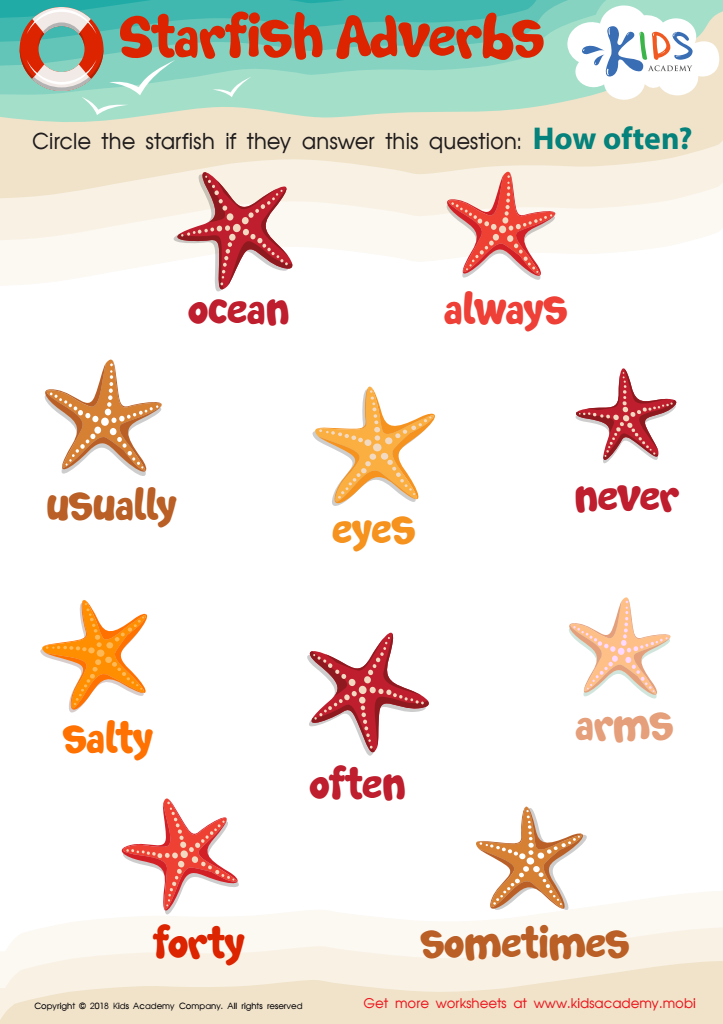
Starfish Adverbs Worksheet
 Assign to My Students
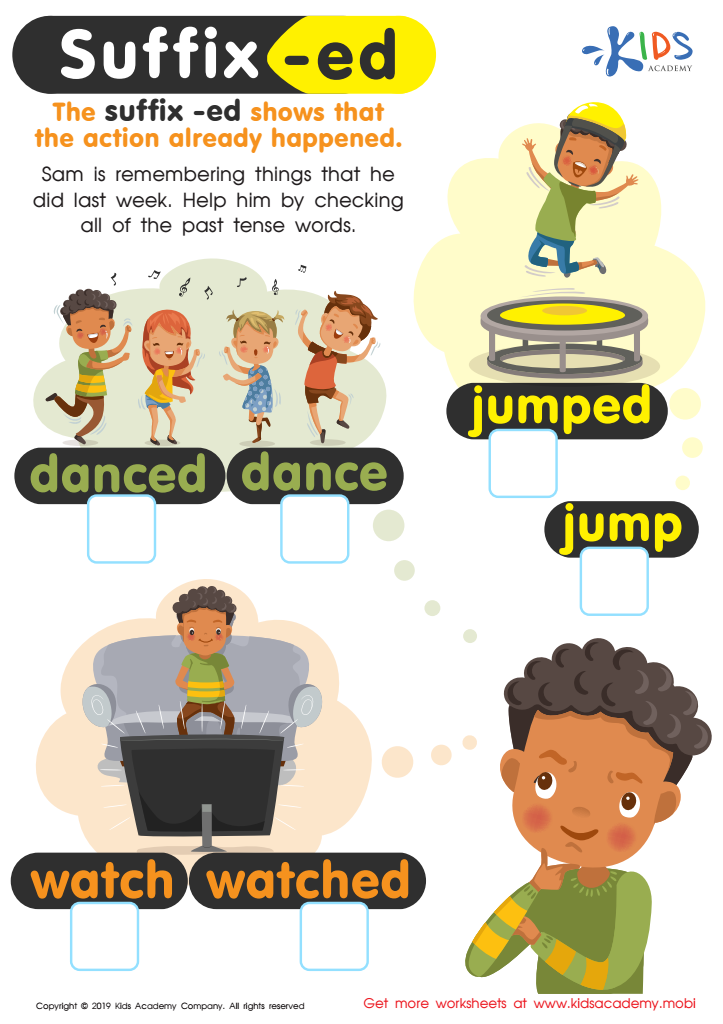
Suffix-ed Worksheet
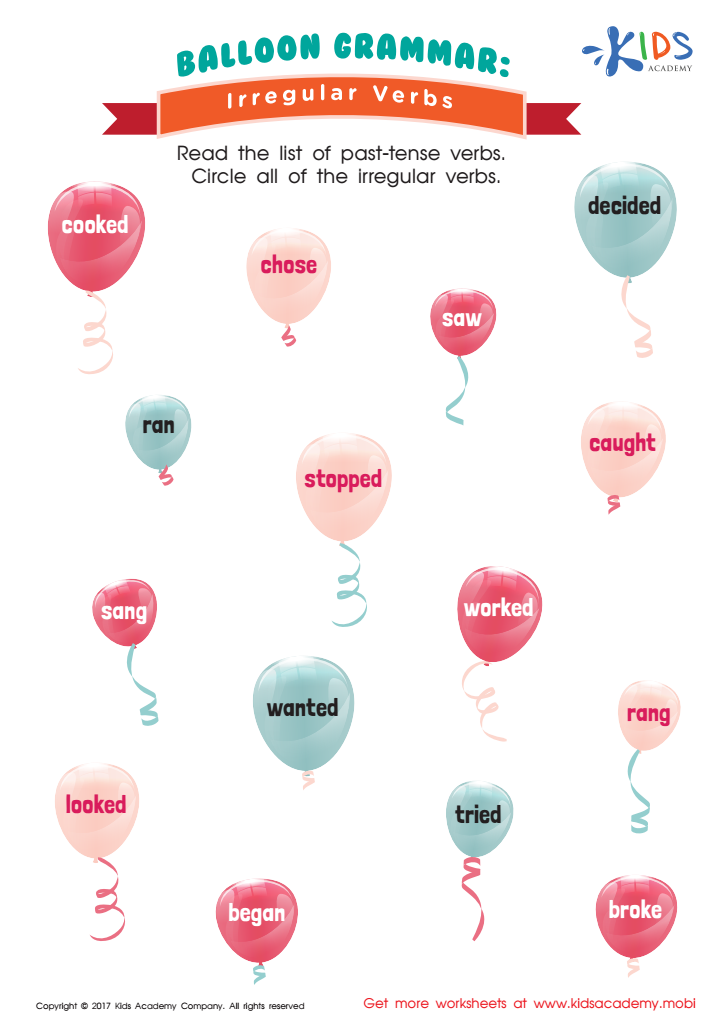
Irregular Verbs: Baloons Worksheet








Enhancing vocabulary writing for children aged 6-9 is crucial for their overall language development and academic success. At this age, children are building the foundation for their literacy skills, and a rich vocabulary serves as a building block for effective communication. When parents and teachers focus on expanding vocabulary, they enable children to express their thoughts, emotions, and ideas more clearly and creatively.
A robust vocabulary not only enhances children’s writing but also improves their reading comprehension, making it easier for them to understand various texts and concepts. Additionally, strong vocabulary skills boost confidence, allowing children to engage in discussions, participate in group activities, and contribute to classroom dialogues.
Moreover, as children encounter more sophisticated language in later academic stages, a solid vocabulary established in early childhood will support their ability to tackle complex texts and articulate their thoughts effectively. Encouraging vocabulary-rich writing and regular practice can foster a lifelong love for language and learning. Engaging activities, such as storytelling, word games, and interactive lessons, can make vocabulary enhancement enjoyable. Ultimately, an investment in vocabulary development will yield long-term benefits for children's educational journeys and equip them with essential tools for future success.








