
Fine Motor Skills Writing Worksheets for Ages 6-9
21 filtered results
Difficulty Level
Grade
Age
-
From - To
Subject
Activity
Standards
Discover our engaging Fine Motor Skills Writing Worksheets designed specifically for children aged 6-9! These worksheets aim to enhance your child's fine motor abilities through fun and interactive writing exercises. Each activity is thoughtfully crafted to improve coordination, control, and dexterity, laying a strong foundation for writing skills. Perfect for home or classroom use, our worksheets ensure children develop their grip, muscle strength, and endurance while enjoying the learning process. Help your young learners boost their confidence and creativity with our age-appropriate fine motor skill activities, making learning both effective and enjoyable. Explore our collection today for a brighter writing future!
Favorites
With answer key
Interactive
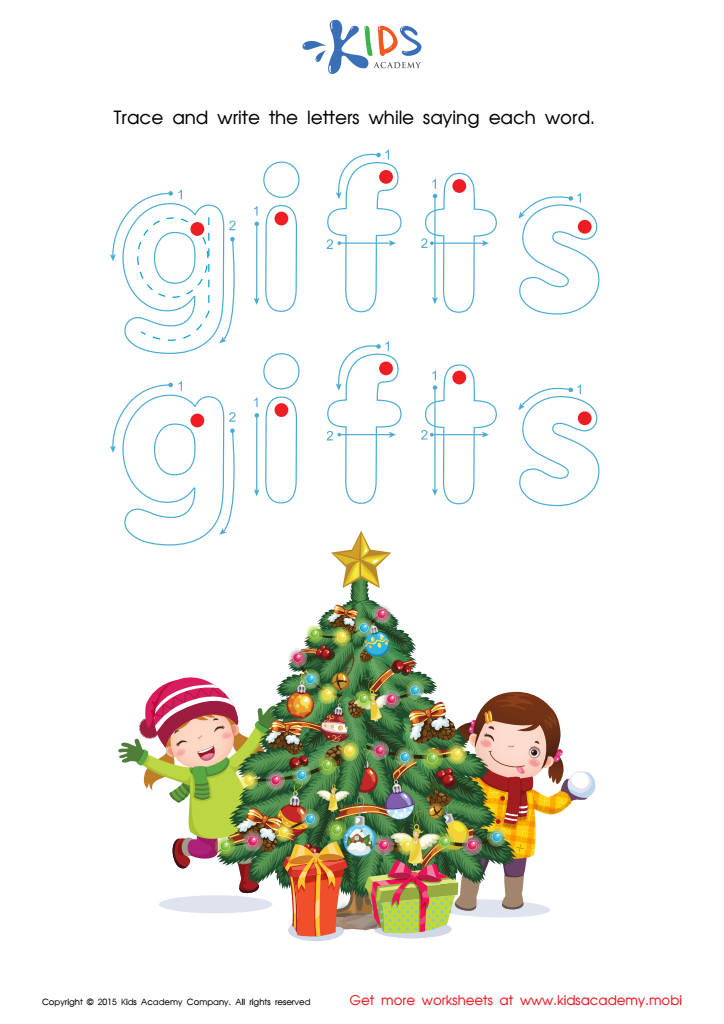
Christmas Tree Tracing Winter Words Worksheet
Print it and let your child trace the word and follow the arrows. Red dots mark the starting points. Have a blast!
 Assign to My Students
Christmas Tree Tracing Winter Words Worksheet
Worksheet
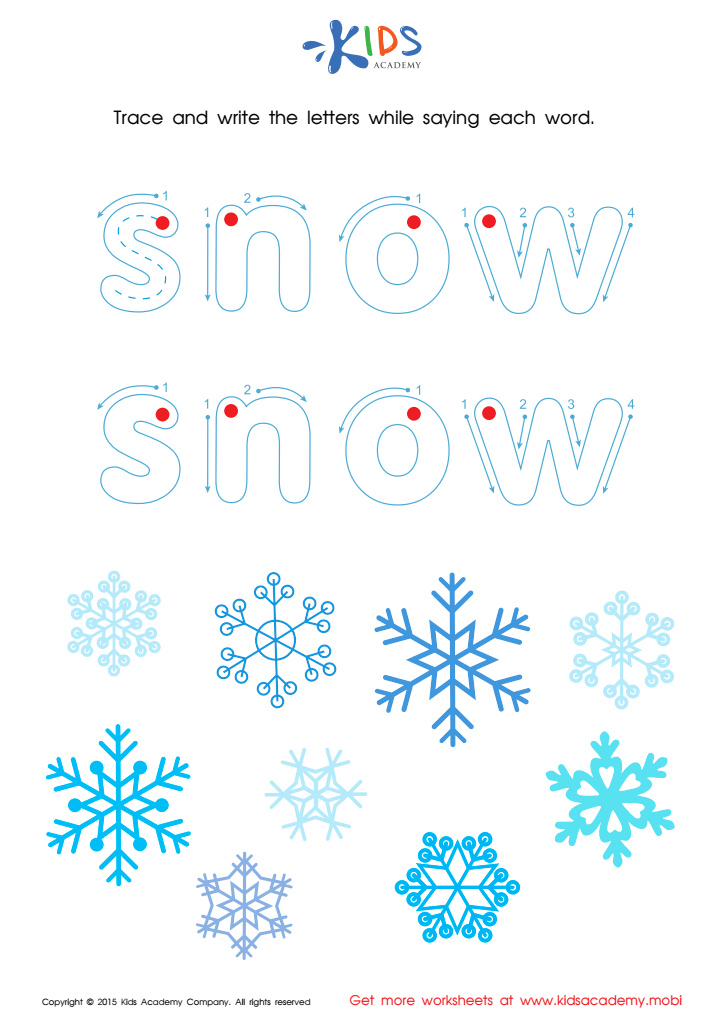
Snowflake Tracing Winter Words Worksheet
Get creative and have fun with our Snowflake handwriting worksheet! Trace the sight word, starting at the big red dots, and follow the arrows. It's a great way to help your little learner develop fine motor skills, work on spelling, and get ready for Christmas! More handwriting printables available on Kids Academy.
Snowflake Tracing Winter Words Worksheet
Worksheet
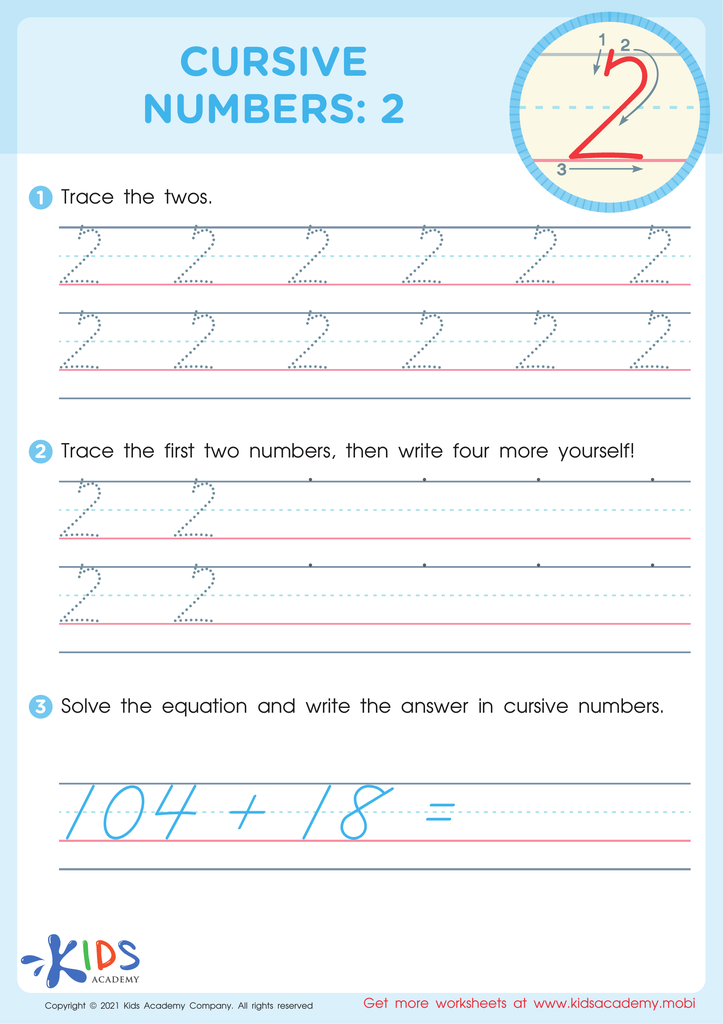
Cursive Numbers: 2 Worksheet
Mastering maths goes beyond basic counting and arithmetic. These tracing worksheets will help your kids practice their cursive numbers. The dotted lines are easy to follow and your kids can trace the number 2 over and over. Soon they'll be able to write it on their own. At the end of the sheet, there's a simple math equation - have your child write the answer in cursive.
Cursive Numbers: 2 Worksheet
Worksheet
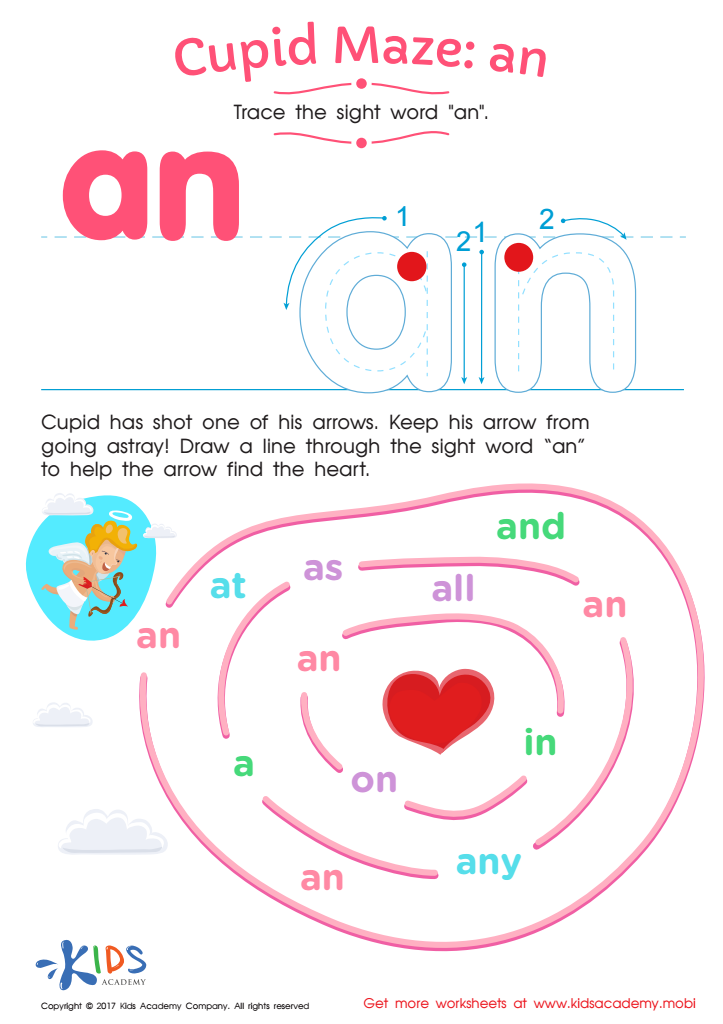
Cupid Maze: An Printable
Get a cute and creative way to boost their reading with this Valentine's Day-themed sight word worksheet. Perfect for kids, it features a fun maze and the article "an".
Cupid Maze: An Printable
Worksheet
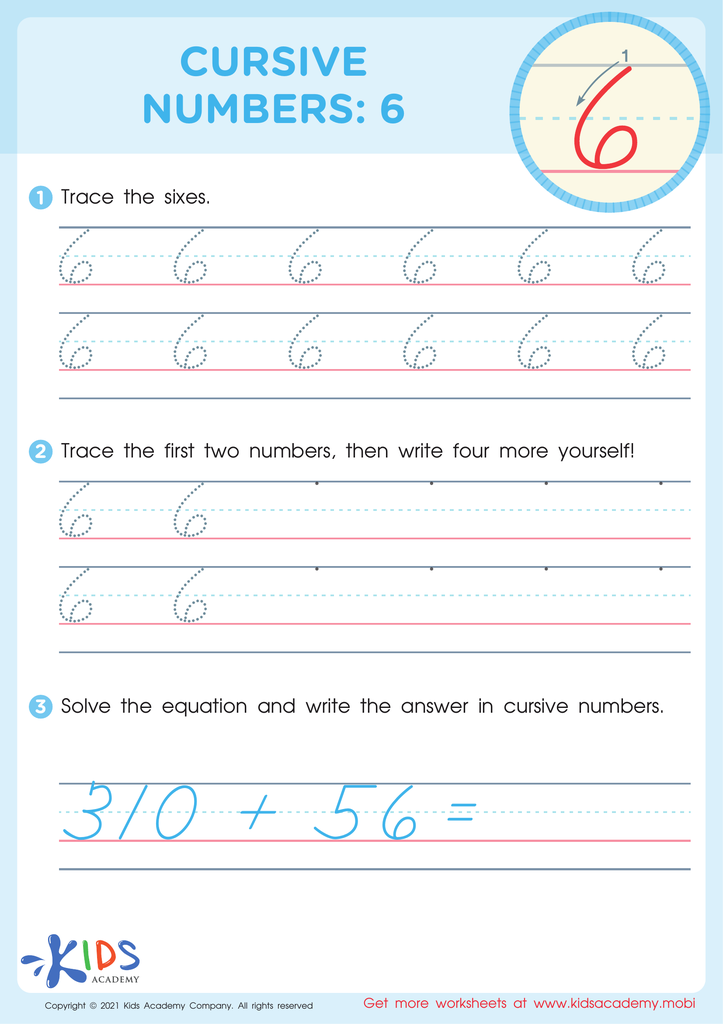
Cursive Numbers: 6 Worksheet
Help your children practice counting and writing numbers with cursive number worksheets. They'll learn to write the number six with dotted lines to guide them and space to practice writing it on their own. They can also solve a simple equation and write the answer in cursive. Let them practice as much as they need - it'll help them succeed.
Cursive Numbers: 6 Worksheet
Worksheet
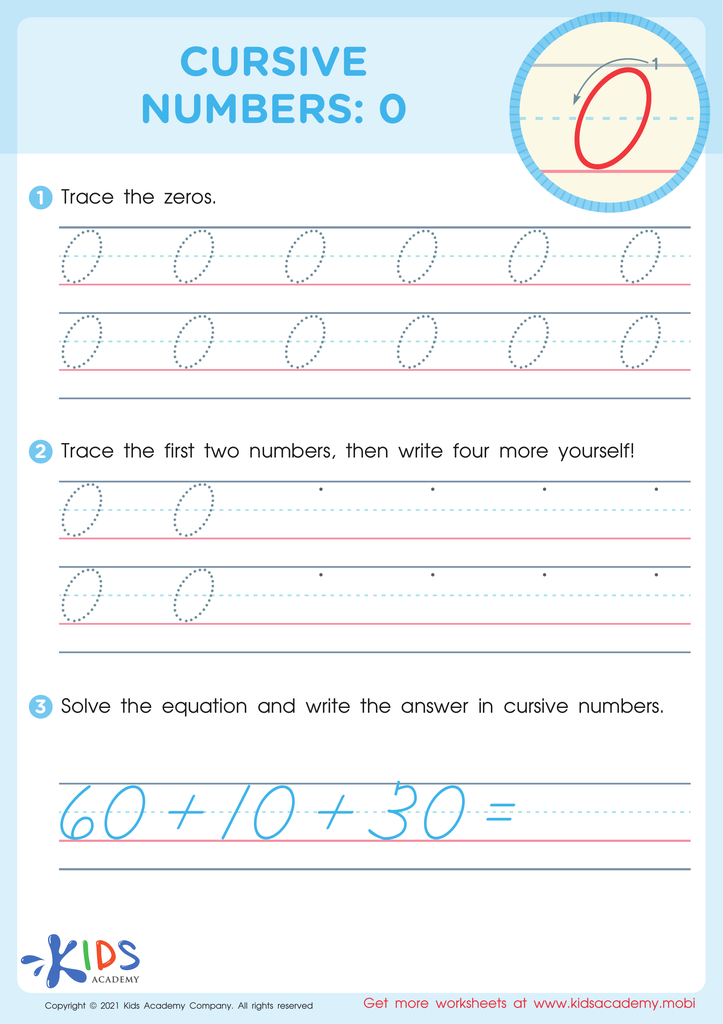
Cursive Numbers: 0 Worksheet
Practice makes perfect when teaching your kid handwriting. Spend time teaching them the alphabet and cursive numbers. These math worksheets have traceable numbers for them to practice with, then they can write 0 on their own. There's also a bonus math problem to solve and write the answer in cursive.
Cursive Numbers: 0 Worksheet
Worksheet
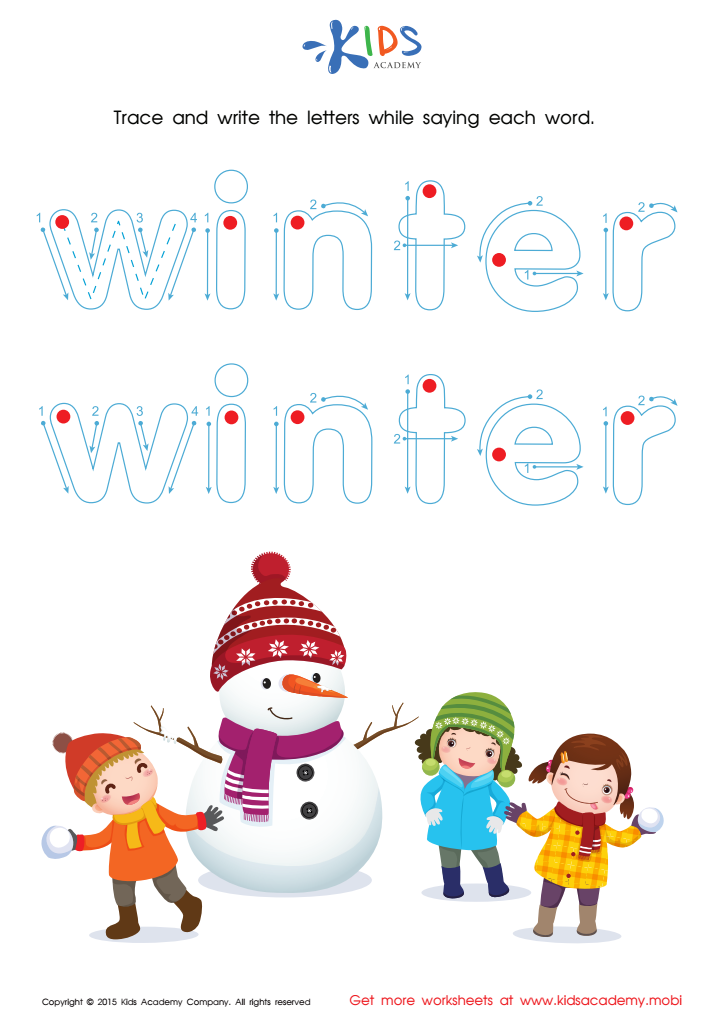
Snowman Tracing Winter Words Worksheet
This free winter printable teaches handwriting and spelling with the word "snowman". It's a fun way to get your kid ready for Christmas cheer! Want more tracing worksheets? Check out here.
Snowman Tracing Winter Words Worksheet
Worksheet
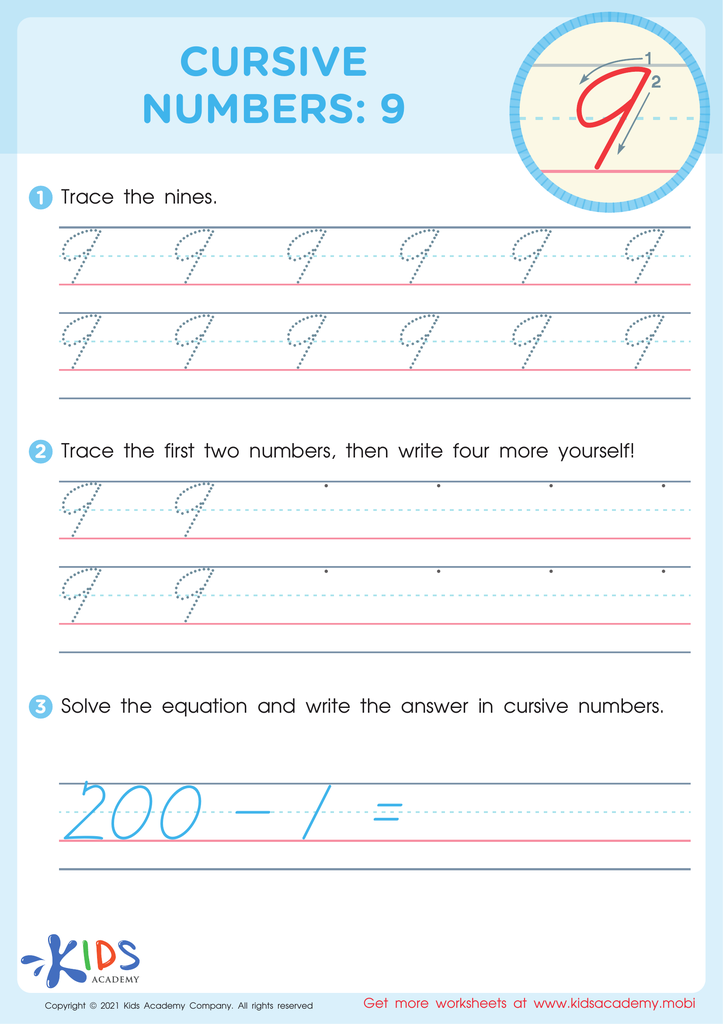
Cursive Numbers: 9 Worksheet
Identifying and writing numbers is key to math success. These worksheets help kids learn to trace the number 9 and build confidence. As they practice, they'll soon be able to write it on their own. Plus, they get to apply their learning and solve a simple equation at the bottom of the page. Writing the answer in cursive is a great way to help them remember!
Cursive Numbers: 9 Worksheet
Worksheet
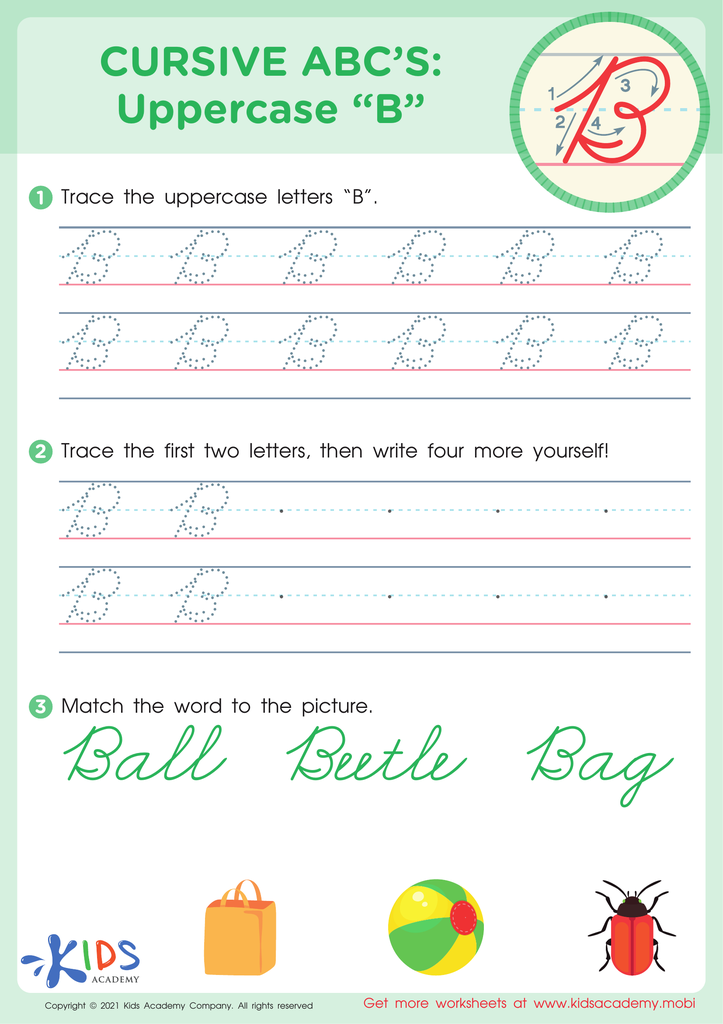
Cursive ABCs: Uppercase B
Help your kids learn the alphabet: have them identify, give examples and sound out letters, then use tracing worksheets to perfect cursive uppercase writing. Show them how to trace the letter ‘B’, then watch them write it on their own. This will give them the skills needed for further writing!
Cursive ABCs: Uppercase B
Worksheet
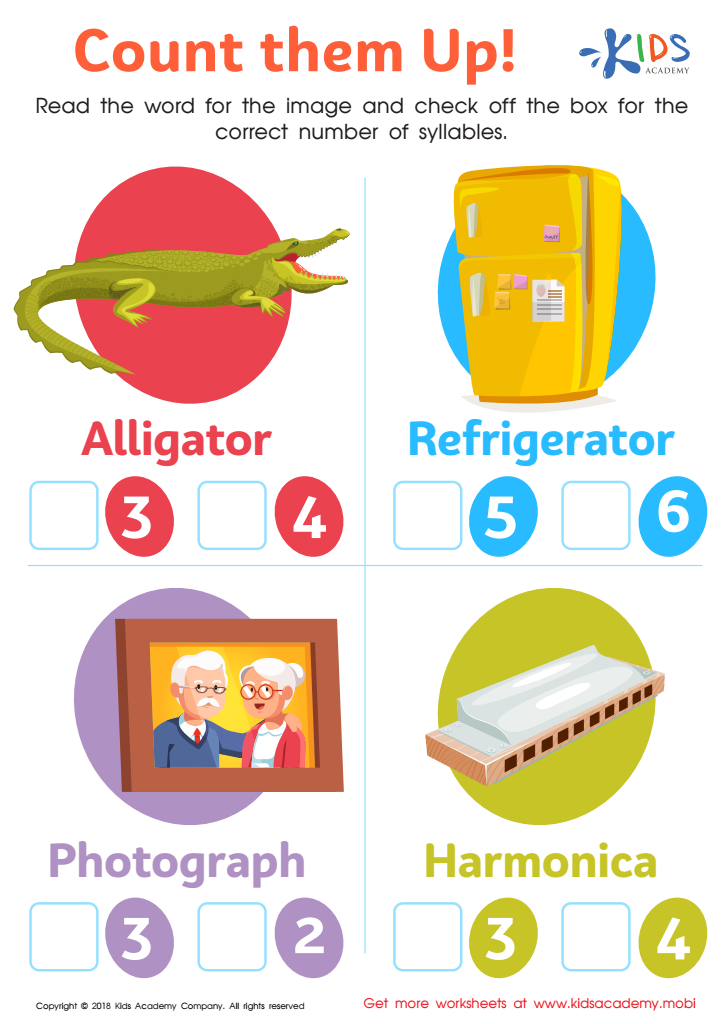
Count Them Up Worksheet
This worksheet has four colorful pictures. Ask your students to identify and name each image, then count the syllables in the word. Make them repeat the word after you, and check off the box with the correct number of syllables. Mastering the art of counting goes beyond numbers. Get your students counting syllables with this activity!
Count Them Up Worksheet
Worksheet
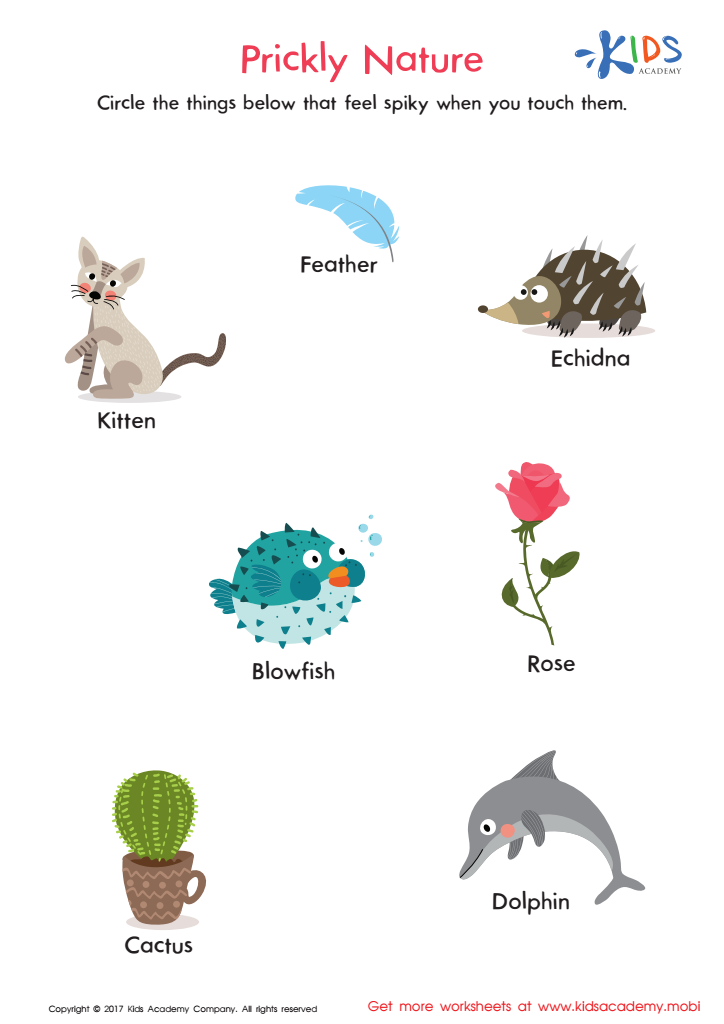
Prickly Nature Worksheet
Help your child stay safe and enhance critical thinking skills with this prickly nature worksheet. It can help them recognize spiky objects in their environment by teaching them to differentiate between prickly and soft textures. Plus, your kid will learn how to admire and avoid them. Get started today!
Prickly Nature Worksheet
Worksheet
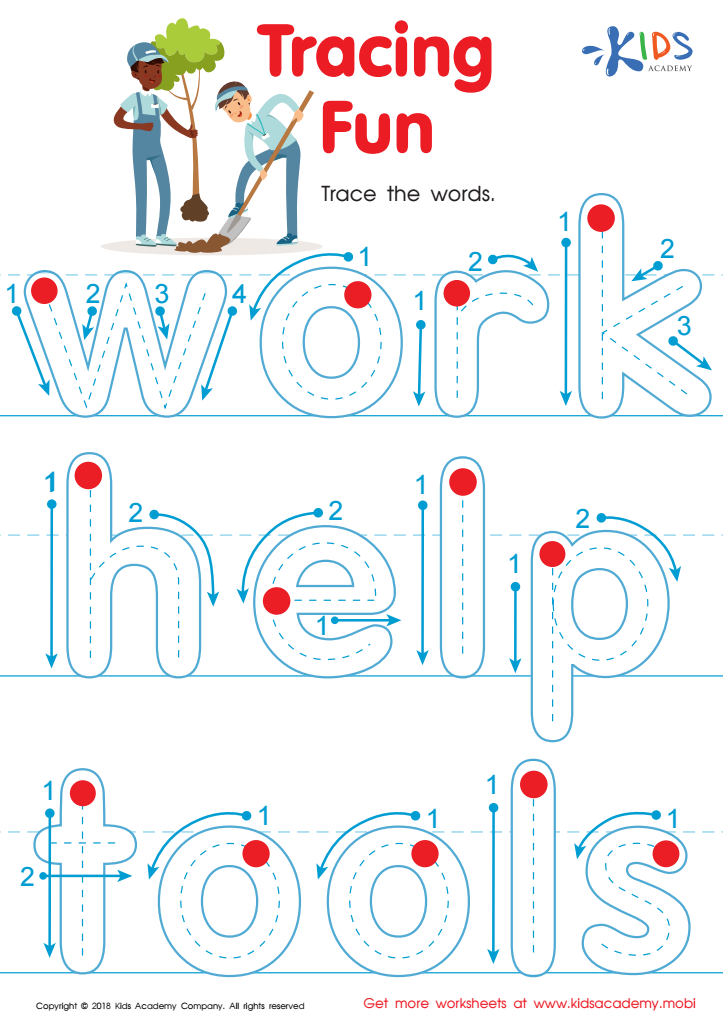
Tracing Fun Worksheet
Believe it or not, good handwriting helps with reading! Starting at the top left and writing legibly builds reading skills. This free worksheet helps little learners practice basic sight words. Red dots show them where to start and the words provide reinforcement without them realising. An enjoyable way to boost their reading and writing.
Tracing Fun Worksheet
Worksheet
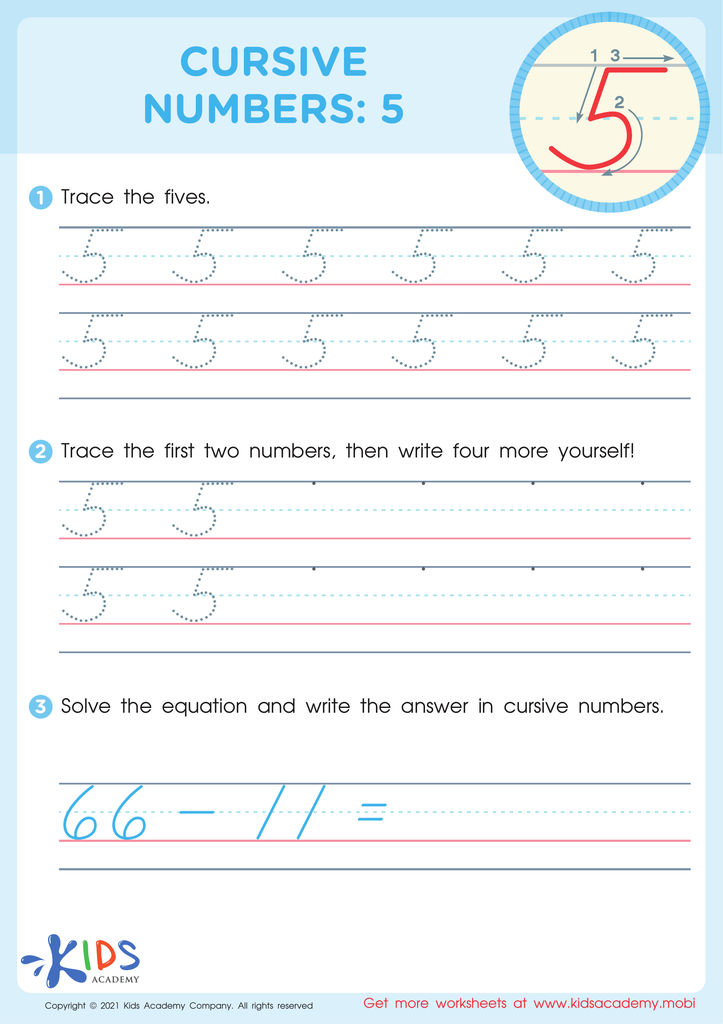
Cursive Numbers: 5 Worksheet
Ask your child to count to 10 to refresh their number knowledge. This worksheet is great for mastering the cursive number 5. Exercises are simple and keep them engaged, with the help of the dotted lines to trace. Constant practice will have your child writing the 5 like a pro!
Cursive Numbers: 5 Worksheet
Worksheet
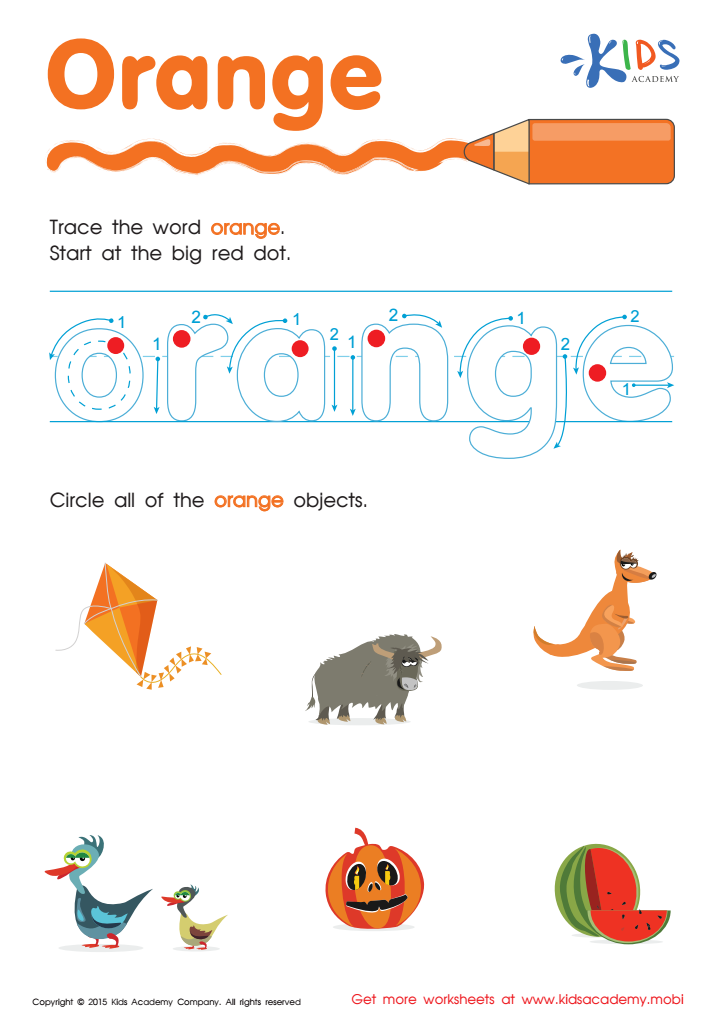
Orange Tracing Color Words Worksheet
This worksheet will surely bring a smile to your kid's face, even if orange isn't their favorite color. Let them trace the word "orange" and use an orange crayon. Ask them to find orange objects in their room for even more fun. Handwriting practice has never been more fun and exciting!
Orange Tracing Color Words Worksheet
Worksheet
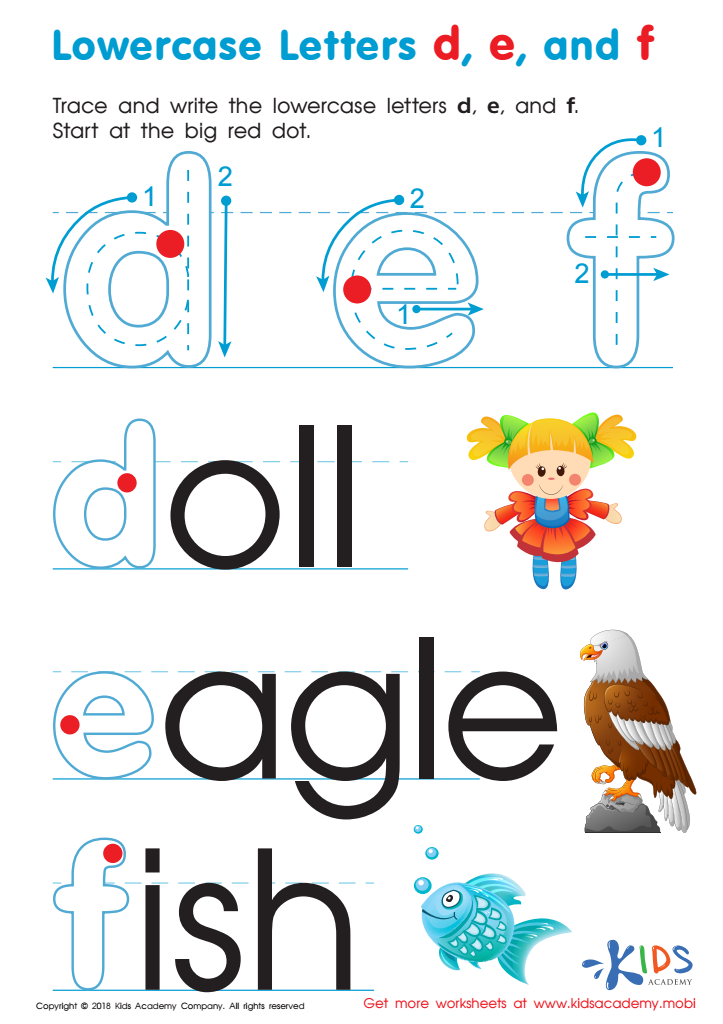
Lowercase Letters d e f Worksheet
Help your child learn the alphabet letters by tracing and writing the lowercase letters d, e, and f. Begin at the big red dot and follow the dots. This worksheet will help your little one gain a better understanding of the letters.
Lowercase Letters d e f Worksheet
Worksheet
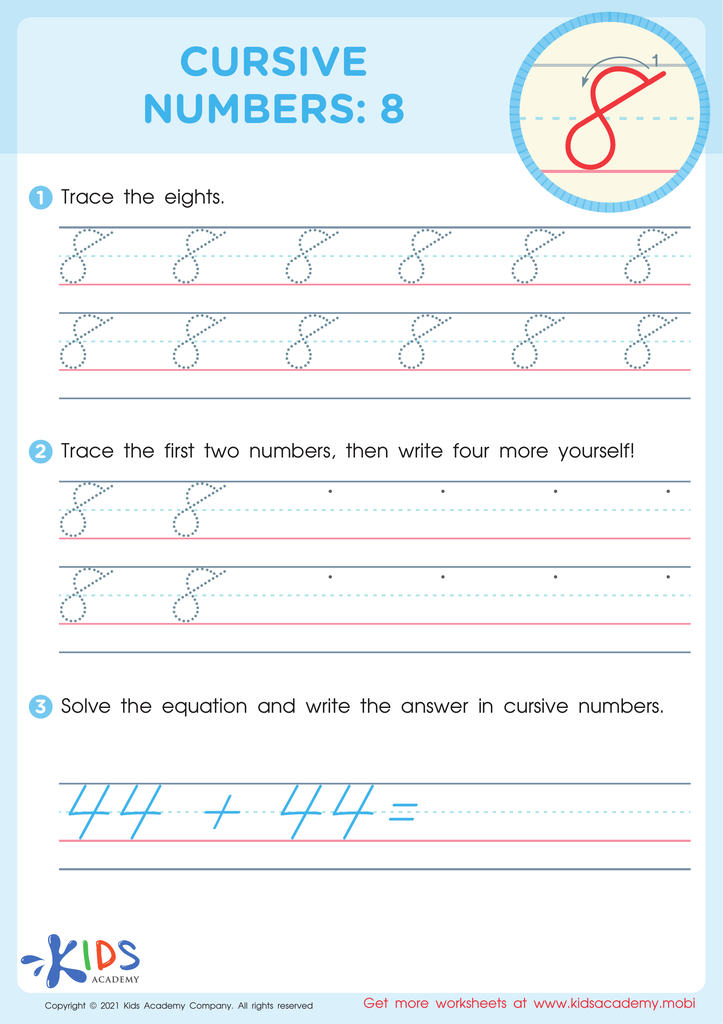
Cursive Numbers: 8 Worksheet
This tracing sheet helps your kids learn to write the cursive number 8. It's perfect for those struggling with handwriting. They'll trace the number 8, write it on their own, then solve a simple math equation and answer in cursive. Counting and writing numbers correctly is essential, so help your kids master it with this worksheet!
Cursive Numbers: 8 Worksheet
Worksheet
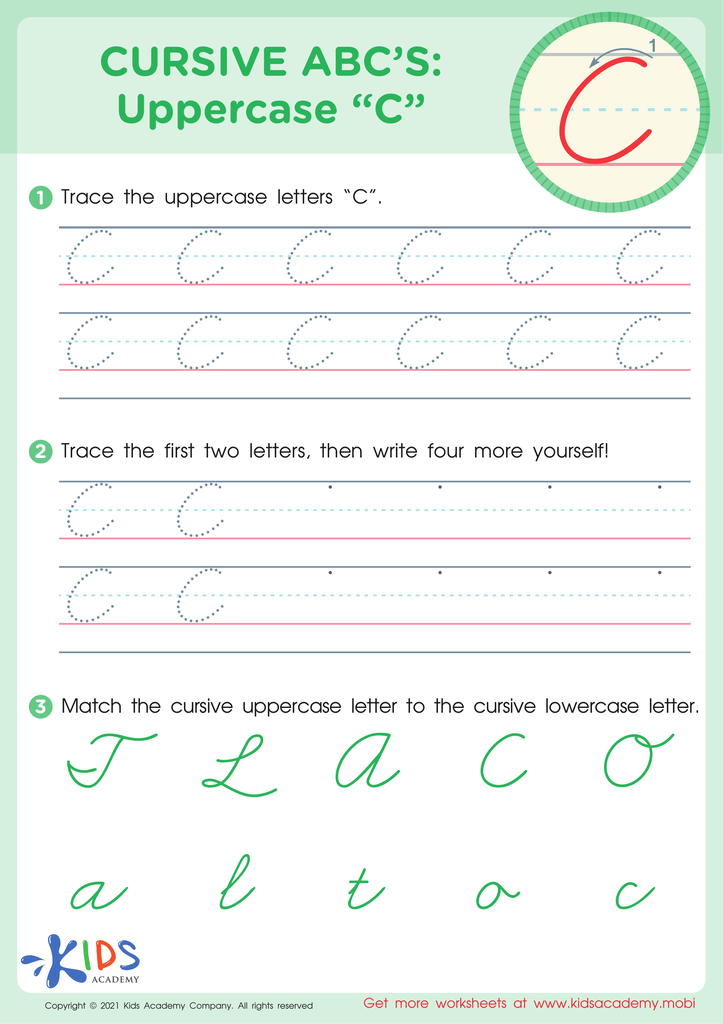
Cursive ABCs: Uppercase C
These worksheets are perfect for those wanting to improve their handwriting or learn letter recognition. The tracing exercises help younger students sharpen their writing skills and teach how to write the 'C' in cursive. First, they trace the given examples and then practice writing it solo. A letter recognition test is at the bottom of the page to check progress.
Cursive ABCs: Uppercase C
Worksheet
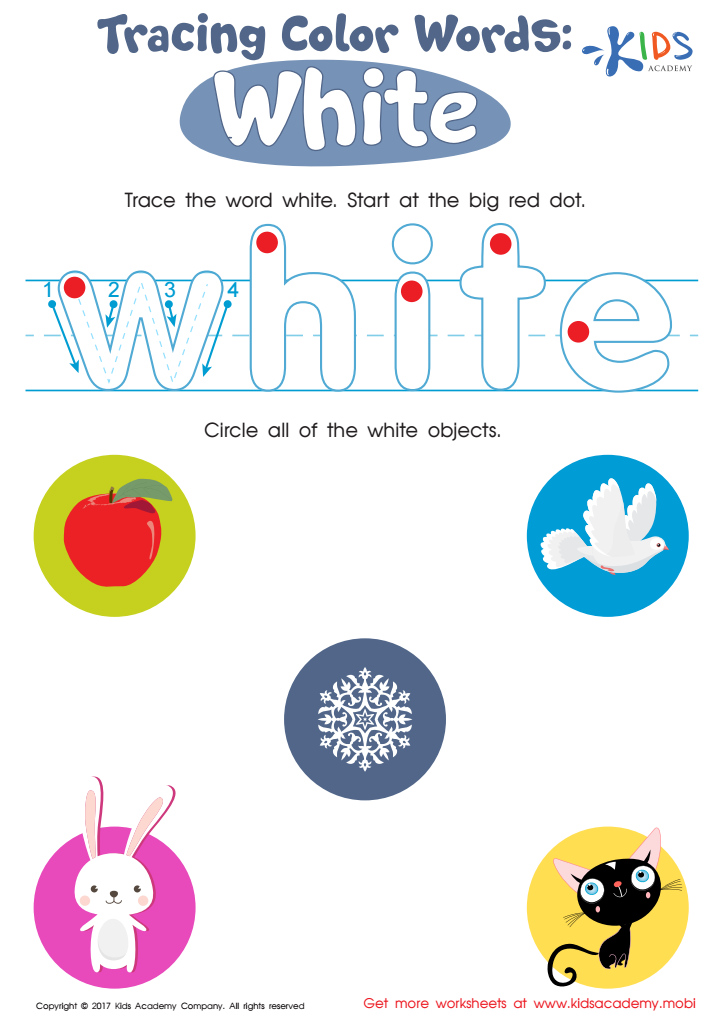
White Tracing Color Words Worksheet
This fun worksheet helps children learn color words quickly. They trace the letters and circle pictures of the color. This helps them practice reading and identifying objects, and they can do it without needing to read phonetically. Download it now and watch your child's skill grow!
White Tracing Color Words Worksheet
Worksheet
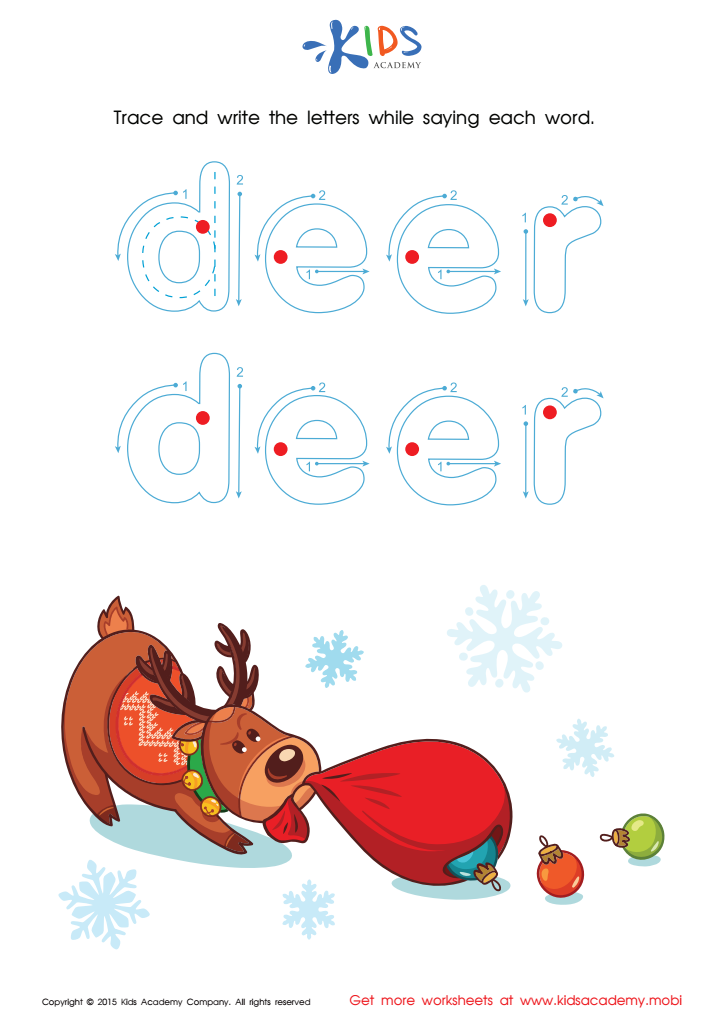
Deer Tracing Winter Words Worksheet
Want to give your kid's handwriting practice a festive twist? This colorful Christmas worksheet helps your child construct familiar sight words letter-by-letter while boosting their confidence in writing. It also teaches them essential motions for good handwriting and provides some spelling practice too. Want more free handwriting printables? Check out Kids Academy.
Deer Tracing Winter Words Worksheet
Worksheet
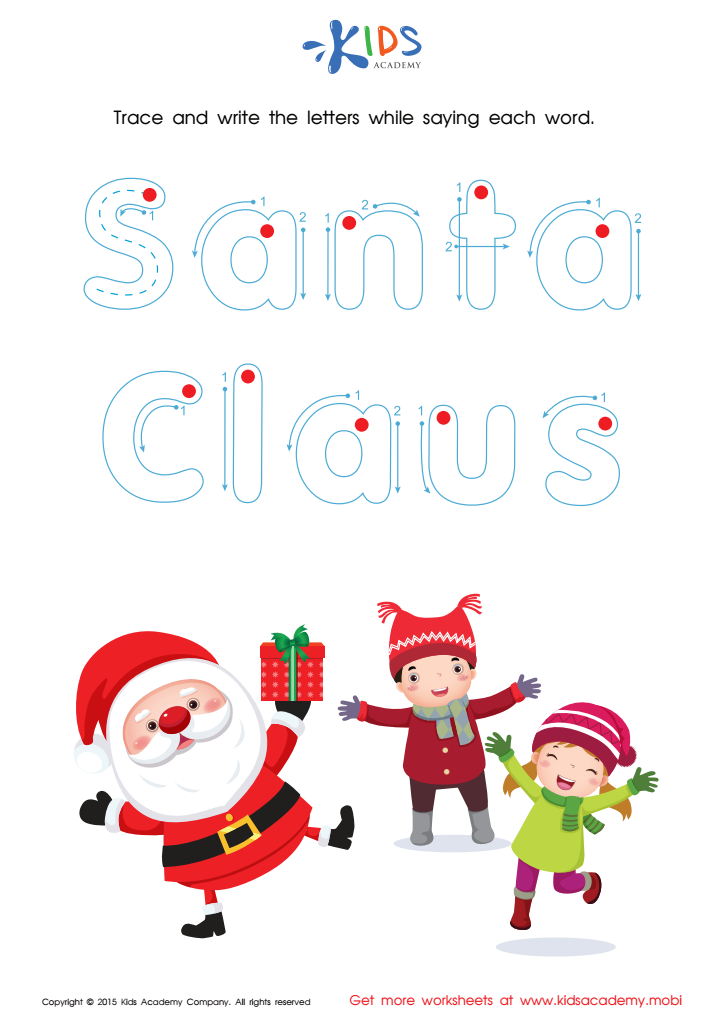
Santa Claus Tracing Winter Words Worksheet
Print out this Santa handwriting worksheet to help your kid build fine motor skills and get a head start on writing and spelling. Perfect for Christmas, and if you want more, take a look at Kids Academy's other handwriting worksheets.
Santa Claus Tracing Winter Words Worksheet
Worksheet
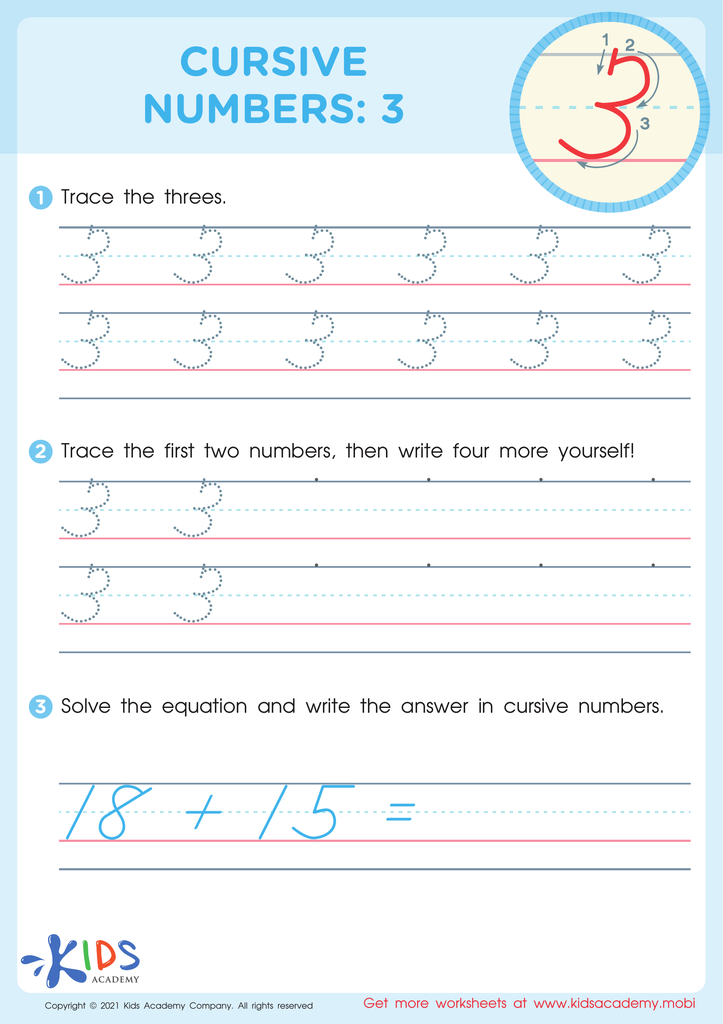
Cursive Numbers: 3 Worksheet
Help your child learn to write with this exercise. They'll practice tracing lines to write the cursive 3 until they gain the skill and confidence to do it on their own. Then have them write the 3 and solve the math equation on the worksheet. You can watch and encourage them as they progress. Writing is a key lesson, so offer your help to ensure they succeed.
Cursive Numbers: 3 Worksheet
Worksheet
Join Kids Academy for Free
Who is primarily going to use this learning content?







Fine motor skills writing is essential for children aged 6-9 because it lays the foundation for various critical developmental milestones. During this crucial age, children are transitioning from pre-writing activities to more advanced writing tasks. Mastering fine motor skills, such as grasping a pencil, forming letters, and controlling writing speed, directly influences their ability to express thoughts coherently and confidently on paper.
Parents and teachers should care about this aspect of development since proficient handwriting impacts children’s academic performance. Well-developed fine motor skills enhance reading and spelling by promoting better letter recognition and memorization. Furthermore, handwriting promotes cognitive engagement, supporting overall learning.
In addition to academic benefits, fine motor skills contribute to a child's self-esteem and independence. As children gain proficiency in writing, they feel more capable and empowered to convey their ideas and emotions, fostering positive communication. This skill also influences daily activities that require dexterity, such as buttoning shirts or using utensils, extending its importance beyond academics.
Overall, focusing on fine motor skills writing during ages 6-9 ensures children build confidence, academic success, and essential life skills, highlighting the critical role of parents and teachers in reinforcing this developmental area.








