Understanding prefixes Writing Worksheets for Ages 6-9
6 filtered results
-
From - To
Unlock the power of language with our "Understanding Prefixes" writing worksheets designed specifically for children aged 6-9. These engaging worksheets help young learners explore the concept of prefixes and their impact on word meanings, promoting vocabulary development and enhancing reading skills. Each worksheet features fun activities, including games and examples, that encourage children to apply their knowledge in imaginative ways. Perfect for use at home or in the classroom, these resources can boost your child's confidence in writing and comprehension. Dive into the world of words and watch your child flourish as they master the art of prefixes!
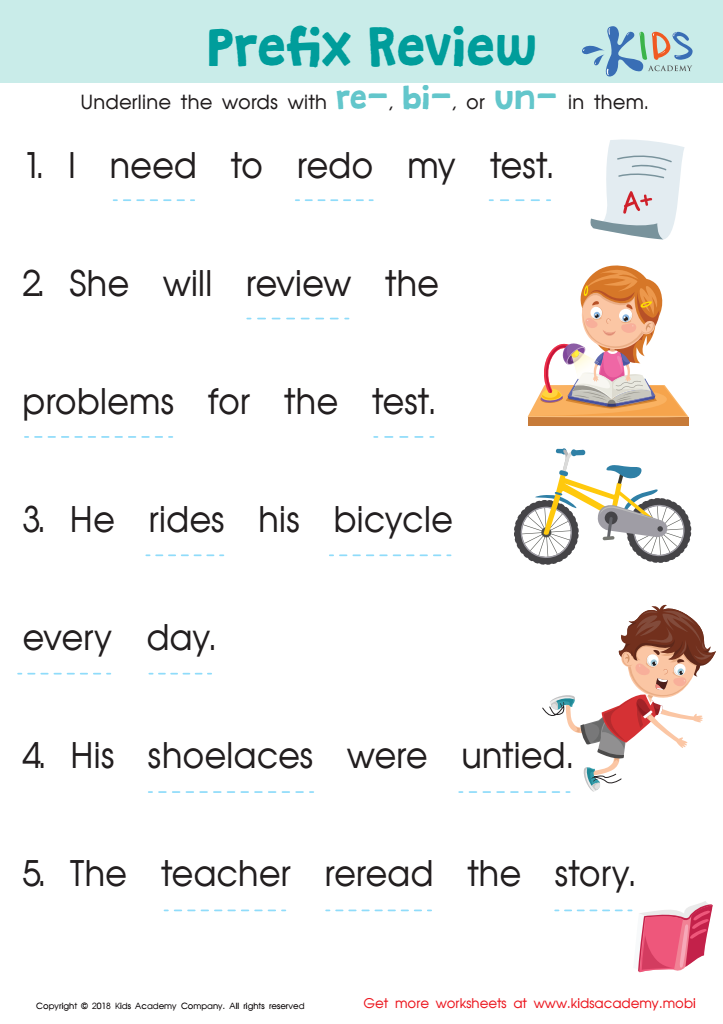
Prefix Review Worksheet
 Assign to My Students
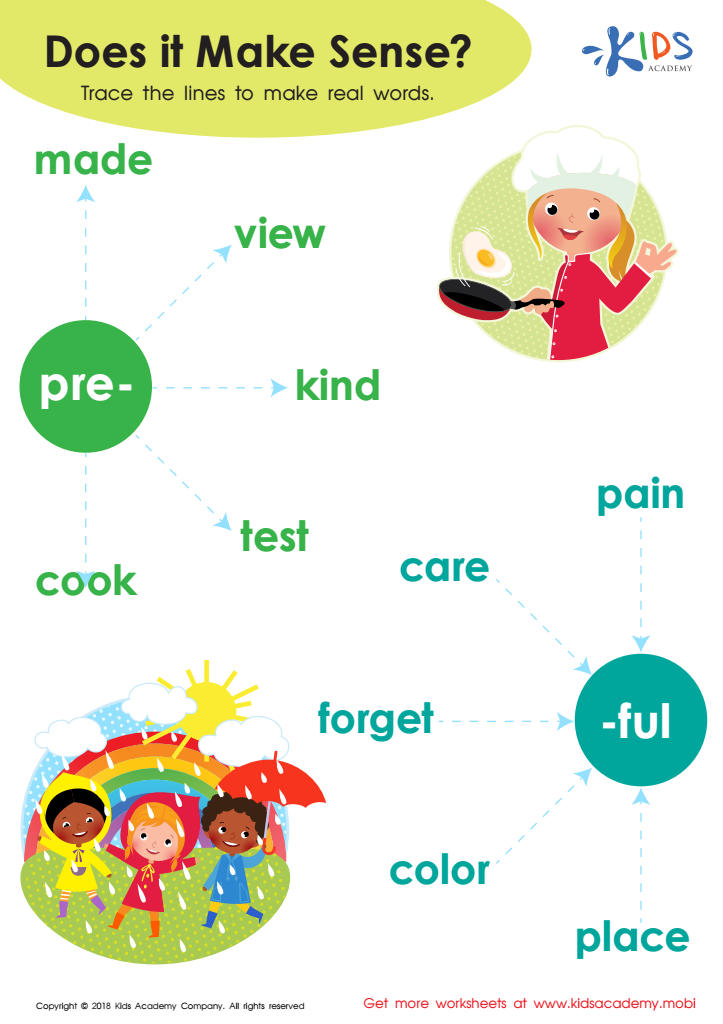
Prefix pre– and Suffix ful– Worksheet
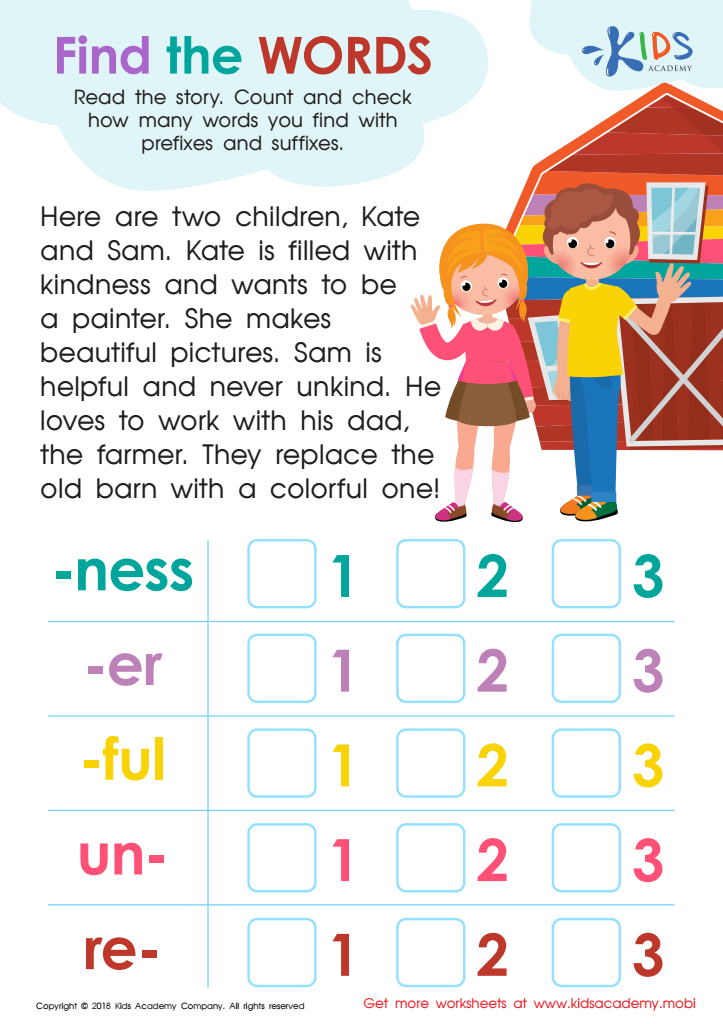
Prefix and Suffix Worksheet For Grade 3
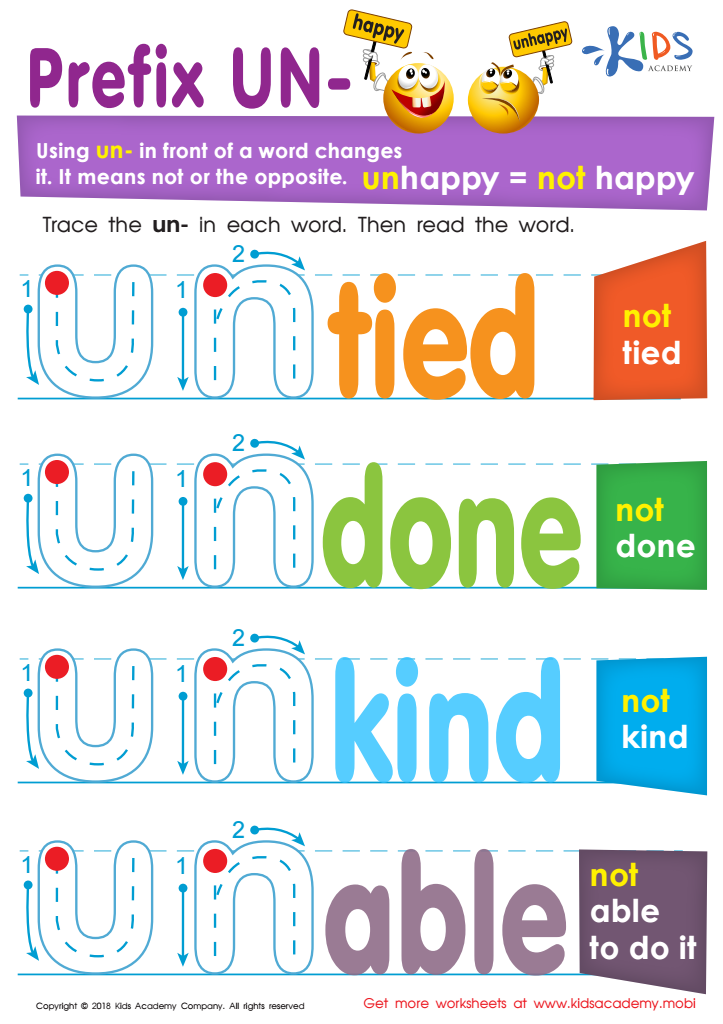
Prefix Un- Worksheet
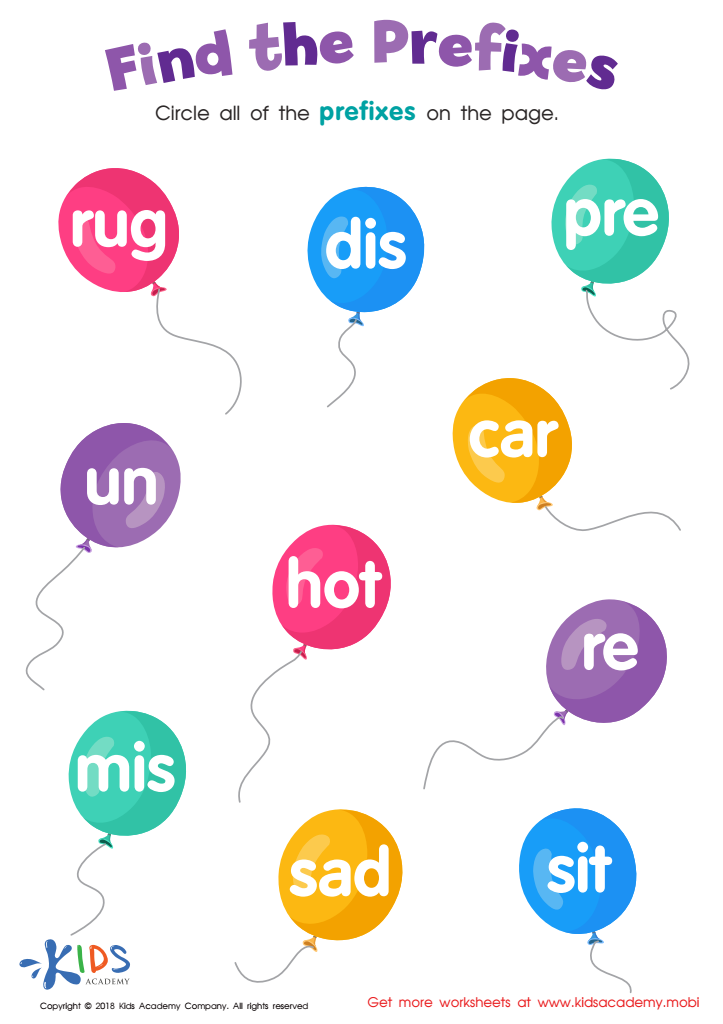
Reading: Find the Prefixes Worksheet
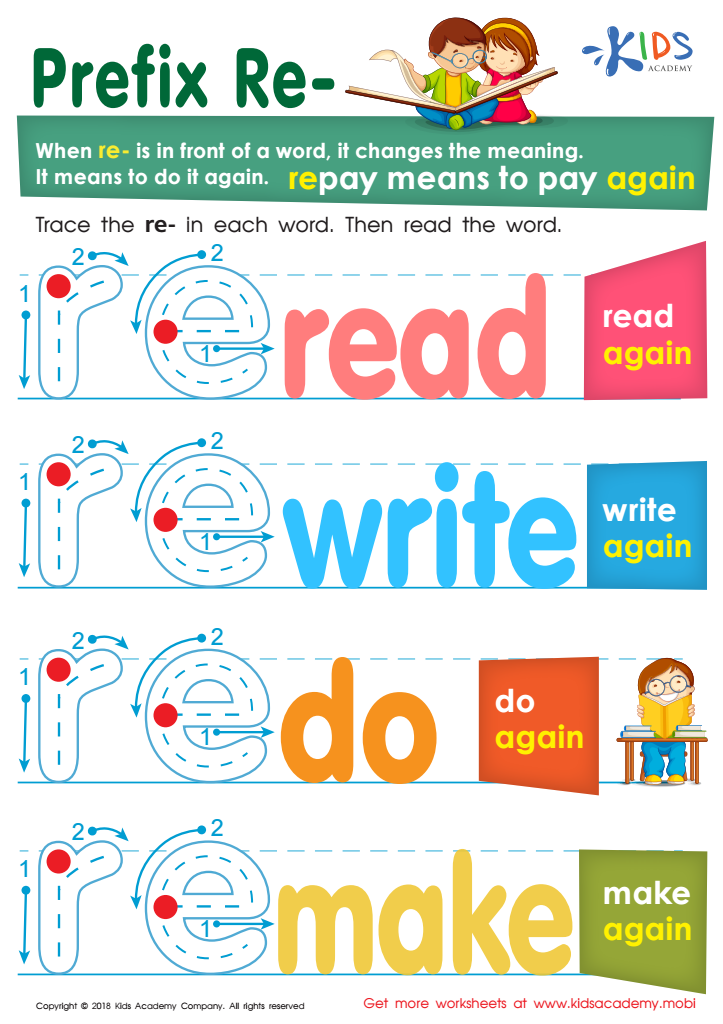
Prefix Re- Worksheet




.jpg)

Understanding prefixes is essential for children aged 6-9 as it lays a solid foundation for reading, writing, and vocabulary development. Prefixes are small word parts added to the beginning of root words to change their meanings, and knowing them enhances a child's decoding skills. For instance, understanding prefixes like "un-" (not), "re-" (again), or "mis-" (wrong) enables students to infer the meaning of unfamiliar words, fostering a sense of independence in their learning.
When parents or teachers emphasize prefixes in writing, it encourages children to expand their word usage and enrich their language skills. This boosts their confidence in expressing thoughts and ideas creatively. Learning about prefixes also supports overall literacy development, contributing to better comprehension and communication abilities.
Moreover, introducing prefixes during these formative years aligns with the curriculum, making learning engaging through interactive activities, games, and discussions. Encouraging young learners to explore prefixes can spark curiosity about language and its structure, helping them become more effective readers and writers as they mature. Ultimately, parents and teachers play a crucial role in nurturing these essential skills, ensuring children are well-equipped for academic success.








