Letter-sound correlation Alphabet Worksheets for 6-Year-Olds
3 filtered results
-
From - To
Unlock your child's reading potential with our engaging Letter-Sound Correlation Alphabet Worksheets designed specifically for 6-year-olds! These worksheets foster key literacy skills by helping young learners connect letters to their corresponding sounds through fun, interactive activities. Each worksheet is designed to captivate young minds while encouraging practice and proficiency in phonics. Children will enjoy tracing letters, identifying sound patterns, and engaging in creative exercises that reinforce their understanding of the alphabet. With our comprehensive resources, teaching foundational reading skills has never been easier. Perfect for parents and teachers alike, these worksheets ensure a solid grounding in early literacy for every child!
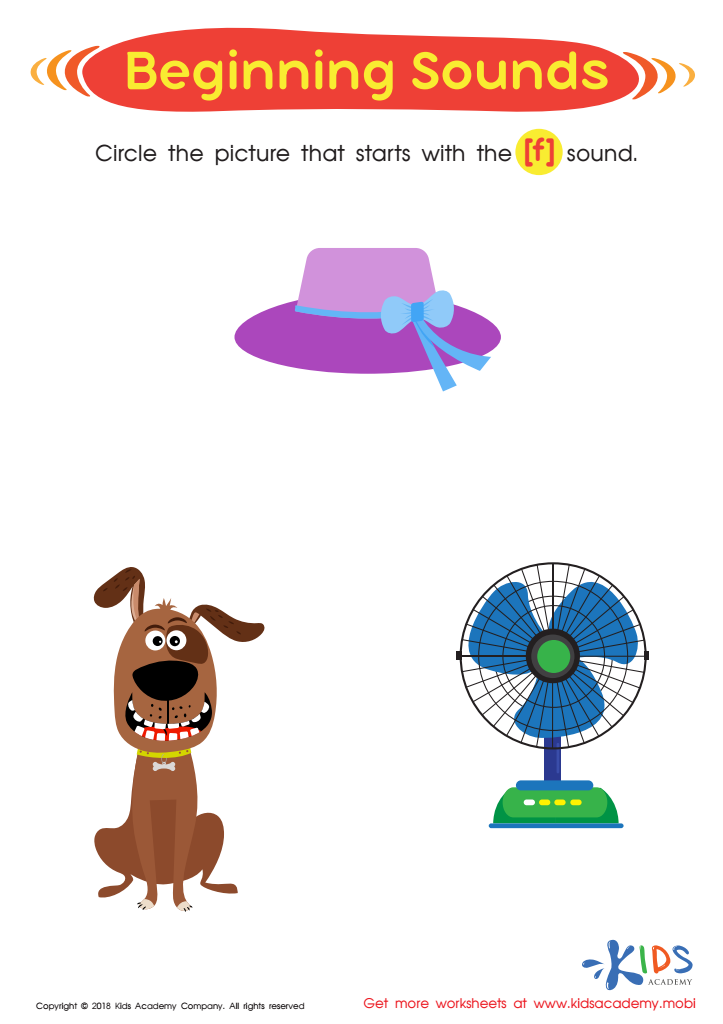
Beginning Sounds Assessment Printable
 Assign to My Students
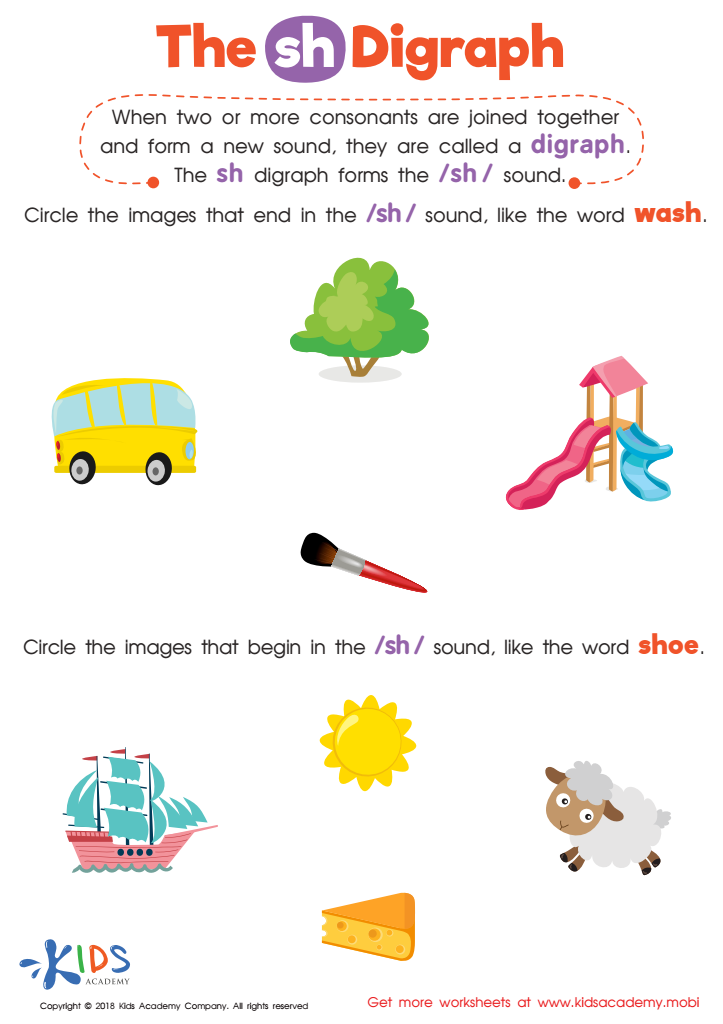
The SH Digraph Worksheet
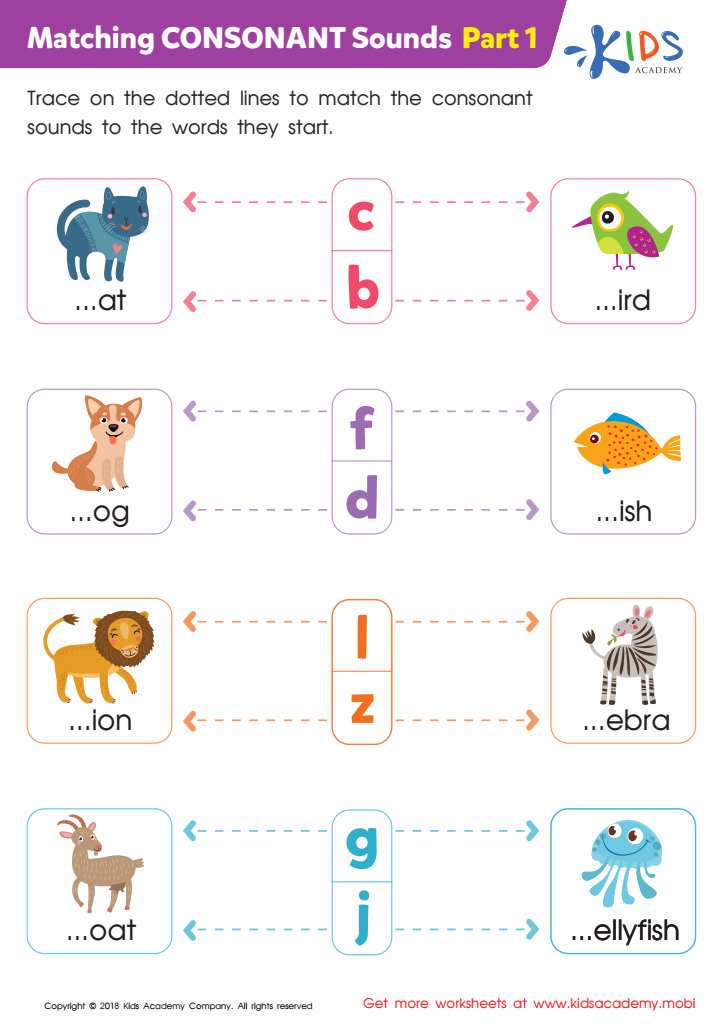
Matching Consonant Sounds: Part 1 Worksheet







Parents and teachers should care about letter-sound correlation for 6-year-olds because it forms the foundation for literacy development. At this age, children are beginning to decode words, and understanding the relationship between letters and their corresponding sounds is essential for reading fluency and comprehension. This correlation fosters phonemic awareness, enabling children to segment and blend sounds, skills critical for effective reading.
When children grasp letter-sound correlations, they become more confident readers, which can enhance their overall academic performance. Early exposure to these concepts helps instill a lifelong love for reading, encouraging their imagination and cognitive skills. Moreover, children who struggle with letter-sound recognition may feel frustrated or anxious about reading, which can lead to negative attitudes towards learning. By emphasizing letter-sound correlations in educational activities at home and in school, parents and teachers can create a supportive environment that nurtures literacy development.
Engaging in fun interactive activities, like phonics games, can make the learning process enjoyable. Ultimately, recognizing and prioritizing letter-sound correlation empowers young learners, equipping them with essential skills for future success in reading and education. Investing in these foundational skills is crucial for developing effective communicators and enthusiastic lifelong learners.







