
Sound-letter association Alphabet Worksheets for 6-Year-Olds
3 filtered results
Difficulty Level
Grade
Age
-
From - To
Subject
Activity
Standards
Enhance your child's literacy skills with our engaging Sound-Letter Association Alphabet Worksheets designed for 6-year-olds. These printable resources provide a fun and interactive way for young learners to connect sounds with their corresponding letters. Through a variety of activities, including letter tracing, sound matching, and identification exercises, children will build a strong foundation in phonics and improve their reading abilities. Ideal for homeschooling or classroom use, our worksheets encourage independent learning and boost confidence in young readers. Download now to ignite your child's love for literacy and set them on the path to reading success!
Favorites
With answer key
Interactive
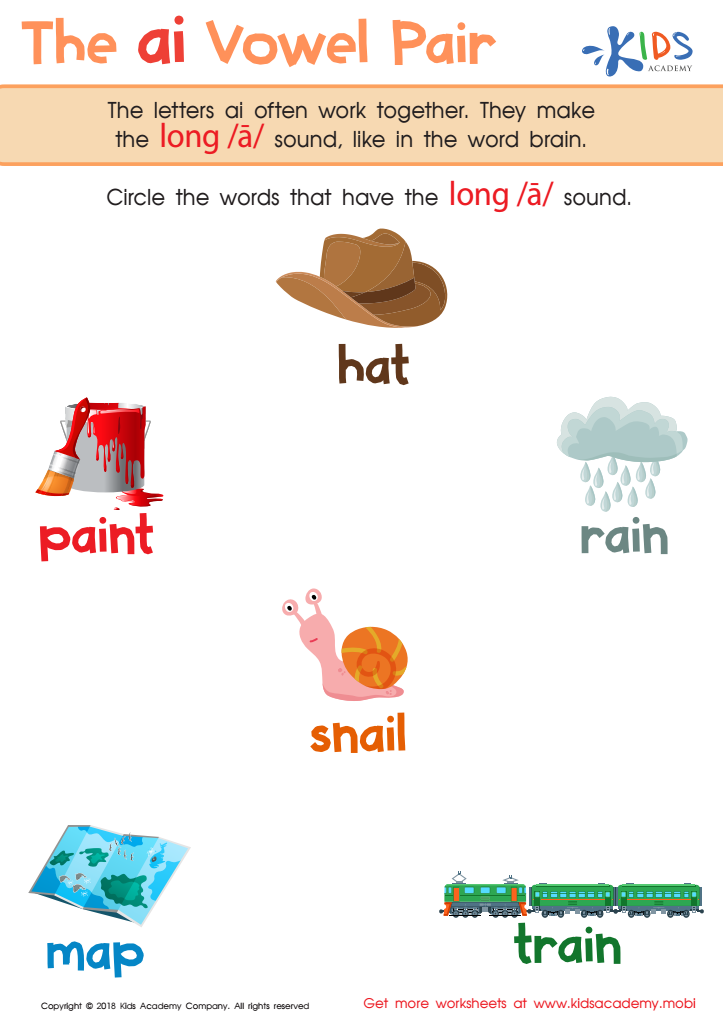
The AI Vowel Pair Worksheet
Vowel pairs make different sounds than individual letters. The 'ai' combination often forms the long /a/ sound, like in 'brain' and 'strain'. Get your kids to look at the pictures in the worksheet, identify each and say the name aloud. Help them circle the words with the long /a/ sound.
The AI Vowel Pair Worksheet
Worksheet
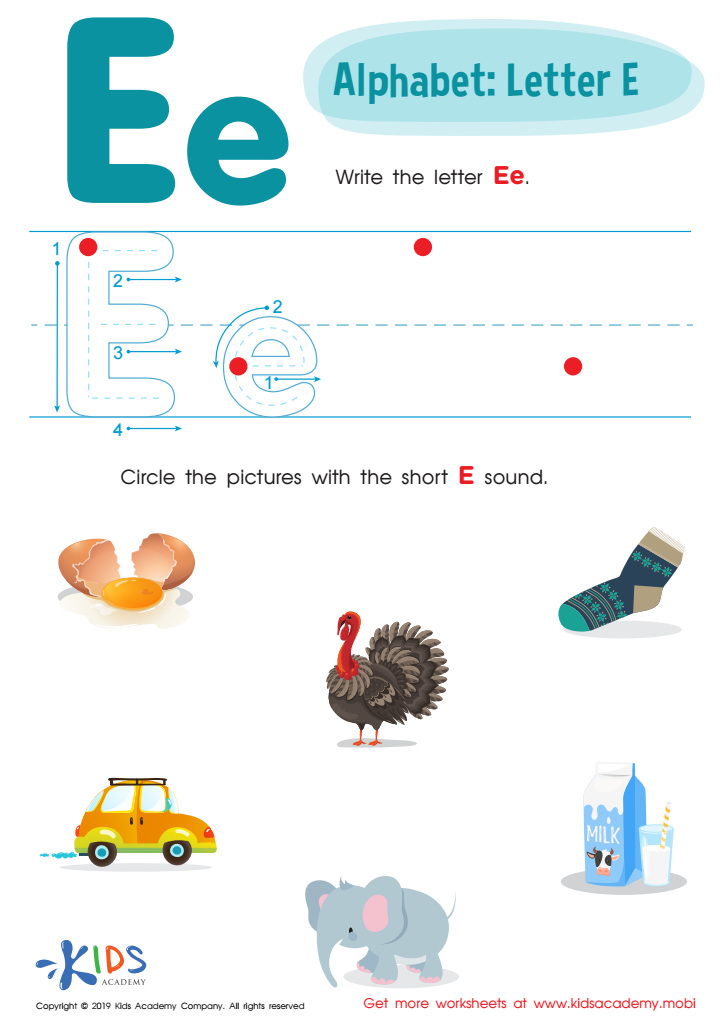
Letter E Tracing Worksheet
Students trace and write uppercase and lowercase letter E. They sound out "E" words, choosing those with short "E" sounds. Preschoolers identify the difference between the 'E' sounds in words like "egg" and "turkey." A tracing sheet helps them to understand.
Letter E Tracing Worksheet
Worksheet
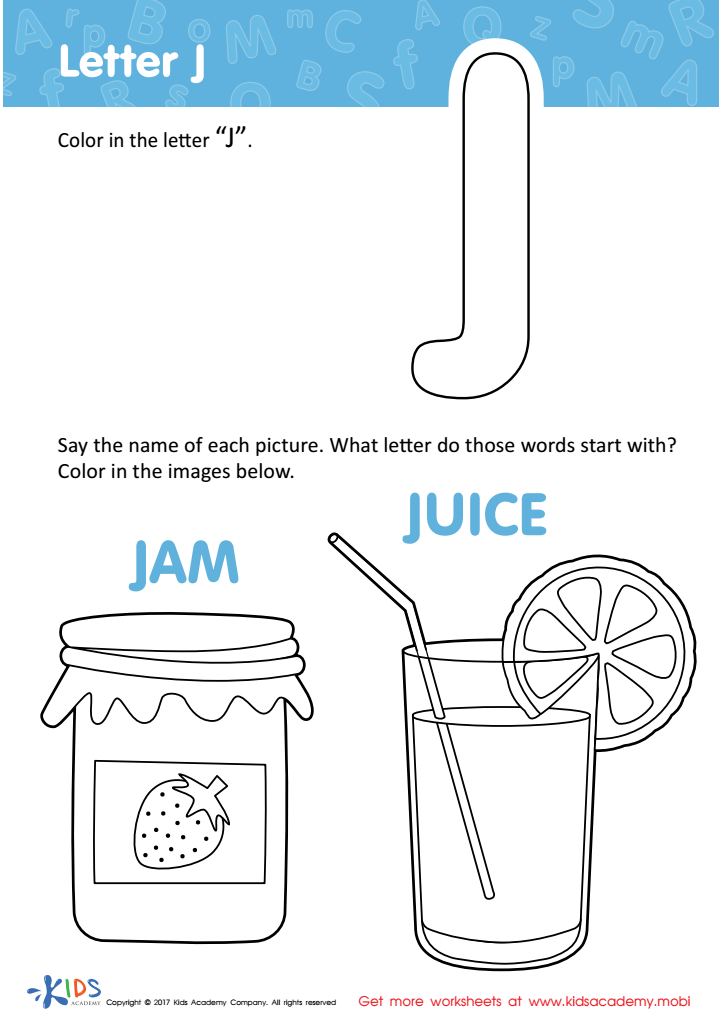
Letter J Coloring Sheet
Practice the letter 'J' with your little one with this fun coloring page! Pictures of jar, juice, jam and jelly make it an enjoyable experience for kids. Learning the letter and coloring is fun for even the youngest learners.
Download (PDF)
 Assign to My Students
Assign to My Students
Letter J Coloring Sheet
Worksheet
Join Kids Academy for Free
Who is primarily going to use this learning content?








Sound-letter association, also known as phonemic awareness or phonics, is a crucial component of early literacy and language development for six-year-olds. Understanding how sounds correspond to letters is essential for reading, writing, and spelling. Parents and teachers should care about this foundational skill for several reasons.
Firstly, sound-letter association fosters early reading ability. When children connect sounds to their corresponding letters and combinations, they can decode words, boosting their reading fluency and comprehension as they progress. This competence leads to greater confidence in their reading abilities.
Moreover, strong sound-letter association aids in spelling and writing. Children learn to encode their spoken language into written form, facilitating effective communication and creative expression.
Additionally, developing sound-letter skills enhances cognitive growth. Children engage in critical thinking as they analyze and manipulate sounds, laying the groundwork for advanced literacy skills and academic success in the future.
Furthermore, cultivating these skills aligns with early learning standards and frameworks, ensuring children are prepared for more rigorous literacy expectations in later grades. In summary, emphasizing sound-letter association prepares children for a lifetime of learning, creativity, and communication, making it vital for parents and teachers to prioritize these foundational skills.







