Uppercase identification Alphabet Worksheets for 6-Year-Olds
5 filtered results
-
From - To
Enhance your child's letter recognition skills with our Uppercase Identification Alphabet Worksheets, specifically designed for 6-year-olds! These engaging and educational activities help young learners confidently identify and write uppercase letters. Filled with fun exercises and vibrant illustrations, each worksheet focuses on mastering the alphabet in an enjoyable way. Perfect for both classroom use and at-home practice, these carefully crafted worksheets support early literacy skills, setting the foundation for future reading and writing success. Boost your child's confidence and proficiency with our expertly designed uppercase alphabet worksheets, tailored to captivate and educate young minds.
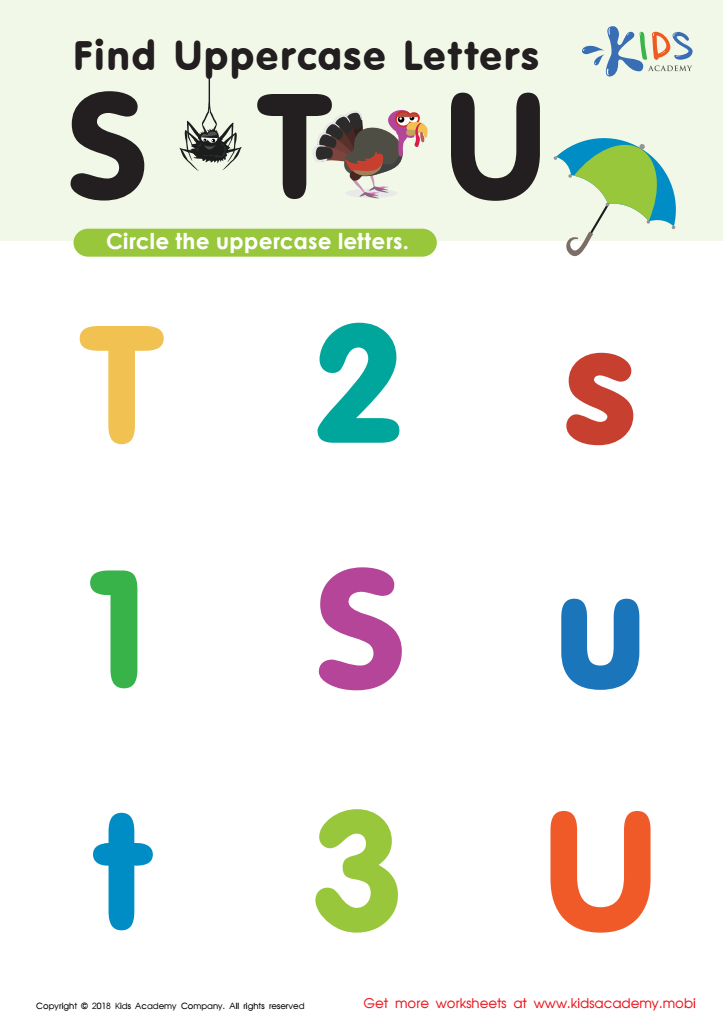
Find Uppercase Letters Worksheet
 Assign to My Students
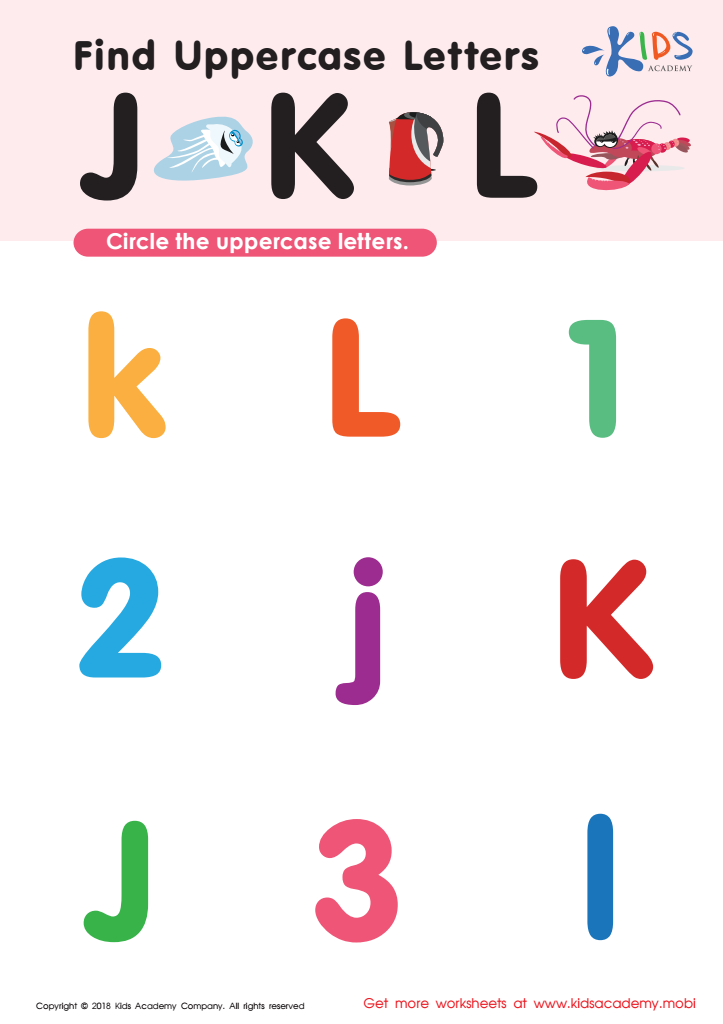
Find Uppercase Letters J, K, and L Worksheet

Find Uppercase Letters A, B, and C Worksheet
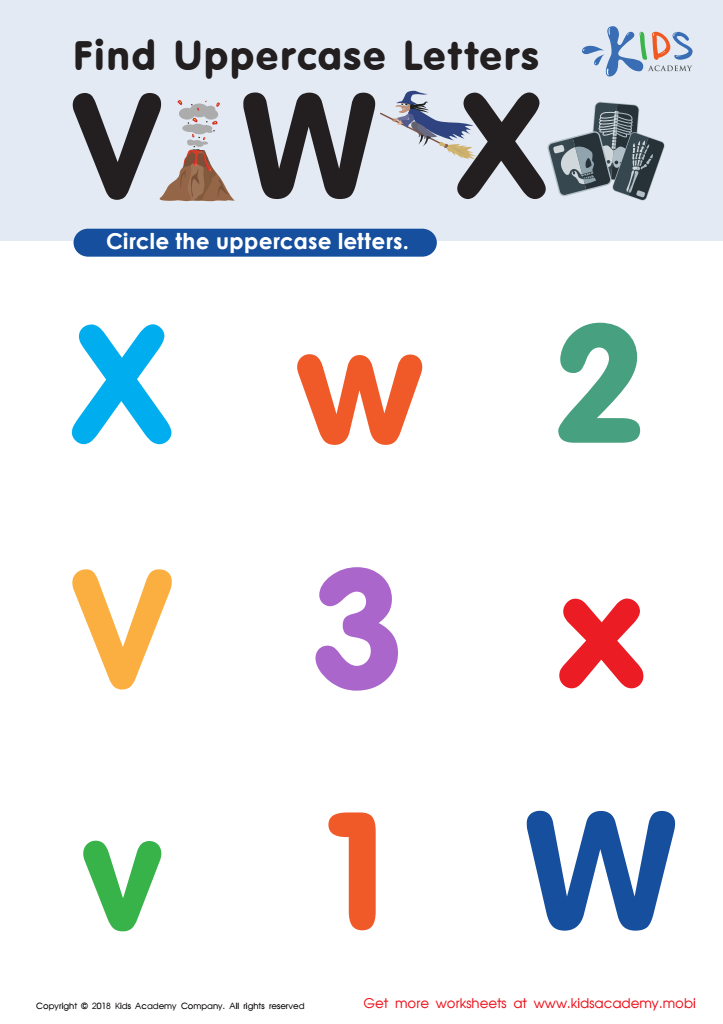
Find Uppercase Letters V, W, X Worksheet
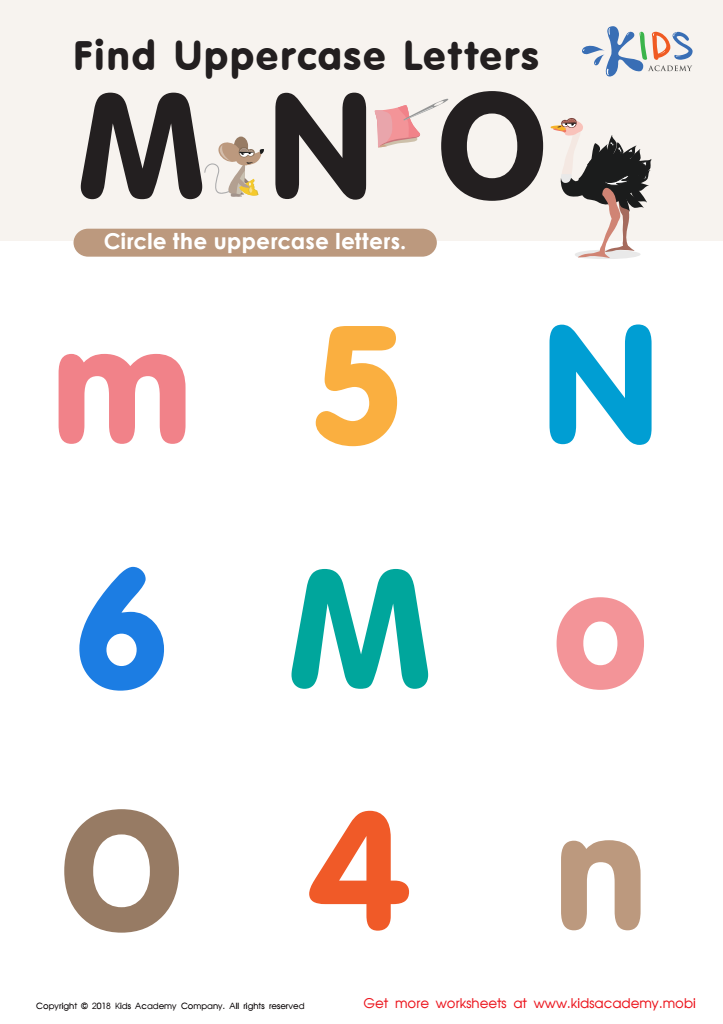
Find Uppercase Letters M, N, and O Worksheet







Parents and teachers should prioritize uppercase letter identification for 6-year-olds because it serves as a foundational element in early literacy development. Recognizing uppercase letters is crucial for young children as it forms the basis for reading and writing skills. Uppercase letters are typically easier for children to distinguish because of their uniform size and simpler, more straightforward shapes compared to lowercase letters. This simplicity aids in reducing confusion and fosters a sense of confidence as children begin their literacy journey.
Additionally, a strong grasp of uppercase letter identification helps in the development of phonemic awareness. When children recognize letters, they link them to their respective sounds, which is crucial for decoding words and comprehensive reading skills. Familiarity with uppercase letters also enhances children's ability to navigate written texts and engage with environmental print, such as signs, labels, and books, fostering early reading habits and print awareness.
From a social perspective, early identification of uppercase letters can facilitate better communication and self-expression. It equips children with the skills needed to write their names, understand simple texts, and participate actively in classroom activities. Ultimately, investing time and effort into uppercase letter identification at this developmental stage paves the way for successful academic achievements and a lifelong love for learning.







