Filters

8 filtered results

Clear all filters
Favorites
With answer key
Interactive

8 filtered results

Difficulty Level

Grade


Boost your child's reading skills with our engaging Vocabulary Development Phonics Worksheets for 6-Year-Olds! Specifically designed to enhance early literacy, these worksheets provide a blend of fun and education, helping young learners recognize phonetic patterns, build vocabulary, and master pronunciation. From playful word matching exercises to creative fill-in-the-blank activities, each worksheet is tailored to make learning an enjoyable experience. Perfect for both parents and teachers, these resources support your child’s journey toward reading fluency and a robust vocabulary foundation. Visit Kids Academy now to explore our extensive collection of premium phonics worksheets.

Check out this FREE Trial Lesson on Phonics for age 6!

The Short A Sound

Favorites
With answer key
Interactive
  • 6
  • Vocabulary development
  • Phonics
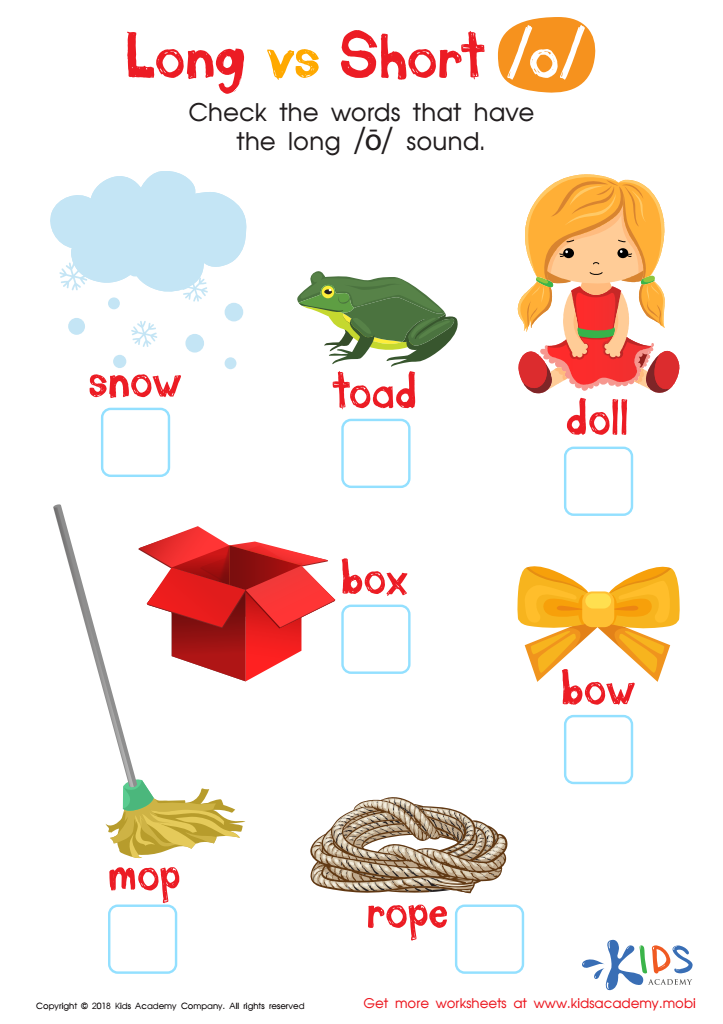
Long vs Short O Reading Worksheet

Long vs Short O Reading Worksheet

Help your child learn to identify the long and short «o» sound with this colourful worksheet. Guide them as they spot words with the long or short «o» sound. With practice, your child will find it easier to tell the difference between the two.
Long vs Short O Reading Worksheet
Worksheet
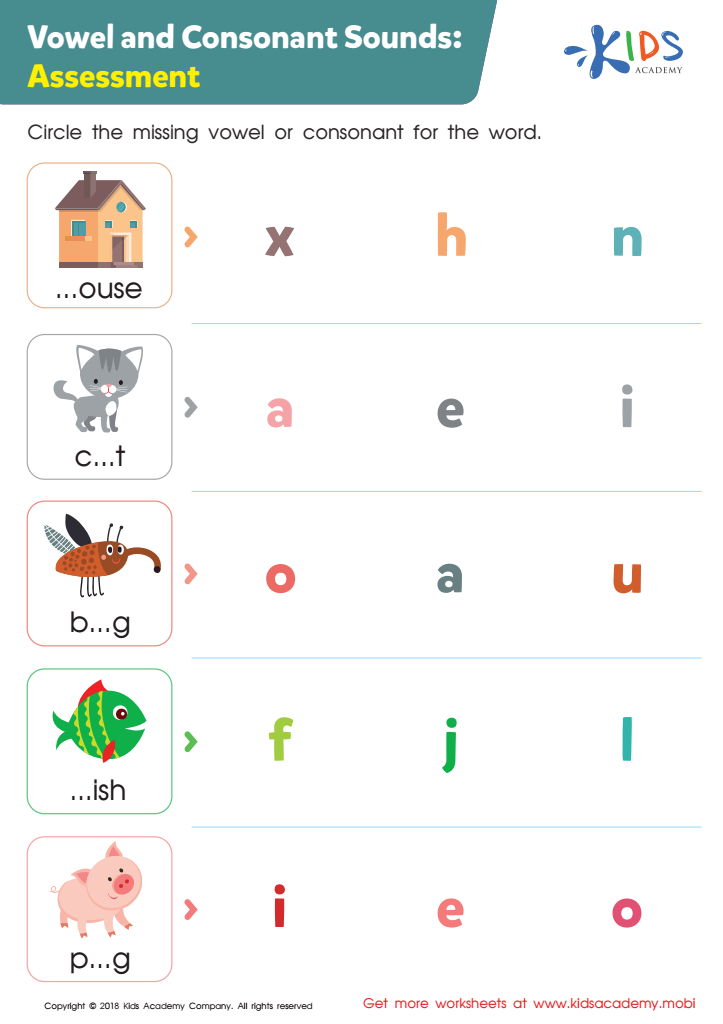
Vowel and Consonant Sounds: Assessment Worksheet

Vowel and Consonant Sounds: Assessment Worksheet

Test young elementary students on vowel and consonant sounds with this friendly phonics assessment worksheet. Get kids to name each image and look at the word underneath. Ask them to sound out the word, then circle the missing letter to complete. This will help assess their knowledge and skills!
Vowel and Consonant Sounds: Assessment Worksheet
Worksheet
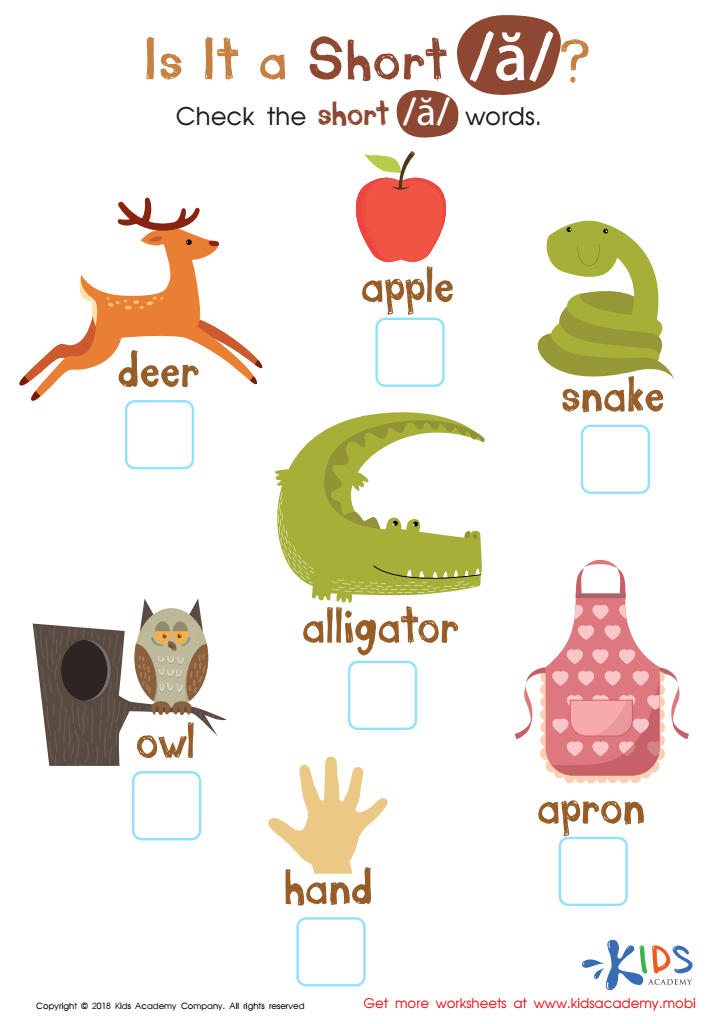
Is It Short A? Reading Worksheet

Is It Short A? Reading Worksheet

Struggling readers may have difficulty distinguishing short from long vowels. With this fun PDF worksheet, they practice identifying the corresponding short «ă» by naming each picture and ticking the right boxes. It's a great way to work on decoding and fluency skills!
Is It Short A? Reading Worksheet
Worksheet
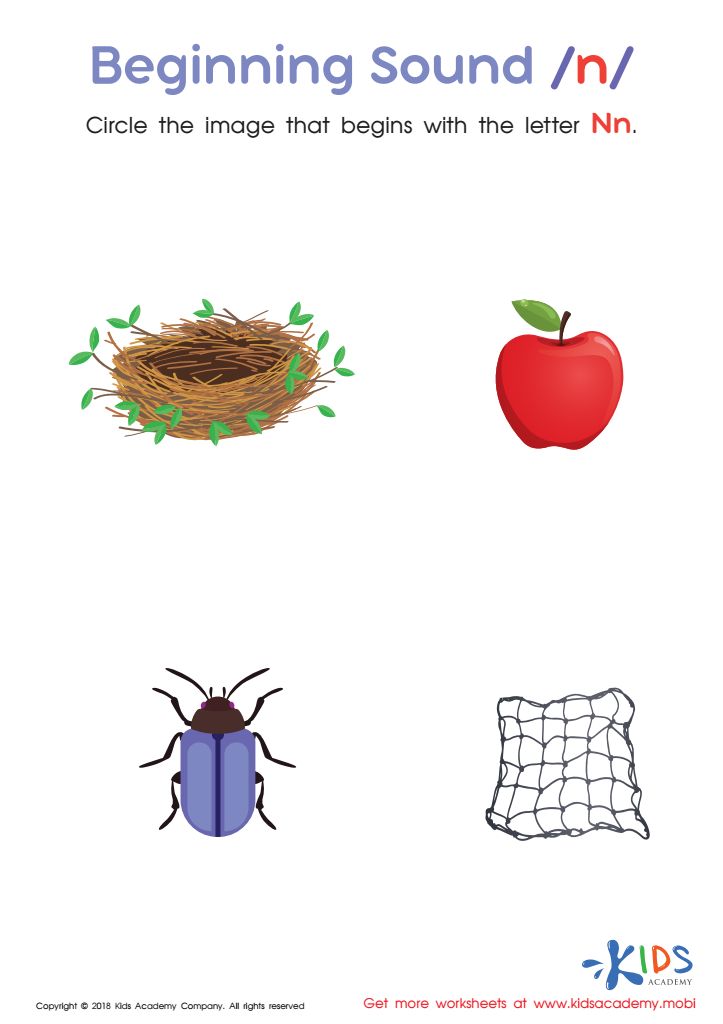
Beginning Sound «n» Worksheet

Beginning Sound «n» Worksheet

Help your emerging reader learn the initial «n» sound with this free PDF worksheet! Strengthen fine motor skills by tracing circles around words beginning with «n». Pictures are clear and engaging, giving beginning Phonics learners the right amount of practice and the confidence to succeed.
Beginning Sound «n» Worksheet
Worksheet
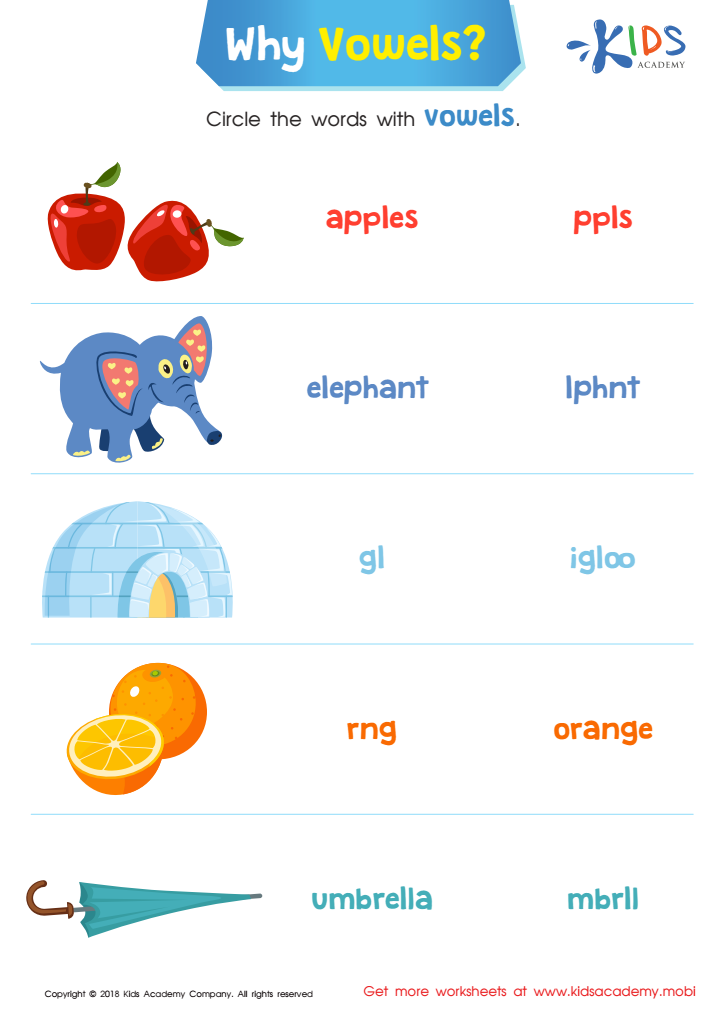
Why Vowels? Reading Worksheet

Why Vowels? Reading Worksheet

This worksheet teaches kids to spell words with vowels. It features familiar pics for them to recognize, and they practice fine motor skills by circling the correct spelling. It's an enjoyable way for kids to learn how to spell and promote reading skills.
Why Vowels? Reading Worksheet
Worksheet
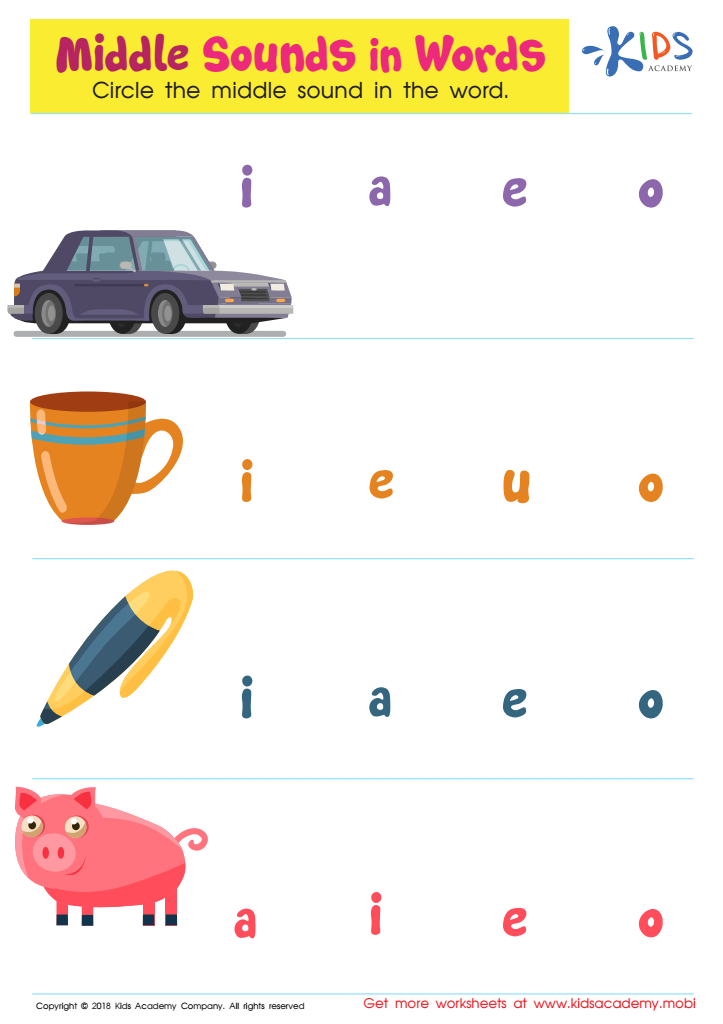
Middle Sounds in Words Worksheet

Middle Sounds in Words Worksheet

This worksheet helps emerging readers use picture clues to identify familiar words and practice tracing and fine-motor abilities. It also reinforces spelling by helping them distinguish middle sounds in words. A great way to build listening and literacy skills!
Middle Sounds in Words Worksheet
Worksheet
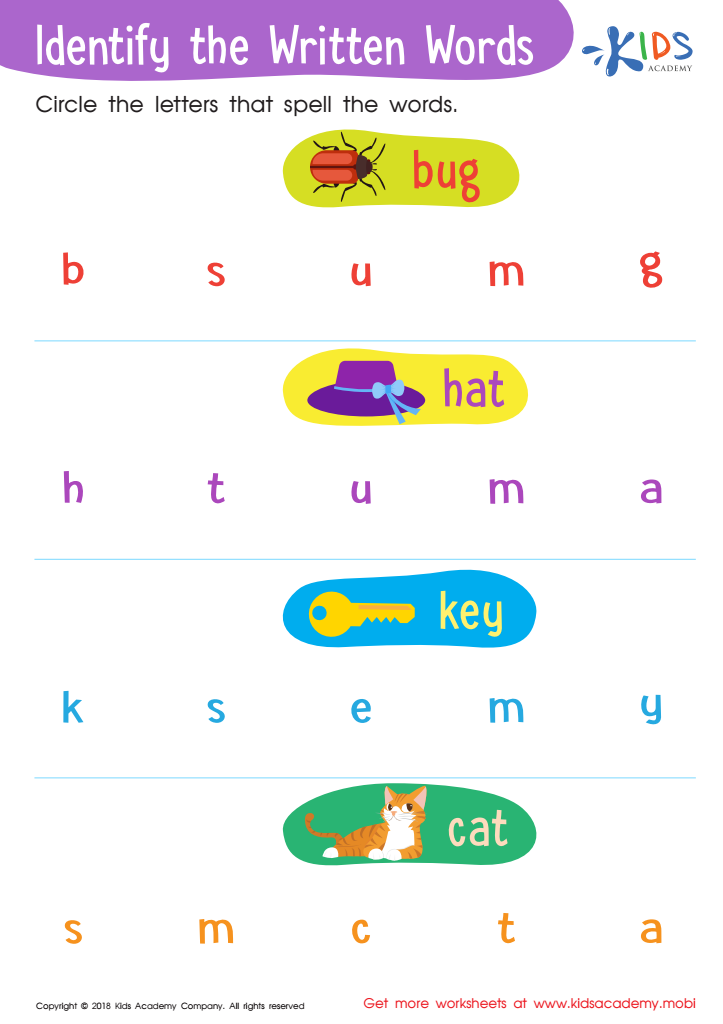
Identify the Written Words Worksheet

Identify the Written Words Worksheet

Have your students identify the objects on the printout, then spell the words. If they already know how to spell, this exercise should be easy. Help them circle the correct letters from the set to spell out the words. This is a great way to reinforce reading and spelling skills. Max 80 words.
Identify the Written Words Worksheet
Worksheet
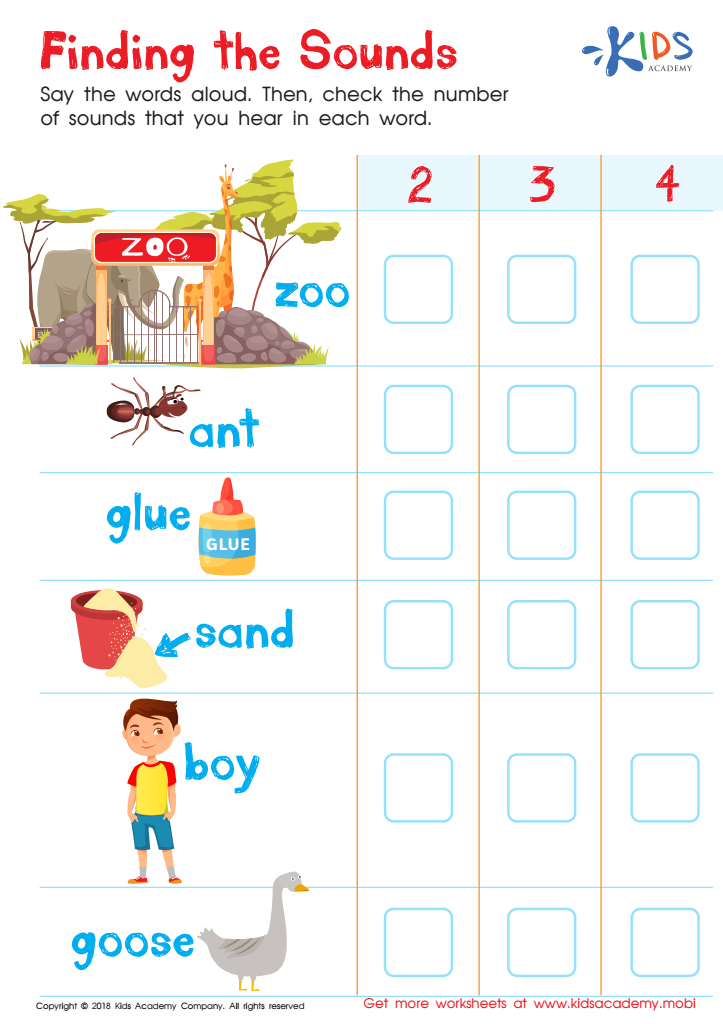
Finding the Sounds Worksheet
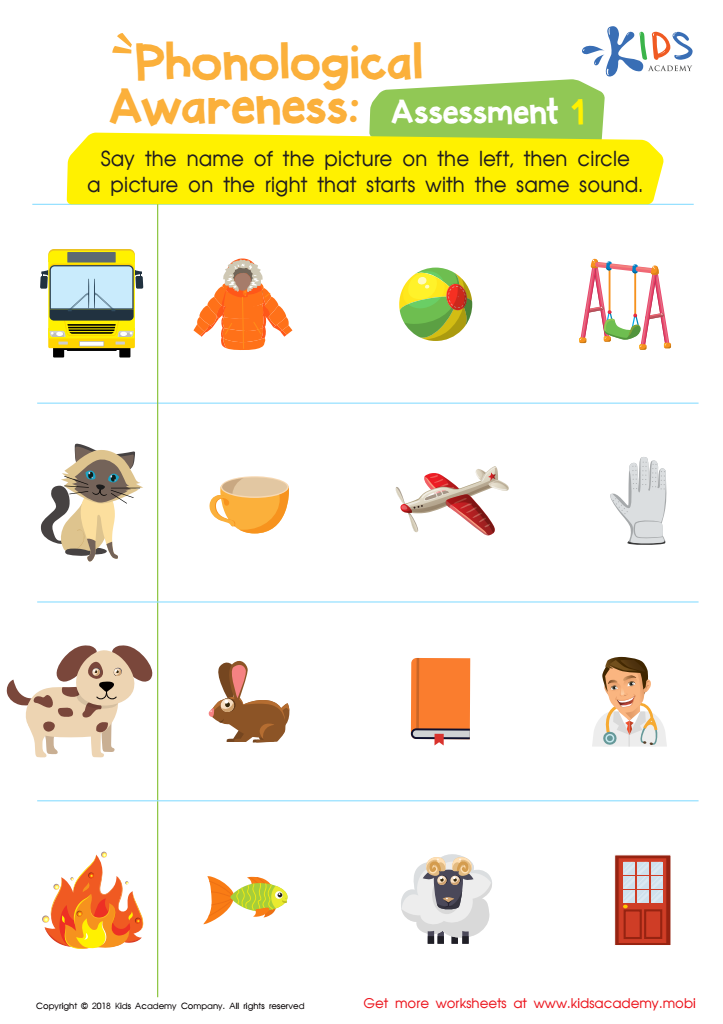

Finding the Sounds Worksheet

This free colorful worksheet assists children in learning words and breaking them down into sounds. It boosts auditory discrimination, phonological awareness and fine motor skills. Picture clues help them read confidently, and they can check the appropriate boxes to practice their reading skills.
Finding the Sounds Worksheet
Worksheet


Vocabulary development and phonics are foundational components of literacy that are crucial for 6-year-olds' cognitive and educational growth. At this age, children's brains are exceptionally receptive to language acquisition, making it an ideal time for parents and teachers to focus on these skills.

Phonics lays the groundwork for reading by teaching children the relationships between letters and sounds. Mastery of phonics enables kids to decode words, promoting fluent reading. This fluency is essential, as it allows children to concentrate more on comprehension rather than on deciphering each word. Complex texts become accessible, enriching their knowledge and vocabulary.

A robust vocabulary enhances communication skills, allowing children to express their thoughts and feelings clearly. It also improves academic performance across subjects, as comprehension is critical in understanding instructions and content. With a strong vocabulary, children are more confident, actively participate in discussions, and are better prepared to tackle challenges.

Integrating vocabulary development and phonics into daily routines encourages a lifelong love of reading and learning. It equips children with the tools necessary for academic success and empowers them to navigate an increasingly text-based world. In sum, investing in these skills during early childhood creates a strong educational foundation, fostering better outcomes throughout their academic journey and beyond.