Letter tracing skills Tracing Letters Worksheets for 6-Year-Olds
3 filtered results
-
From - To
Enhance your 6-year-old's handwriting with our engaging letter tracing worksheets! Specifically designed to foster letter recognition and writing skills, these worksheets provide a fun, interactive way for children to practice forming both uppercase and lowercase letters. Each activity encourages motor skill development and boosts confidence as kids trace, color, and learn. With vibrant illustrations and easy navigation, your child will enjoy every moment of practice. Our resources cater to various learning styles, ensuring a well-rounded approach to literacy. Dive into our collection and watch your child's letter tracing skills flourish, setting the foundation for future reading and writing success!
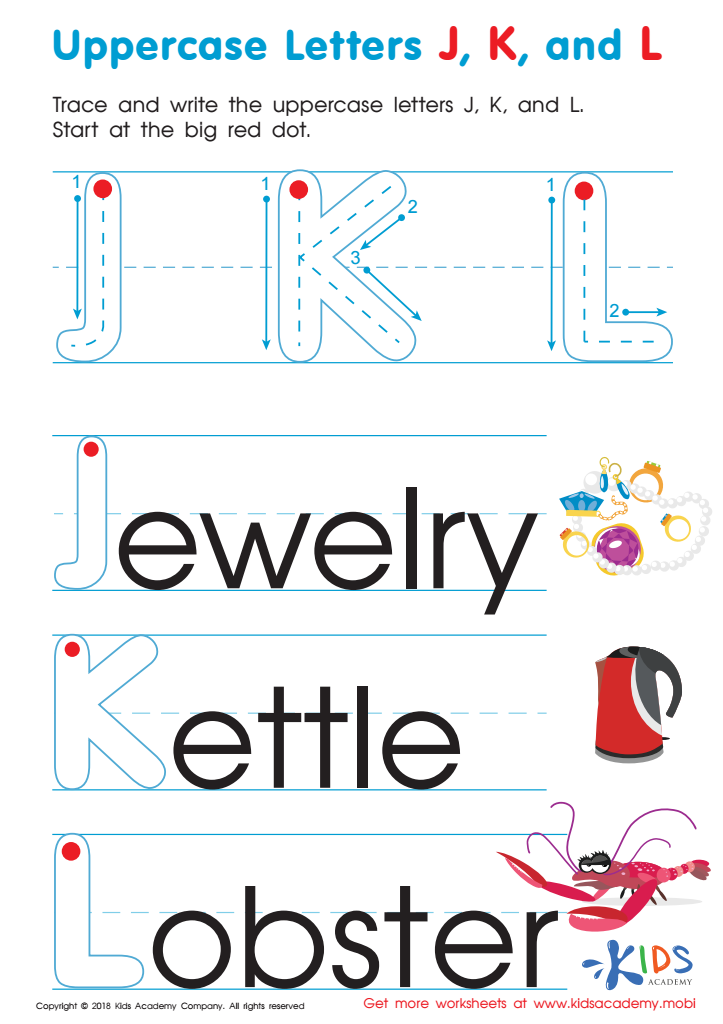
Uppercase Letters J, K, and L Worksheet
 Assign to My Students

Letter C Tracing Page
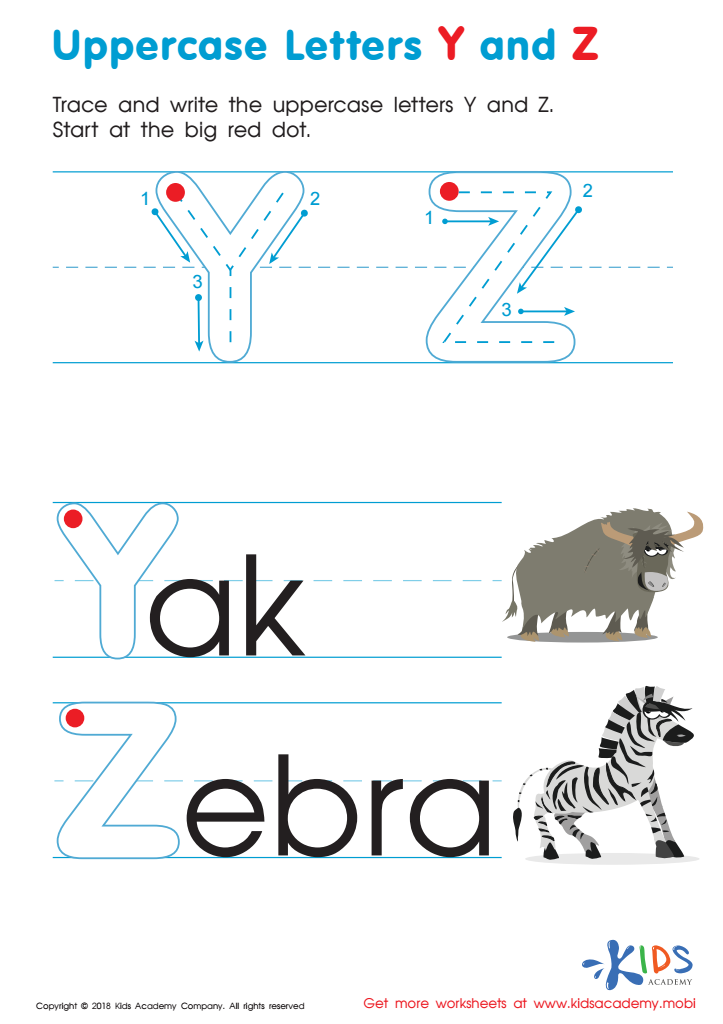
Uppercase Letters Y Z Worksheet








Letter tracing skills are a crucial foundation for young learners, especially for 6-year-olds, as they prepare to embark on writing and literacy journeys. Firstly, tracing helps children develop fine motor skills, which are essential for holding writing instruments and controlling movements on paper. Through consistent practice, their grip improves and they learn to coordinate their hand-eye movements, building confidence in their writing abilities.
Secondly, letter tracing aids in letter recognition and phonics awareness. By tracing letters, children not only learn how to form them but also associate the shapes with sounds, enhancing their reading skills. This dual approach fosters early literacy as they connect speaking, writing, and reading.
Moreover, tracing activities can be a fun, engaging way to promote learning. Parents and teachers can incorporate tracing into play, making it an enjoyable experience that encourages repetition without feeling tedious.
Finally, building these early writing skills lays the groundwork for future academic success. Strong handwriting contributes to clear communication and expression of ideas, essential skills for lifelong learning. In summary, investing time in letter tracing offers lasting benefits that extend beyond the classroom, nurturing both academic skills and self-esteem in young learners.








