Counting skills English for Beginners Worksheets for 6-Year-Olds
10 filtered results
Difficulty Level
Grade
Age
-
From - To
Subject
Activity
Standards
Enhance your child's counting skills with our "Counting Skills English for Beginners Worksheets for 6-Year-Olds." Designed especially for young learners, these fun and engaging worksheets are perfect for developing foundational math skills while improving English language proficiency. Packed with colorful illustrations and interactive exercises, our worksheets help children practice counting, recognition of numbers, and basic math concepts. Ideal for both classroom and home use, these printable activities support a hands-on learning approach, fostering a love for numbers and bolstering confidence in English. Start your child’s journey to math mastery and language development today!
Favorites
With answer key
Interactive
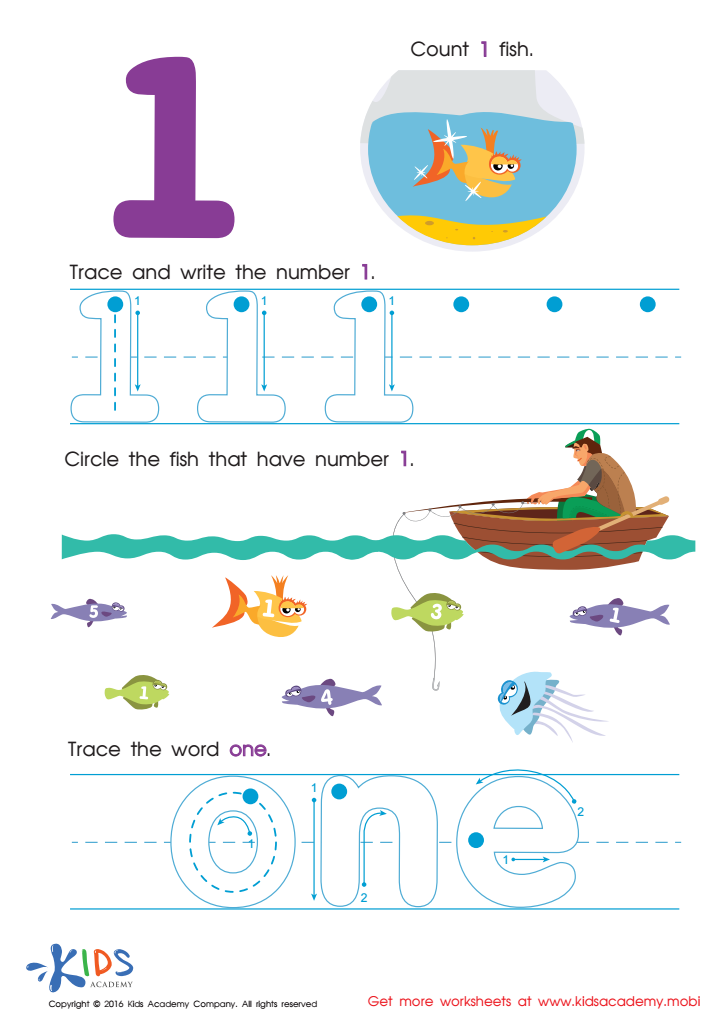
Learning to Write 1 Worksheet
Learning to write numbers can be easy and fun! Get this new number worksheet to help your child excel. Practice counting, tracing and writing the number “one”, then circle the fish with “1” on them. Revise spelling and have fun! Get more tracing numbers worksheets at Kids Academy and enjoy the learning process.
 Assign to My Students
Learning to Write 1 Worksheet
Worksheet
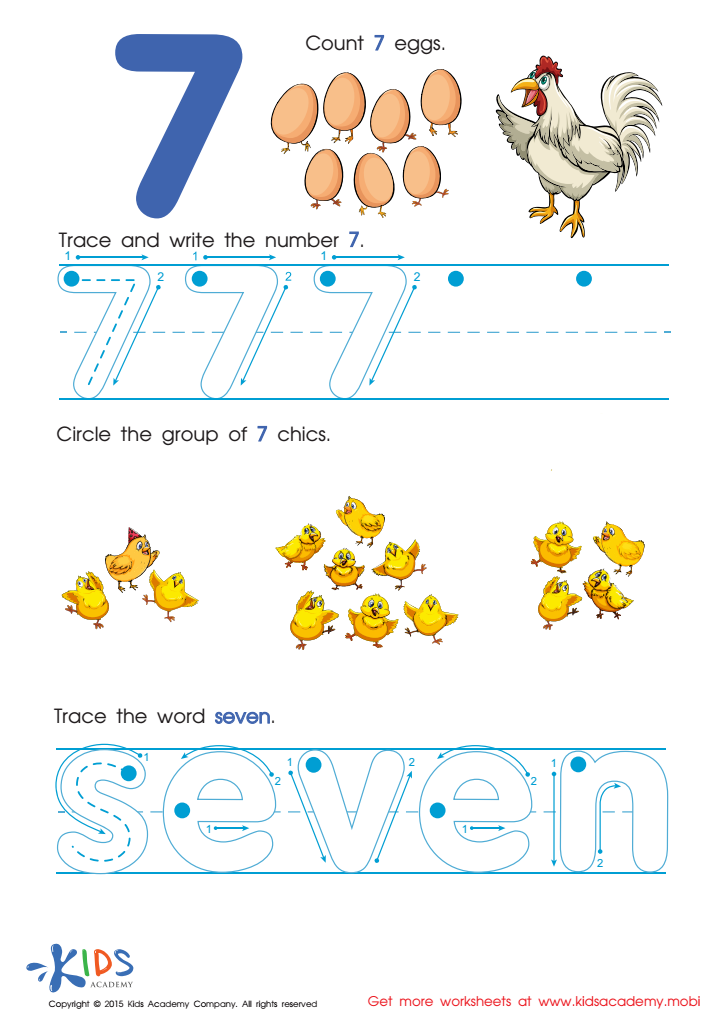
Trace And Write Number 7 with Fun Worksheet
Try one with a cute hen and its seven eggs! Trace and write the number 7, circle the group of seven chicks, and trace the word "seven". Fun and educational!
Trace And Write Number 7 with Fun Worksheet
Worksheet
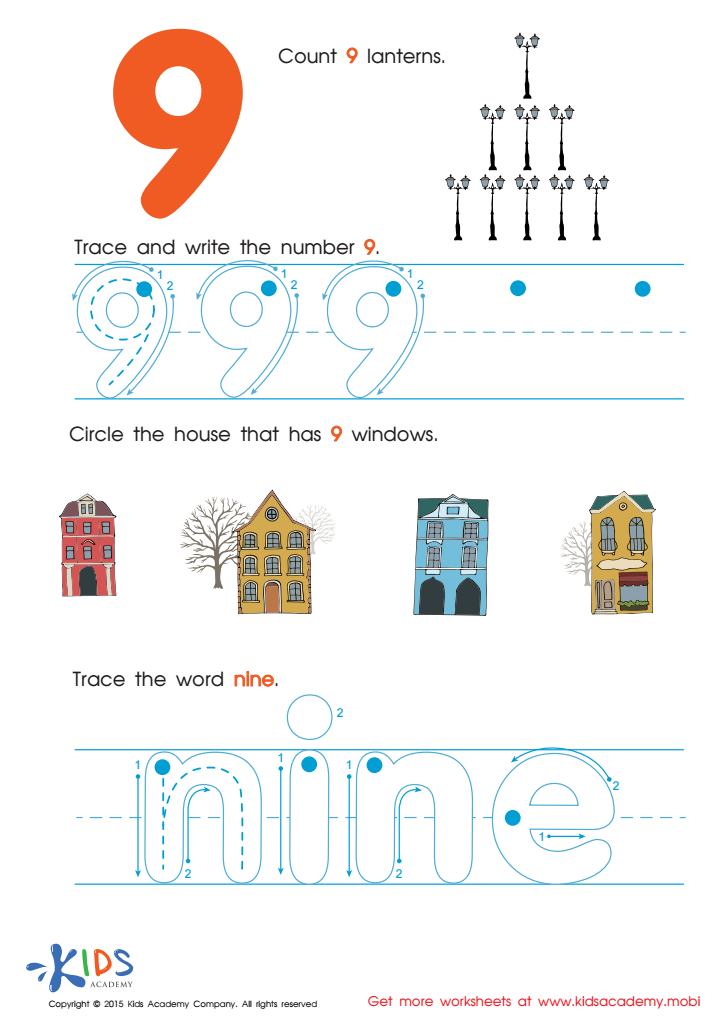
Tracing And Learning to Write Number 9 Worksheet
Explore our collection of learning numbers worksheets and make teaching numbers to preschoolers easier with Kids Academy. Trace numbers, circle houses with the specified number of windows, write the corresponding number words and revise previous numbers regularly to help kids learn.
Tracing And Learning to Write Number 9 Worksheet
Worksheet
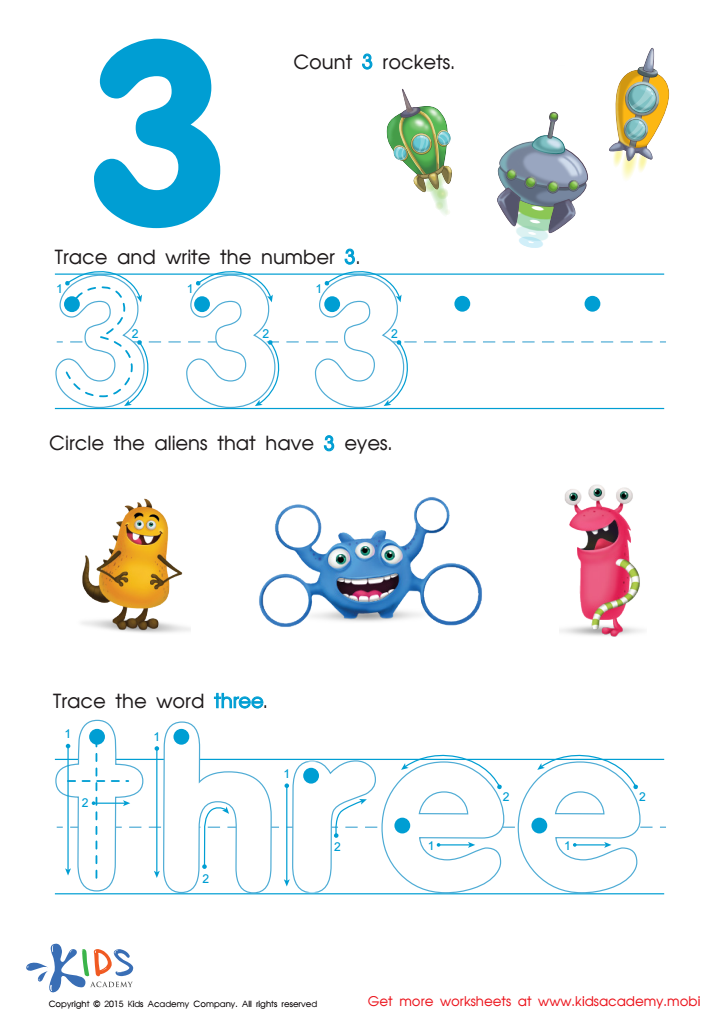
Learning Number Three Worksheet
Learn to count with aliens! Trace the number 3 and circle aliens with 3 eyes. Explore our web site for more number games and activities for preschoolers.
Learning Number Three Worksheet
Worksheet
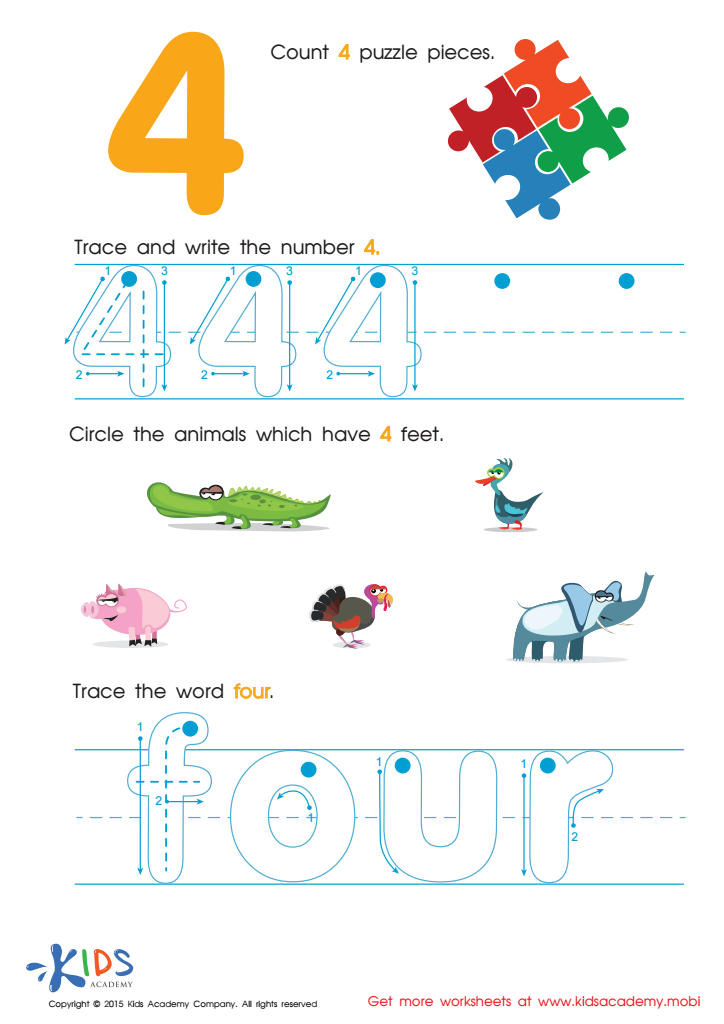
Teaching Children to Write Number 4 Worksheet
Count the pieces of the puzzle - there are four. Trace the number and write it. Circle the animals with four feet. Trace the word "four" too. Kids Academy offers tracing numbers worksheets for preschoolers, making studies easy and effective.
Teaching Children to Write Number 4 Worksheet
Worksheet
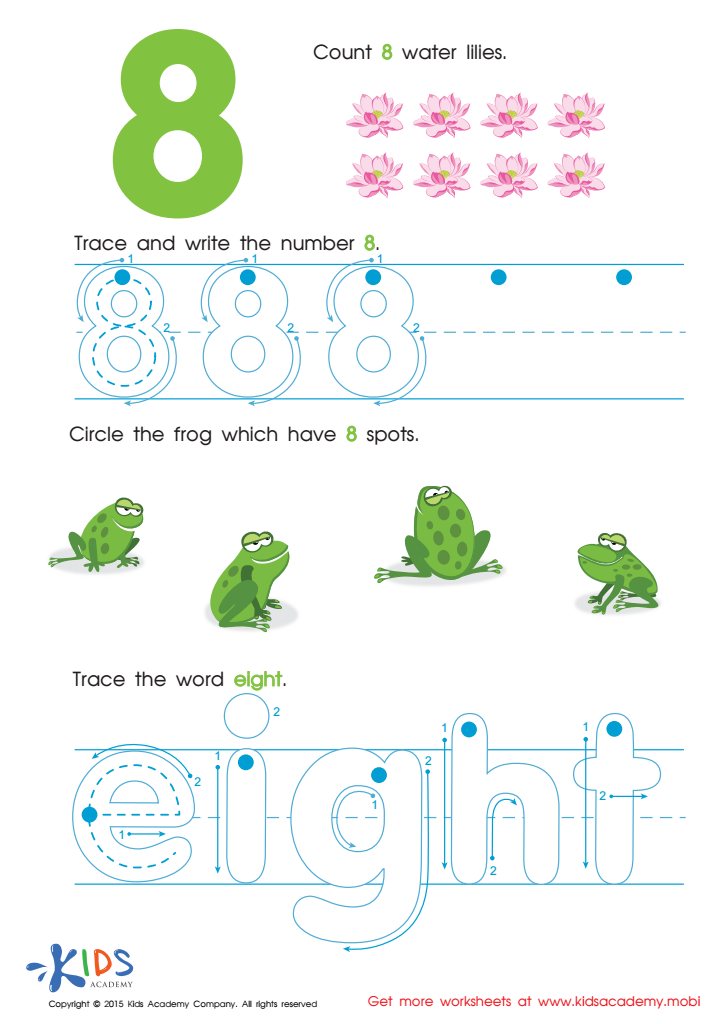
Learn Number 8 Easily Worksheet
Kids can trace, write numbers and learn to pronounce them through exciting activities and games. Try our number worksheets for preschoolers to make learning fun!
Learn Number 8 Easily Worksheet
Worksheet
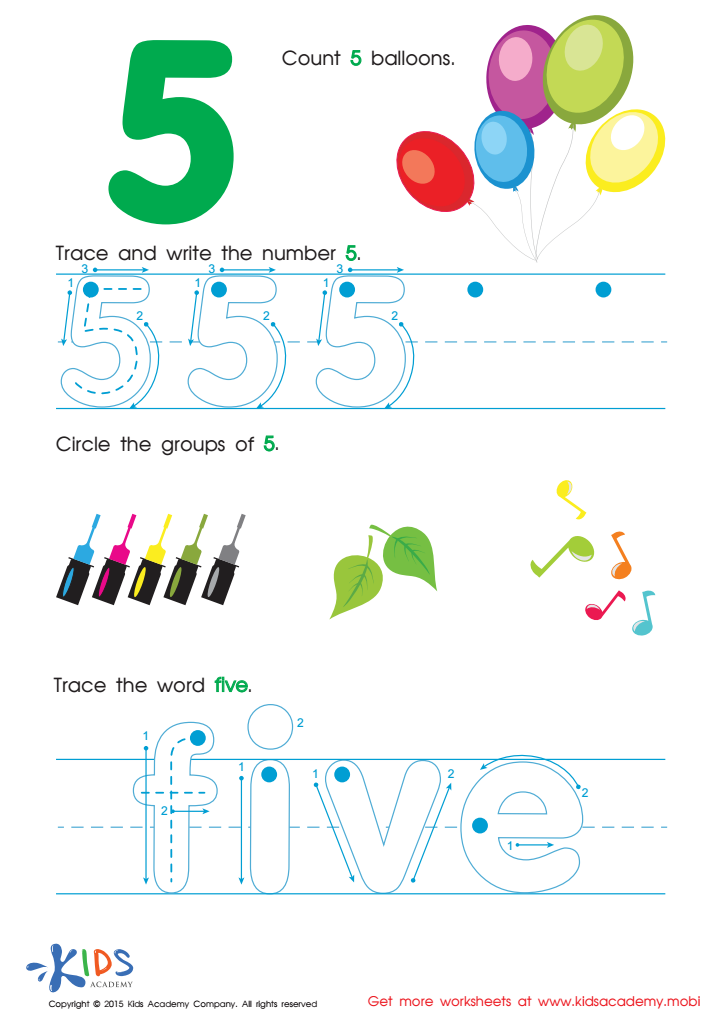
Practice Writing Number 5 Worksheet
Make learning numbers fun! Let your kids count the balloons, trace numbers, and circle the groups with five items. Also, have them trace the word "five" for letter revision. Get the full collection of preschool number worksheets from Kids Academy for a fun and interactive learning experience.
Practice Writing Number 5 Worksheet
Worksheet
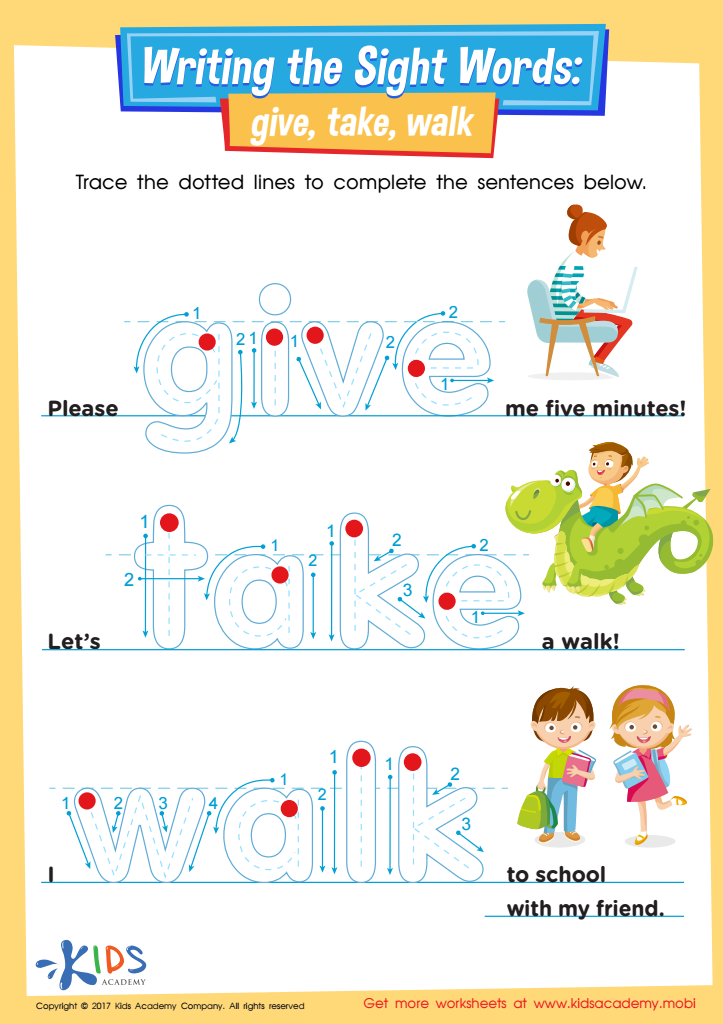
Give, Take, Walk Printable Sight Words Worksheet
Reading aids writing development: this worksheet has your child read sentences and write three sight words: give, take, and walk. It's a great way to strengthen writing skills.
Give, Take, Walk Printable Sight Words Worksheet
Worksheet
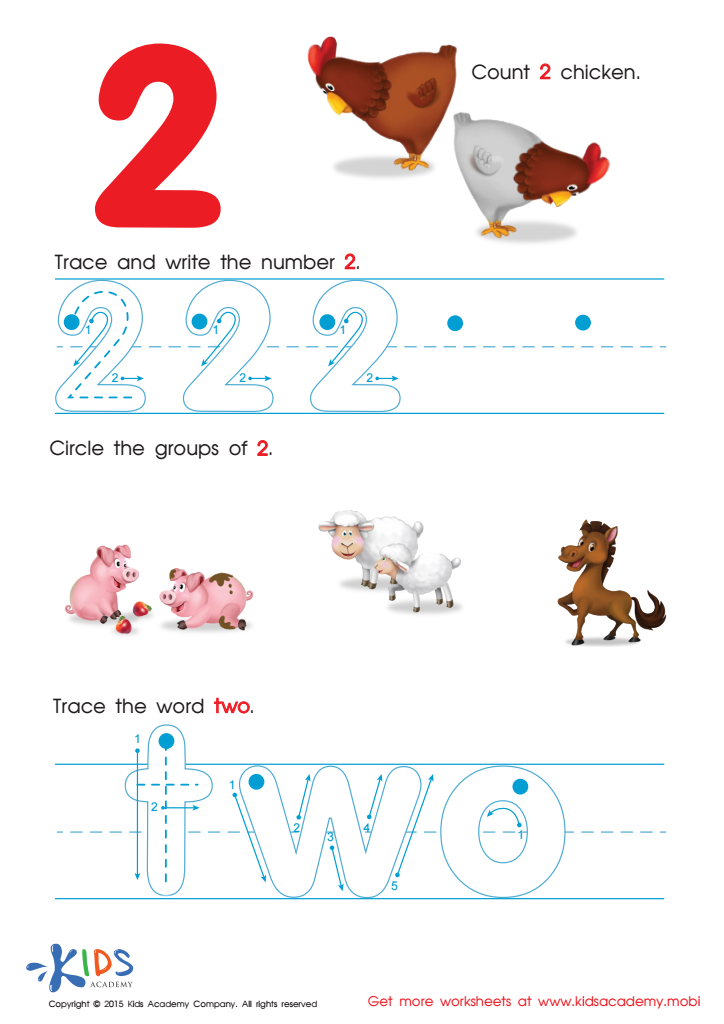
Learn to Write the Number 2 Worksheet
Teaching numbers should be fun! Ask your kids to count the two chicks, circle the groups of two among the animals, then trace and write the number and word. Get more fun worksheets from Kids Academy.
Learn to Write the Number 2 Worksheet
Worksheet
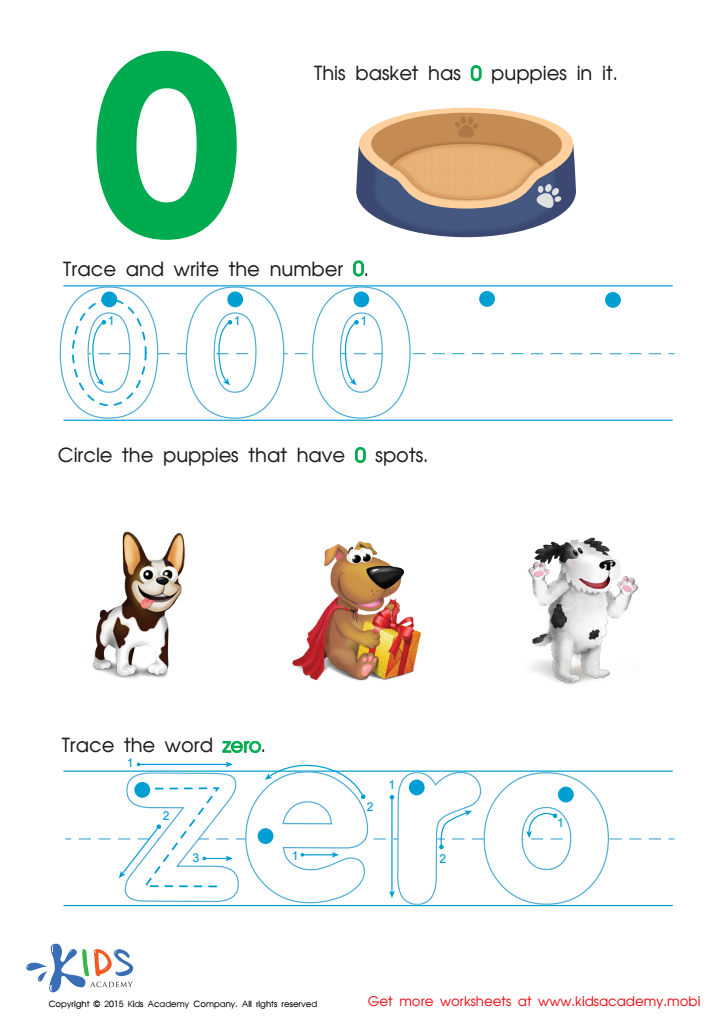
Trace And Write Number 0 Worksheet
Let’s learn numbers together! Start with zero: practice writing, counting, matching spots. Tracing lines will help. Then move on to the collection of number worksheets. Enjoy learning with Kids Academy!
Trace And Write Number 0 Worksheet
Worksheet
Join Kids Academy for Free
Who is primarily going to use this learning content?




Counting skills in English for Beginners are fundamental for 6-year-olds as they lay the groundwork for both mathematical proficiency and language development. At this formative age, children are highly receptive to learning through experience, and developing counting skills enhances cognitive abilities like memory, attention, and problem-solving. These skills are crucial for understanding more complex mathematical concepts in later grades, such as addition, subtraction, and place value.
For parents and teachers, fostering counting skills in English serves a dual purpose. Firstly, it reinforces numerical literacy, ensuring children can understand and use numbers in everyday situations. This real-world application builds confidence and independence. Secondly, integrating counting with language learning enhances vocabulary and comprehension. Children learn number names, sequence words like "first" and "second," and other mathematical language that enriches their overall communication skills.
Moreover, counting exercises often involve social interaction, whether in classroom group activities or at home with family members. This interaction boosts social skills, cooperative learning, and verbal communication. Caring about counting skills isn't just about learning numbers; it's about providing a holistic environment where children can thrive intellectually, socially, and linguistically, setting a robust foundation for future academic success.