Comparative skills Worksheets for 6-Year-Olds
3 filtered results
-
From - To
Discover our engaging Comparative Skills Worksheets designed specifically for 6-year-olds! These worksheets help young learners develop their ability to compare and contrast various objects, pictures, and concepts. Through fun activities and colorful illustrations, children will enhance their analytical thinking and vocabulary as they learn to identify similarities and differences. Perfect for home or classroom use, our printable worksheets provide a variety of exercises that keep kids entertained while promoting critical thinking skills. Watch your child's confidence grow as they master comparative language—making learning both effective and enjoyable! Visit us now to explore our collection of valuable resources.
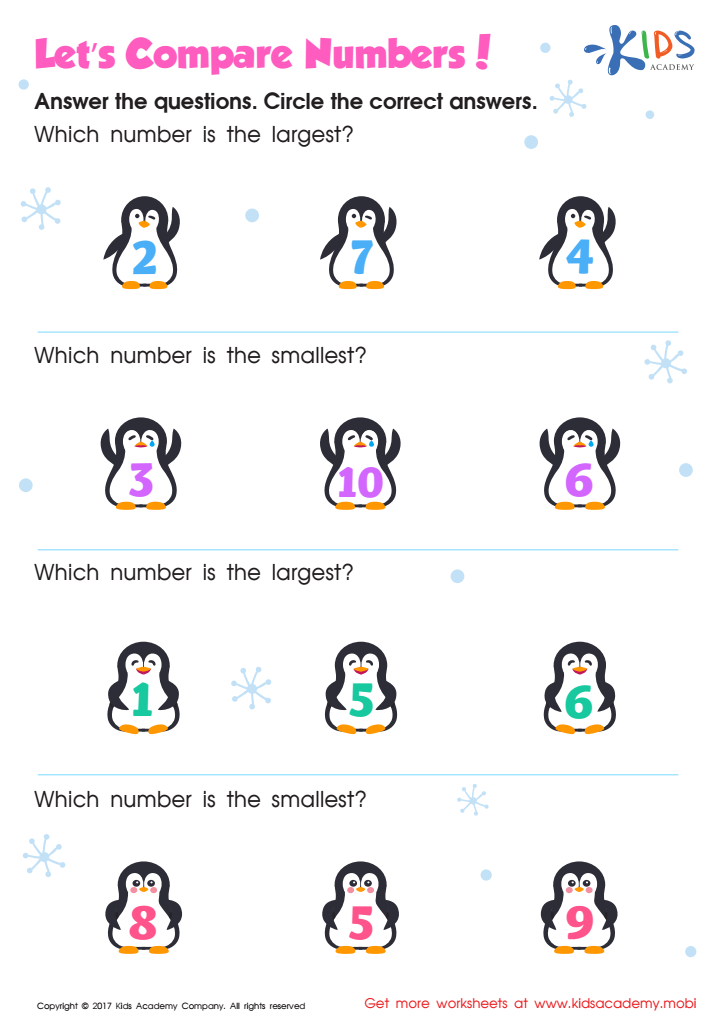
Comparing Numbers 1–10 Worksheet Kindergarten
 Assign to My Students
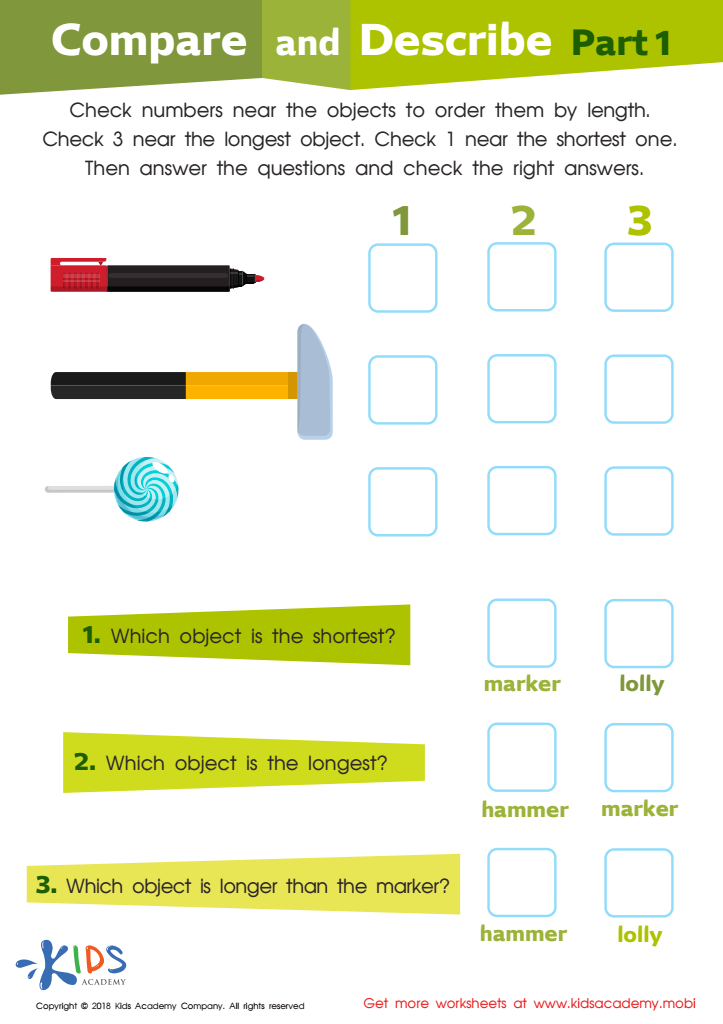
Compare and Describe: Part 1 Worksheet
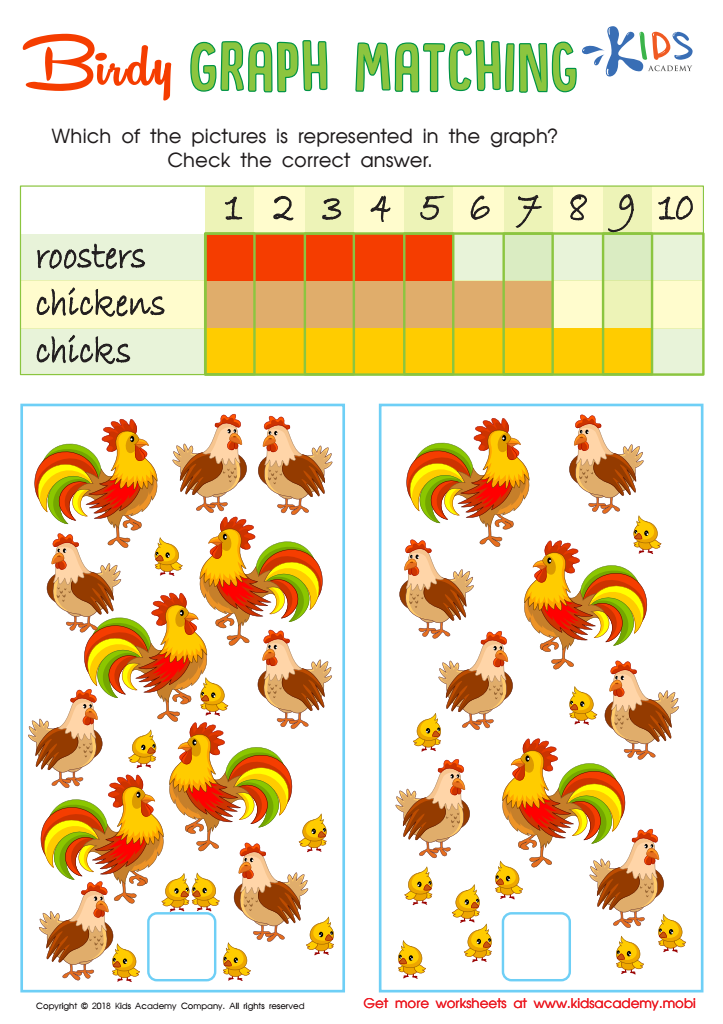
Birdy Graph Matching Worksheet







Comparative skills are essential for six-year-olds as they lay the groundwork for critical thinking and cognitive development. At this age, children are beginning to make sense of the world around them, and comparative skills help them understand differences and similarities between objects, ideas, and experiences. By fostering these skills, parents and teachers can encourage children to engage in observation, reasoning, and problem-solving.
Understanding comparisons aids in the development of mathematical concepts, such as measurement and quantity, as children learn to categorize and classify objects. For instance, they can compare sizes, shapes, and amounts, essential for early math skills and logical reasoning. Additionally, strong comparative skills foster effective communication, as children articulate their thoughts and explain their reasoning.
Moreover, these skills support social development. When children learn to compare, they also understand diversity and build empathy by recognizing others' perspectives and experiences. Encouraging comparative skills not only helps children in educational contexts but also prepares them for everyday decision-making and interactions. In essence, nurturing comparative skills equips six-year-olds with the tools they need to think critically, make informed choices, and effectively engage with their environment. As such, parents and teachers have a vital role in emphasizing and developing these skills in early education.








