Improving spelling skills Worksheets for 6-Year-Olds
5 filtered results
-
From - To
Boost your child's spelling prowess with our expertly crafted worksheets designed for 6-year-olds! At Kids Academy, our "Improving Spelling Skills" printables aim to make learning both enjoyable and effective. Each worksheet focuses on essential spelling rules, phonics, and sight words, helping young learners build a strong foundation in language arts. Interactive and engaging, these worksheets foster confidence and enhance vocabulary. Perfect for both classroom use and at-home practice, they cater to various skill levels and learning styles. Start your child's spelling journey today and watch their literacy skills soar with Kids Academy's thoughtfully designed resources!
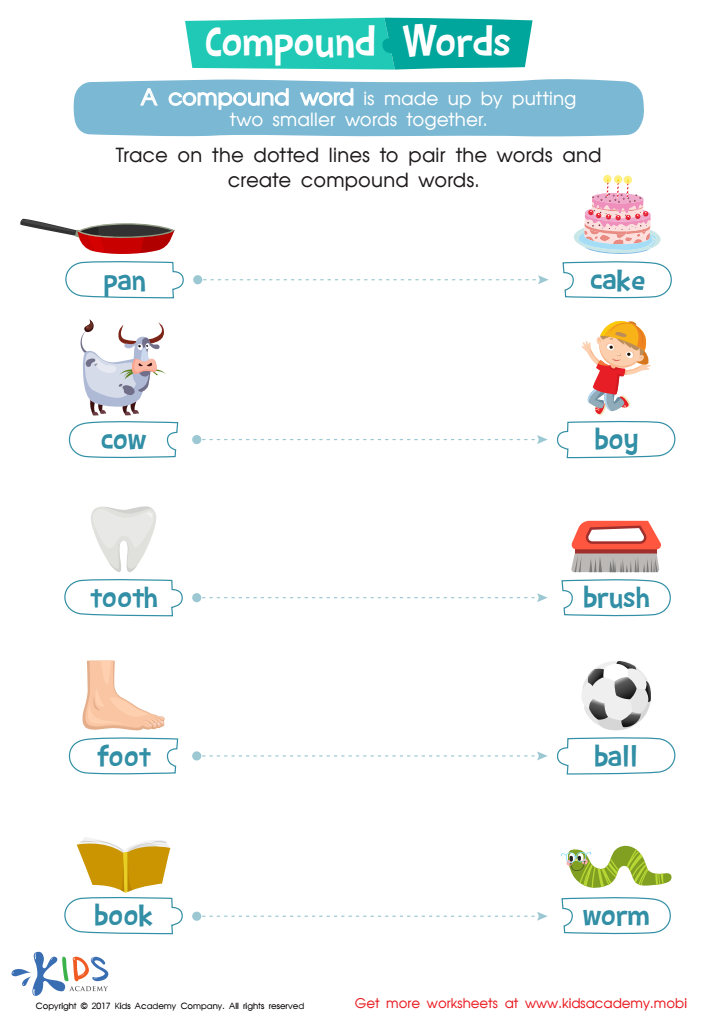
Compound Words Word Structure Worksheet
 Assign to My Students
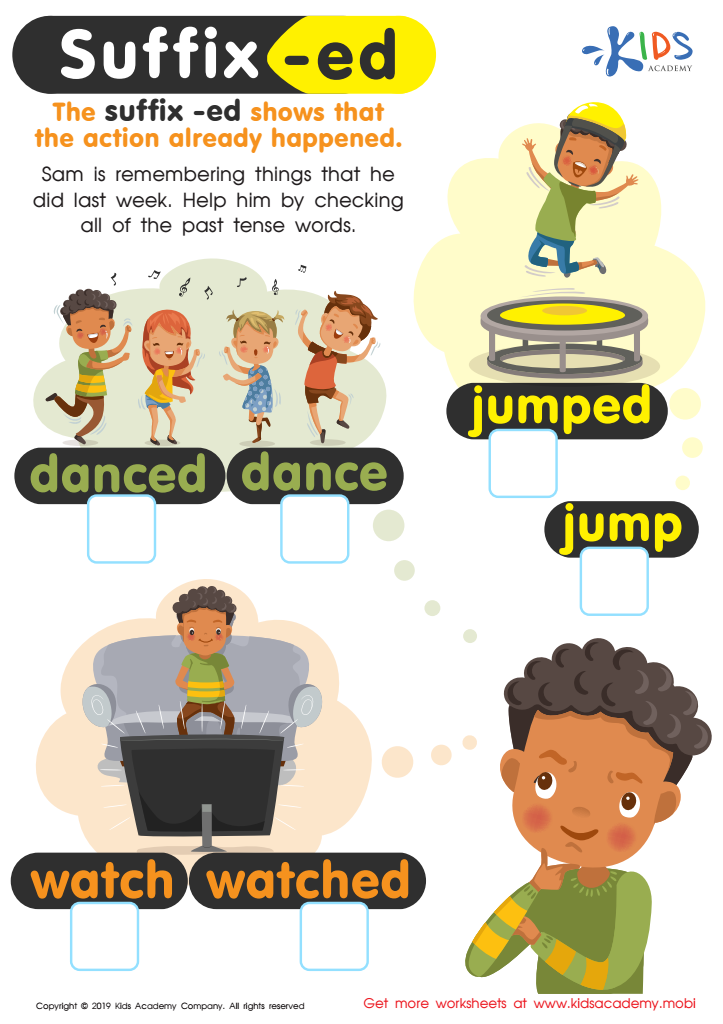
Suffix-ed Worksheet
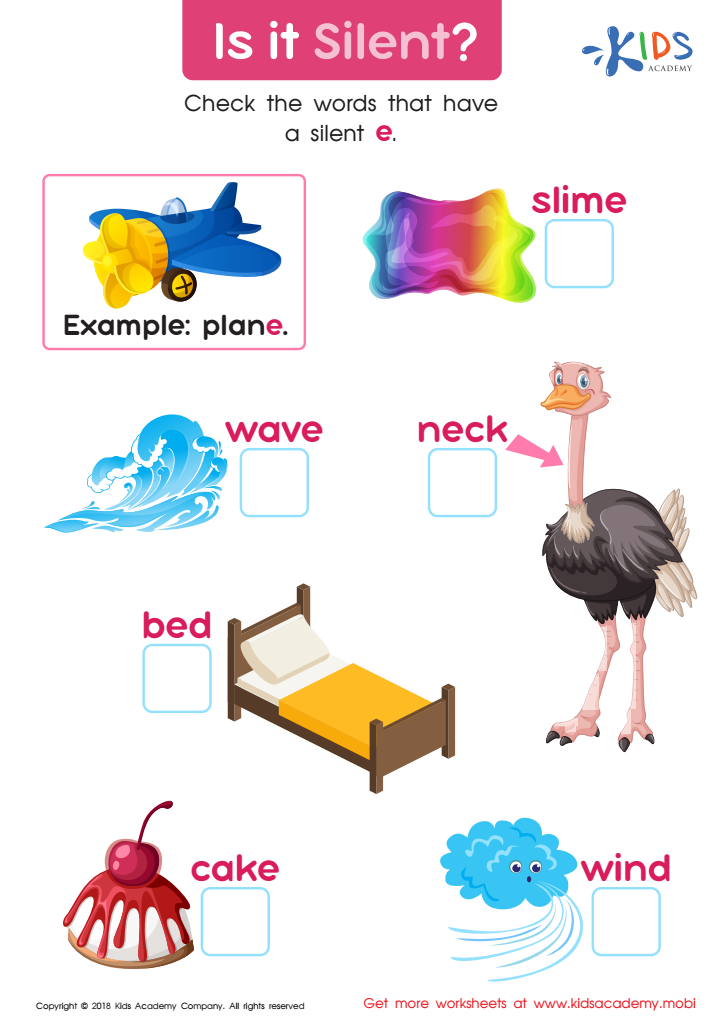
Is It Silent? Worksheet
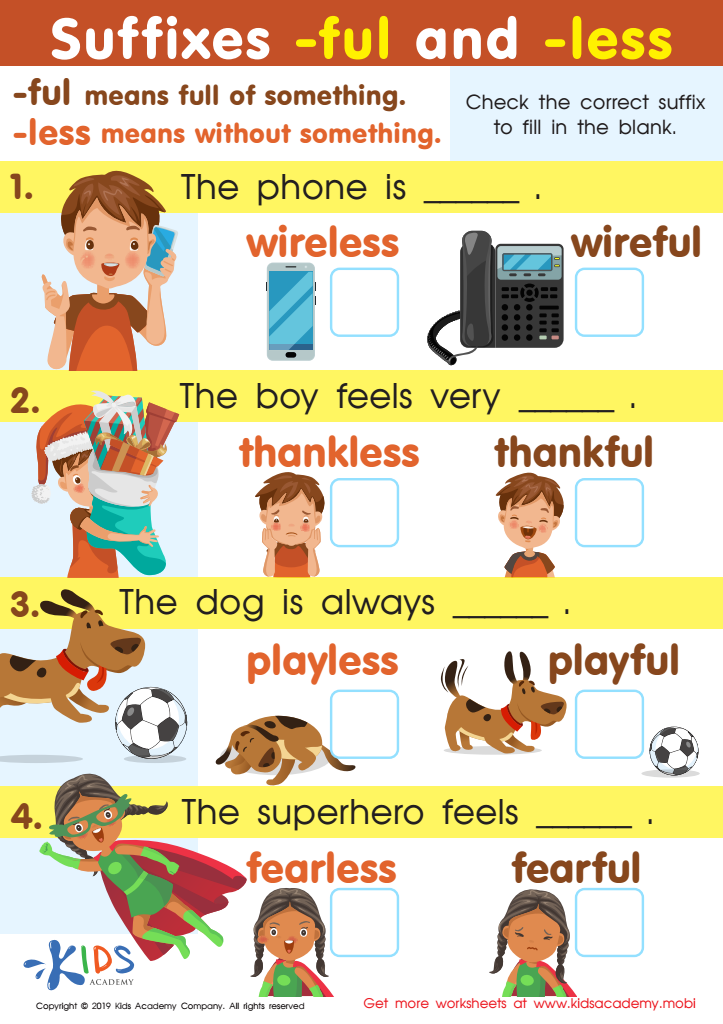
Suffixes –ful and –less Worksheet
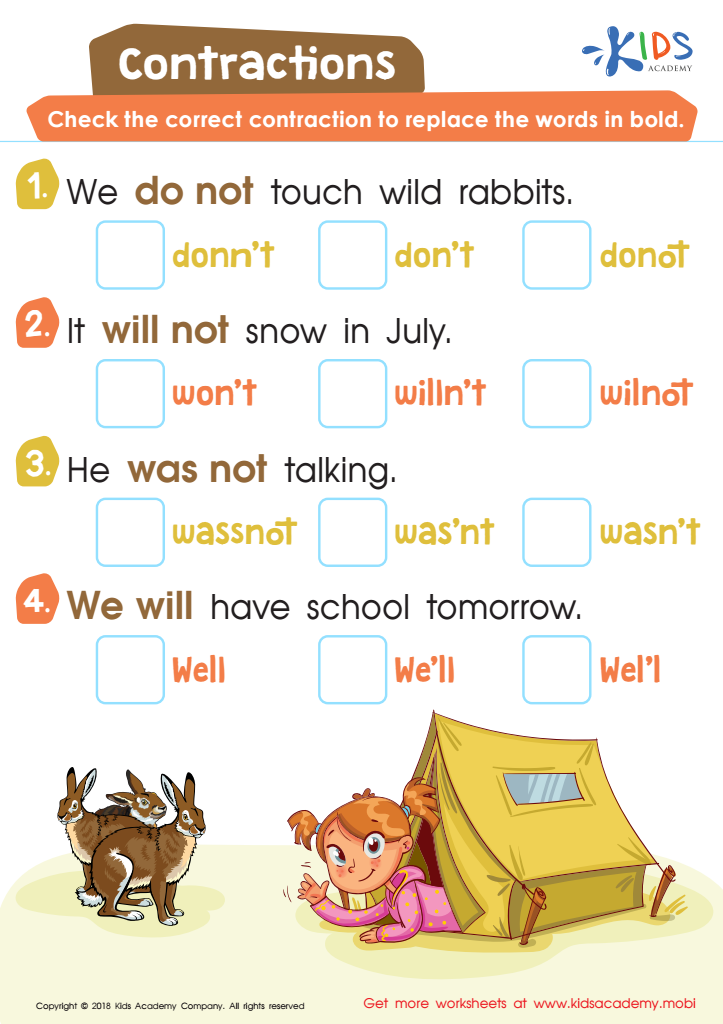
Contractions Worksheet




.jpg)


Improving spelling skills for 6-year-olds is crucial because it lays the foundation for their overall literacy development. At this early age, children's brains are incredibly receptive to language learning, and reinforcing good spelling habits can help them become proficient readers and effective communicators as they grow. Spelling is intertwined with reading; by recognizing and spelling words correctly, children enhance their phonetic awareness and decoding skills, making it easier for them to understand and interpret written text.
Secondly, strong spelling skills boost a child's confidence and self-esteem. When children are able to spell words correctly, they feel more competent in their academic endeavors, which can foster a positive attitude towards school and learning in general. This growing confidence can have ripple effects across all subjects, reinforcing the idea that effort leads to improvement.
Furthermore, improving spelling skills at a young age supports better writing ability. Good spelling allows children to communicate their thoughts clearly and effectively, facilitating more coherent and organized writing. This not only helps academically but also fosters creativity and critical thinking.
Lastly, focusing on spelling at an early age helps identify potential learning difficulties like dyslexia. Early intervention can drastically improve outcomes for children with such challenges, allowing for tailored educational approaches to support their learning journey. Thus, parents and teachers play a vital role in nurturing essential spelling skills during these formative years.








