
Money identification Worksheets for 6-Year-Olds
3 filtered results
Difficulty Level
Grade
Age
-
From - To
Subject
Activity
Standards
Introducing our engaging Money Identification Worksheets designed specifically for 6-year-olds! These fun and educational resources help young learners recognize and distinguish between various coins and bills, building a solid foundation for essential money management skills. Our worksheets offer a variety of activities, including tracing, matching, and identifying different denominations, which cater to diverse learning styles. By incorporating vibrant illustrations and interactive exercises, we make learning about money enjoyable and effective. Perfect for home or classroom use, these worksheets empower children to gain confidence in their financial knowledge while preparing them for real-world situations. Start your child's money mastery journey today!
Favorites
With answer key
Interactive
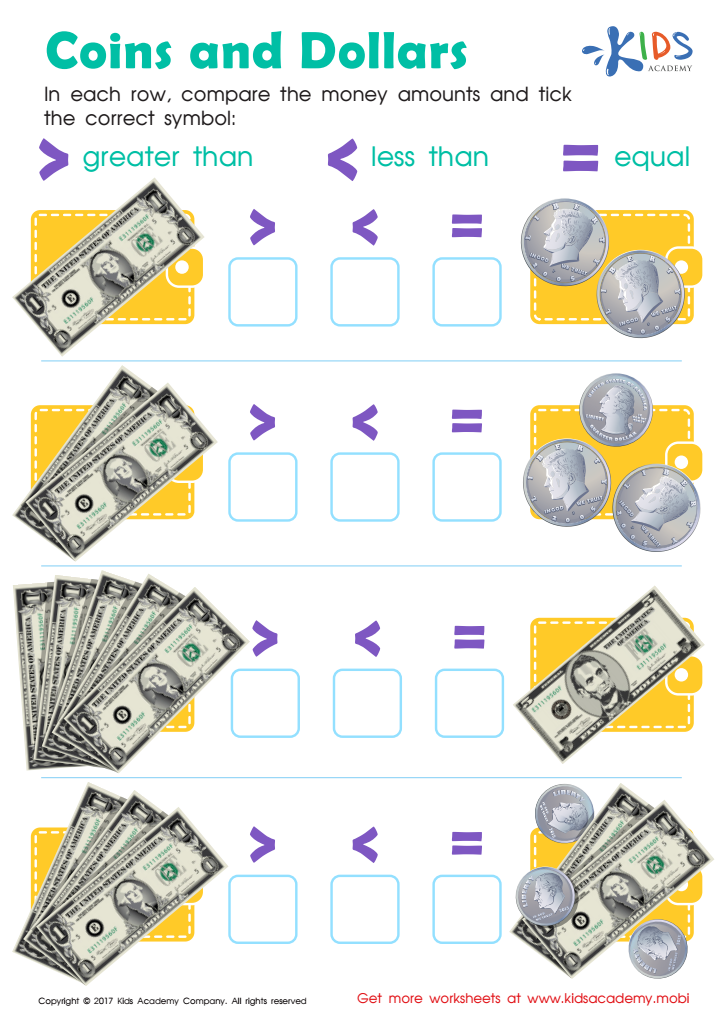
Money: Coins Dollars Printable
Motivate your kid to learn and practise essential math skills, like 'greater than' and 'less than', by introducing the importance of money! The money worksheet "Coins and Dollars" will give them a hands-on experience of counting coins and dollars, making math symbols more memorable.
 Assign to My Students
Money: Coins Dollars Printable
Worksheet
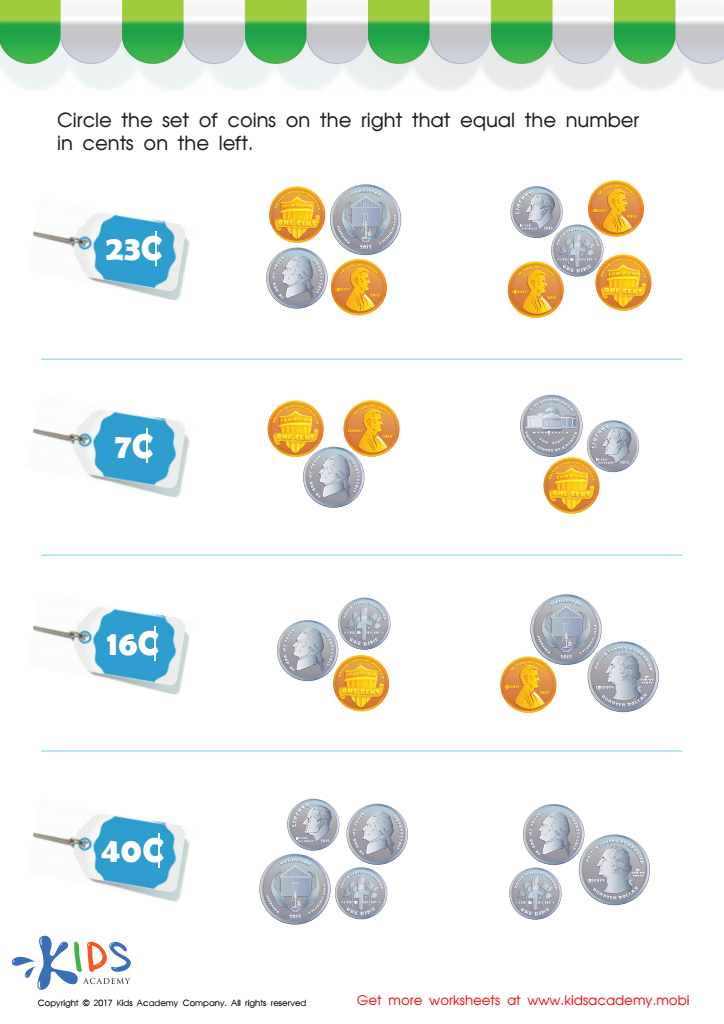
Picking the Coins You Need Money Worksheet
Let's learn to count money with Parents and Kids Academy! Investigate a real shop together: buy a globe, pencils, books, and a school bag using coins. Then, circle the coins you'll need. Visit our website for more free and fun money games for kids!
Picking the Coins You Need Money Worksheet
Worksheet
Join Kids Academy for Free
Who is primarily going to use this learning content?







Money identification is a crucial skill for 6-year-olds that benefits both their present and future. Understanding money is foundational for several reasons. Firstly, it enhances a child's numeracy skills by teaching them the value of different coins and bills, fostering early math comprehension through counting and making change. As they engage with practical money concepts, such as transactions during play or at the store, children develop critical problem-solving skills.
Moreover, money identification instills financial literacy from a young age, preparing children for responsible spending and saving, which becomes increasingly important as they grow. It encourages conversations about budgeting and the importance of earning and managing money, helping children develop a healthy attitude toward finances.
For parents, teaching money skills can lead to engaging and educational bonding activities, turning everyday errands into learning opportunities. For teachers, integrating money identification into the curriculum supports the development of life skills that transcend mere academic knowledge. Overall, fostering money identification in young children equips them with essential skills for navigating the world around them, promoting independence and confidence as they adopt more complex financial responsibilities in the future.








