
Understanding compound words Worksheets for 6-Year-Olds
3 filtered results
Difficulty Level
Grade
Age
-
From - To
Subject
Activity
Standards
Discover our engaging "Understanding Compound Words Worksheets for 6-Year-Olds" at Kids Academy! Perfectly designed for young learners, these worksheets offer fun and educational activities to help kids grasp the concept of compound words. With vibrant visuals and interactive exercises, children will enjoy combining words to form new ones, enhancing both their vocabulary and reading skills. Each worksheet is crafted to encourage independent learning while ensuring children find the process enjoyable and rewarding. Give your 6-year-old the tools to succeed in mastering compound words with our expertly developed resources! Visit us to explore and download these exciting worksheets today.
Favorites
With answer key
Interactive
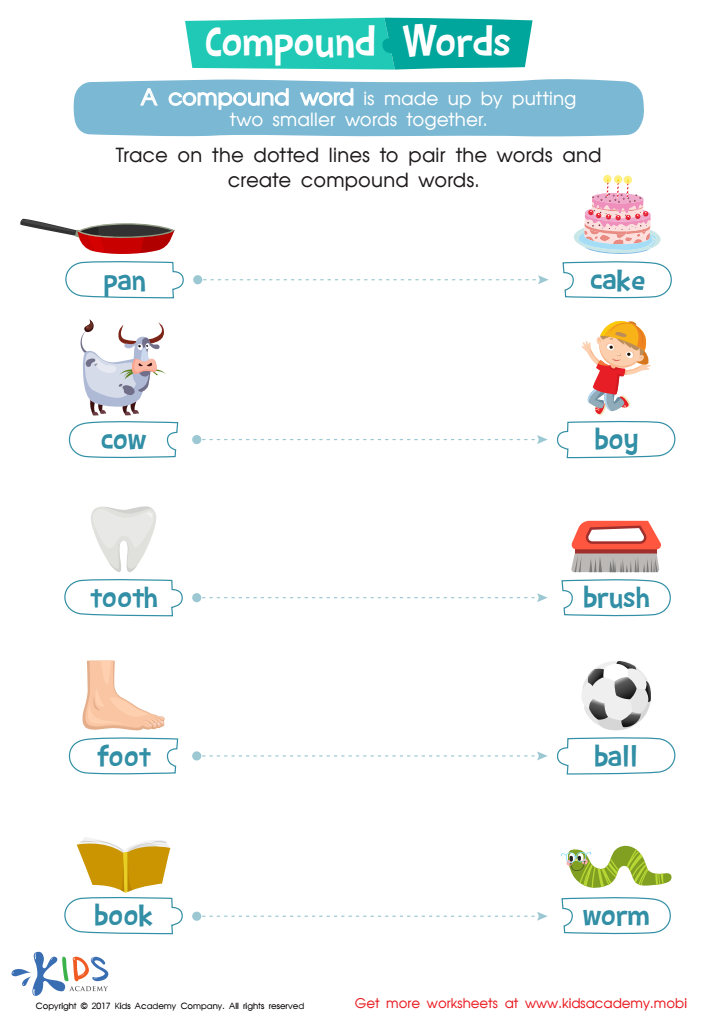
Compound Words Word Structure Worksheet
Studying compound words is a great way to improve reading and writing skills! Try this fun worksheet: Compound Words – trace the lines to make new words! It's an easy and enjoyable way to get better at English.
 Assign to My Students
Compound Words Word Structure Worksheet
Worksheet
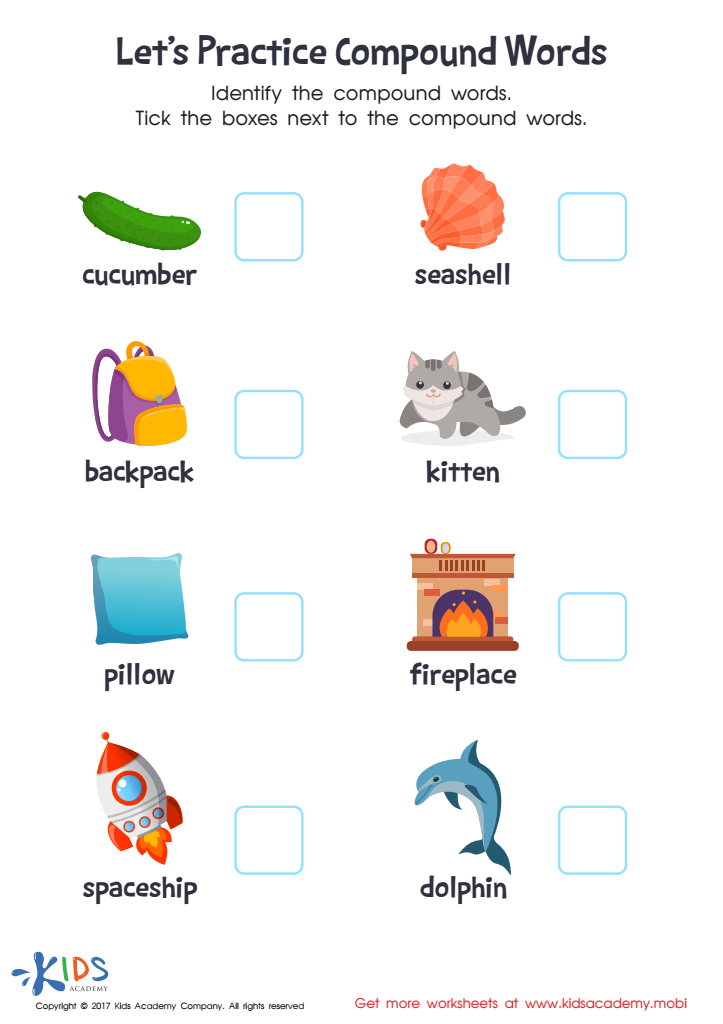
Let's Practice Compound Words Word Structure Worksheet
Test their knowledge of compound words with this fun worksheet and help them build their vocabulary. Have them say the words out loud as they work!
Let's Practice Compound Words Word Structure Worksheet
Worksheet
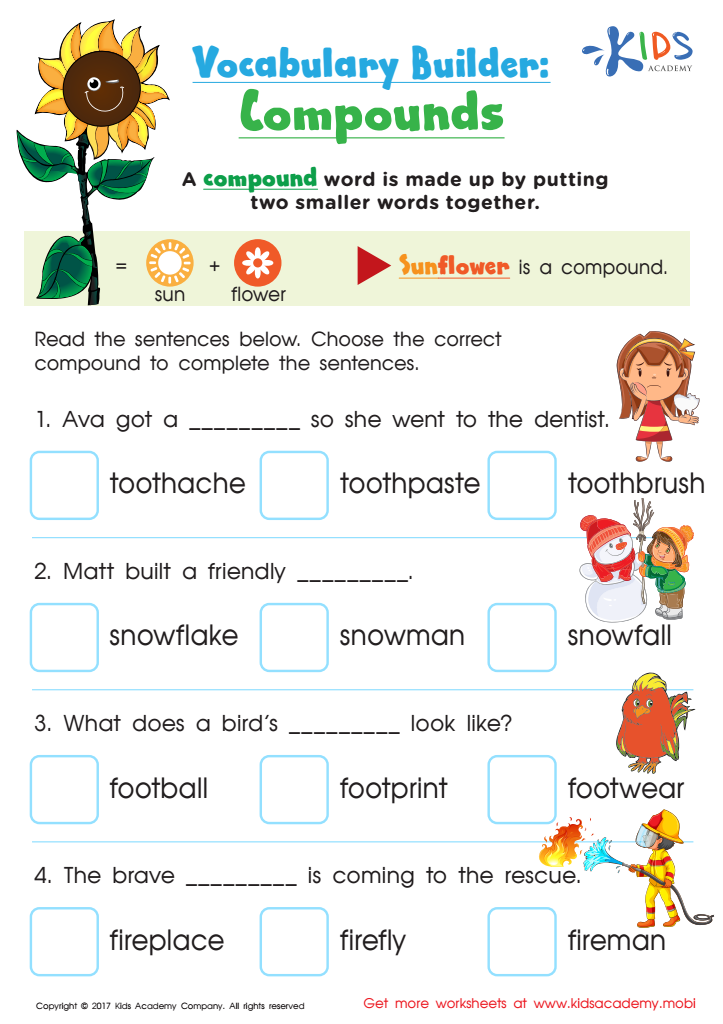
Compound Words Worksheet
Help your child get to grips with compound words! From sunflowers to snowflakes, firemen to fireflies, some words are made up of two. Introduce them to the world of compound words with this grade 2 PDF worksheet, packed with fun activities!
Compound Words Worksheet
Worksheet
Join Kids Academy for Free
Who is primarily going to use this learning content?







Understanding compound words is crucial for 6-year-olds as they embark on their literacy journey. Compound words are formed when two smaller words are joined to create a new word with a unique meaning. For instance, "sun" and "flower" combine to make "sunflower." Recognizing and comprehending compound words enhances vocabulary acquisition, making it easier for young learners to decode and understand new words.
For parents and teachers, focusing on compound words can significantly boost reading fluency and comprehension. When children grasp how smaller words come together, they can break down unfamiliar words into understandable parts, which is essential for reading confidently. This skill lays a solid foundation for more advanced language acquisition and complex reading tasks.
Moreover, understanding compound words develops critical thinking and cognitive skills. Children learn to analyze, deduce, and infer meanings, which broadens their problem-solving abilities and creativity. Activities like identifying, creating, and using compound words in sentences can be both educational and fun, fostering a positive learning environment.
In essence, teaching compound words to 6-year-olds is a simple yet powerful tool in language development. It builds a robust linguistic foundation, facilitates smoother reading experiences, and nurtures cognitive growth, making it a crucial component of early education.








