Basic Math Skills Addition & Subtraction Worksheets for 6-Year-Olds - Page 2
28 filtered results
-
From - To
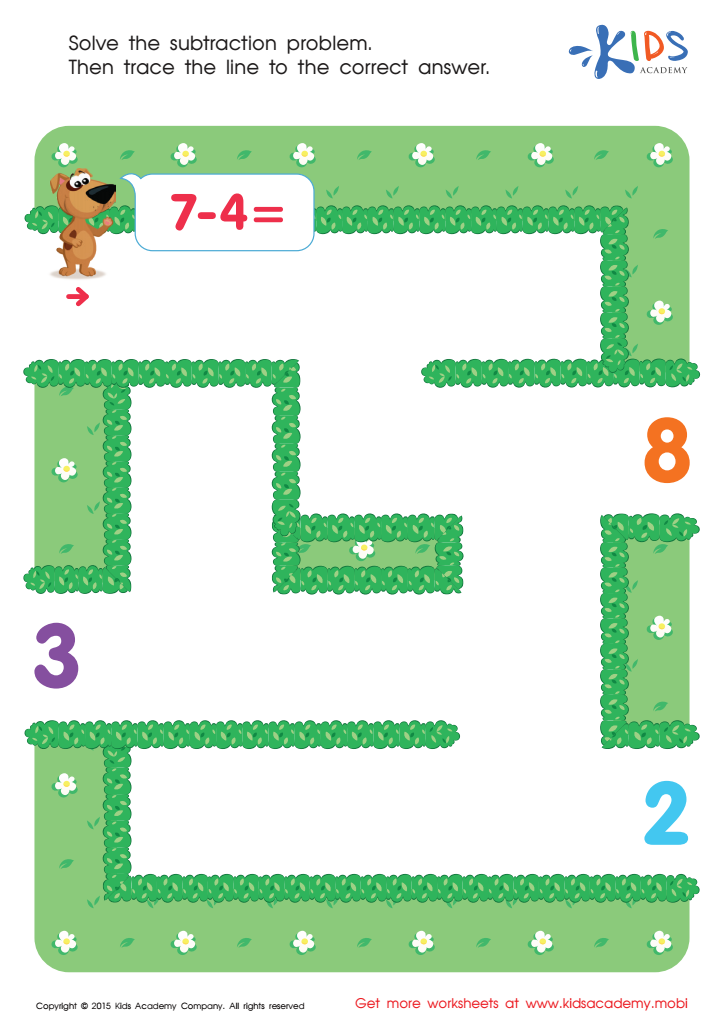
Subtraction Seven Minus Four Worksheet
 Assign to My Students
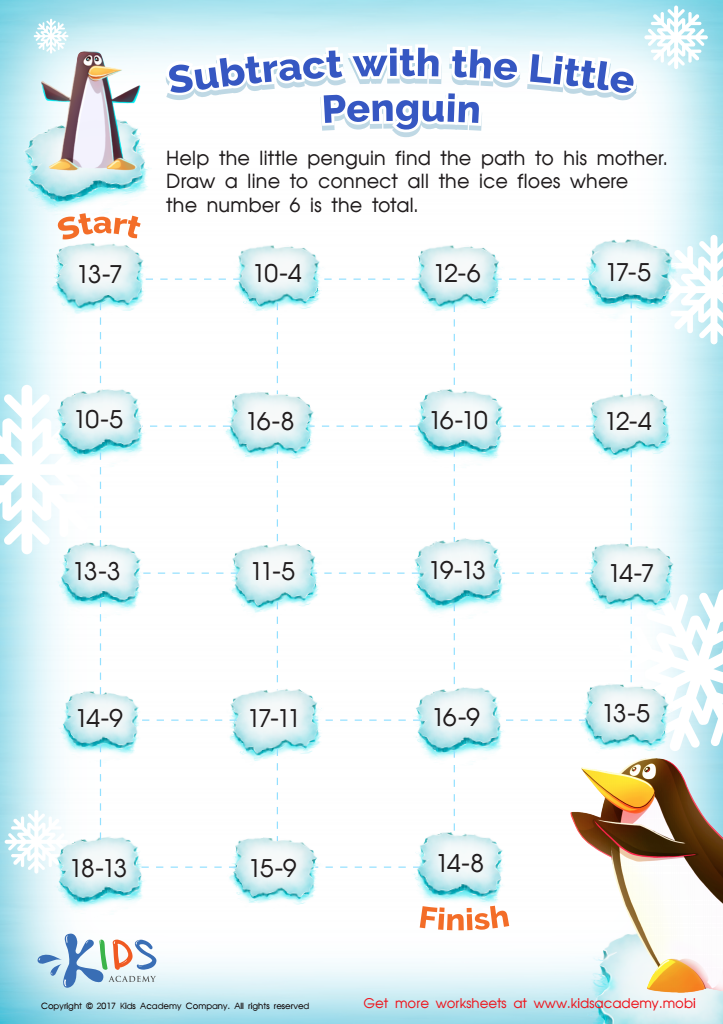
Subtract With The Little Penguin Substraction Worksheet
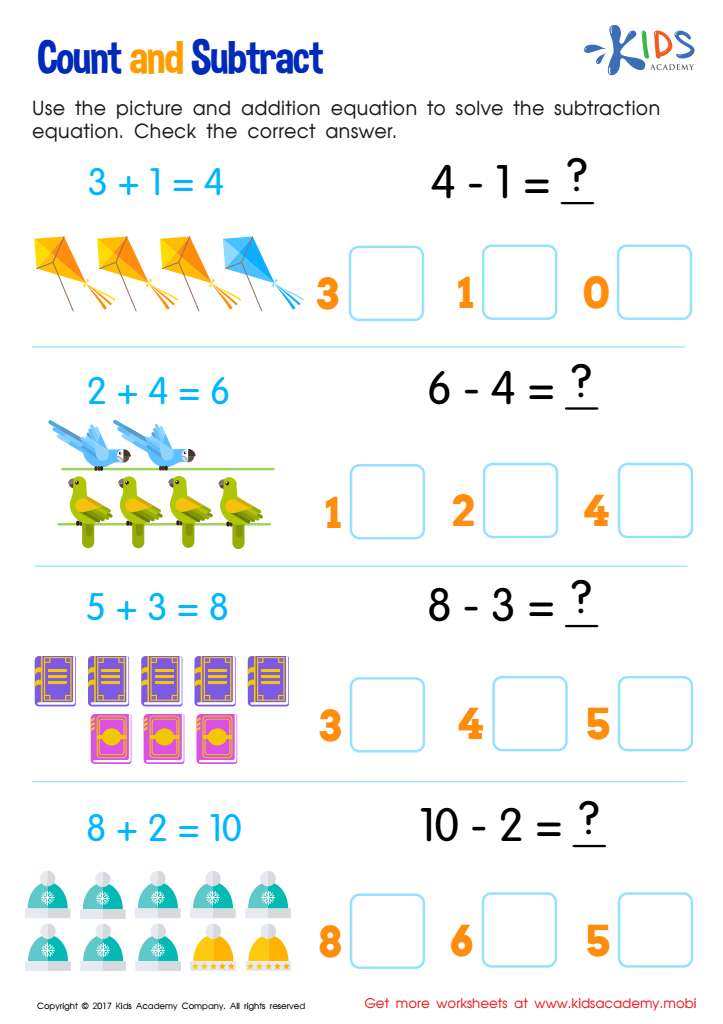
Count and Subtract Worksheet
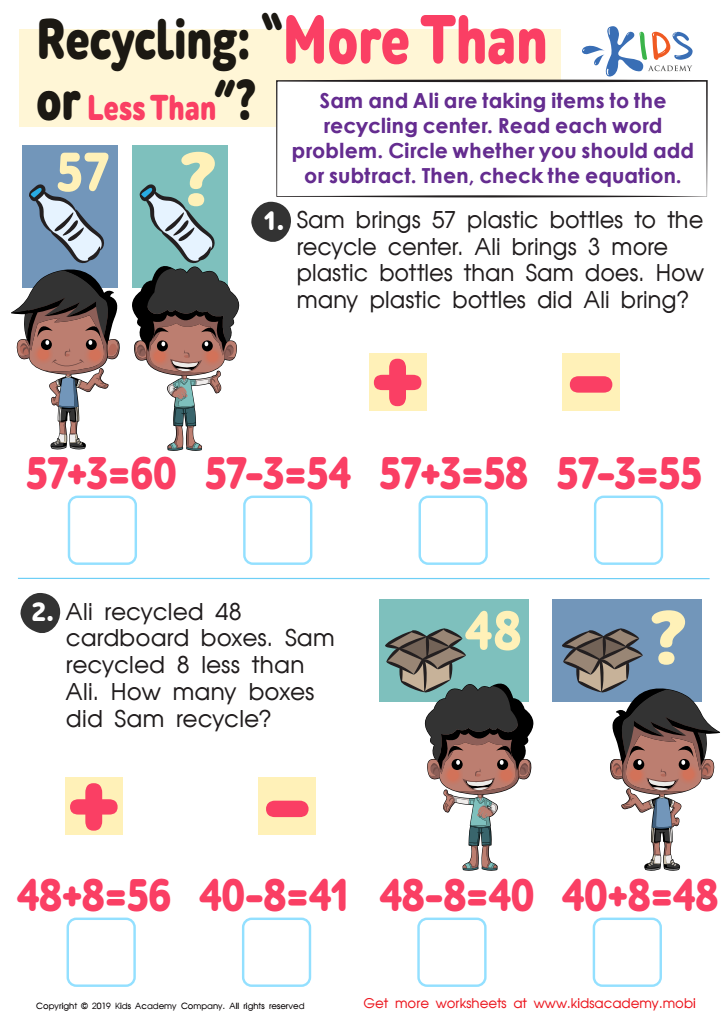
Recycling - More or Less Worksheet








Parents and teachers should prioritize basic math skills, especially addition and subtraction, for 6-year-olds because they form the foundation for all future mathematical learning. At this age, children's brains are highly receptive to new information, making it an ideal time to introduce fundamental concepts. Comprehending these basic operations not only enhances numerical fluency but also boosts problem-solving skills, logical reasoning, and cognitive development.
Mastering addition and subtraction helps children develop confidence in their abilities, fostering a positive attitude towards learning and school in general. These skills support daily activities such as counting money, telling time, and understanding quantities, thereby improving practical life skills and independence.
Moreover, early math proficiency is strongly correlated with later academic success. Research indicates that children who struggle with basic arithmetic in the early grades are likely to face challenges in more advanced math and related subjects, cascading into broader academic difficulties. Therefore, ensuring that students grasp these essential arithmetic skills enables a smoother transition to more intricate topics like multiplication, division, fractions, and algebra.
In sum, instilling basic math skills at a young age equips children with the tools they need for educational achievement and everyday functioning, laying a robust groundwork for lifelong learning and problem-solving abilities.








