Basic geometry Geometry Worksheets for 6-Year-Olds
3 filtered results
-
From - To
Welcome to our Basic Geometry Worksheets for 6-Year-Olds! Designed to introduce young learners to fundamental geometric concepts, these engaging and interactive worksheets help children explore shapes, patterns, and spatial relationships while enhancing their critical thinking skills. Our activities encourage creativity and problem-solving, making learning fun and enjoyable. From identifying basic shapes to drawing and matching activities, these worksheets cater to various learning styles. Parents and educators alike will appreciate the structured approach that builds a solid foundation in geometry, preparing kids for future mathematical endeavors. Download our worksheets today and watch your child's confidence in geometry grow!
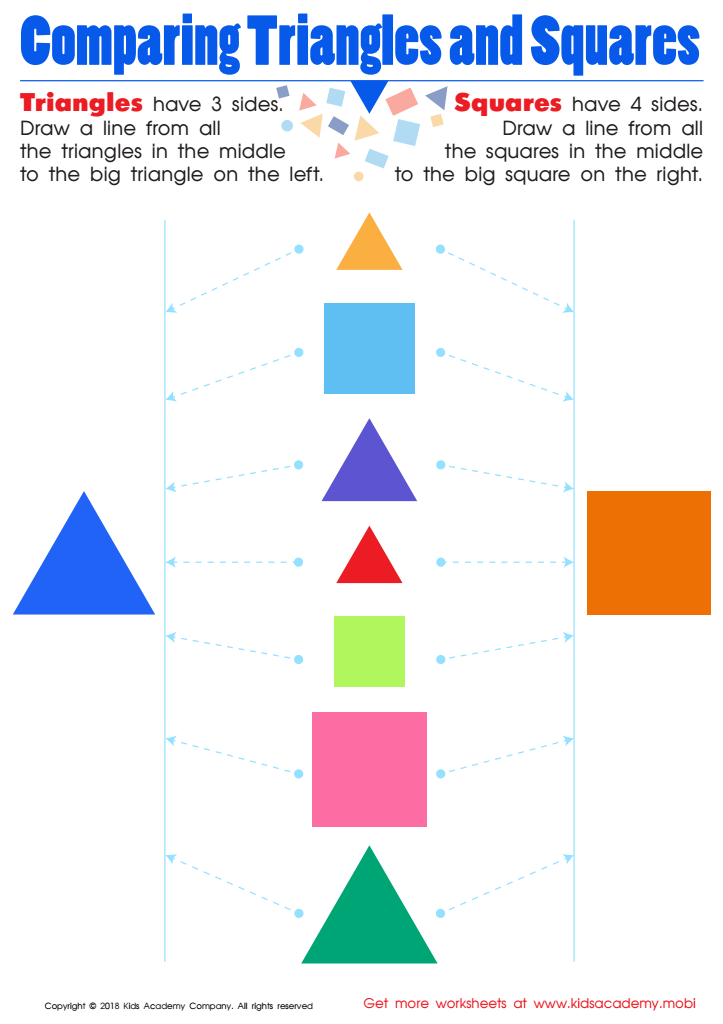
Comparing Triangles Squares Worksheet
 Assign to My Students











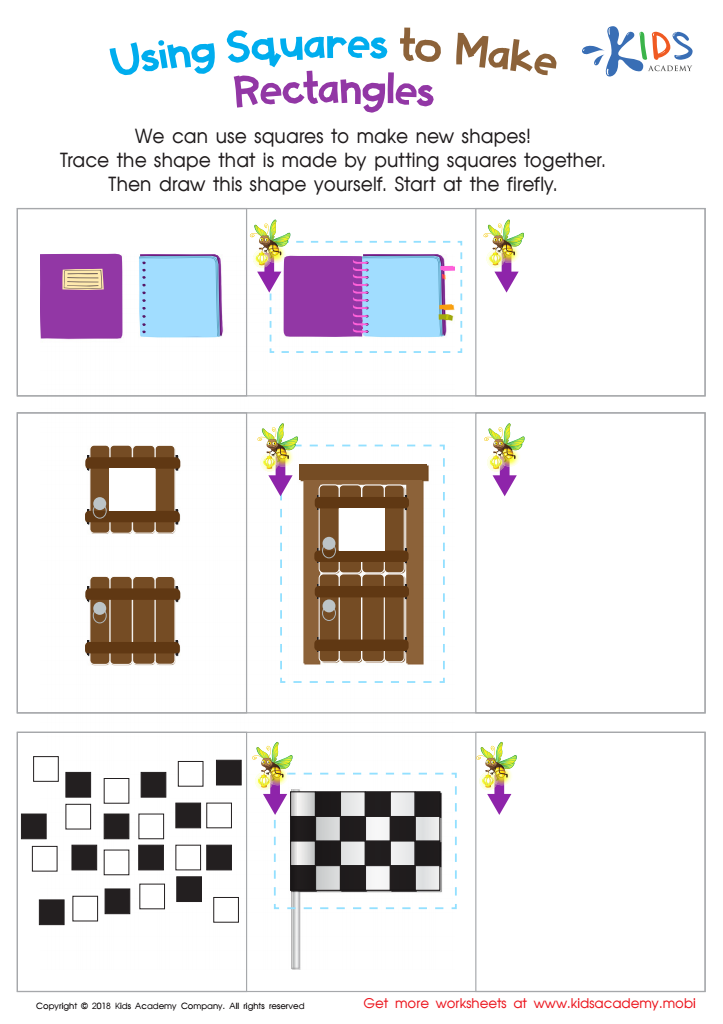
Using Squares to Make Rectangles Worksheet
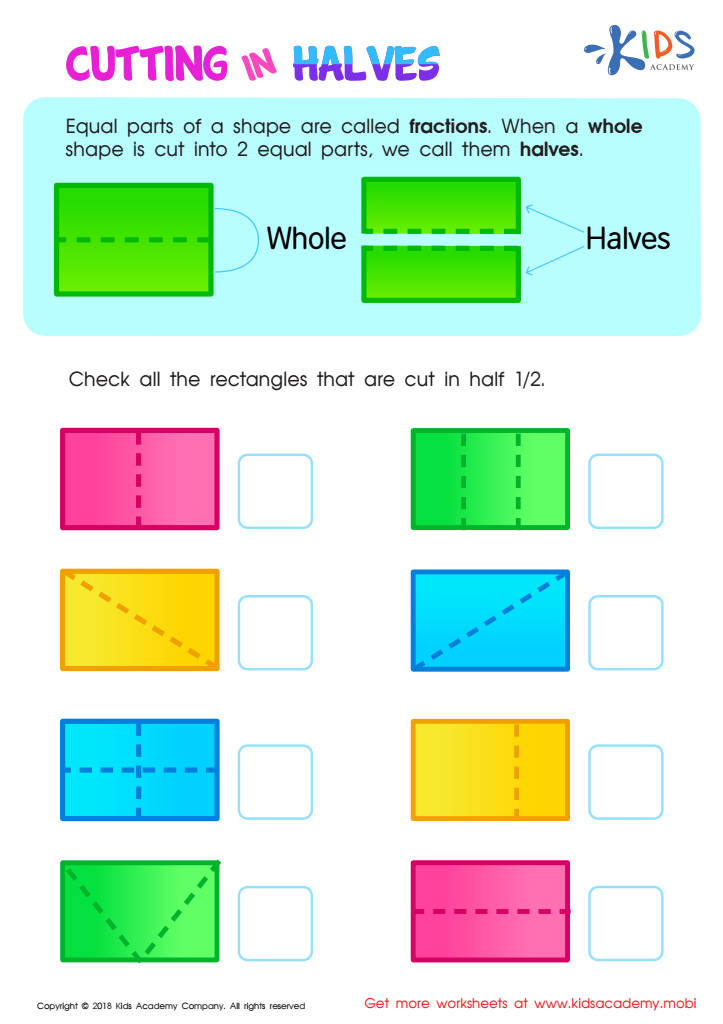
Cutting in Halves Worksheet








Parents and teachers should care about basic geometry for 6-year-olds because it lays the foundation for critical thinking and problem-solving skills. At this age, children are naturally curious and eager to explore their surroundings, making it an ideal time to introduce geometric concepts. Understanding basic shapes—such as circles, squares, and triangles—enhances their ability to make sense of the world around them.
Geometry also plays a crucial role in early mathematics development. When children learn to recognize and draw shapes, they are not just memorizing; they are engaging in spatial reasoning, which helps them visualize and understand more complex mathematical concepts in the future. Furthermore, geometry encourages creativity. Activities involving building and manipulating shapes can foster imagination and innovation.
Incorporating geometry into everyday life encourages children to observe and interact with their environment. For example, identifying shapes in architecture or nature makes learning applicable and fun. Ultimately, a solid grounding in basic geometry empowers children, boosting their confidence and laying the groundwork for future academic success. By supporting geometry education at this early stage, parents and teachers help cultivate strong analytical skills that are essential for lifelong learning.








