Comparing shapes Geometry Worksheets for 6-Year-Olds
3 filtered results
-
From - To
Discover our engaging Comparing Shapes Geometry Worksheets designed specifically for 6-year-olds! These worksheets use playful activities to introduce young learners to the basics of geometry. Students will explore various shapes, compare their sizes, and learn to distinguish differences using fun illustrations. Perfect for both classroom and home learning, these exercises help children enhance their observation skills and understand fundamental geometric concepts. By making geometry exciting and accessible, our worksheets are an excellent resource for parents and teachers alike. Boost your child's math confidence and shape recognition with our expertly crafted activities!
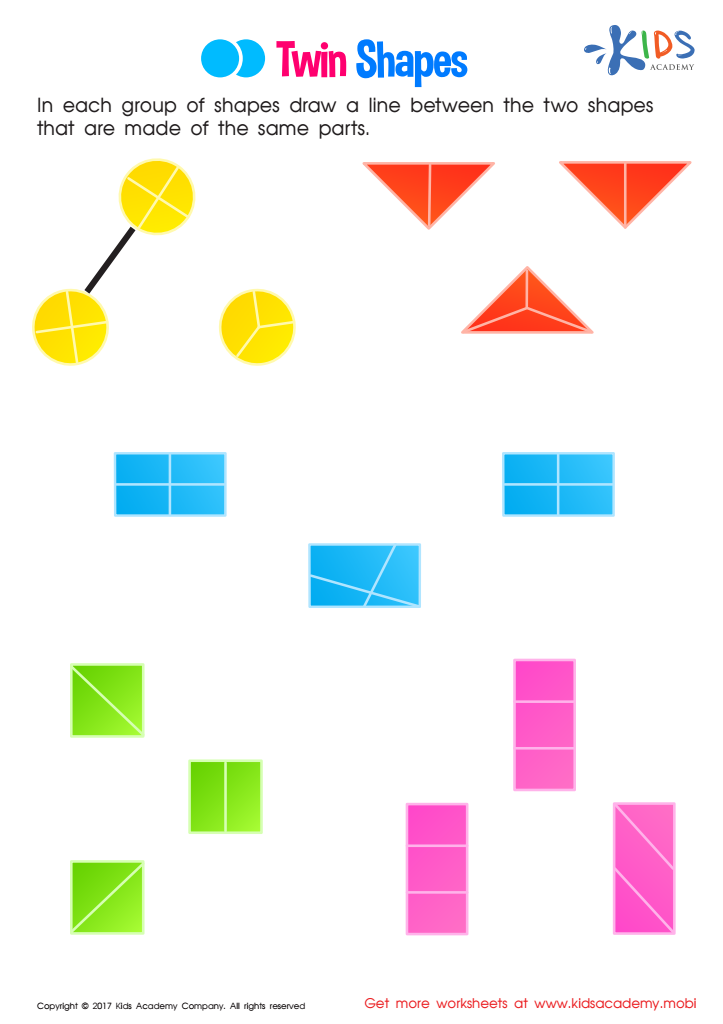
Twin Shapes Worksheet
 Assign to My Students











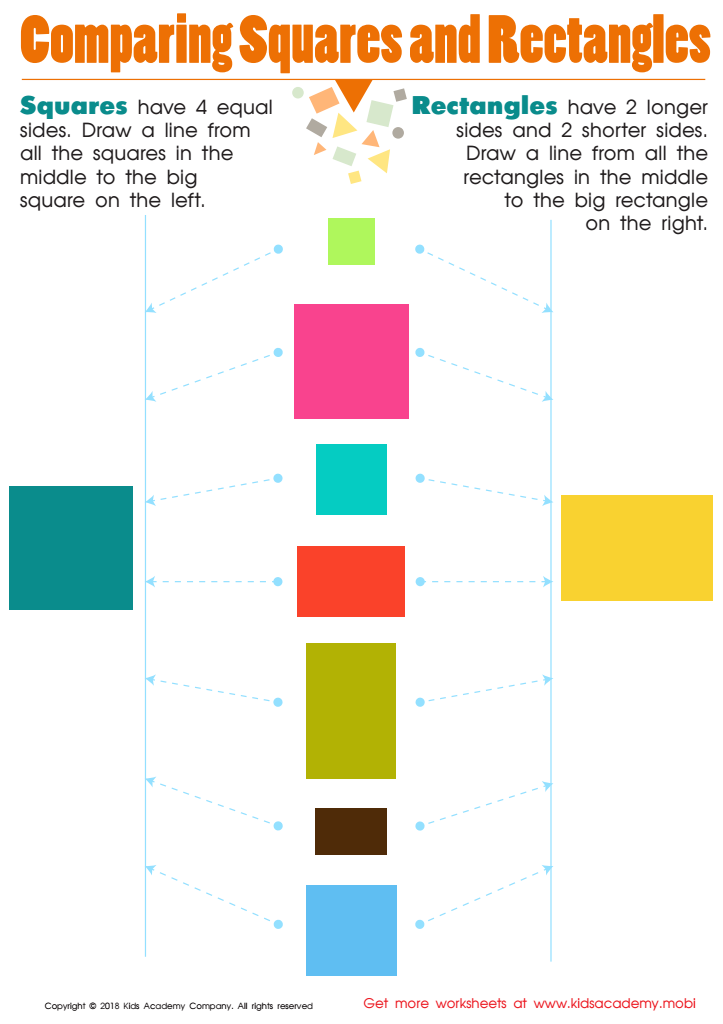
Comparing Squares Rectangles Worksheet
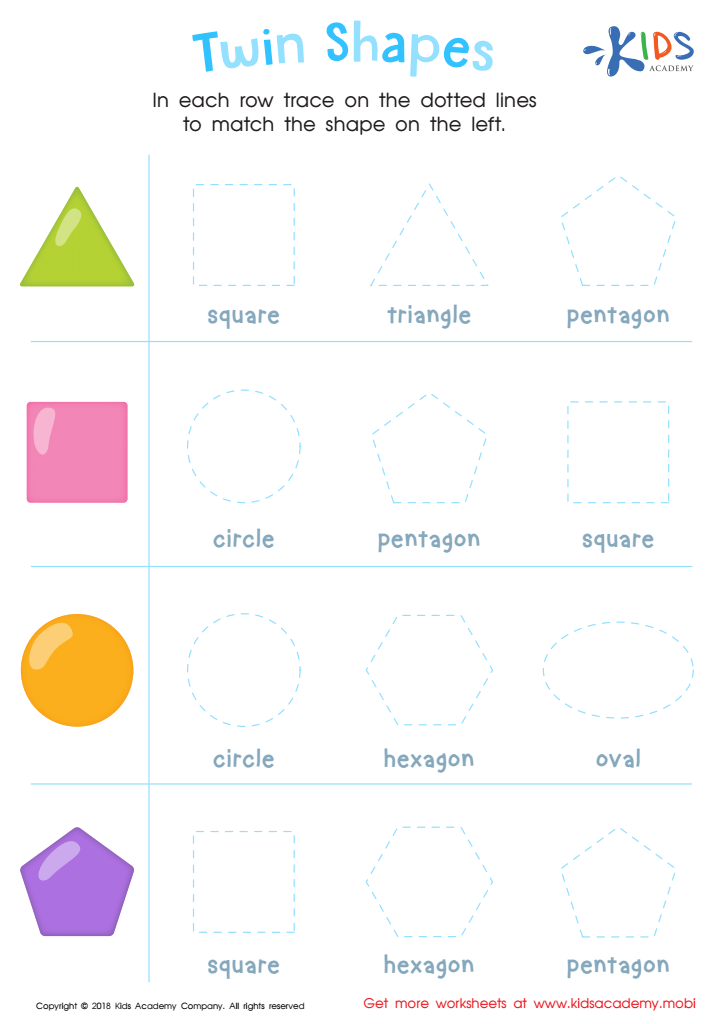
Twin Shapes Dot-to-Dot Worksheet








Comparing shapes in geometry for 6-year-olds is vital for several key reasons, beneficial both academically and developmentally. Firstly, learning to compare shapes enhances a child's spatial awareness, helping them understand how different shapes fit into the world around them. This foundational skill is crucial for more advanced math topics and problem-solving tasks they will encounter in later years.
Secondly, understanding geometric concepts supports the development of critical thinking. When children compare shapes, they learn to observe, analyze, and distinguish differences and similarities, fostering analytical skills that are transferable to other subject areas.
Moreover, incorporating shape comparison into the curriculum can make learning engaging and enjoyable. It often involves interactive activities such as sorting, matching, or hands-on manipulations, which can cater to a child’s natural curiosity and need for active learning.
Thirdly, grasping basic geometry enhances language and communication skills. As children learn to describe shapes and their properties, they expand their vocabulary and practice articulating their thoughts clearly.
Finally, being aware of geometry's role in everyday life helps children see the practical applications of what they learn, thereby promoting a positive attitude toward learning. For parents and teachers, fostering these skills early on sets a robust foundation for future success in various academic disciplines.








