Reading comprehension Geometry Worksheets for 6-Year-Olds
4 filtered results
-
From - To
Discover our engaging Reading Comprehension Geometry Worksheets tailored for 6-year-olds! These interactive resources from Kids Academy combine the fundamentals of geometry with reading comprehension skills, offering a fun and educational experience. Each worksheet features captivating stories and illustrations to help young learners understand shapes, patterns, and spatial relationships. Designed by experts to align with educational standards, these worksheets not only enhance geometric understanding but also boost literacy and critical thinking. Perfect for both classroom and home use, our worksheets pave the way for confident and proficient young readers and budding mathematicians. Explore and download now!
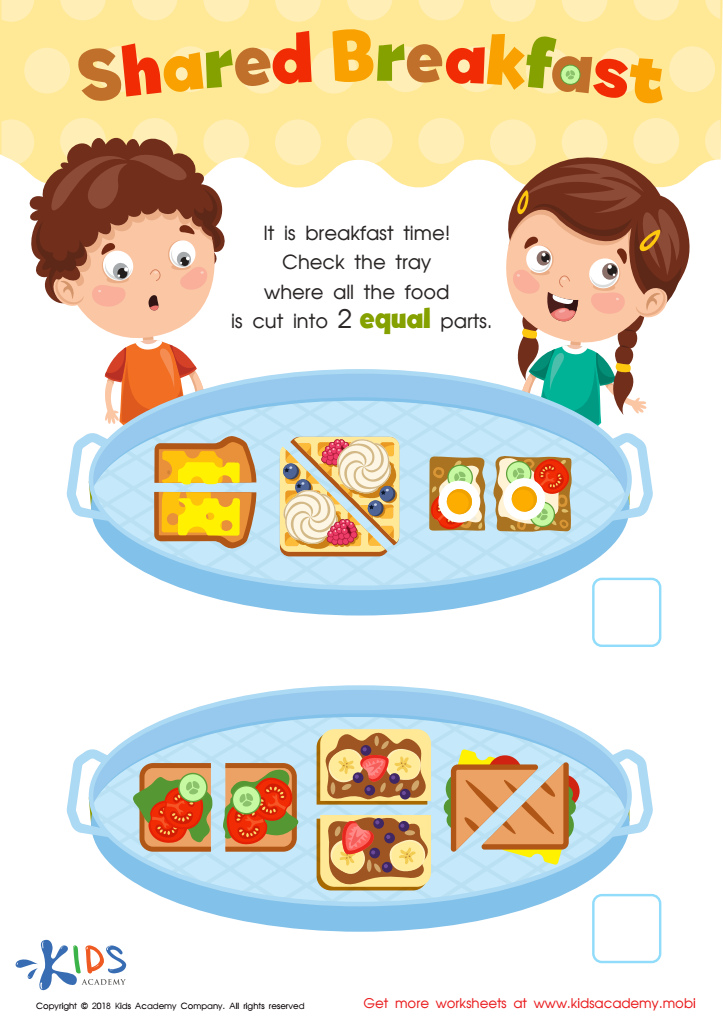
Shared Breakfast Worksheet
 Assign to My Students











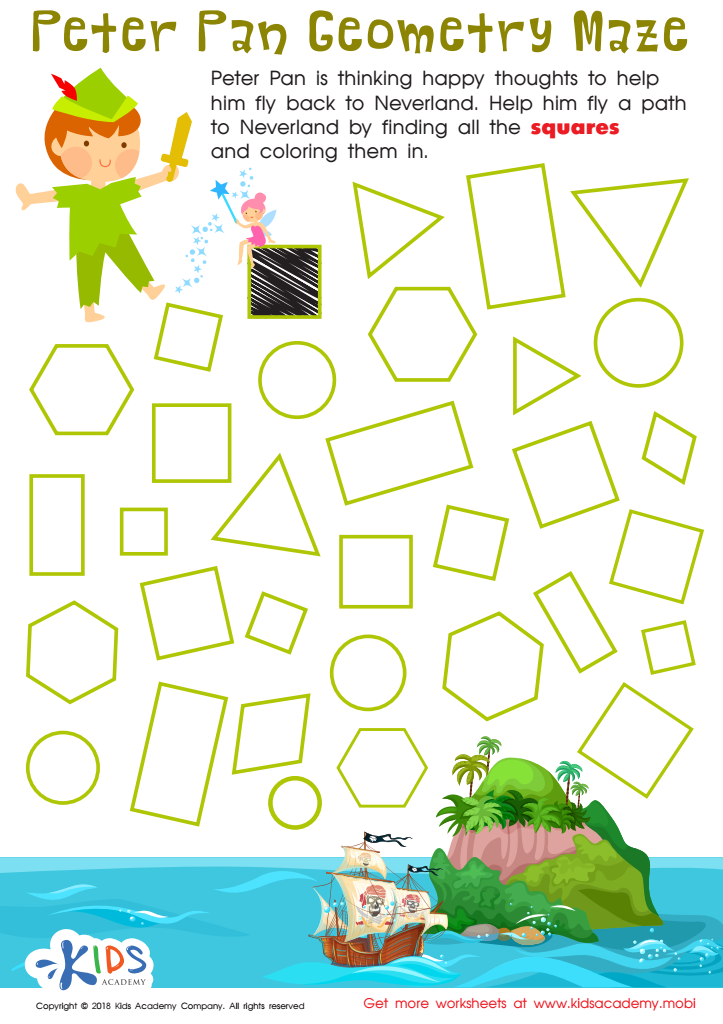
Peter Pan Worksheet
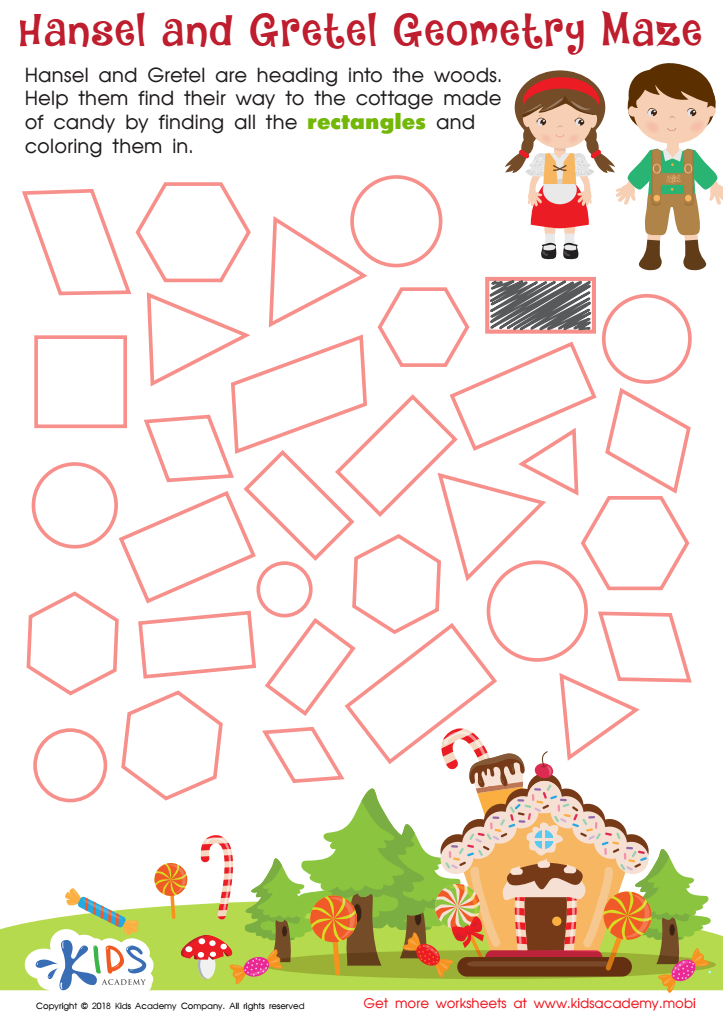
Hansel and Gretel Geometry Maze Worksheet
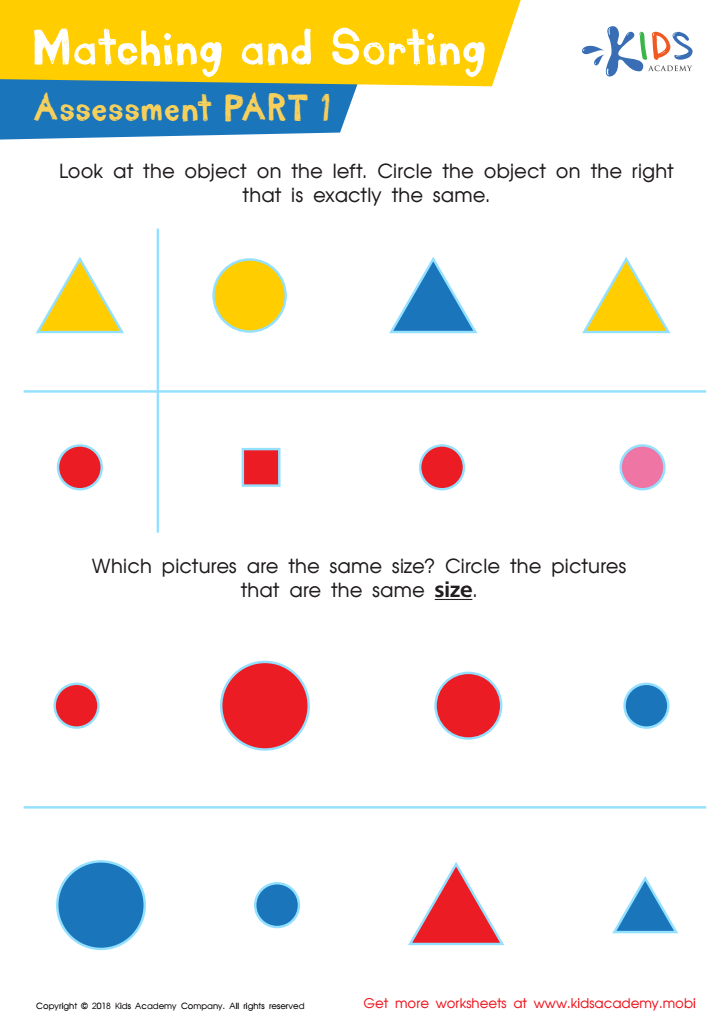
Matching and Sorting for Kindergarten: Assessment 1 Worksheet








Reading comprehension and geometry are both foundational skills crucial in early education. For 6-year-olds, understanding these concepts is more than just an academic exercise; it spurs cognitive and developmental growth.
Firstly, reading comprehension facilitates more than just the ability to understand stories. It strengthens language skills, broadens vocabulary, and enhances critical thinking. As children decipher text, they learn to follow narratives, predict outcomes, and make connections between ideas. This lays the groundwork for more advanced literacy and effective communication skills in the future.
Geometry, on the other hand, introduces young minds to spatial awareness and problem-solving. Even basics like recognizing shapes and understanding symmetry help children make sense of the world around them. Geometry enhances visual and motor skills by allowing kids to manipulate objects and comprehend different dimensions and sizes. This geometric insight is pivotal not only in academics but also in everyday tasks, from organizing a drawer to playing with building blocks.
Parents and teachers should care deeply about these skills because they collectively nurture a well-rounded, versatile mind. Proficiency in reading comprehension and geometry equips children with a toolkit for exploring and understanding their environment, fostering both mental agility and curiosity. Emphasizing these areas helps ensure that children are prepared, confident, and excited for future learning adventures.








