Spatial understanding Geometry Worksheets for 6-Year-Olds
3 filtered results
-
From - To
Discover engaging Spatial Understanding Geometry Worksheets designed specifically for 6-year-olds on our educational platform. These fun and interactive worksheets help young learners grasp fundamental geometric concepts and develop critical spatial reasoning skills. Through colorful shapes, patterns, and puzzles, children explore the world of geometry while enhancing their ability to visualize, recognize, and manipulate objects in space. Perfect for at-home practice or classroom use, our worksheets make learning geometry enjoyable and effective. Start building a strong mathematical foundation for your child today with our expertly crafted worksheets tailored to inspire and challenge young minds.
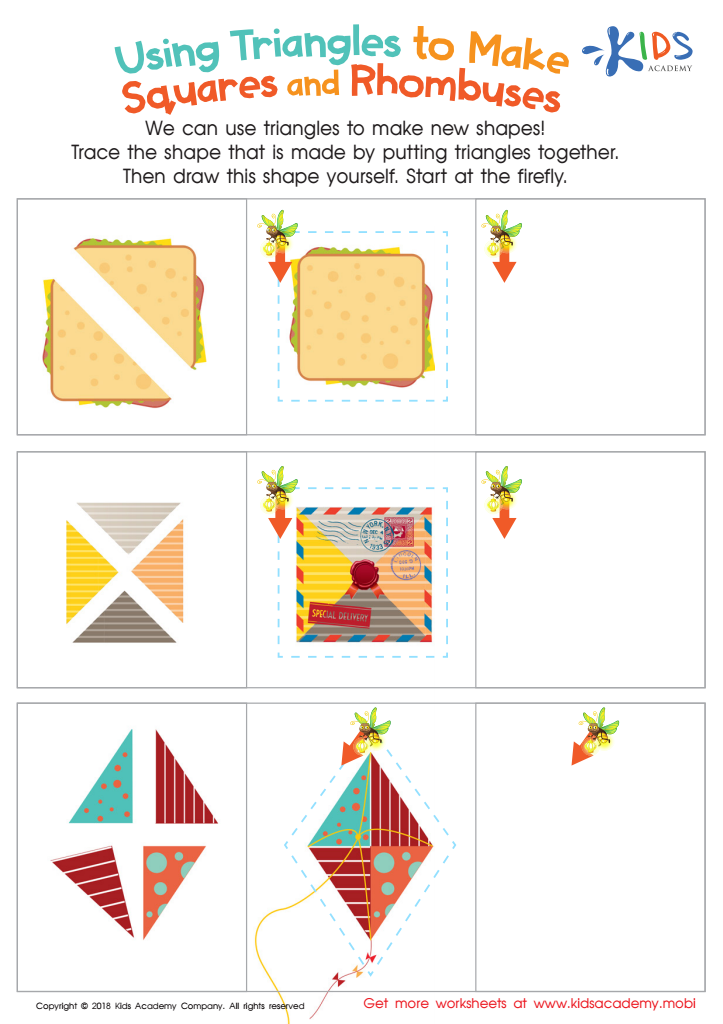
Using Triangles to Make Squares and Rhombuses Worksheet
 Assign to My Students











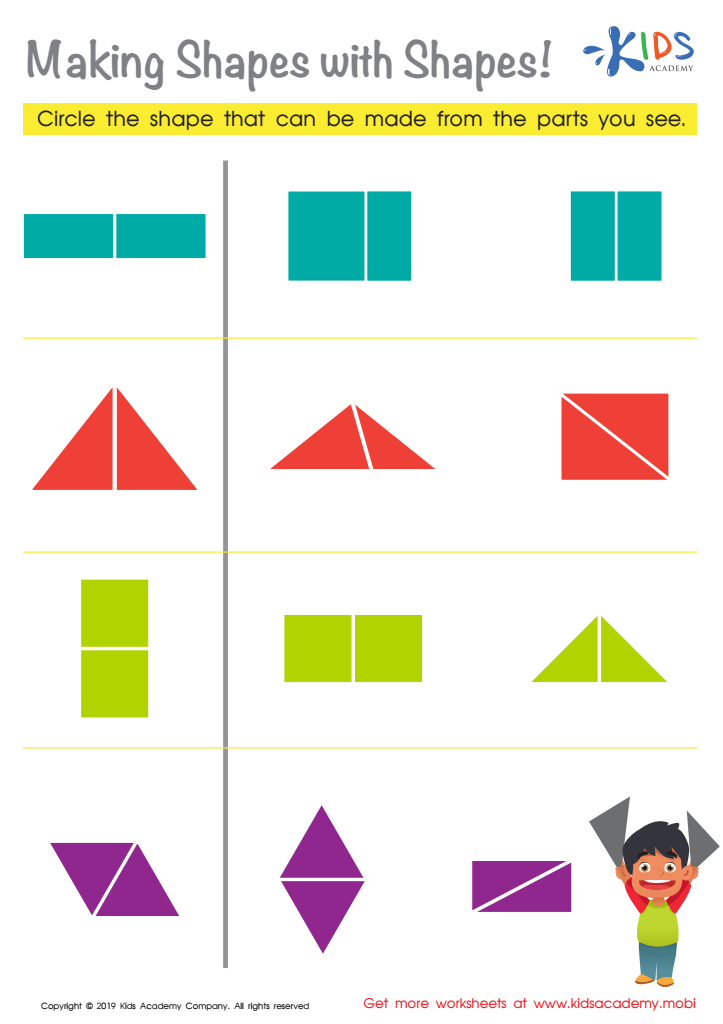
Making Shapes with Shapes Worksheet
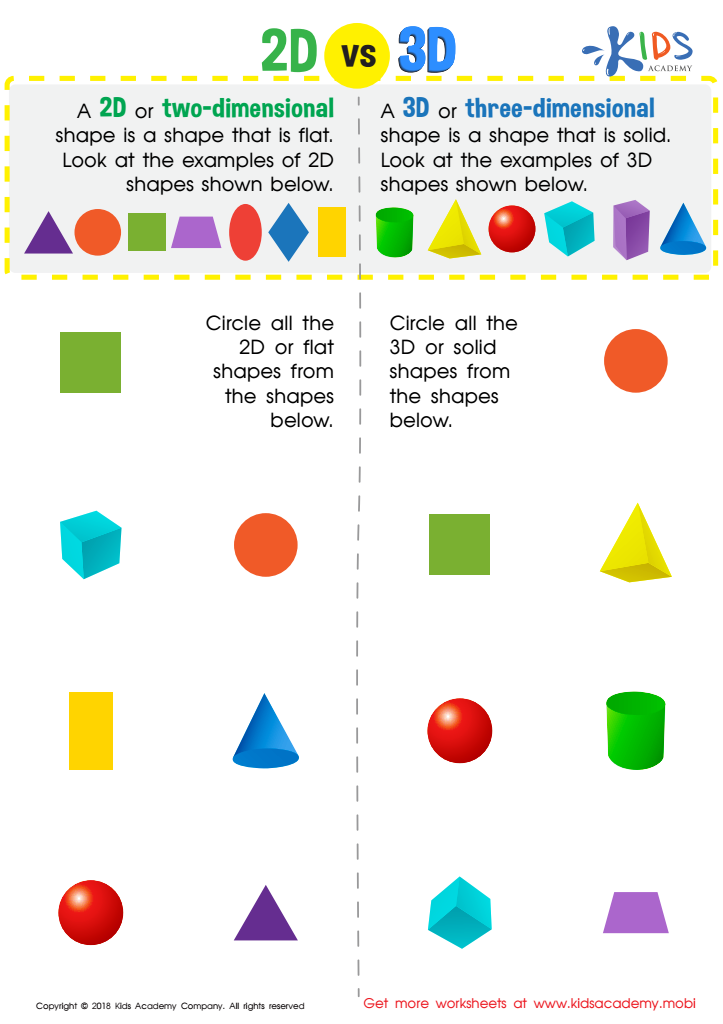
2D vs 3D Shapes Worksheet








Spatial understanding and geometry for 6-year-olds are crucial for numerous reasons, laying the foundation for future academic success and everyday problem-solving skills. At this age, children's brains are highly flexible and ready to absorb fundamental concepts that will support learning in various subjects, particularly math and science.
Firstly, spatial understanding is the ability to comprehend and interact with the space around us. It helps children visualize shapes, sizes, positions, directions, and movements, which is essential for developing reasoning and critical thinking skills. When they play with blocks, solve puzzles, or engage in drawing, they enhance their spatial awareness, which is directly linked to better performance in geometry later on.
Secondly, early exposure to geometry contributes to a child's ability to recognize patterns, an important aspect of both math and reading. By identifying geometric shapes and their properties, children learn important vocabulary and classification skills that aid in organizing information logically.
Additionally, strong spatial skills are associated with success in STEM (Science, Technology, Engineering, and Mathematics) fields. Encouraging young children to engage with their spatial environment prepares them for complex tasks and challenges they will encounter in these areas as they grow older.
Involving 6-year-olds in spatial and geometric activities doesn't just enhance academic abilities but also supports their cognitive development, creativity, and fine motor skills, making it vital for holistic growth.








