
Visual discrimination Geometry Worksheets for 6-Year-Olds
6 filtered results
Difficulty Level
Grade
Age
-
From - To
Subject
Activity
Standards
Discover engaging Visual Discrimination Geometry Worksheets designed specifically for 6-year-olds! Our worksheets focus on enhancing young learners' ability to identify shapes, sizes, and patterns in geometry. These fun and colorful activities will not only captivate your child's attention but also develop their critical visual skills essential for successful learning. Each worksheet encourages children to compare and contrast different geometric figures, honing their analytical abilities while building a strong math foundation. Perfect for home or classroom use, these resources support early education by making geometry enjoyable and accessible. Unlock your child's potential with our Visual Discrimination Geometry Worksheets today!
Favorites
With answer key
Interactive
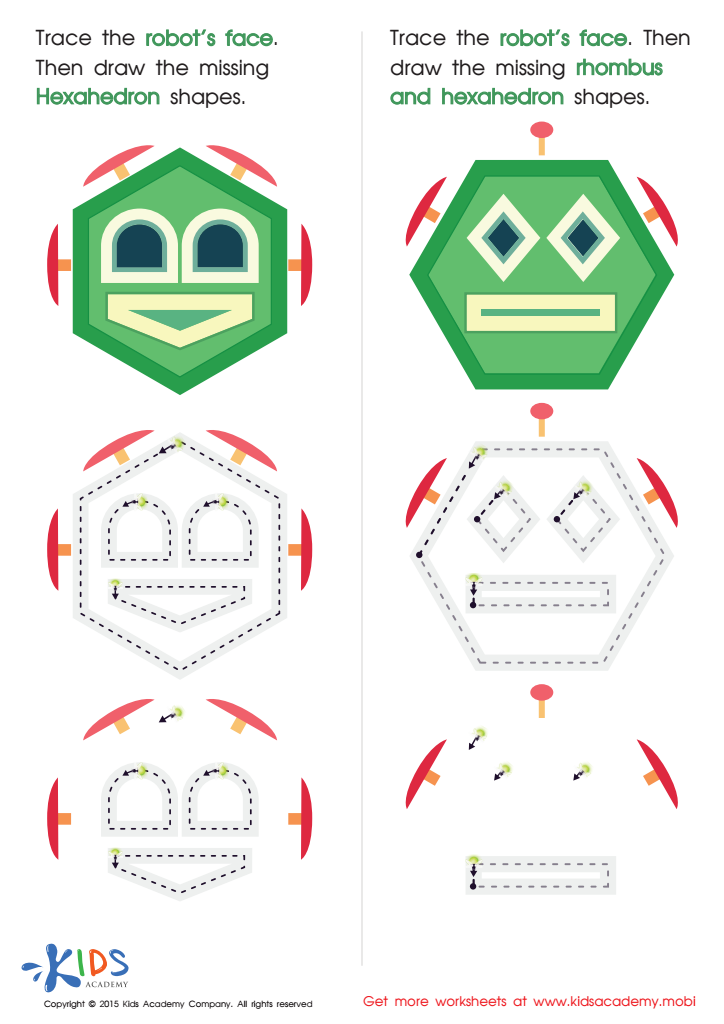
Practice Drawing Hexahedrons And a Rhombus Worksheet
Trace the Robot's face, draw hexahedron and rhombus shapes, then trace again. Our tracing shapes worksheets make it easy for kids to learn geometry. Get more materials from Kids Academy to practice all the shapes.
 Assign to My Students
Practice Drawing Hexahedrons And a Rhombus Worksheet
Worksheet











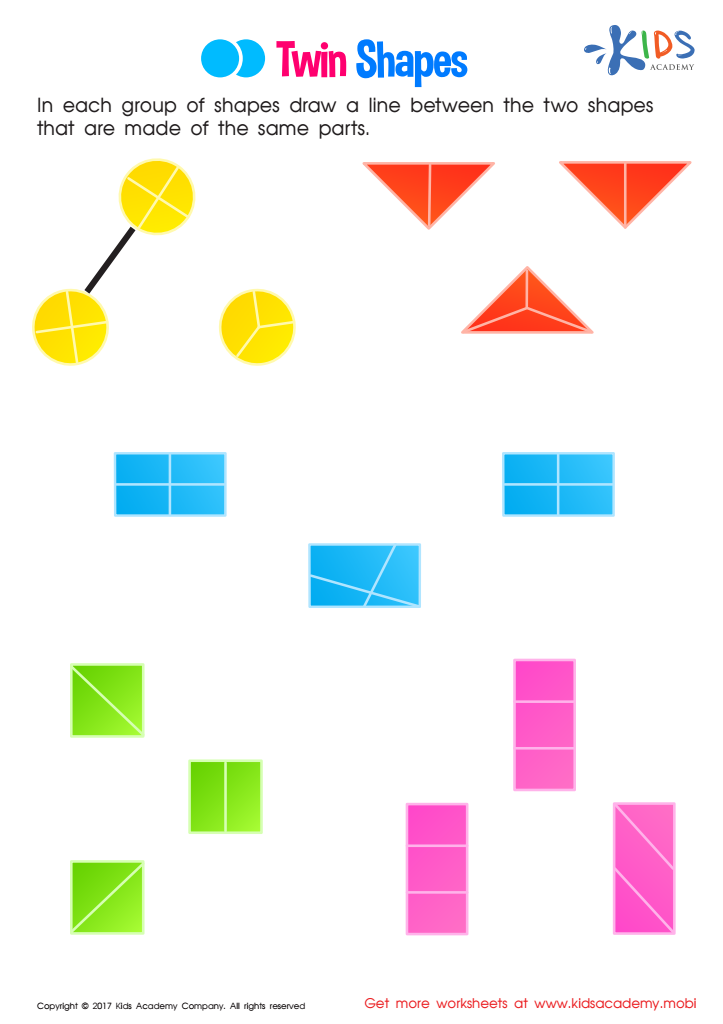
Twin Shapes Worksheet
Your students' goal in this worksheet is to find the twin shapes: drawing a line between two shapes made of the same parts. Likely, the first shapes encountered were circles, triangles, rectangles and squares - examples of which are seen frequently in everyday life. Encourage them to apply what they know and work out which is the twin shape!
Twin Shapes Worksheet
Worksheet
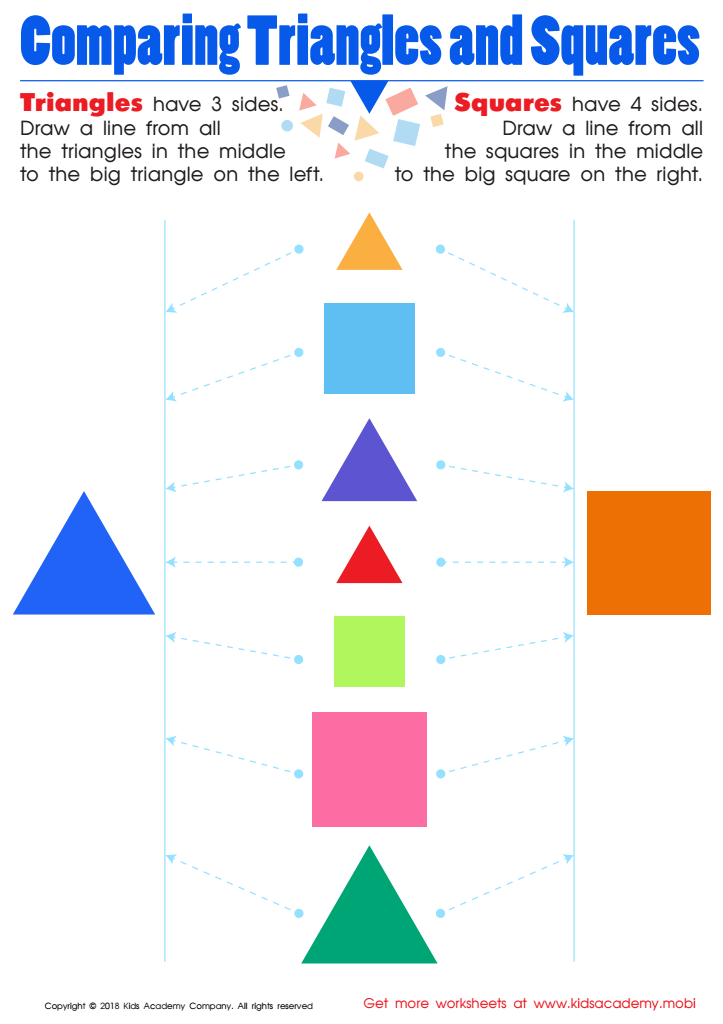
Comparing Triangles Squares Worksheet
Squares and triangles are different in the number of sides they have. Challenge kids to compare them with this fun worksheet! Read the descriptions at the top, then use the left and right shapes to match up the middle ones. Go down the page, joining the middle shapes to the side using the dotted lines!
Comparing Triangles Squares Worksheet
Worksheet
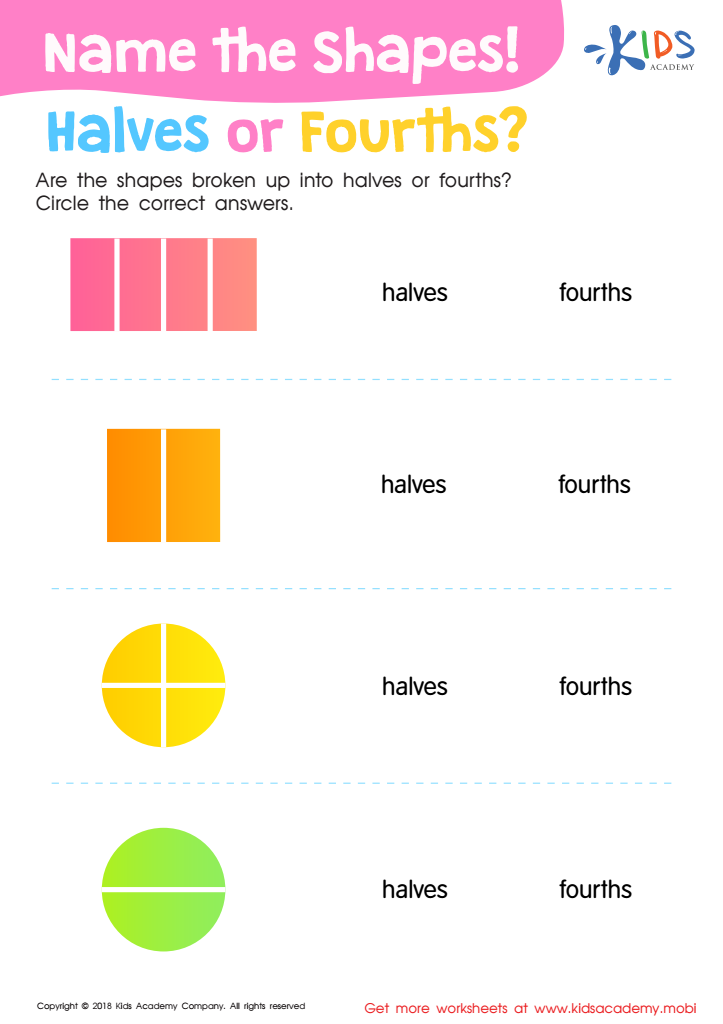
Name the Shapes Halves or Fourths? Worksheet
Before starting, ask your child if they understand what halves and fourths are. If they can answer correctly, move on with the worksheet. Help them circle the right option beside each shape, showing if it's split into halves or fourths.
Name the Shapes Halves or Fourths? Worksheet
Worksheet
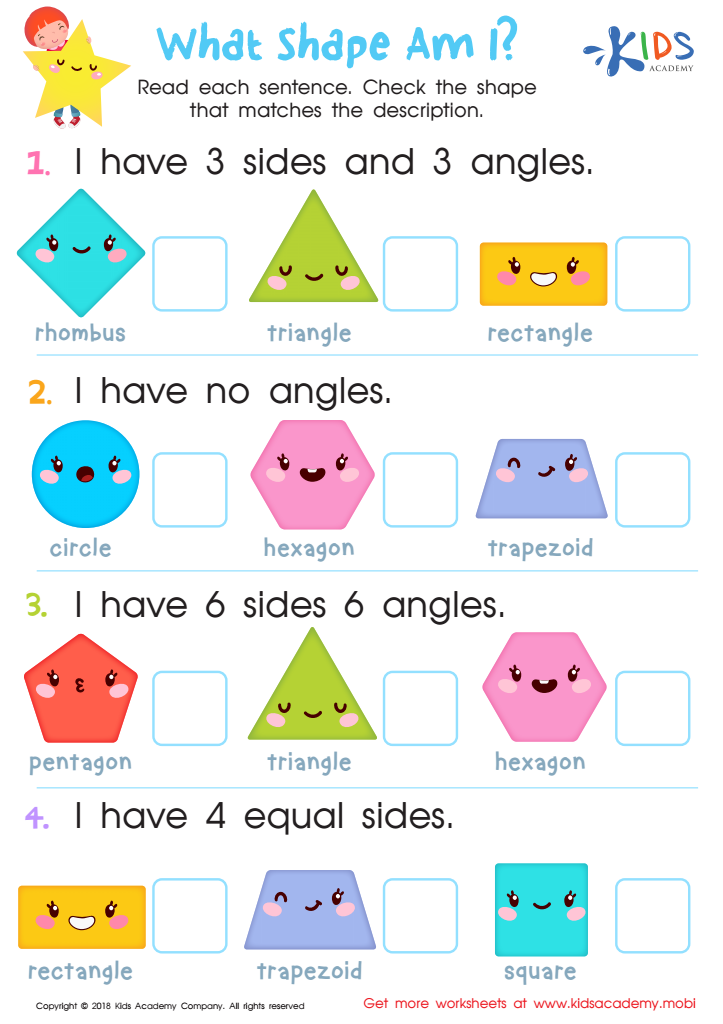
What Shape Am I? Worksheet
Help your child read each sentence in this colorful worksheet. Have them identify the shapes described and check the boxes. To prepare, ask simple questions like "How many sides does a triangle have?" and "Which shape has 4 equal sides?" Your child will become more skilled at shapes by the end of this activity.
What Shape Am I? Worksheet
Worksheet
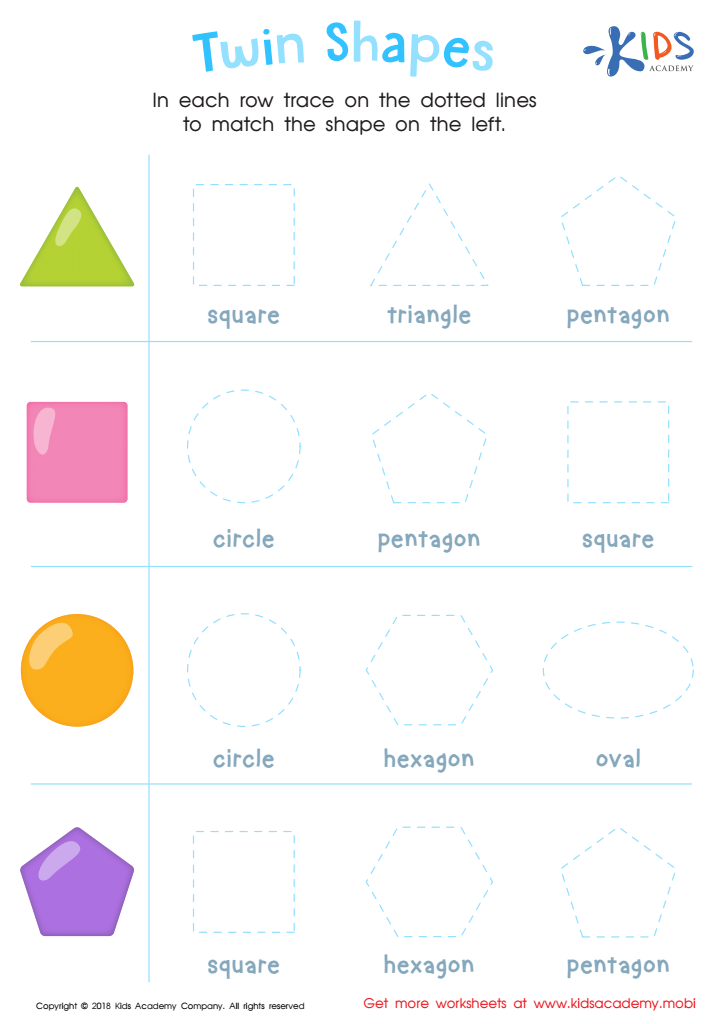
Twin Shapes Dot-to-Dot Worksheet
Test your child's ability to copy with this worksheet. Ask them to find and name the four shapes on the left. Then, they must match each with the dotted lines on the right. Help your child with all four shapes in this fun exercise.
Twin Shapes Dot-to-Dot Worksheet
Worksheet
Join Kids Academy for Free
Who is primarily going to use this learning content?








Visual discrimination in geometry is crucial for 6-year-olds as it lays the foundation for their overall cognitive development and critical thinking skills. At this age, children are beginning to explore shapes, patterns, and spatial relationships, which are essential components of early math education. An understanding of visual discrimination helps them recognize differences and similarities in shapes and sizes, paving the way for more complex math concepts later on.
When parents and teachers prioritize visual discrimination skills, they enhance children's ability to classify objects, solve problems, and communicate mathematically. This skill encourages creativity as children learn to visualize and manipulate shapes, fostering both artistic and analytical thinking.
Moreover, strong visual discrimination skills support literacy development. As children learn to identify and distinguish shapes, they can better recognize letters and words, crucial for reading proficiency. Engaging children in playful activities—like puzzles, shape-sorting games, and drawing—can strengthen these skills while making learning fun.
Ultimately, caring about visual discrimination in geometry empowers children with the confidence and skills they need to tackle more challenging academic tasks in the future, establishing a solid base for lifelong learning and success.








