Unlock your child's potential with our engaging Problem-Solving Abilities Numbers Worksheets designed specifically for 6-year-olds! These interactive worksheets foster critical thinking and mathematical reasoning, helping children enhance their problem-solving skills in a fun and effective way. Each exercise focuses on real-life scenarios, encouraging kids to apply their knowledge to solve problems, develop logical thinking, and improve their numerical understanding. Perfect for reinforcing classroom learning or for at-home practice, our worksheets provide both challenges and enjoyment, ensuring that kids remain motivated. Equip your young learners with essential skills that will benefit them for years to come—let's make math exciting!

Check out this FREE Trial Lesson on Numbers for age 6!

Relate Place Value (base 10 block) addition to standard algorithm addition Part 1

Favorites
With answer key
Interactive
  • 6
  • Problem-solving abilities
  • Numbers
Kindergarten Counting by Tens Worksheet

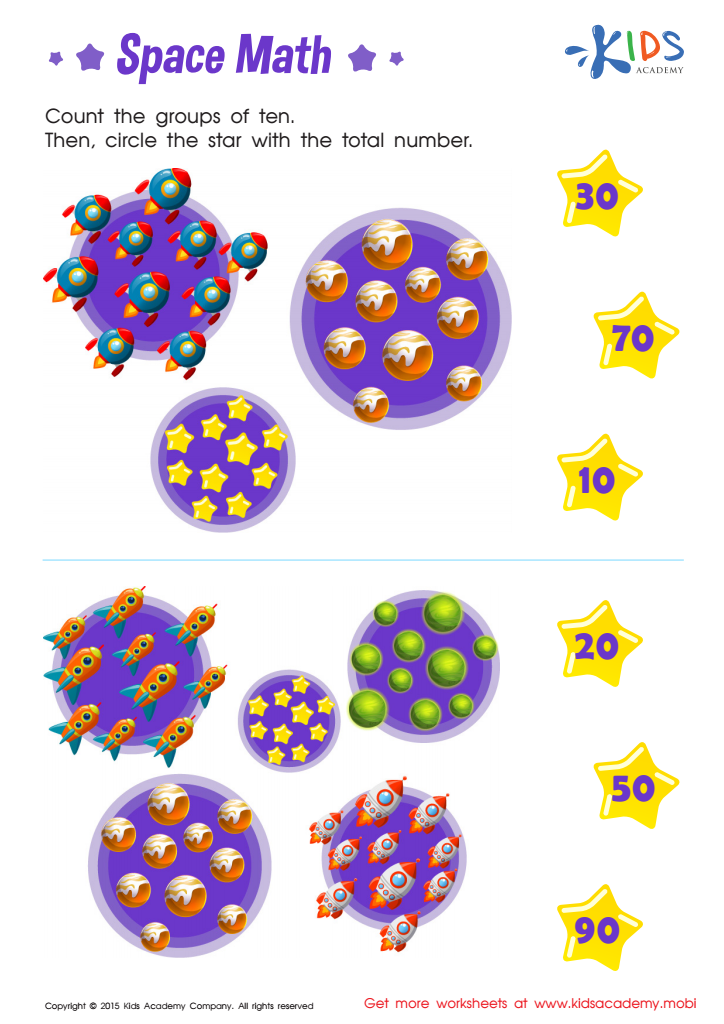
Learn dozens: Space math Worksheet

This worksheet uses Singapore Math's approach to help your child visually understand basic counting and math problems.
Learn dozens: Space math Worksheet
Worksheet
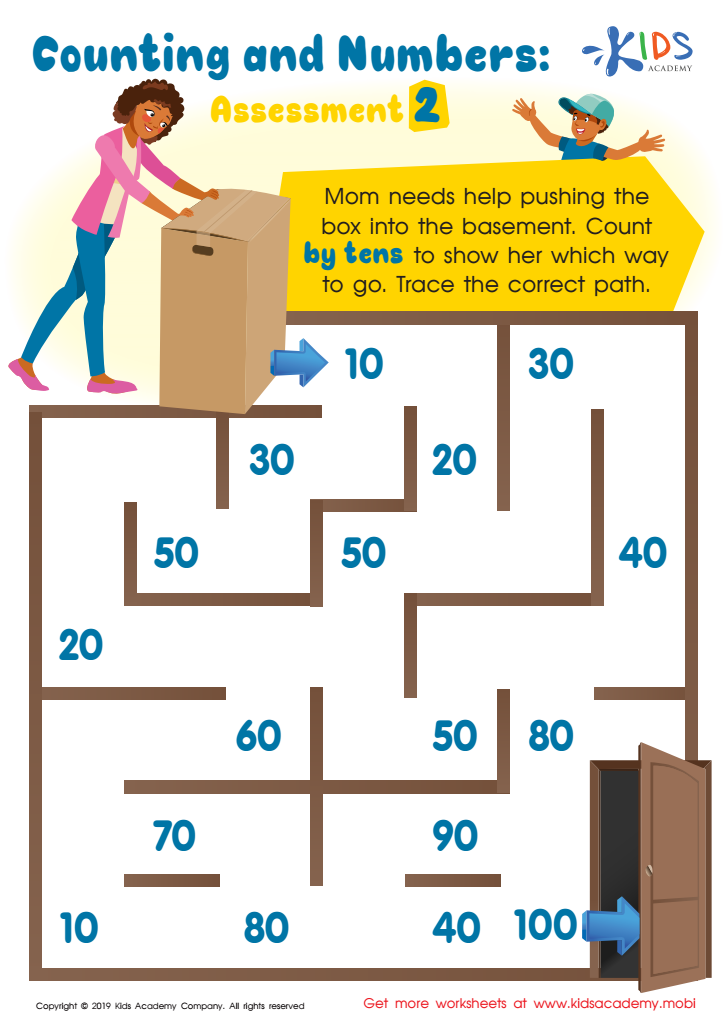
Counting and Numbers: Assessment 2 Worksheet

Counting and Numbers: Assessment 2 Worksheet

Kids love mazes and this free assessment worksheet helps them master counting by 10s. As they navigate the path, they'll improve their math skills and reach 100! It's a fun way to check your child's understanding of counting and chunking, and you'll quickly know their skill level.
Counting and Numbers: Assessment 2 Worksheet
Worksheet
Find the Missing Number Worksheet

Find the Missing Number Worksheet

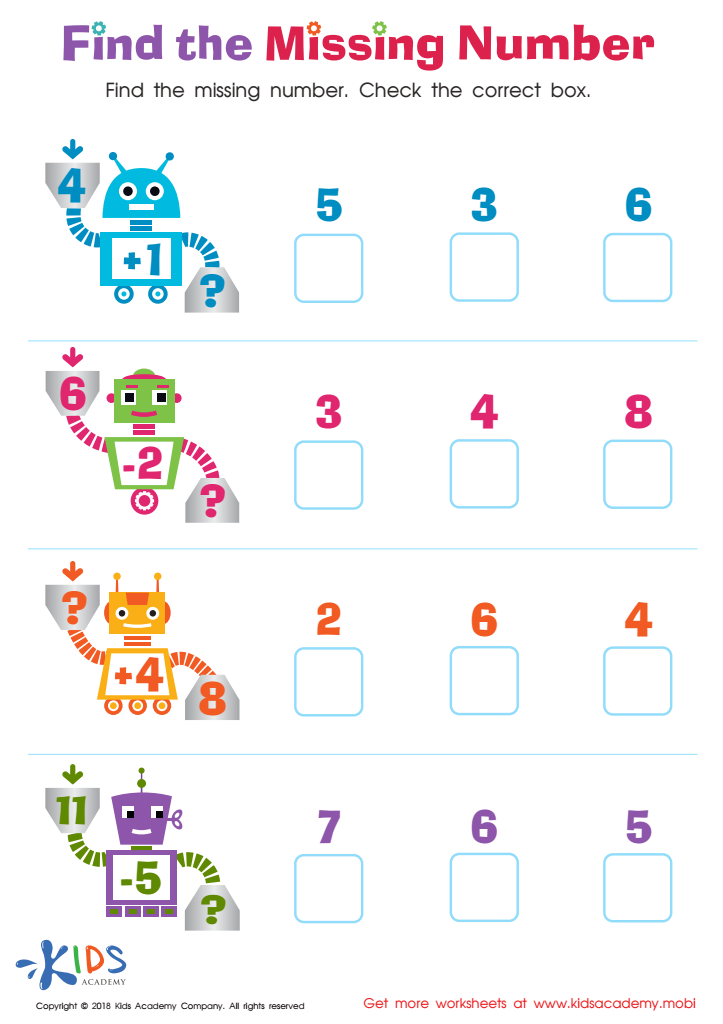
Repetition and practice are key to success in elementary math. Kids Academy's printable worksheet featuring delightful robots with addition and subtraction problems is a great way to reinforce this. Your child must find the missing number, check the box and complete the sheet. Here's a fun way to foster learning!
Find the Missing Number Worksheet
Worksheet
Line plot worksheet for 2nd grade

Sweet Shop – Counting Coins Worksheet
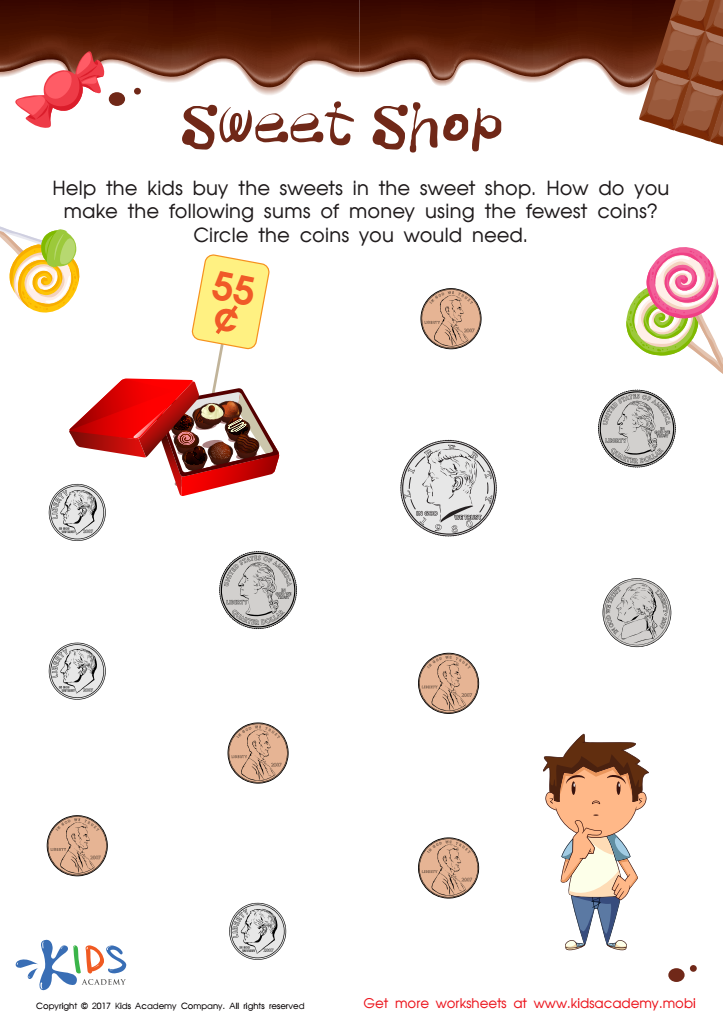
Help your child get ready to buy sweet treats with this coin counting worksheet. It'll challenge them to use the fewest coins possible. With knowledge of coin values, they'll work out the right combination to get the sweets!
Sweet Shop – Counting Coins Worksheet
Worksheet
Different Ways to Add Worksheet

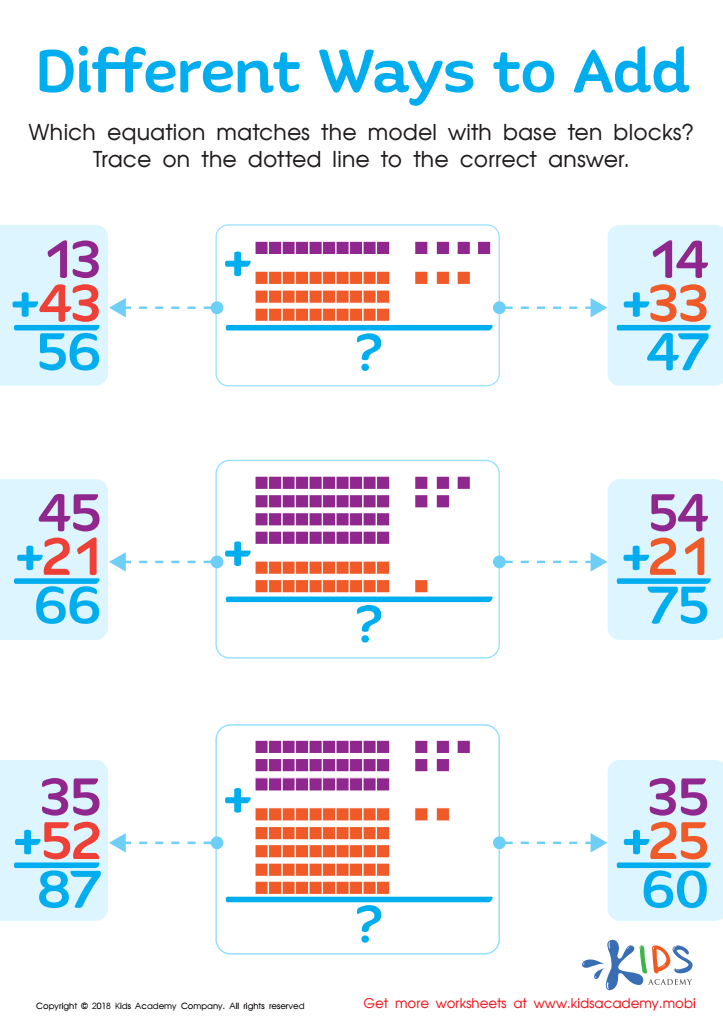
Different Ways to Add Worksheet

This worksheet enhances math skills by having students match equations to base ten pictures and tracing lines. It not only helps with fine motor skills, but also encourages number sense, with various ways to add and build upon existing math knowledge.
Different Ways to Add Worksheet
Worksheet
Addition and Subtraction Within 1: Assessment 3 Worksheet

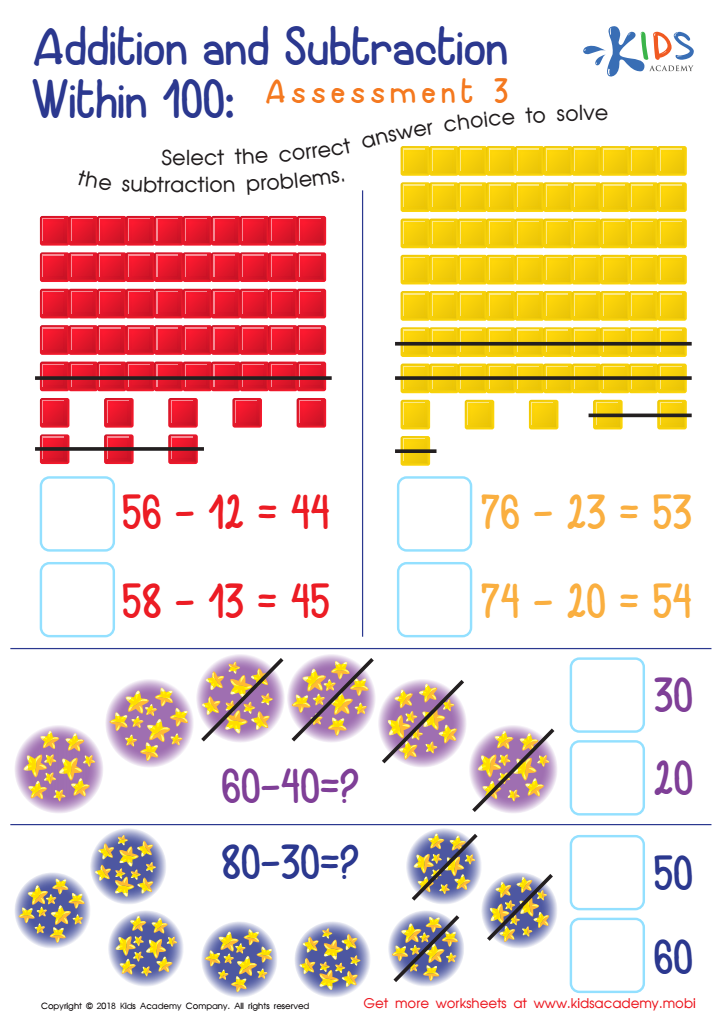
Addition and Subtraction Within 1: Assessment 3 Worksheet

Help your kids count the base ten blocks in the picture. Then, count how many have been marked off. Ask them to select the correct answer choice to solve the subtraction problems based on the blocks counted. 80 words
Addition and Subtraction Within 1: Assessment 3 Worksheet
Worksheet
Data: Assessment 2 Worksheet


Data: Assessment 2 Worksheet

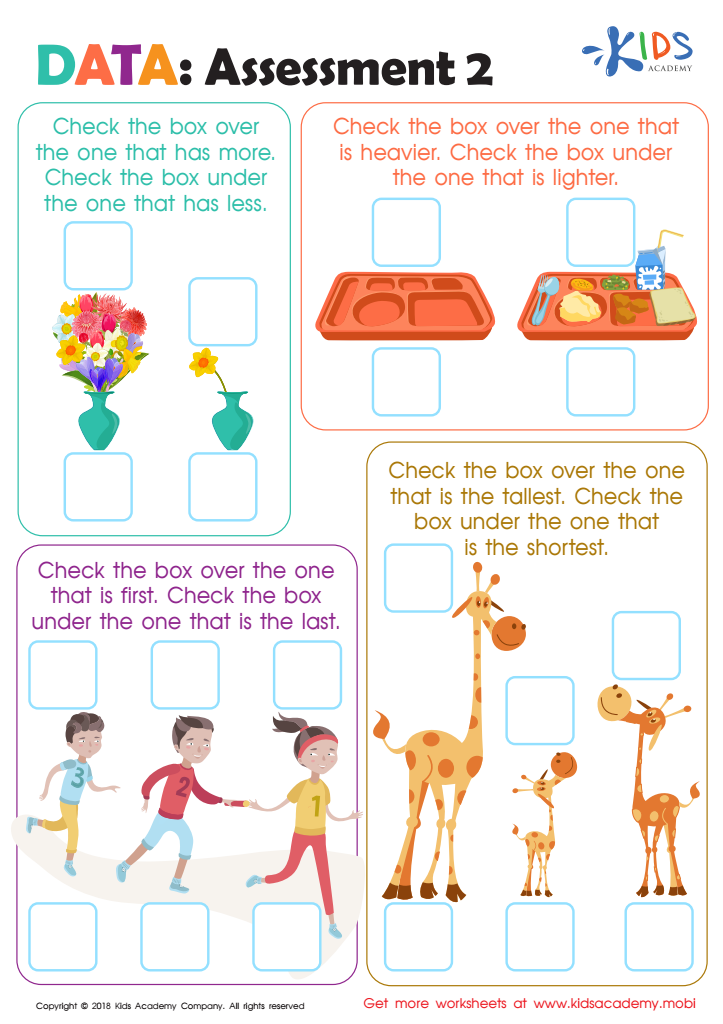
This printable worksheet tests students' understanding of words related to quantity and measurement, such as "more", "less", "heavy", "light", "first", "last", "tall", and "short". It helps children compare and contrast when solving measurement problems. Ideal for math classes, it encourages students to gain the essential skills needed in subjects like math, science, and reading.
Data: Assessment 2 Worksheet
Worksheet


Parents and teachers should prioritize problem-solving abilities in six-year-olds, as early experiences lay the foundation for lifelong learning and critical thinking skills. At this age, children are naturally curious and eager to explore their environment, making it an ideal time to foster these abilities. Problem-solving helps children learn to interpret information, approach challenges with confidence, and develop resilience when faced with setbacks.

Moreover, problem-solving with numbers enhances cognitive development and mathematical understanding. It enables children to make connections between concepts such as addition, subtraction, and patterns. This foundation not only supports their academic growth in mathematics but also nurtures analytical and logical reasoning skills that are crucial in everyday life.

Additionally, nurturing problem-solving skills promotes creativity and innovation. When children learn to approach problems from various angles, they cultivate flexibility in thinking. This is vital in our ever-evolving world, where adaptive skills are in high demand.

Ultimately, encouraging problem-solving abilities in young children prepares them for future academic success, instills a growth mindset, and equips them with essential life skills that extend far beyond the classroom. Parents and teachers play a crucial role in guiding this important aspect of development, ensuring children become independent thinkers and confident problem-solvers.