Associative learning Math Worksheets for 6-Year-Olds
3 filtered results
-
From - To
Introducing our Associative Learning Math Worksheets tailored specifically for 6-year-olds, designed to make math engaging and fun! These meticulously crafted worksheets aid young learners in grasping foundational math concepts through interactive activities that stimulate memory and comprehension. By connecting new information with familiar concepts, our worksheets boost confidence and enhance problem-solving skills. Perfect for classroom use or at-home practice, they're an excellent resource for parents and teachers seeking to support children's early math development. With a variety of colorful, imaginative exercises, you'll watch your child thrive and build a strong math foundation. Unlock your child's potential with these innovative learning tools today!
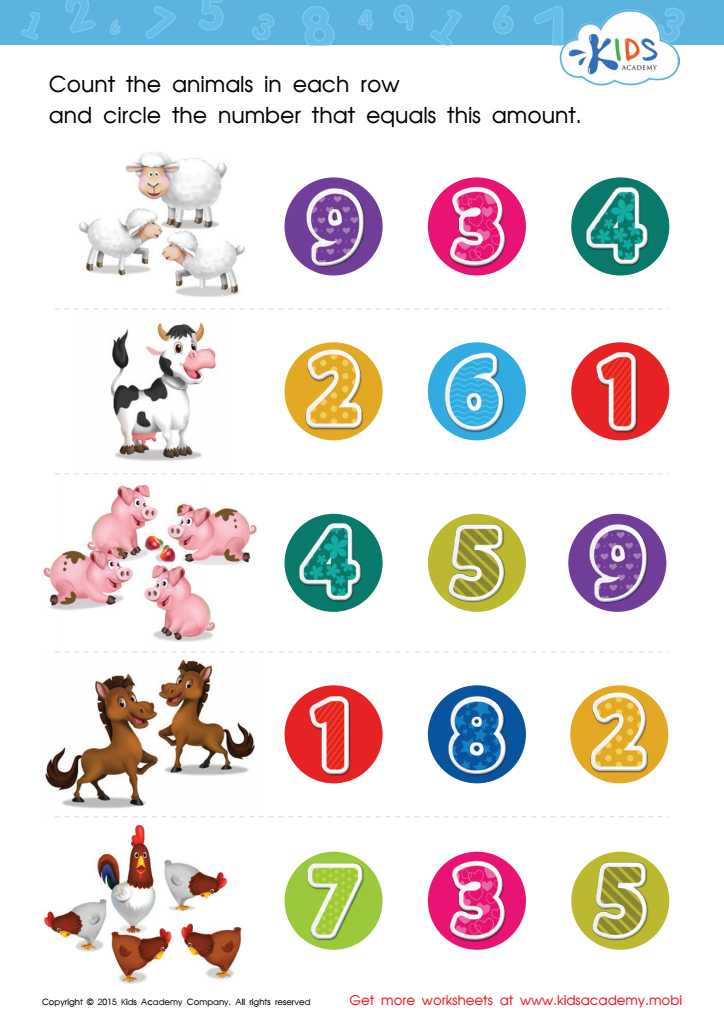
Count and Match 1 – 5 Math Worksheet
 Assign to My Students
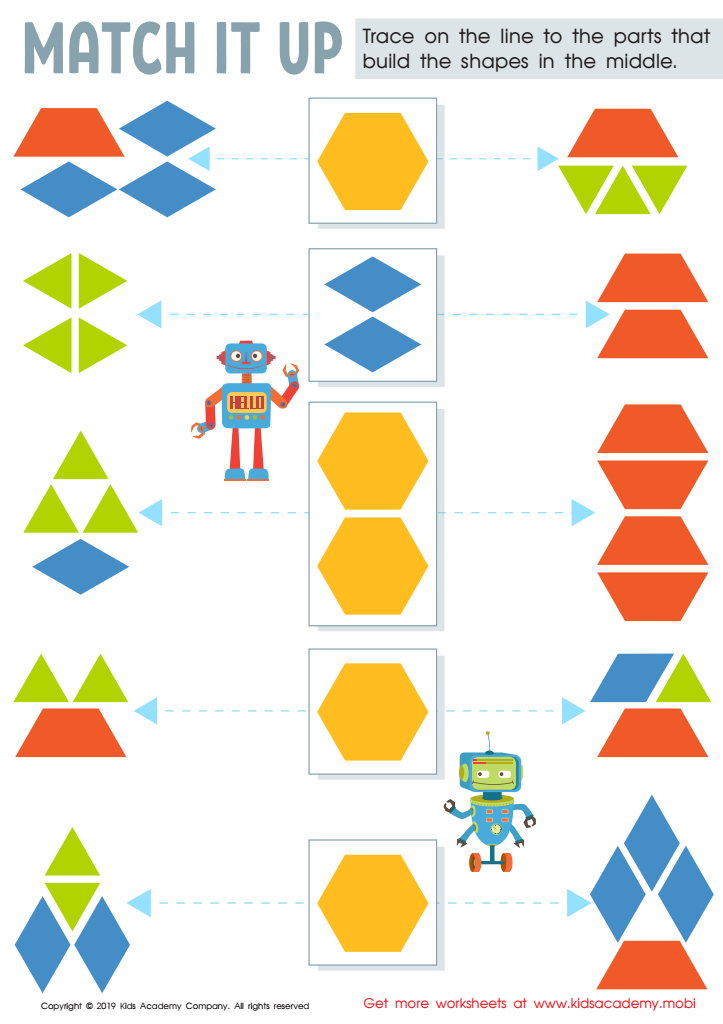
Match It up Worksheet
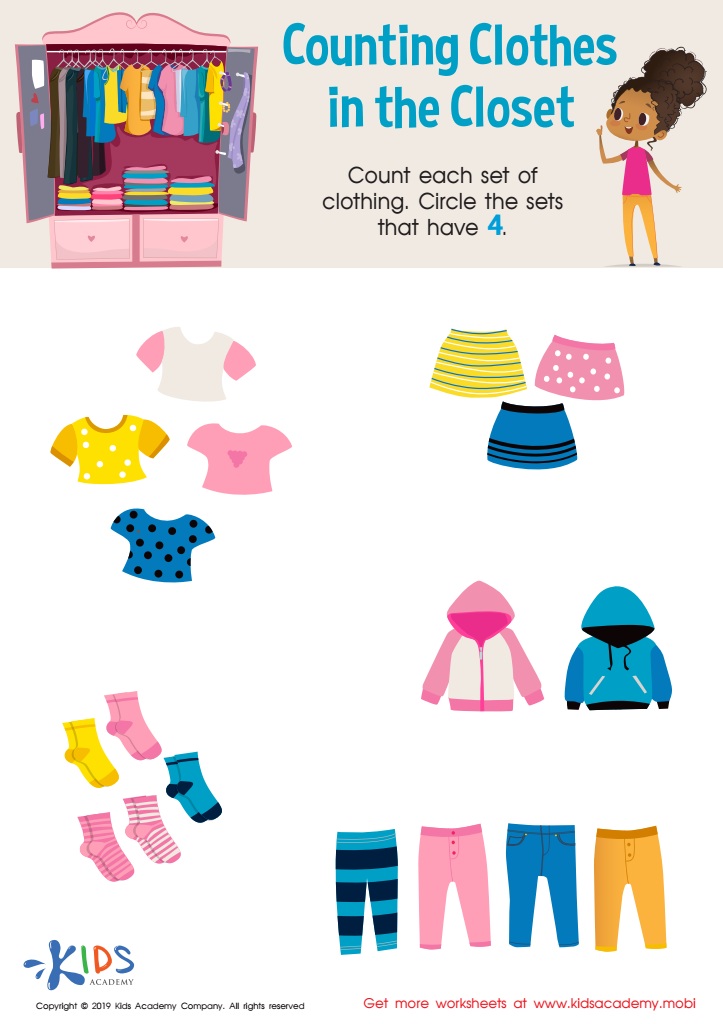
Counting Clothes Worksheet





Associative learning in math is crucial for 6-year-olds because it lays the foundation for their future academic success and everyday problem-solving abilities. At this age, children are primed for learning through experiences and associations, making math concepts more relatable and memorable.
First, associative learning helps young children understand basic math concepts such as addition and subtraction, grouping, and number relationships. For example, relating numbers to physical objects like counting apples or toys enhances their understanding. This concrete experience transforms abstract numbers into something tangible, making math less intimidating.
Second, it fosters cognitive development by enhancing memory, pattern recognition, and logical thinking. When kids learn to associate numbers with everyday occurrences, like recognizing that three buttons plus two buttons make five buttons, they start seeing mathematical patterns in their environment.
Additionally, engaging a child's curiosity through associative learning can ignite a lifelong interest in math. This intuitive approach makes learning fun and interactive, thereby reducing math anxiety and building confidence. When teachers and parents invest in associative learning techniques, they create a supportive and stimulating learning environment.
Ultimately, establishing a strong mathematical foundation through associative learning equips children with essential skills for future educational tasks and helps them develop critical problem-solving abilities needed throughout life.








