Visual representation of fractions Math Worksheets for 6-Year-Olds
3 filtered results
-
From - To
Welcome to our engaging collection of Fractions Math Worksheets designed specifically for 6-year-olds! These worksheets provide a fun and interactive way for young learners to grasp the concept of fractions through visual representations. Children will explore various fraction models, including shapes and number lines, enhancing their understanding in a colorful and imaginative way. Our worksheets are perfect for reinforcing key math skills while keeping kids motivated and excited about learning. Ideal for both classroom activities and at-home practice, these resources are tailored to help your little ones build a strong foundation in fractions. Discover the joy of learning with us today!
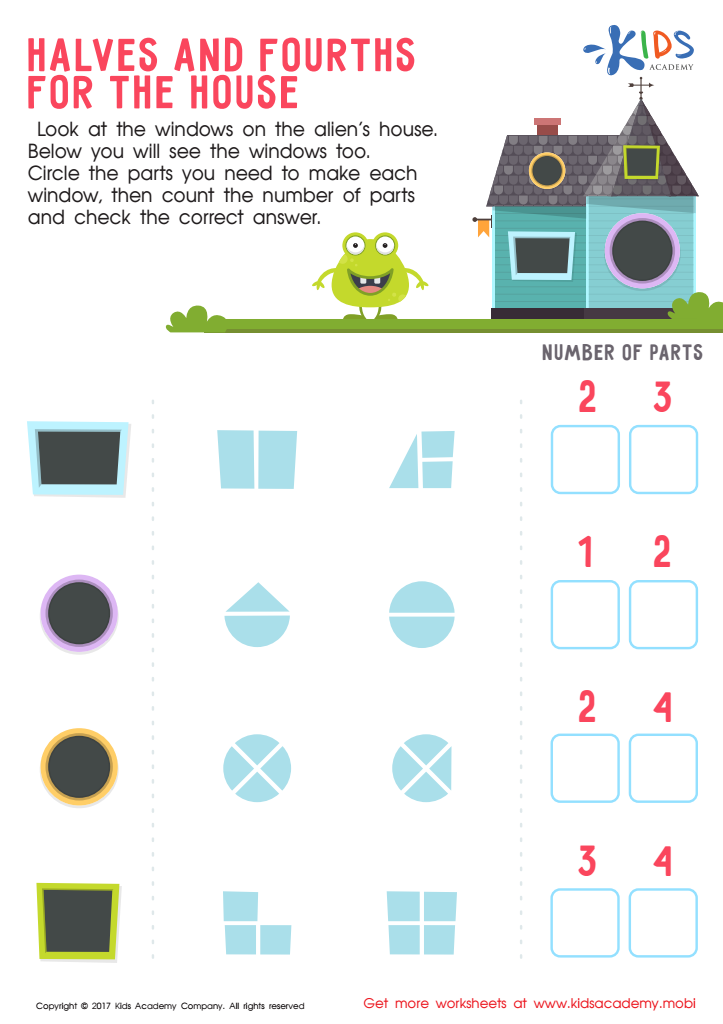
Halves and Fourths for the House Worksheet
 Assign to My Students
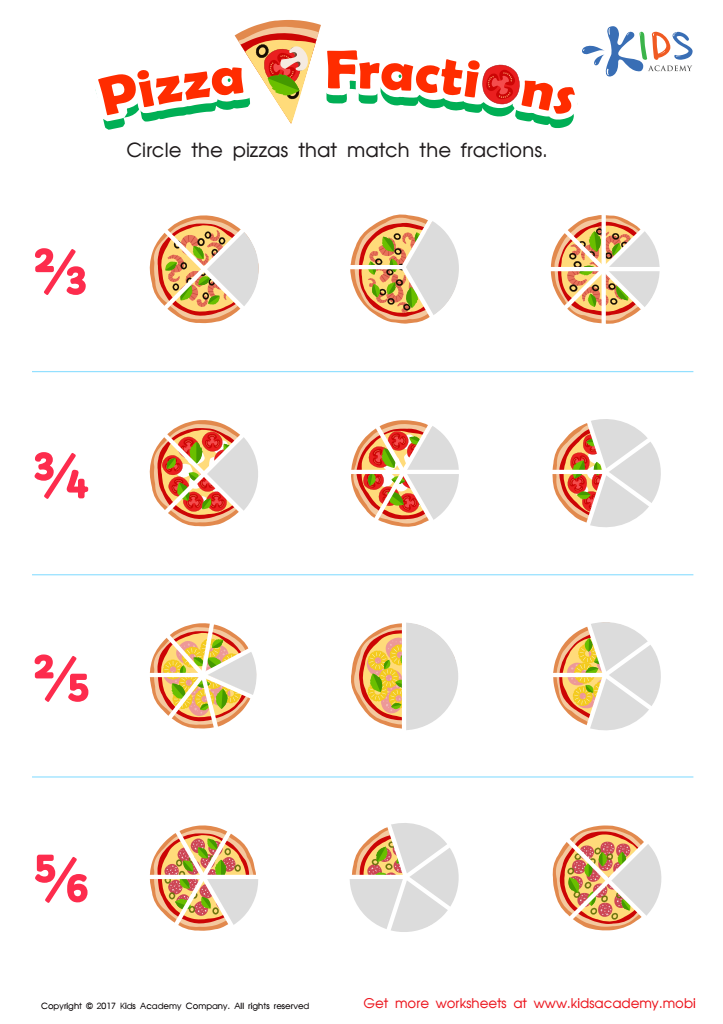
Fractions: Pizza Printable
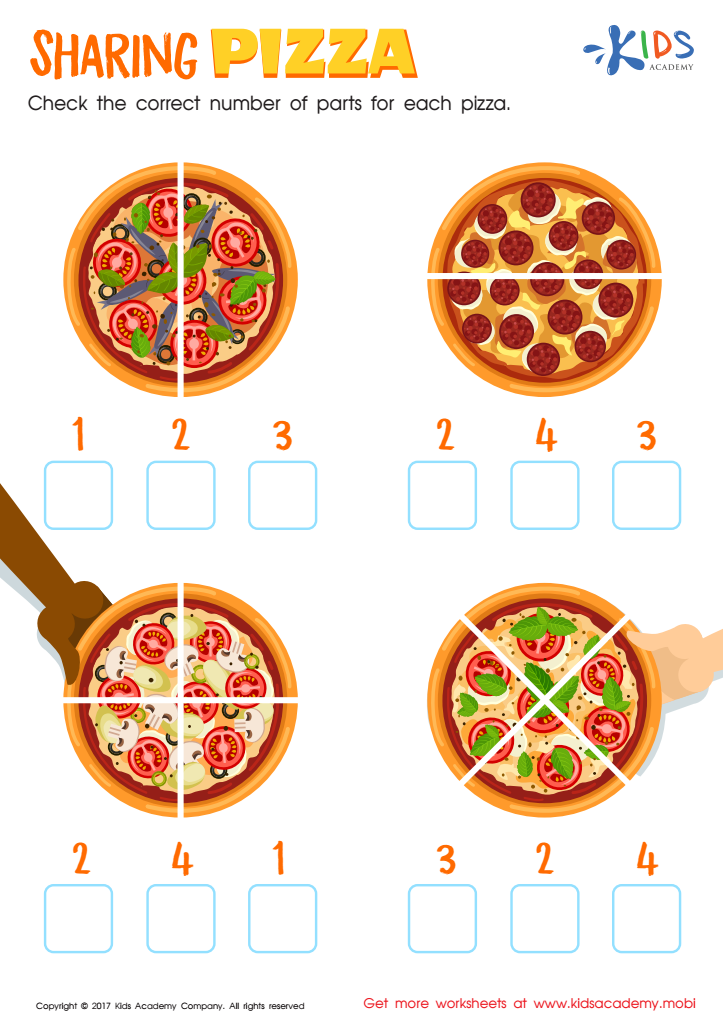
Sharing Pizza Worksheet






Visual representation of fractions is crucial for teaching 6-year-olds because it enhances their comprehension and engagement in mathematics. At this early age, children are still developing their understanding of abstract concepts; visual aids make these concepts tangible and relatable. By using shapes, bars, or pictures, children can see fractions as parts of a whole, which helps them grasp the idea that fractions represent division—an essential mathematical skill.
Moreover, visual representations cater to diverse learning styles. Some children may be kinesthetic learners, needing hands-on experiences to absorb information. Using manipulatives, like fraction circles or pie charts, enables them to experience fractions physically, strengthening their conceptual understanding.
In addition, visual aids foster better problem-solving skills. When children visualize fractions, they can more easily compare sizes and quantities, which builds a solid foundation for more complex mathematics in the future. It also encourages active participation, as kids may find it more enjoyable to explore fractions through games and visuals rather than rote memorization.
Ultimately, by emphasizing visual representations of fractions early in math education, parents and teachers can cultivate a more profound understanding and appreciation of math in children, setting them up for success in subsequent learning.








