Vocabulary Building Matching Worksheets for 6-Year-Olds
3 filtered results
-
From - To
Enhance your child's vocabulary with our engaging Vocabulary Building Matching Worksheets designed specifically for 6-year-olds! These fun, interactive activities help young learners practice essential language skills by matching words with corresponding images. Our worksheets incorporate colorful illustrations and relatable contexts, making learning enjoyable and effective. Perfect for the classroom or at home, these resources encourage children to explore new words, improve their comprehension, and boost their confidence in language use. Discover the joy of learning with our carefully curated vocabulary exercises, designed to inspire a lifelong love of words and reading! Start building a strong vocabulary foundation today!
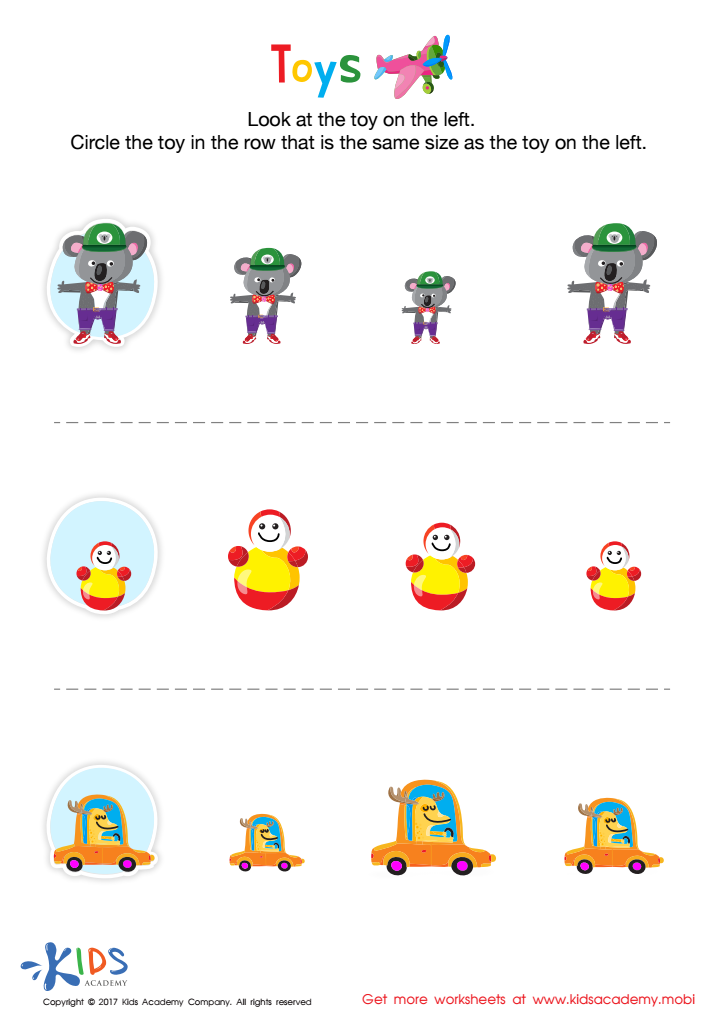
Matching: Classifying Toys by Size Worksheet
 Assign to My Students
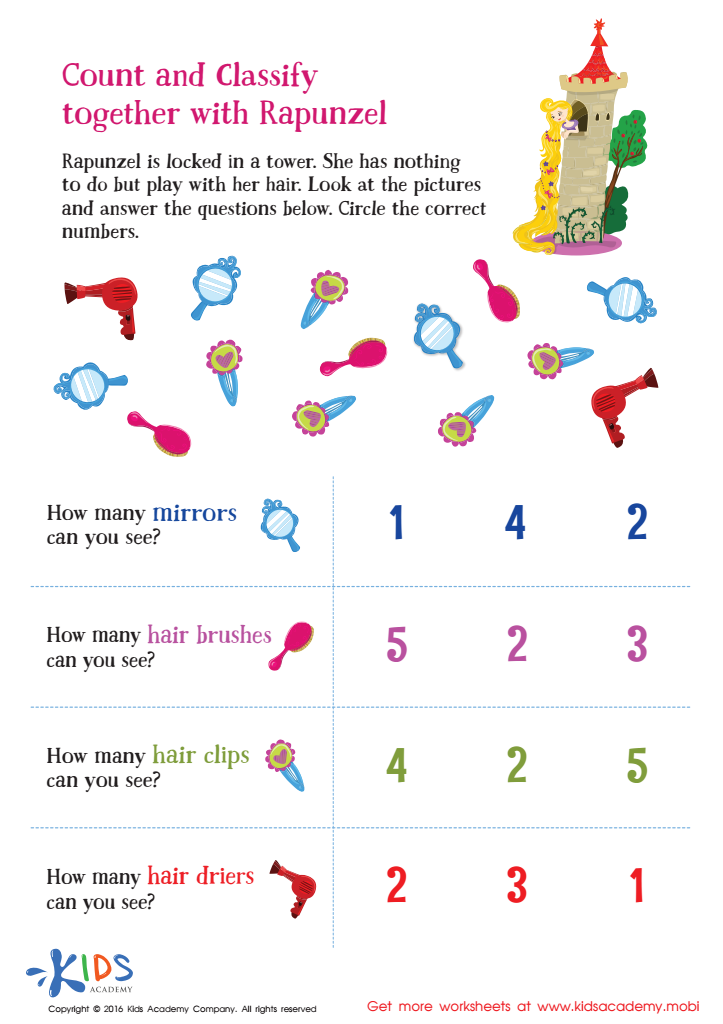
Fairy Tale Worksheet: Count and Classify with Rapunzel







Vocabulary building is essential for 6-year-olds as it lays the foundation for successful communication and literacy. At this age, children are in a critical developmental stage where they absorb language and begin to express themselves more clearly. Engaging in vocabulary-building activities, such as matching games, can significantly enhance their word knowledge and comprehension skills.
Parents and teachers should care about these activities because a strong vocabulary is linked to improved reading proficiency, which is fundamental for academic success. When children have a rich vocabulary, they can better understand what they read, articulate their thoughts, and interact effectively with others.
Moreover, vocabulary matching games make learning fun and interactive, fostering a positive attitude towards language arts. They promote cognitive skills such as memory and critical thinking, encouraging children to make connections between words and their meanings.
Furthermore, a robust vocabulary helps boost children's confidence in their communication abilities, empowering them to participate in discussions and express their ideas clearly. By focusing on vocabulary development at this formative age, parents and teachers can equip children with essential skills that will benefit them throughout their educational journey and beyond.








