Comparing object weights Measurement Worksheets for 6-Year-Olds
3 filtered results
-
From - To
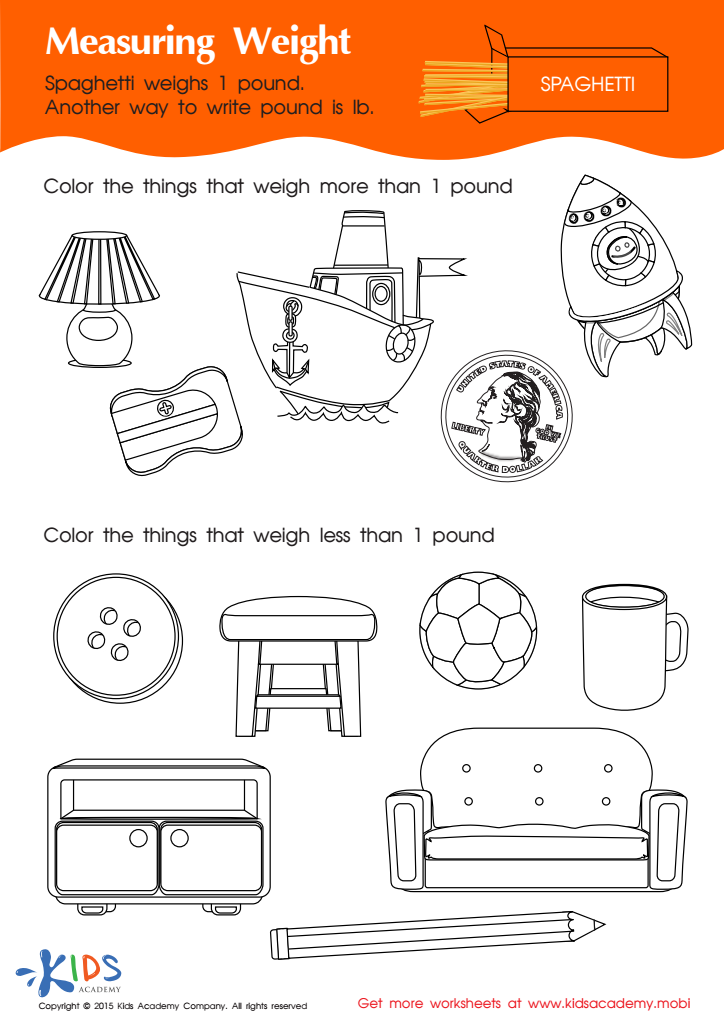
Discover our engaging "Comparing Object Weights Measurement Worksheets" designed specifically for 6-year-olds! These worksheets introduce young learners to the fascinating world of weight measurement through fun and interactive activities. Children will practice comparing the weights of various objects, enhancing their understanding of measurement concepts while developing critical thinking skills. Each worksheet features colorful illustrations and easily relatable objects, making learning enjoyable and accessible. Ideal for classroom instruction or at-home practice, these worksheets encourage hands-on exploration and promote curiosity about the physical world. Start your child's journey into measurements today with our thoughtfully crafted resources!
 Assign to My Students
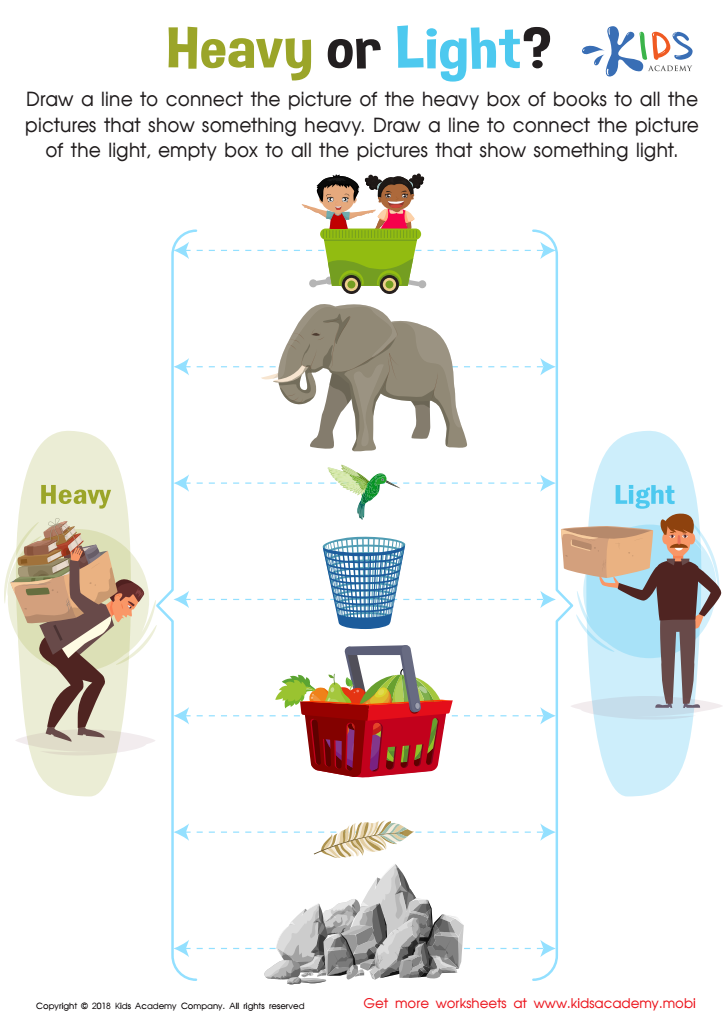
Heavy or Light? Worksheet
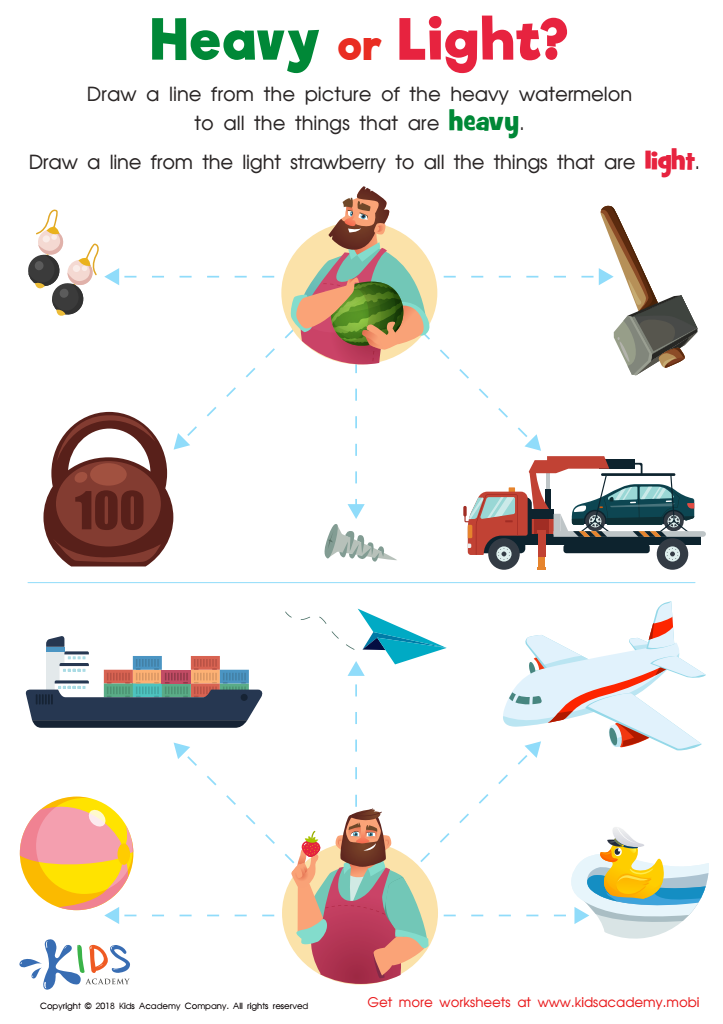
Heavy or Light? Worksheet








Comparing object weights is a fundamental concept in early childhood education that plays a crucial role in developing a child’s mathematical skills and scientific understanding. For six-year-olds, engaging in activities that focus on weight comparison nurtures their ability to think critically and enhance problem-solving skills. It encourages observation, experimentation, and interactive learning, essential for cognitive development.
Parents and teachers should care about this measurement skill because it lays the groundwork for more complex mathematical concepts in the future. Children begin to learn about mass, balance, and comparative reasoning through hands-on experiences. For instance, using a balance scale to compare the weight of different objects not only reinforces mathematical thinking but also introduces basic physics principles and promotes inquiry.
Moreover, this activity helps children develop a strong grasp of vocabulary associated with measurement, encouraging language development through discussions about heavy, light, and equal weights. Additionally, it fosters social skills when conducted in group settings where children work collaboratively, share findings, and engage in meaningful dialogue. In essence, teaching six-year-olds to compare object weights is vital, as it supports holistic development, integrating math, science, language, and social skills—all essential for their future learning journey.








